Ash and Crimson

Listen to Ash and Crimson

Facing the night, writing invites me to notice the moments of the day once again. Those waking hours that encourage me to keep my eyes open and look. Observation not only helps me find my way through the world, but also gives rise to expression, connection, and the strength to shake myself off and move on—as every day does, as always.

We are deep in the side of the countryside.
There are hardly any tourists here, apart from the occasional bus from a Nagasaki retirement home. Certainly no Western tourists. And us? Let's be honest—we're not particularly Western either. Two natives from Jaffa.

And as such, we allow ourselves to make decisions, even irrational ones, like zigzagging farther south into the south, using the best railway network in the world, just to meet a friend performing in a concert in Kagoshima. That's how it turned out.

But before the zigzags. The shortest Shinkansen. Seven minutes. It whisks us from the Milky Way of Ureshino to Takeo, in Saga Prefecture, on Yoei's recommendation.

Takeo Onsen is a small town with the self-confidence of a big city. It reveals itself gently, like a delightful babushka of surprises. And every morning we extend our stay by another night, just to enjoy them all.

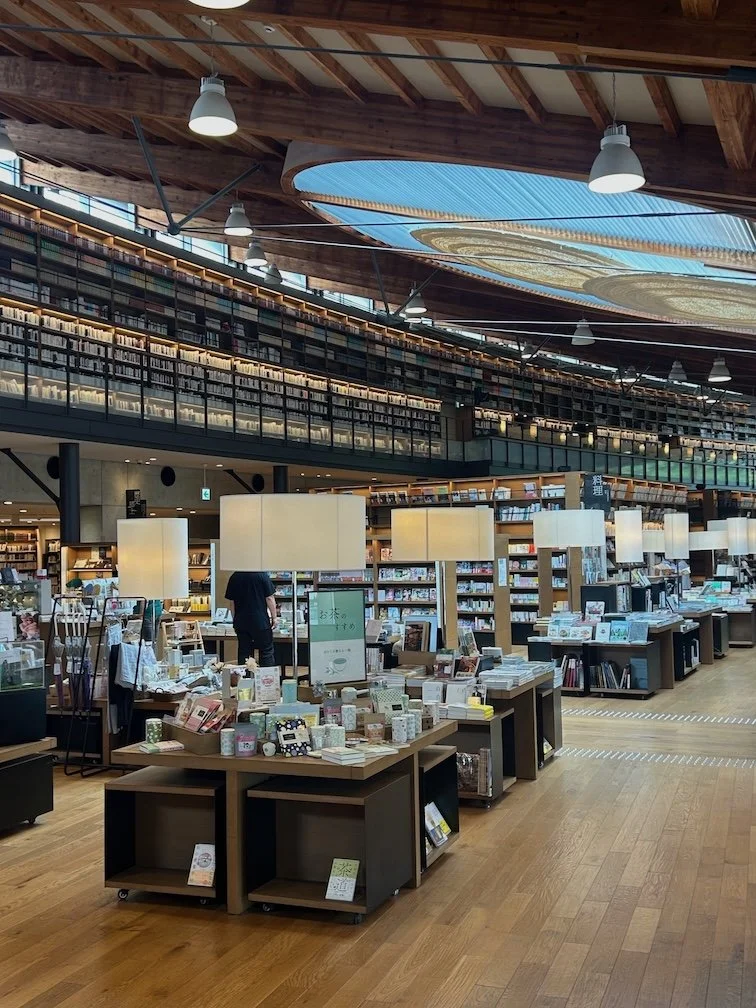
The first surprise is the municipal library. An architectural dream. Something between a temple, a cathedral, and a futuristic library. Bookshelves climb two stories high, light pours in from every direction, wood and glass alternate, inviting us to establish a settlement with a book, a coffee, and a pastry.

Dror declares a workday and opens his laptop. So do I. Open. Close. And without any declaration, I get up, moon-struck, and begin wandering through the library, flipping through books and running my fingers over their covers the way one examines fabric. And slowly and quietly, I drift into the library shop, toward shelves crowded with small Japanese inventions—clever, elegant - and entirely unnecessary.

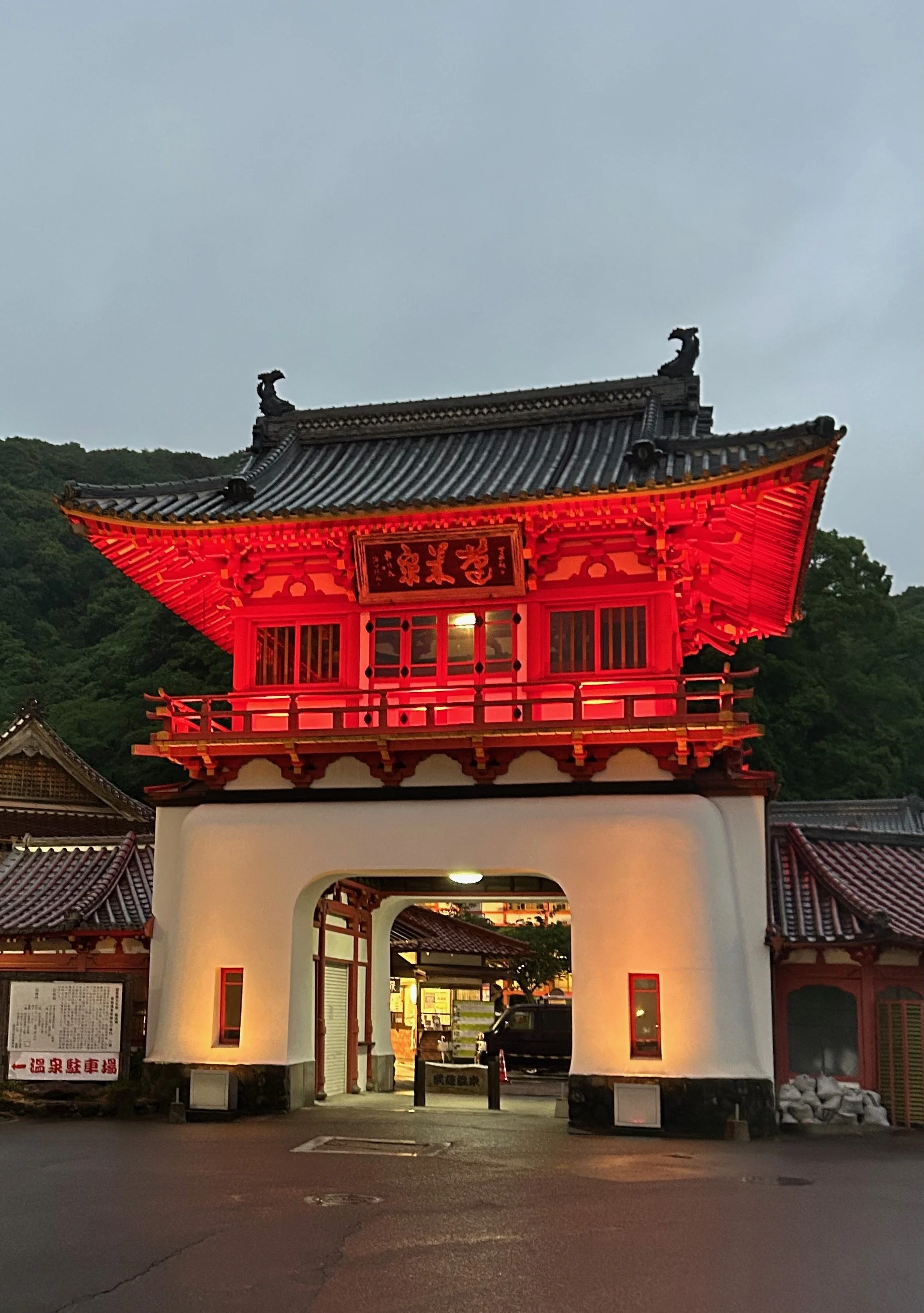
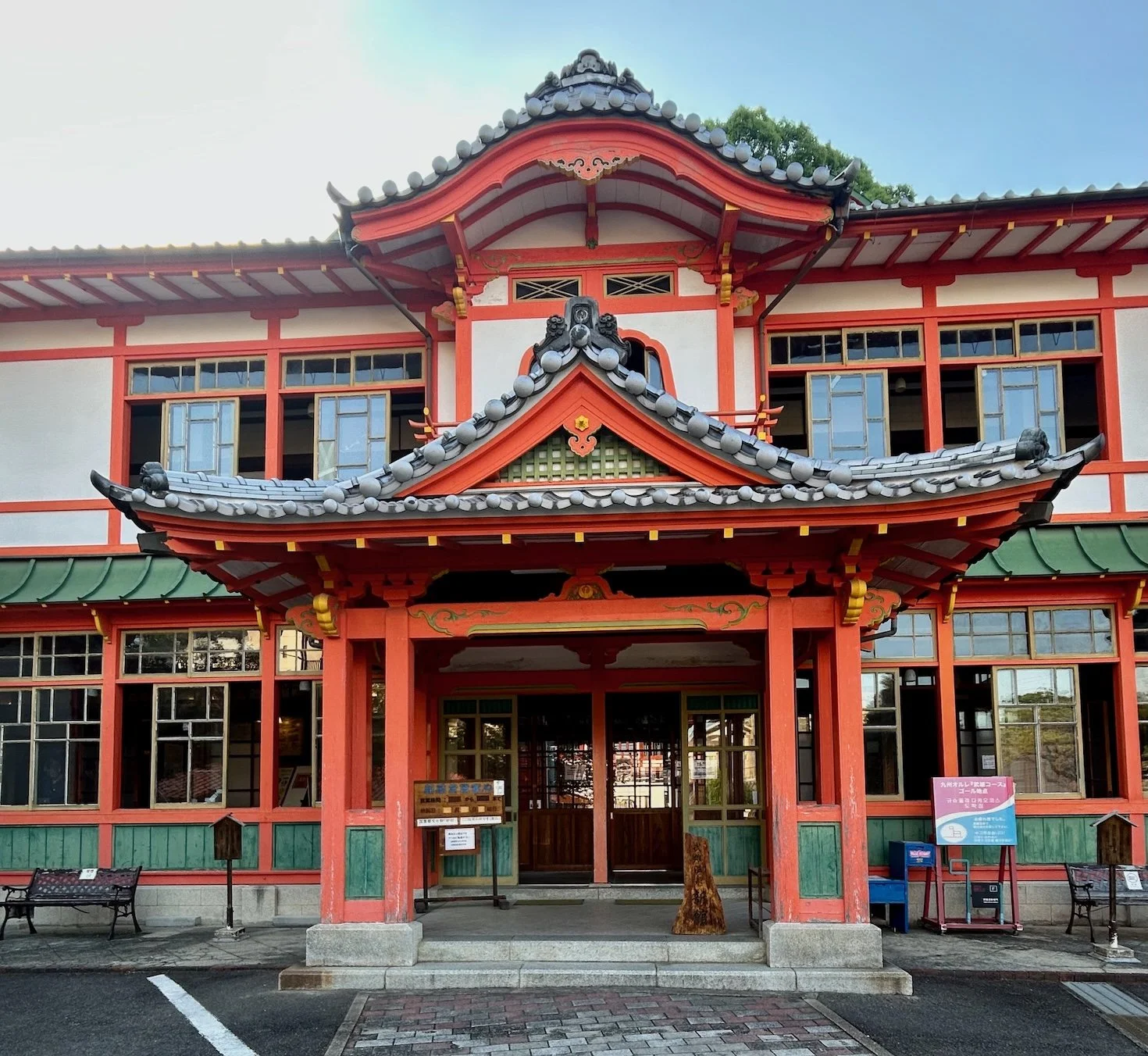
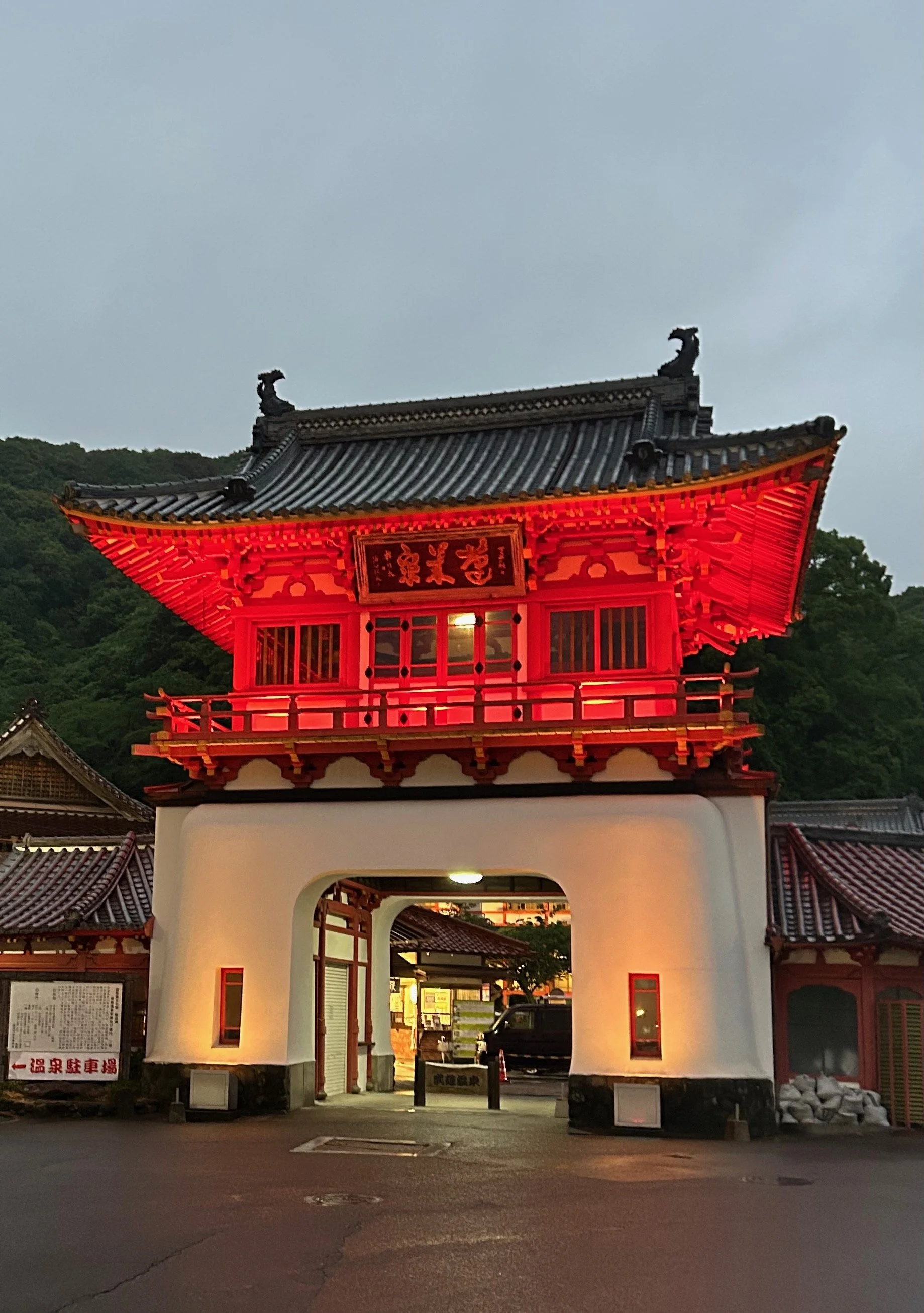
There is also the bathhouse gate, more than a hundred years old, painted a brilliant crimson. In Japan, gates like these mark a passage from one state of consciousness to another. In this case—from the street outside our hotel into an onsen more than 1,300 years old.

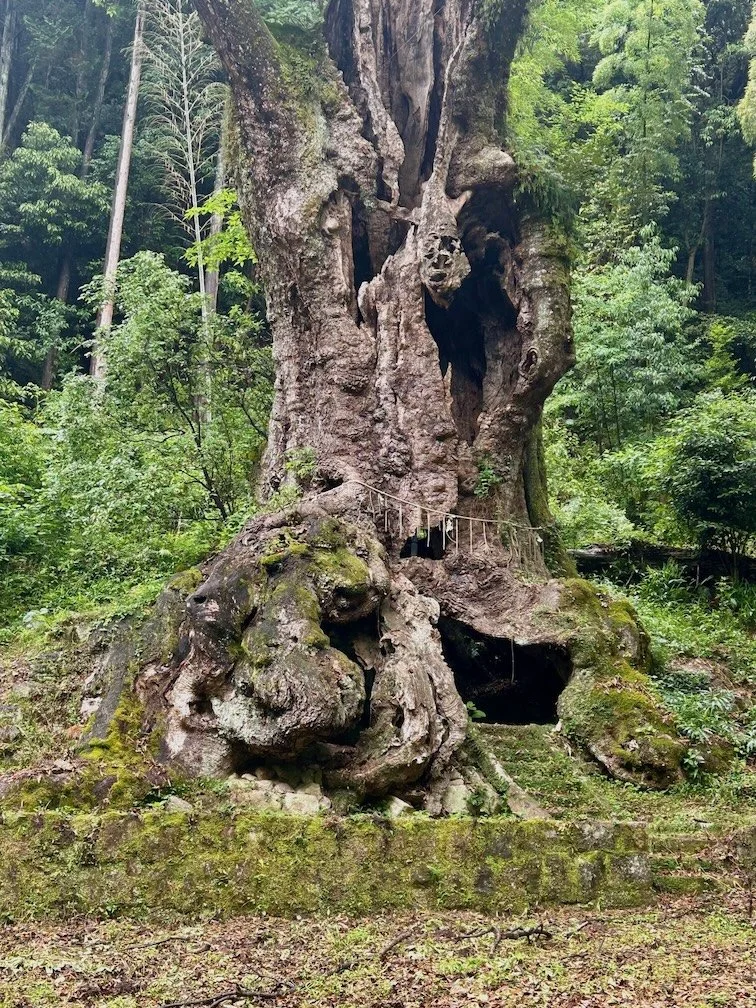
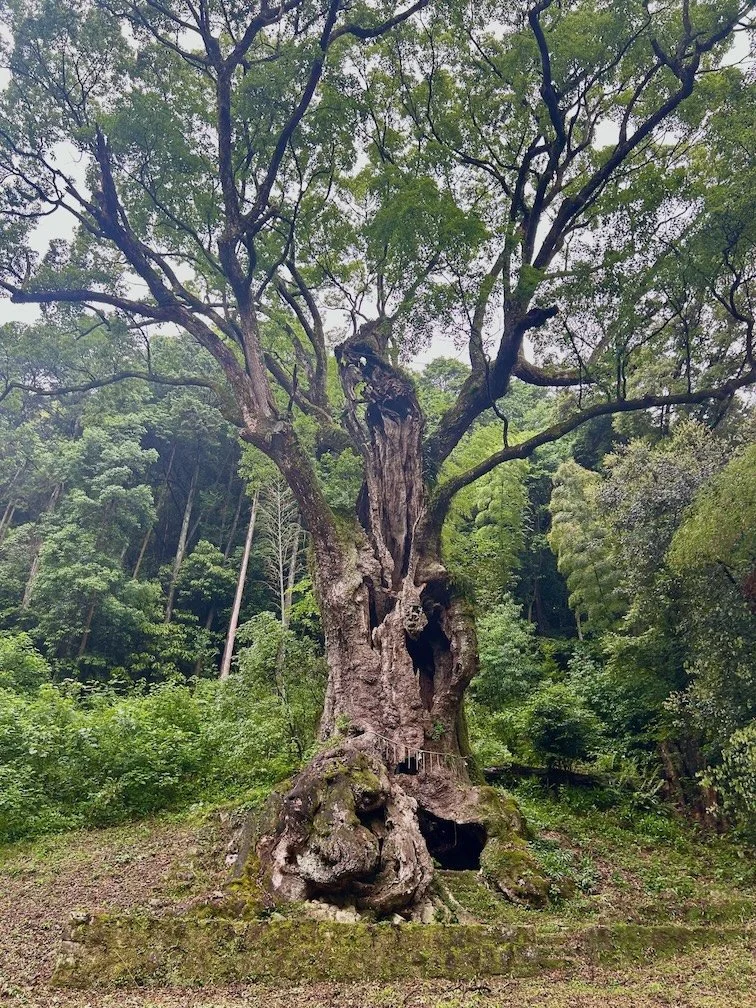
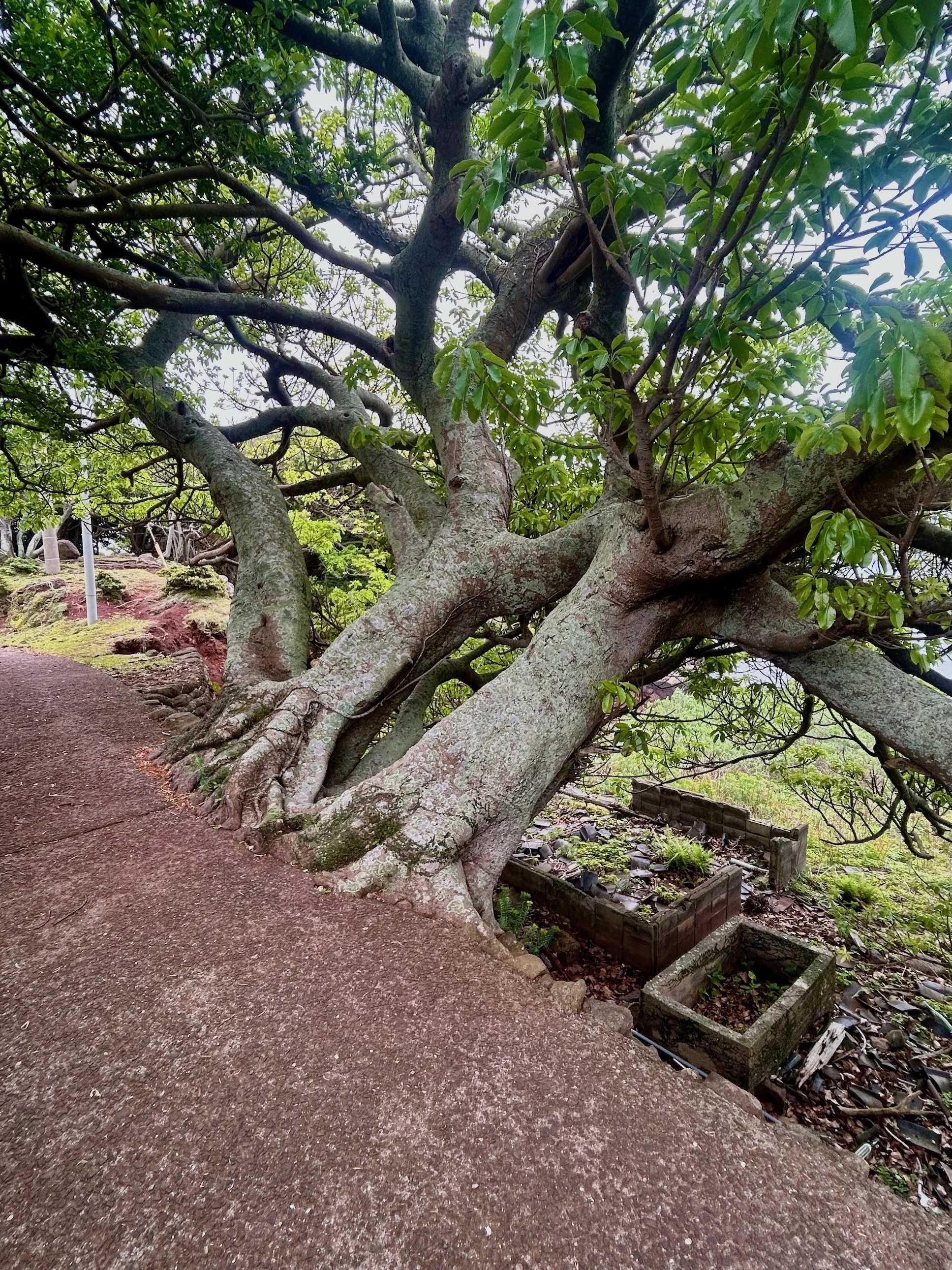
And further up the hierarchy—a 3,000-year-old camphor tree. And if a tree falls in the forest and nobody hears it, it is probably not this tree.
Camphor. A beautiful word. I will use it again.

Camphor trees look like they have spent centuries negotiating with wind, rain, and time. Their trunks are thick, twisted, and hollow. Their bark is furrowed and wrinkled, and their branches spread into a dense green canopy that casts deep shade and fills the air with a faint scent of camphor.

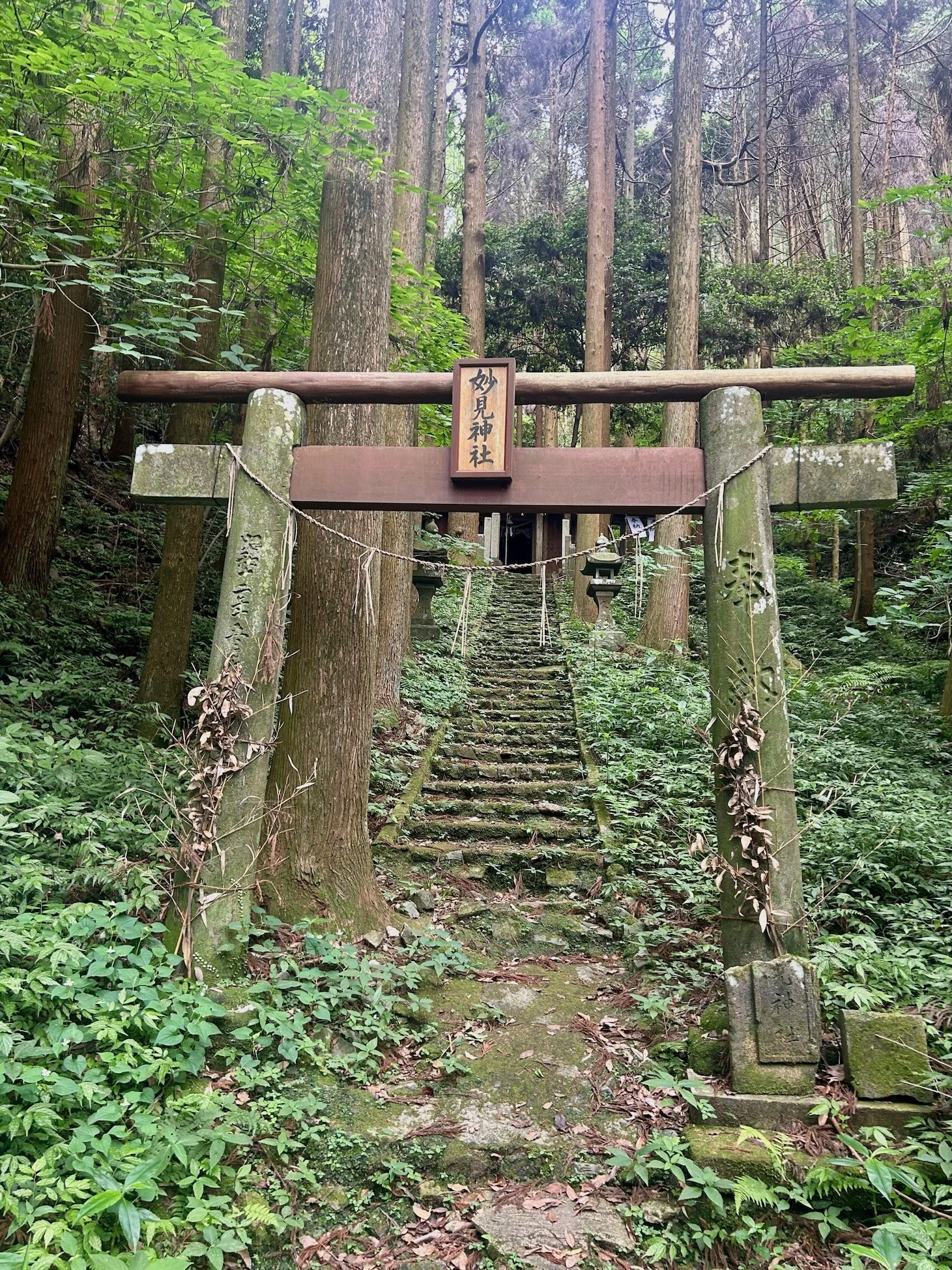
This Methuselah of a tree sits high above, after dozens of steep steps and protected by a rope enclosure, as befits a national treasure.

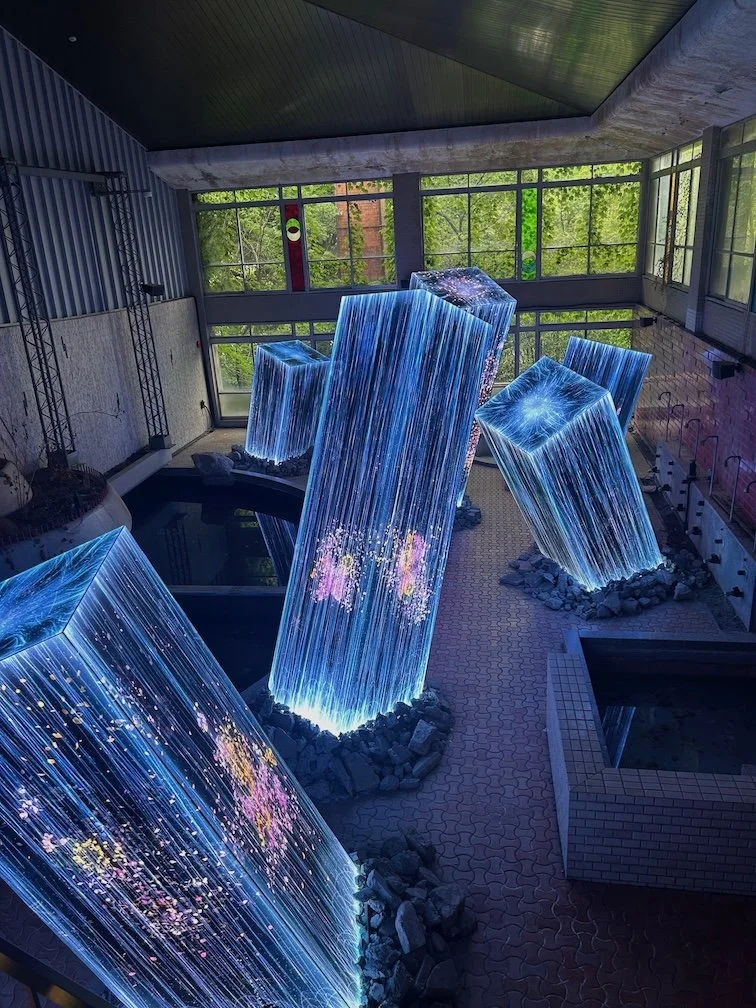
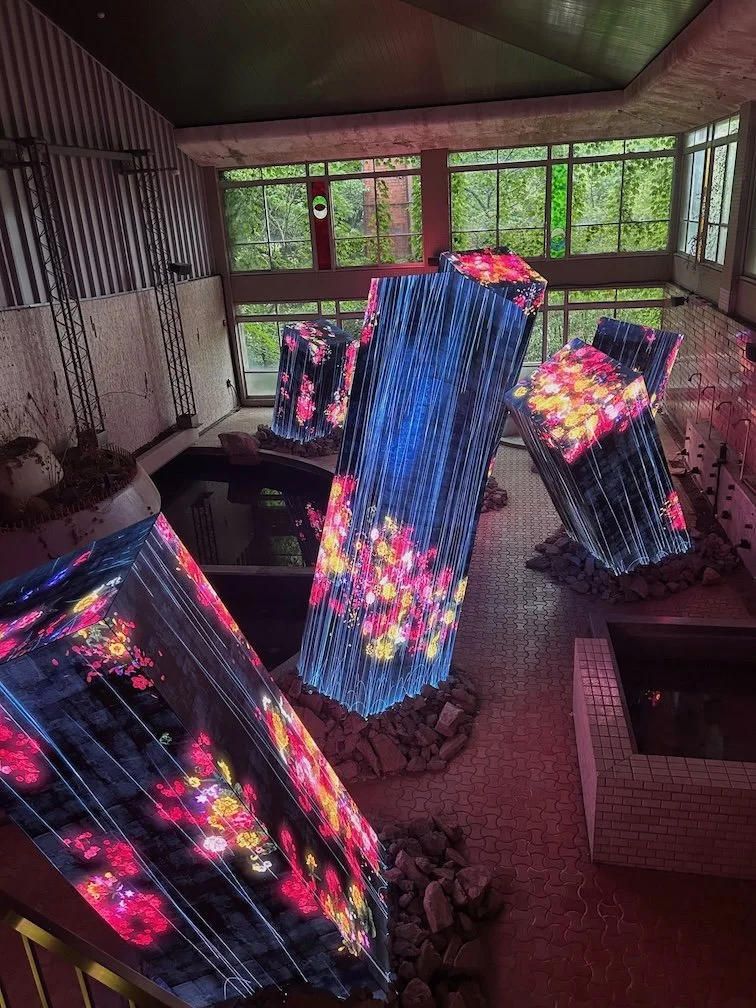
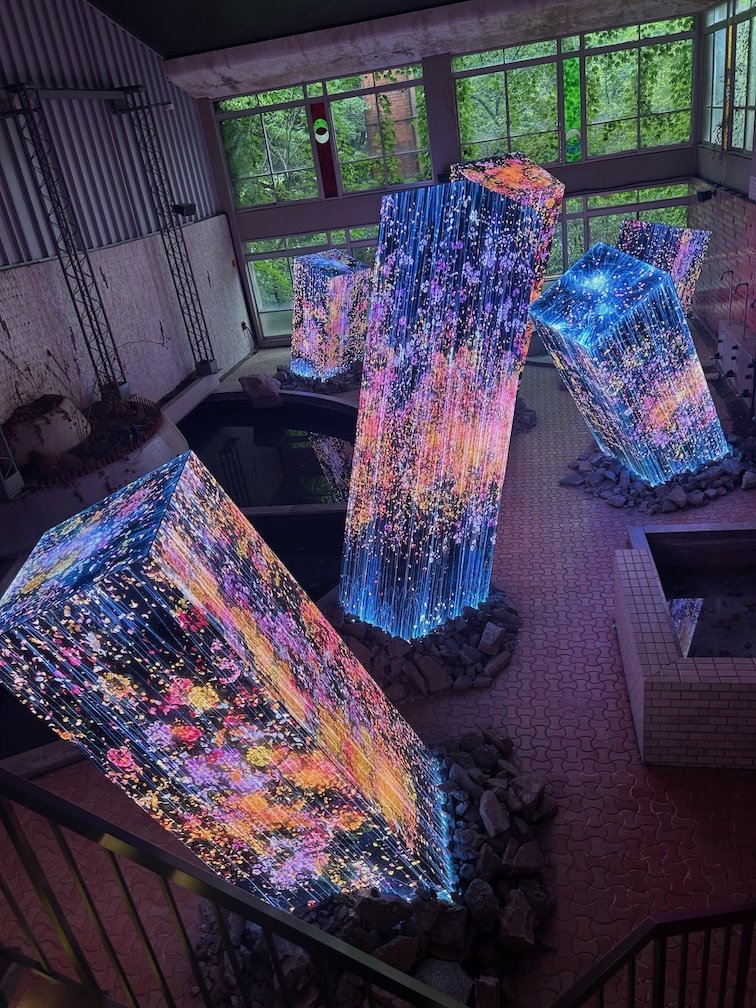
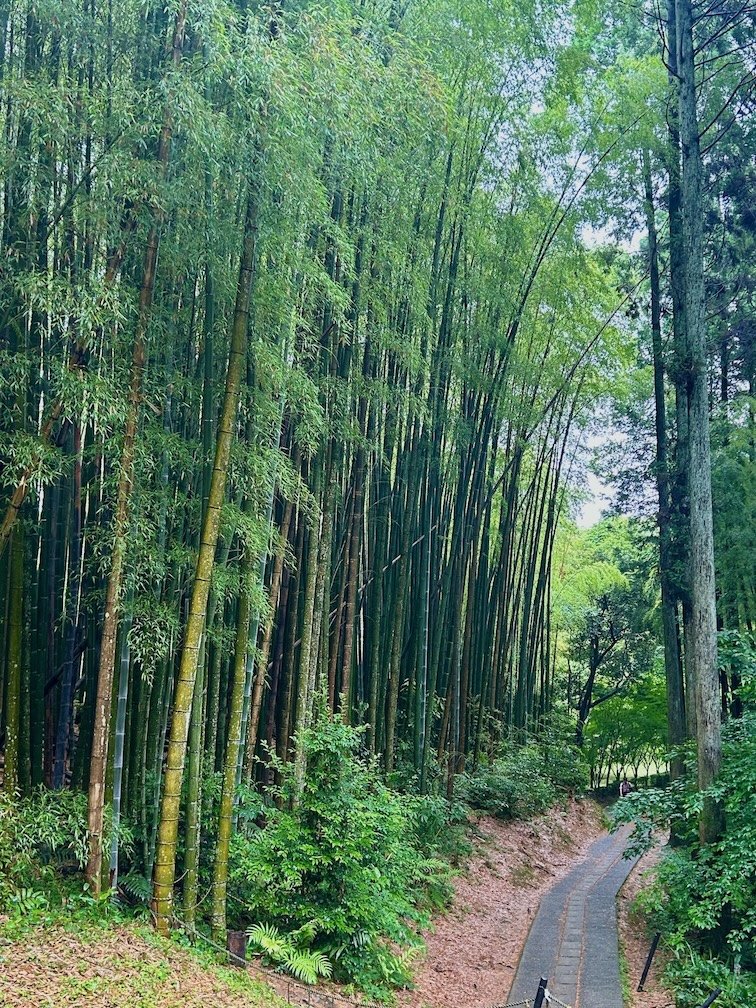
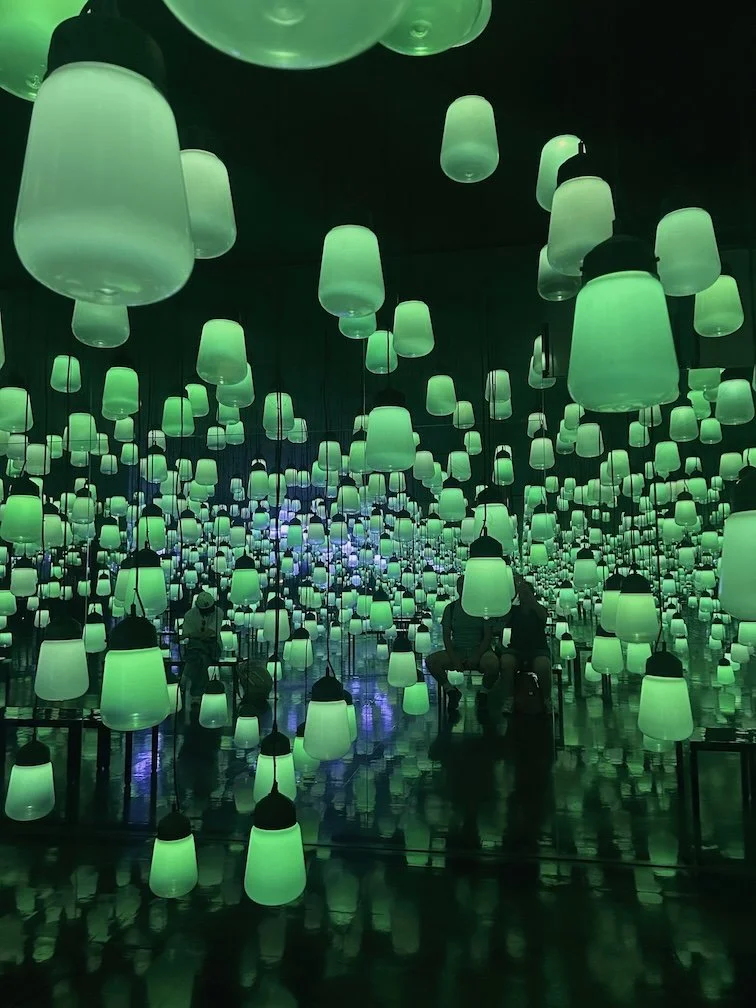
There is also TeamLab's sound-and-light installation in a bamboo forest that shelters an ancient bathhouse. As darkness falls, the entire forest becomes a screen. Trees, rocks, ponds, and stone walls fill with light and sound. Seasons and strange figures appear, drift by, and disappear again, as if out of a dream, until it becomes difficult to tell where the artwork ends and the forest begins.
Photoshop in nature. I loved it.

TeamLab is a Japanese collective of artists, programmers, and engineers that has spent years trying to blur the boundary between nature, art, and technology. They succeeded.

Even our hotel, Kyotoya, feels slightly enchanted. It is built around nostalgia for Japan a hundred years ago—the Taishō era, when the country opened itself to the West while fiercely guarding its Japanese soul.

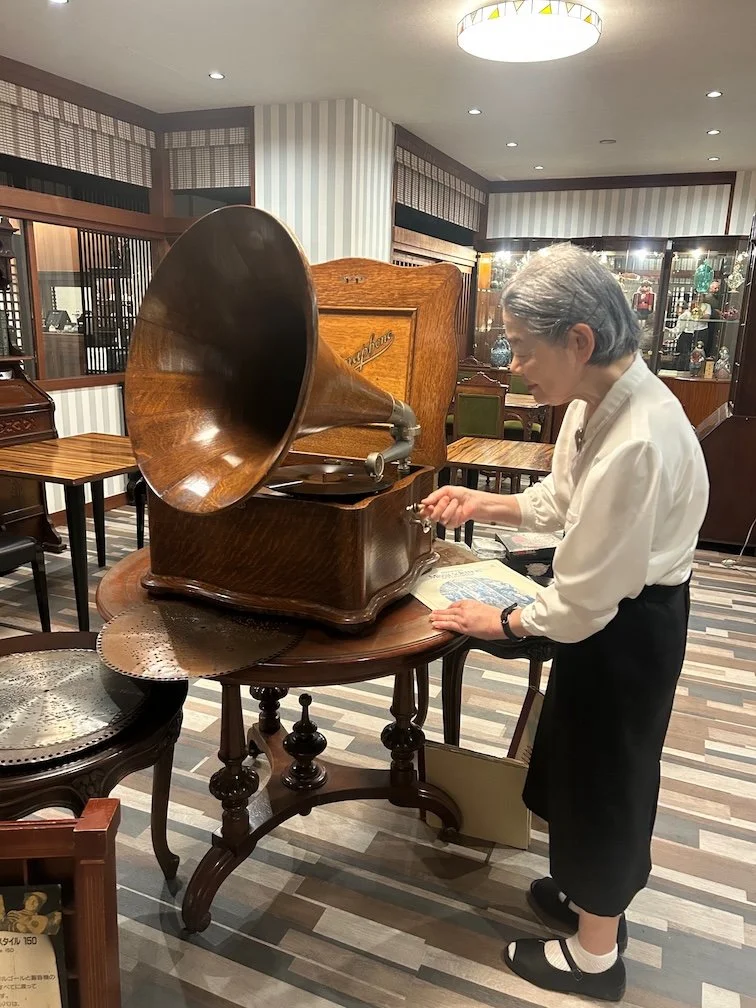
Entering the lobby feels like stepping into a living, singing museum. Old clocks tick in the background, music boxes scatter birdsong through the air, and at the center of the room stands an automatic piano playing itself endlessly. Beside it stands a miniature Japanese lady in a perpetual bow, as though folded from a sheet of origami paper, offering her porcelain smile, with the rhythm of a metronome, to everyone who enters.

The piano reads a perforated paper roll and produces music by mechanical means. Once, this was the height of progress—a way of bringing music into the home even when there wasn't a Japanese pianist nearby. Today, it is simply magic.

Nature is indifferent to our presence.
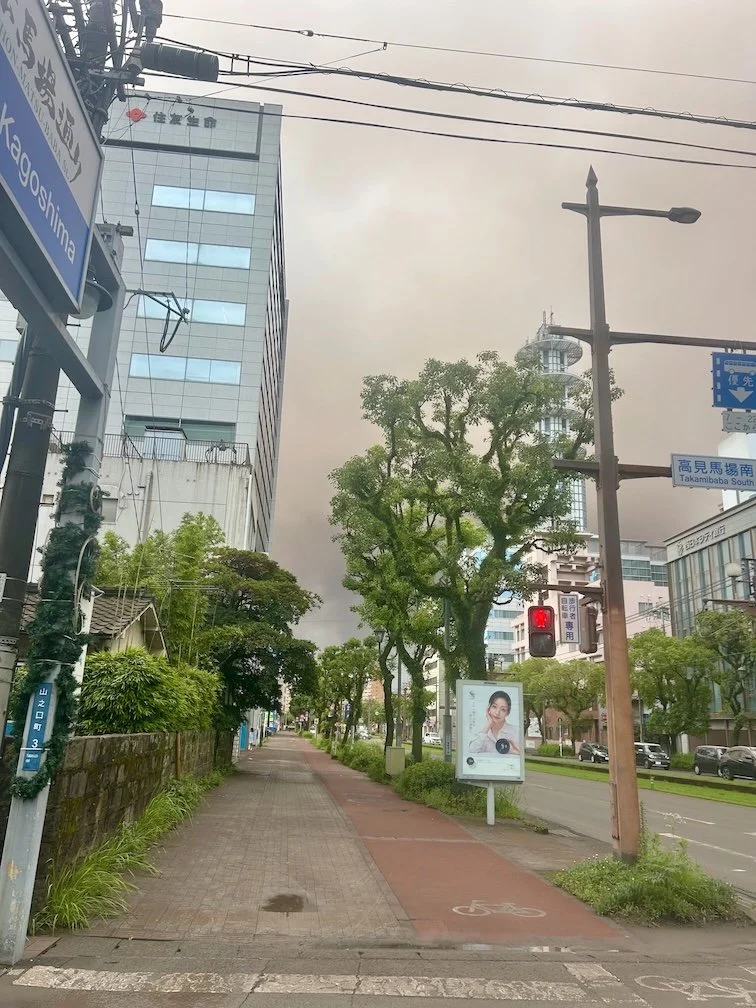
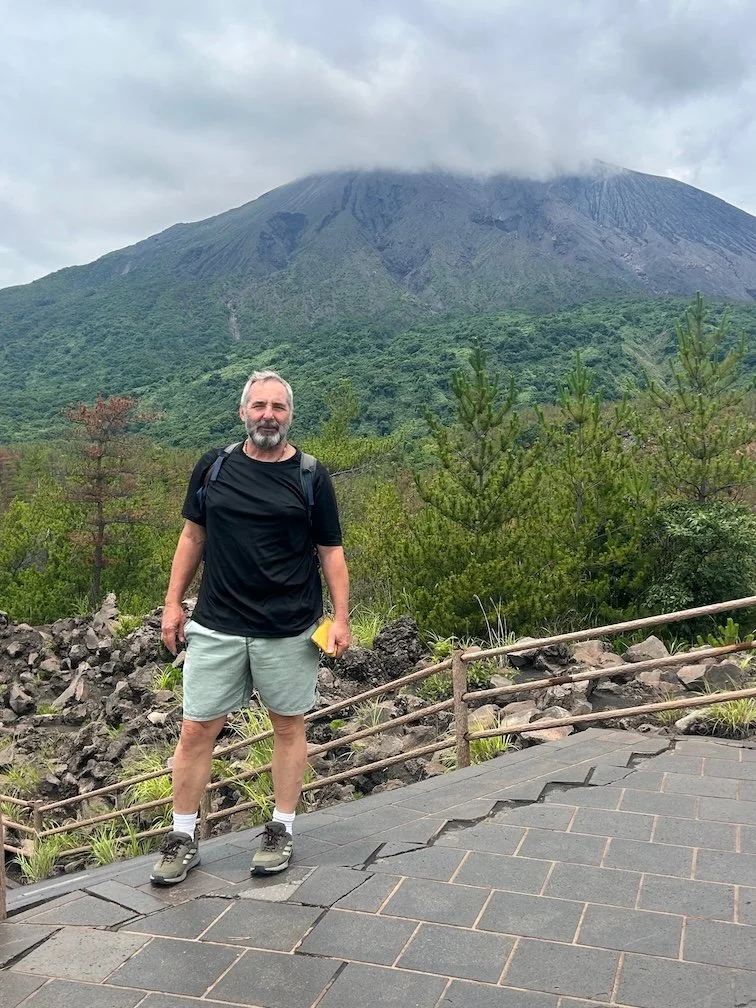
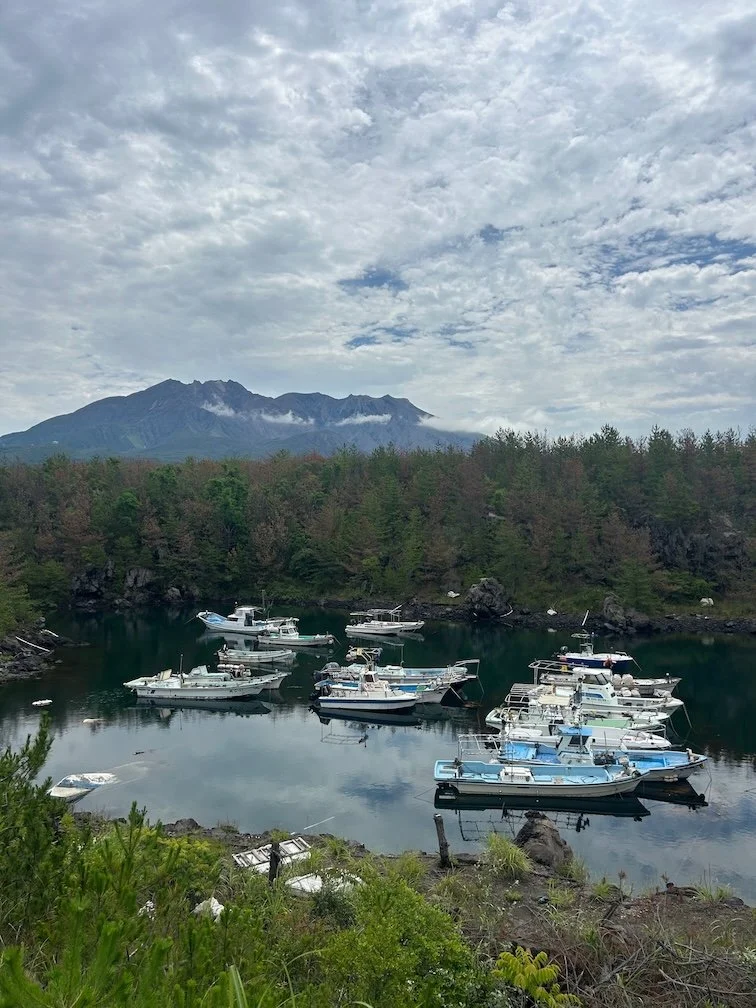
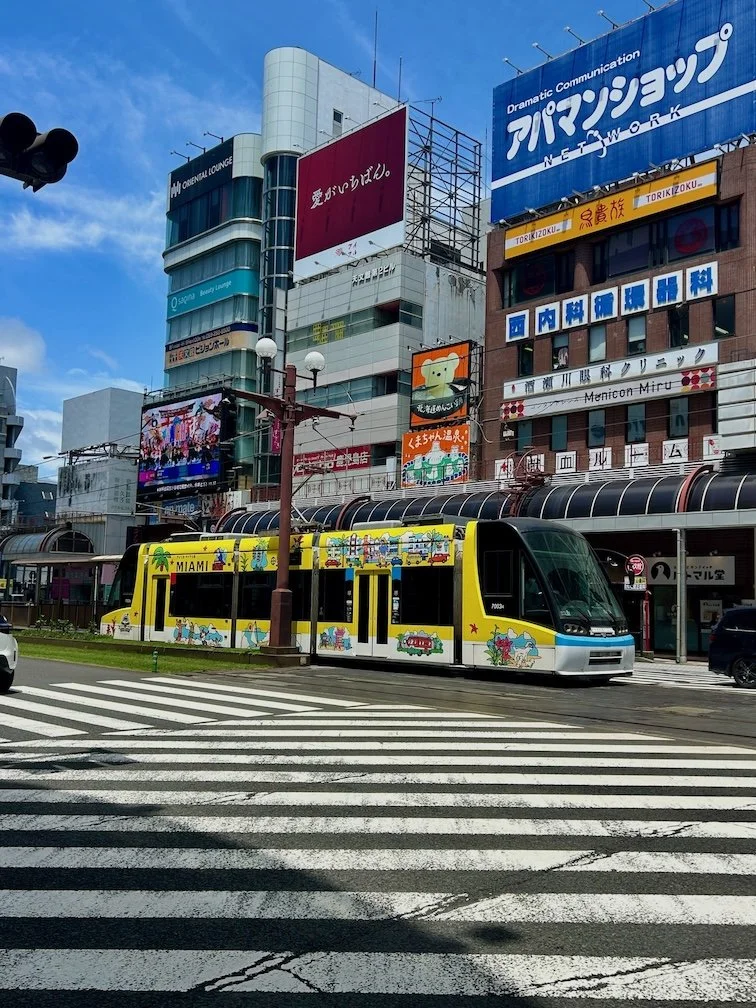
Kagoshima is a city living in the shadow of a natural nuclear reactor. It sits beside a quiet bay while above it hovers—and appears on every T-shirt, towel, and keychain in sight — Sakurajima, an active volcano with deep wrinkles around its ever-smoking mouth.

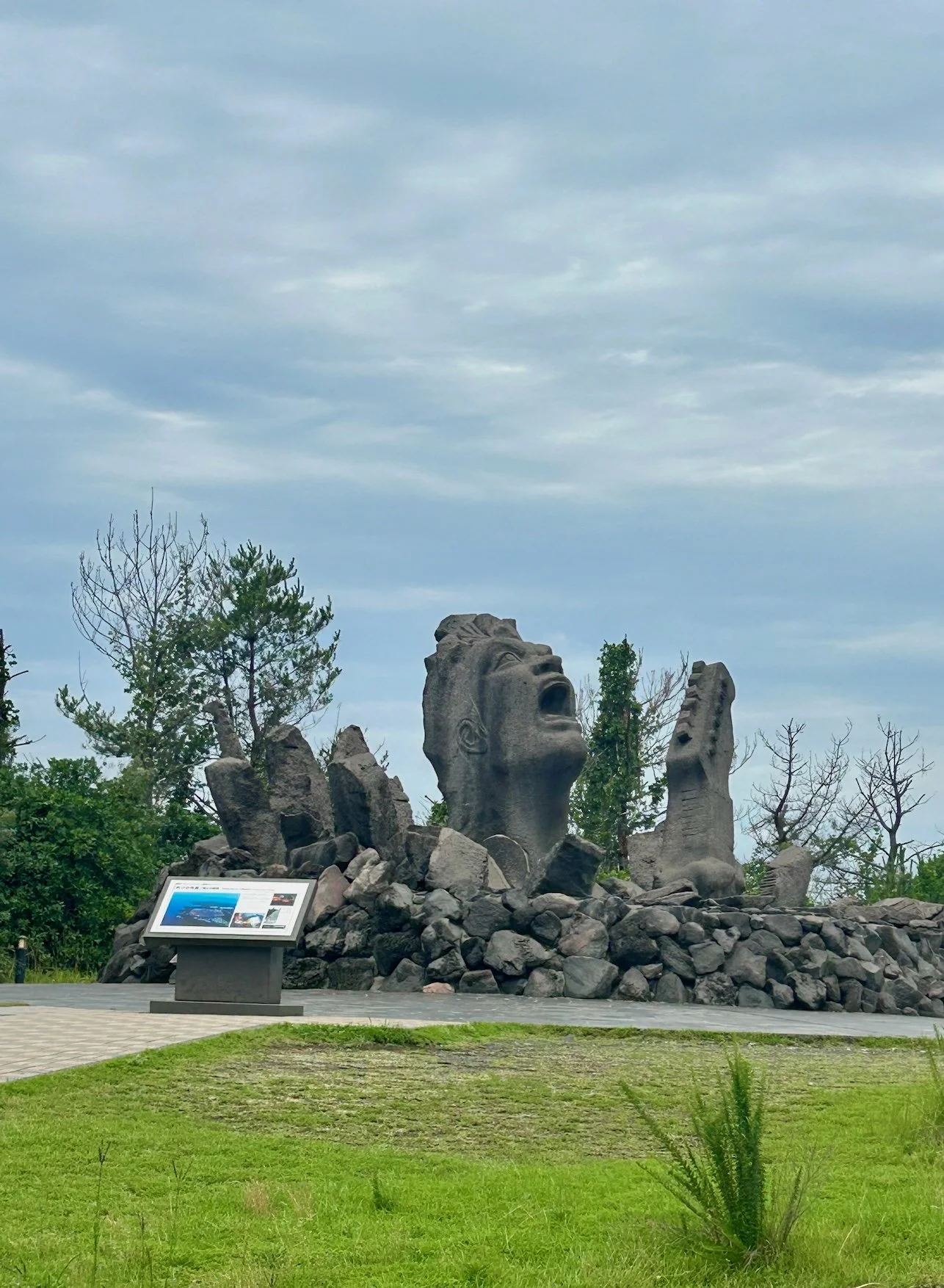
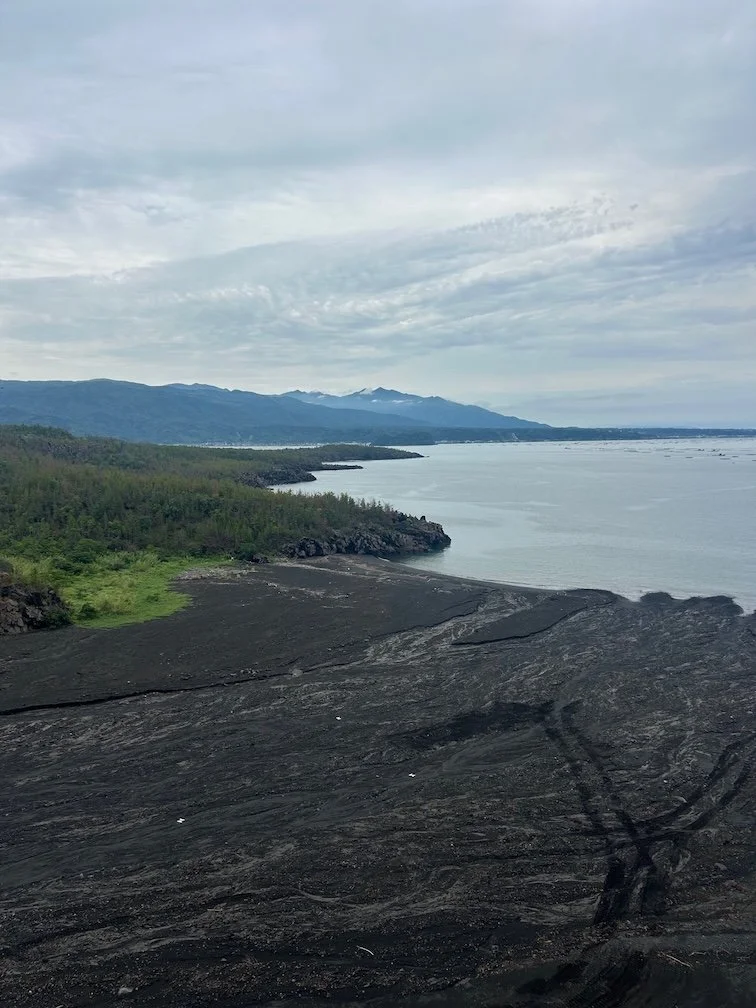
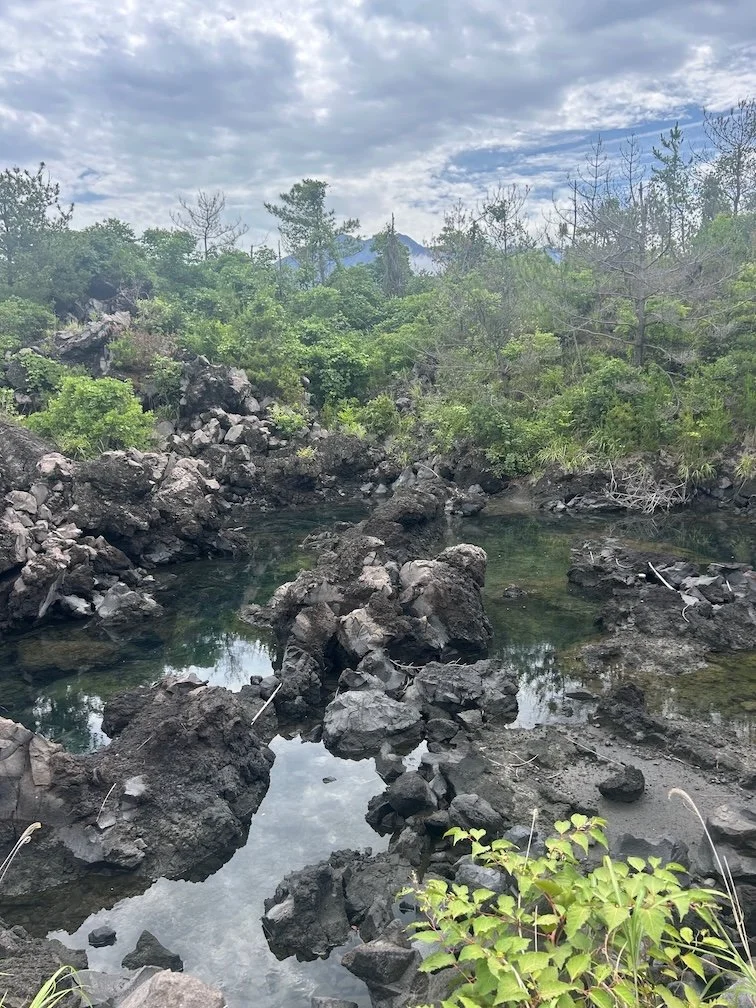
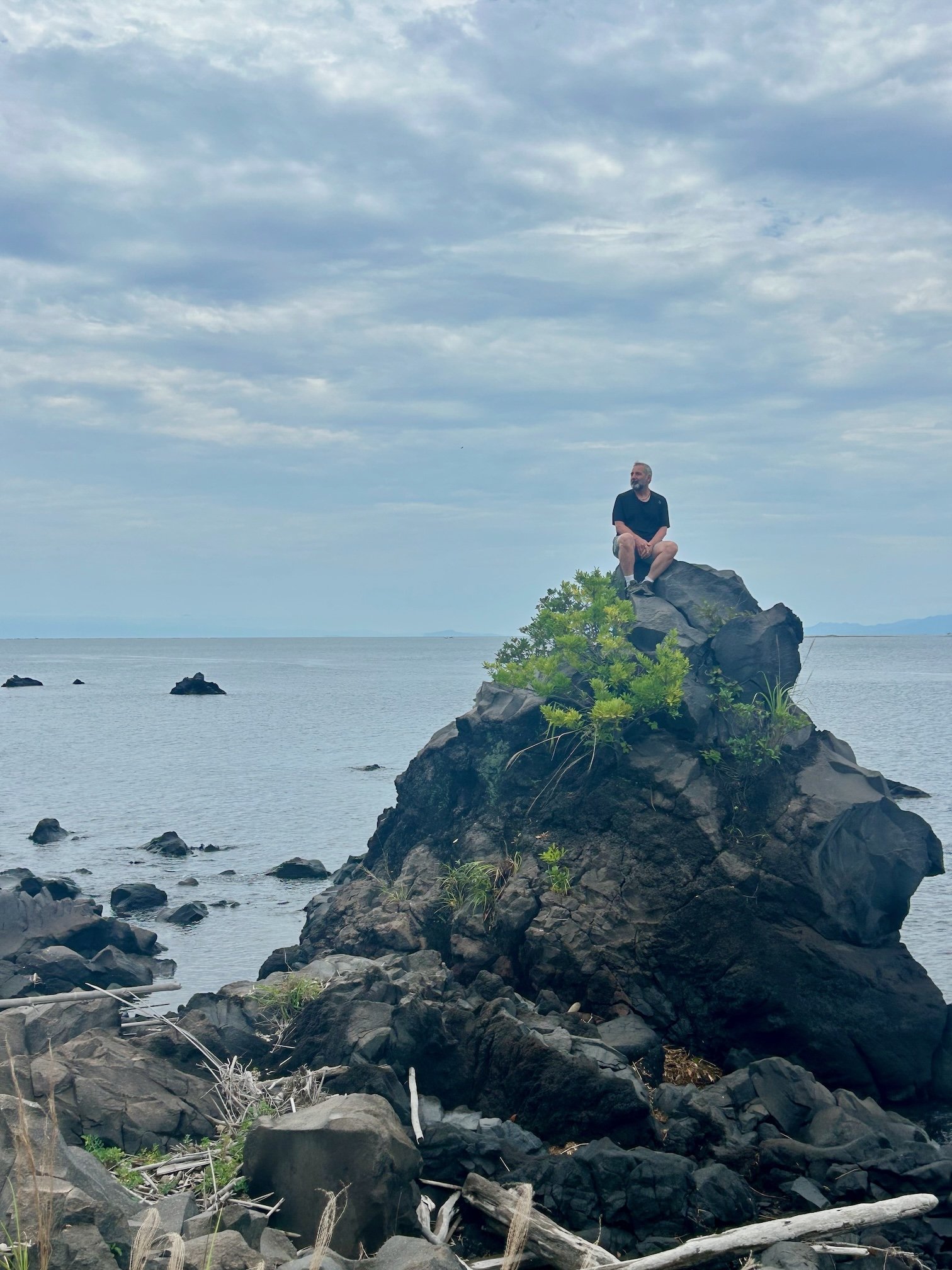
The landscape is raw and unpolished. As though everything is being held together by the force of some ancient substance. Jagged basalt shelves line the coast like a giant washboard.

In 1914, the volcano erupted with such force that lava flows connected it to the Ōsumi Peninsula in Kyushu.

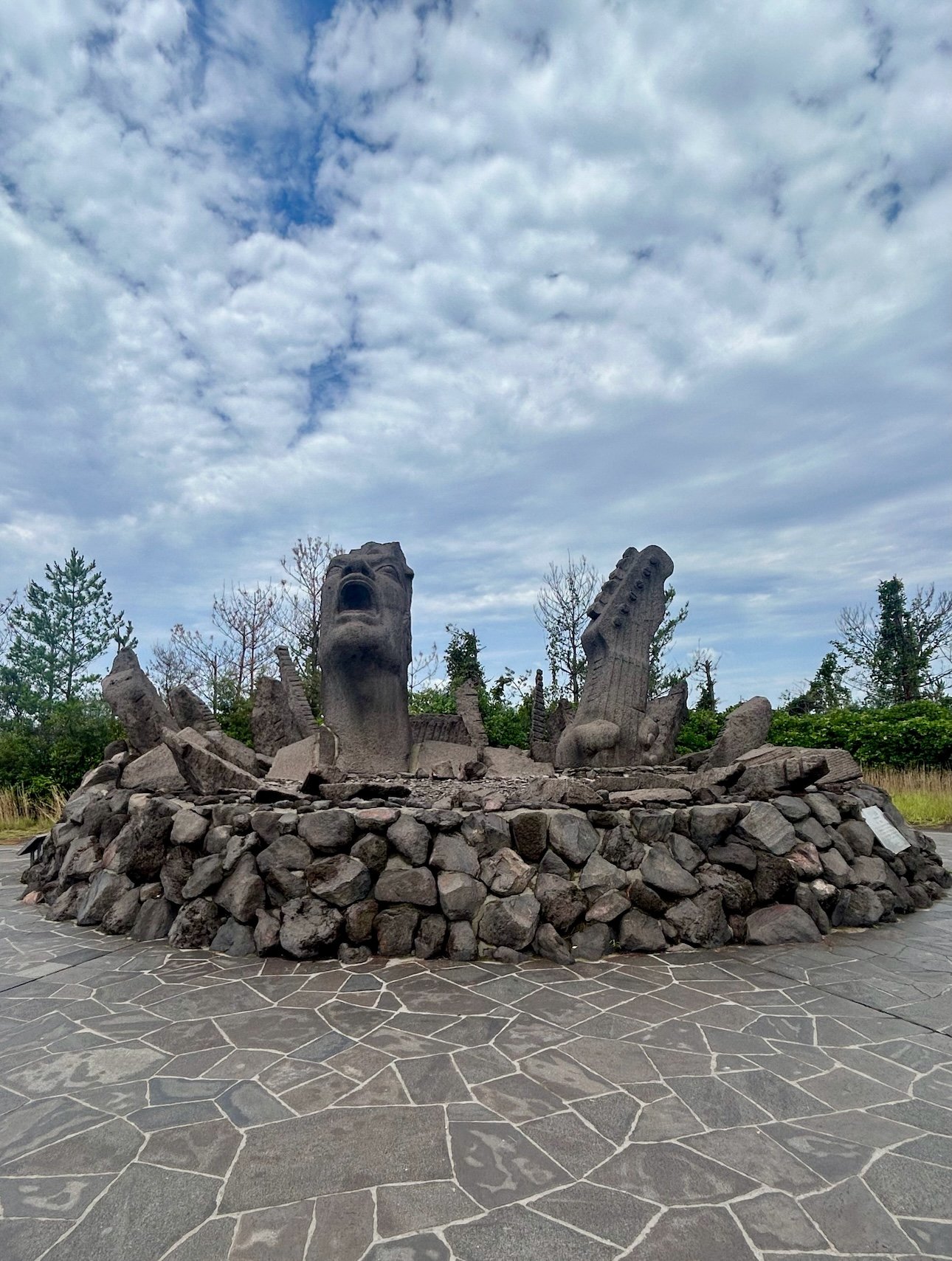
Several thousand people live on Sakurajima at the foot of the volcano, and volcanic ash is part of daily life here. There is something very Japanese in the way they live alongside the threat—a daily coexistence that does not seek to defeat nature, only to get along with it.

I am beginning to think that my father's book ״On to the Puddle״, which sees the world through weather, landscape, and nature, was a kind of spoiler for this journey. Because somehow we have experienced almost every possible weather event. As though reality itself were turning the pages of the book, poem after poem, bringing my father back to life.

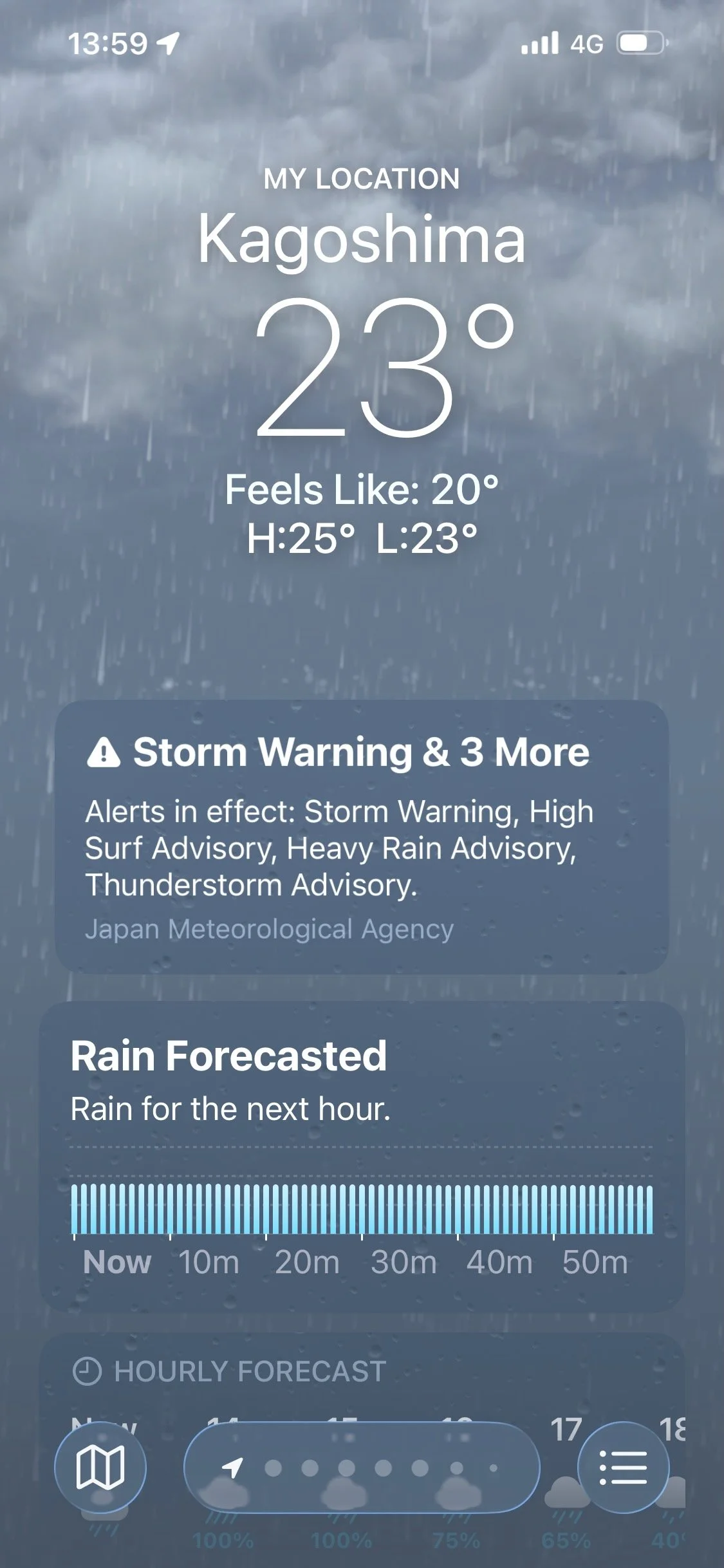
The moment we step off the train in Kagoshima, a typhoon warning devours our urban plans to stroll angajeh through the southern city. Instead, we walk beneath umbrellas among sandbags scattered throughout the streets. The shops are shuttered. Transportation is suspended. A drizzly rain falls charmless, unnecessary, and mildly irritating.
An emergency procedure without prior notice.

Volcanic Forecast
Morning. I look out the hotel window and am startled by a dark reddish-black cloud approaching like the Pillar of Fire. Or the Pillar of Cloud. Or both.

I tell Dror, who is casually tapping away at an algorithm while still wearing his post-onsen yukata, that I think another storm is approaching in the wake of the typhoon. Without waiting for a response, I leave the room and ride ten floors down in the elevator like a storm chaser.

Only when I stand before the enormous cloud and smell sulfur in the air do I begin to understand that this storm is coming from Sakurajima itself. And that this cloud is not about to bring rain. More like nuclear fallout.

It turns out this happens here about once every two weeks. Sakurajima releases a reddish-black cloud of ash that covers everything in a thin layer of dust—cars, balconies, sidewalks. Just like the lines of my father's poem ״When Nature Gets Angry.״ Only here, angry nature is called Sakurajima.
״And sometimes the mountains too
Grow angry, wild—and rumble through
They open wide a fiery mouth
Flames and smoke are rushing out
A volcano is its fearsome name
And in its rage, it roars in flame״

And speaking of clouds.
There is a Japanese expression known as ״Kokura‘s Luck
The city of Kokura was the primary target for the second atomic bomb in August 1945, but clouds and smoke covered the city. The plane circled overhead again and again, unable to identify its target, and continued on to its secondary target—Nagasaki.

Since then, the expression has become a metaphor for someone who escapes great disaster through a chance turn of events, without ever knowing how close they came.
Sometimes history is written by generals. And sometimes by a cloud.

And if Kokura symbolizes a fate determined by chance, then the kamikazes of Chiran symbolize a fate consciously chosen. Between chance and choice stretches the entire human story.

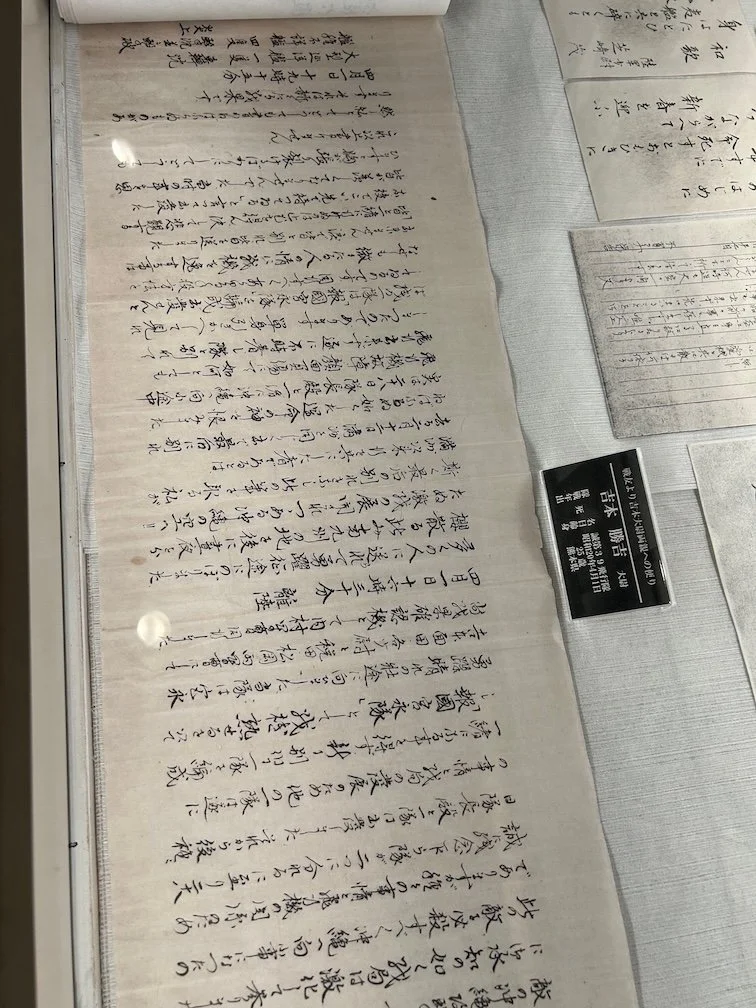
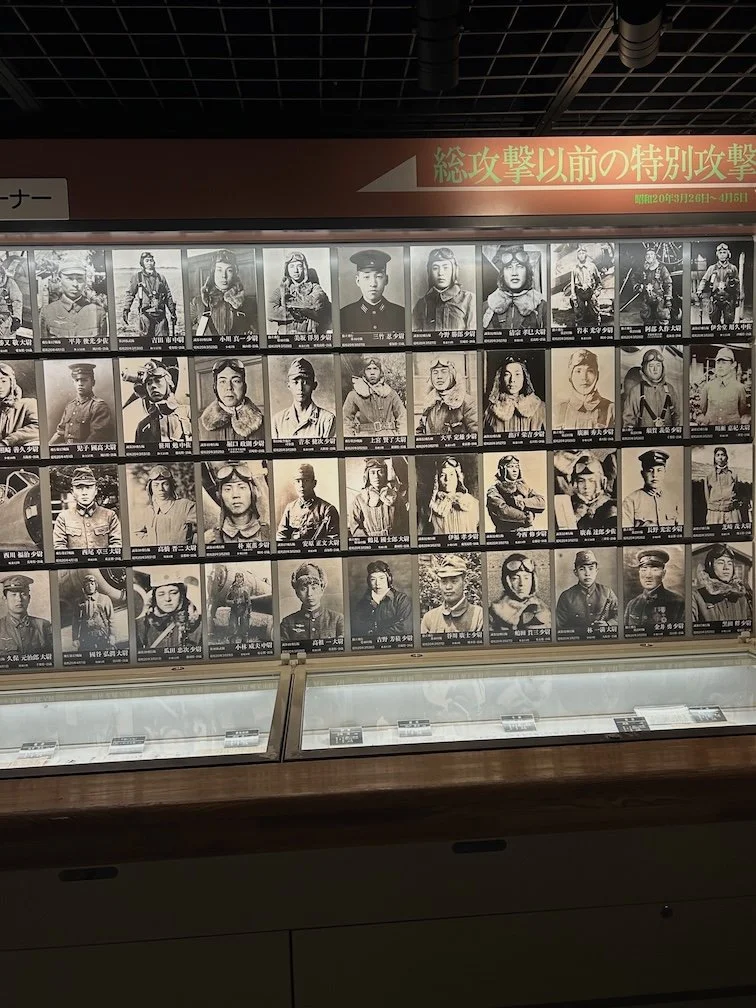
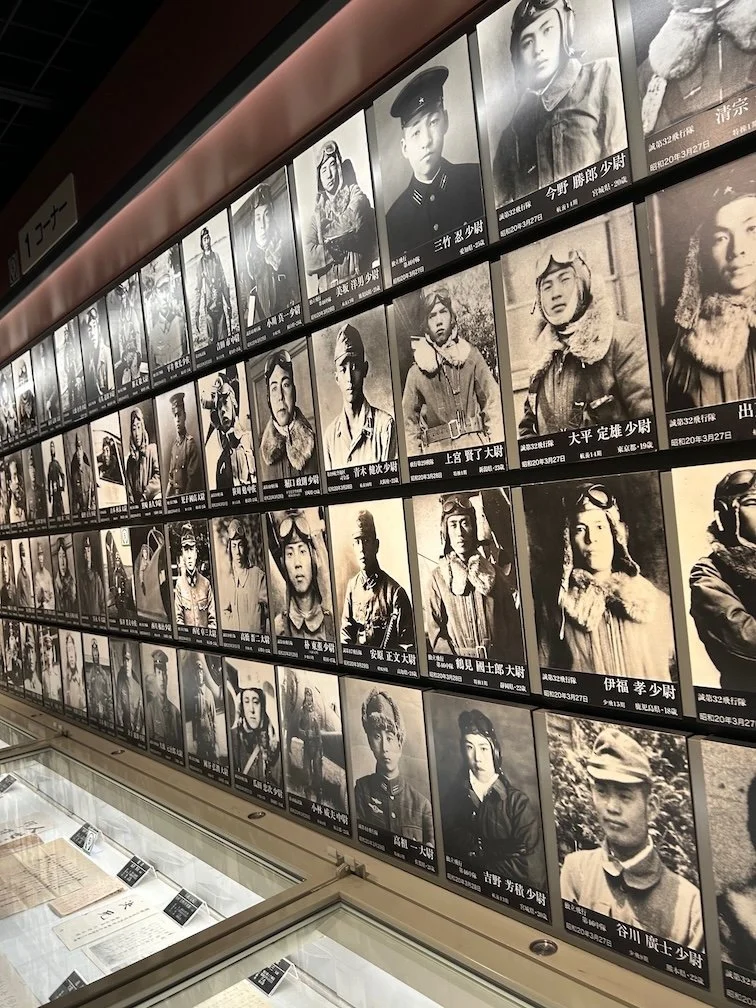
Chiran is a quiet town where one of Japan's most painful chapters was written. From here, in the spring of 1945, hundreds of kamikaze pilots departed on missions from which there was no return. Most were young men, barely twenty years old.

At the Chiran Peace Museum, one encounters faces. Not a concept. Not a myth. Faces. Hundreds of photographs, final letters to parents, short poems, personal belongings. ״Kamikaze״ ceases to be a word. Like those insects drawn to light until they lose their bearings. It becomes a collection of young lives cut short.

The sadness seeps through. The memorial also awakens memories of October 7. We shake them off. When we step back outside, reality whispers itself anew through the gods of the smallest details.

And these are they:
After successfully ordering food at a restaurant, a sense of relief settles over us, as though we have solved the daily puzzle.

I love the fact that you don't need to buy a bottle of juice to use a restroom. There is a veritable inflation of public toilets here. Really—since when did toilets become a luxury?

Asking "How old are you?" is an integral part of introducing oneself. They do not hesitate to ask me either. I round down. Slightly.

At Canal City, at the entrance to a build-it-yourself toy store, faces are scanned to prevent shopping addictions. You are allowed to buy a toy only once a day.

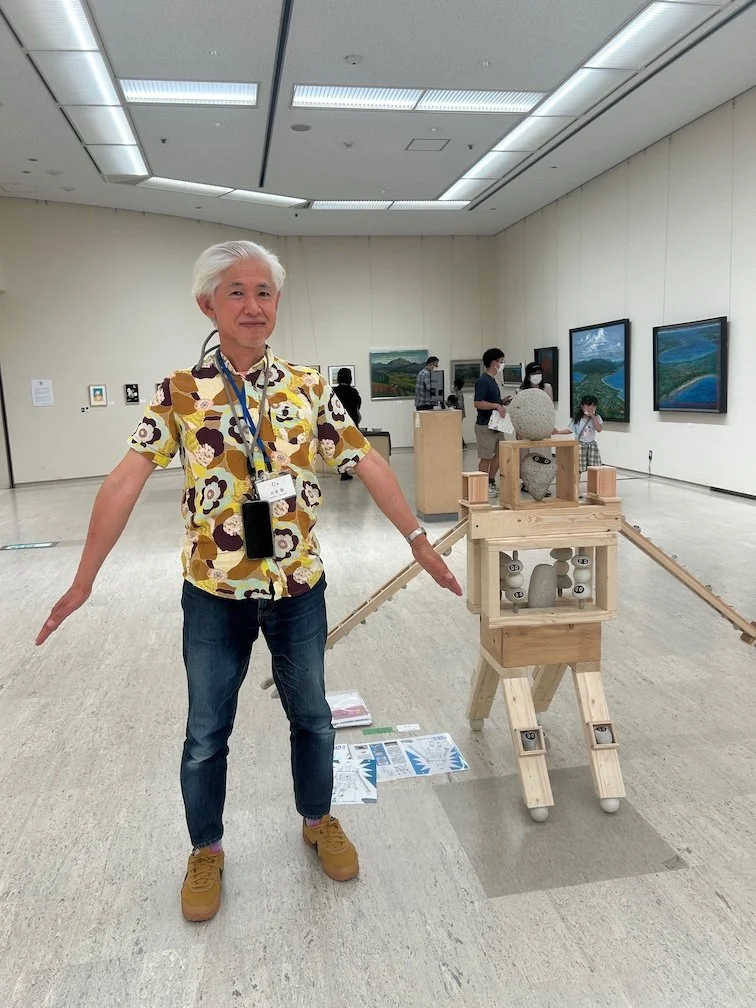
In a gallery, I saw a man searching for a telephone number in a telephone directory. Who said rare breeds no longer exist?

All the things that are missing here—I do not miss them.

Japanese puddles make me believe in fairy tales.

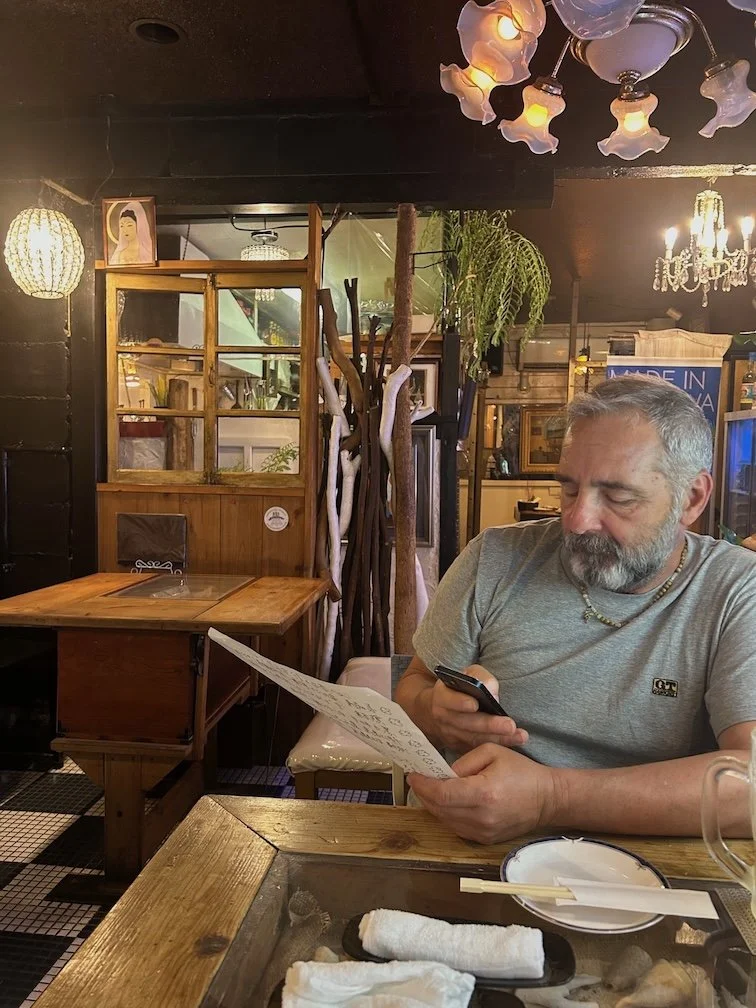
For two evenings in a row we eat at a restaurant run by a woman who looks like Zelda the poet.

The Human Factor
Kagoshima, June 2026. We are excited about Shalev's concert, a celebrated harpsichordist of the Berlin Orchestra, who moves from concert hall to concert hall and has arrived for a series of performances across Japan.
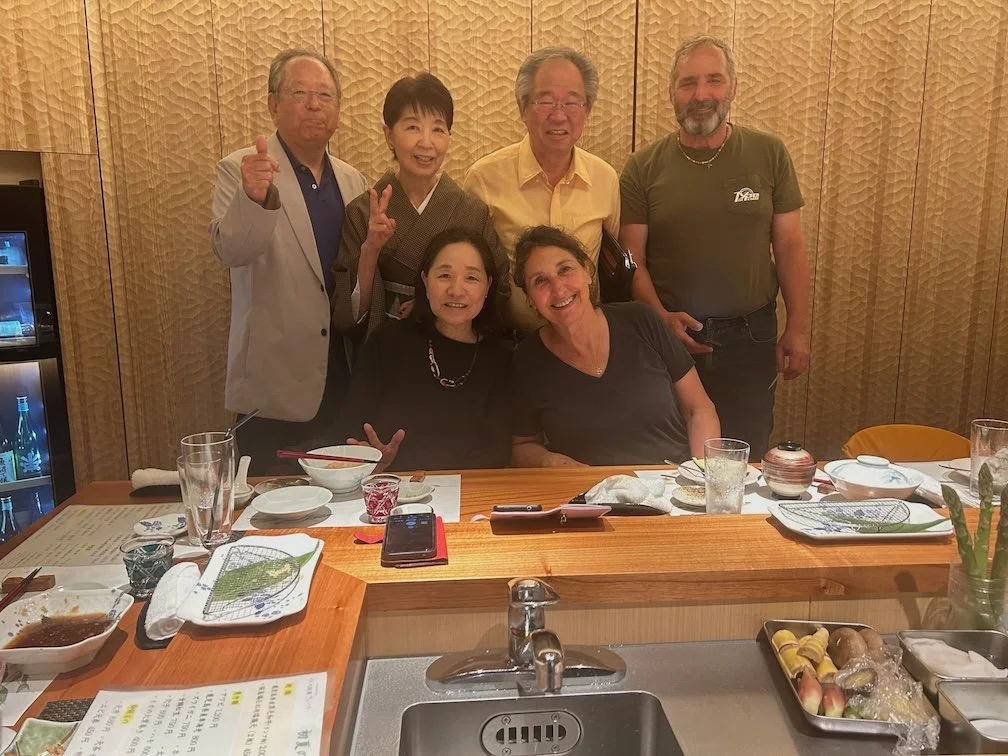
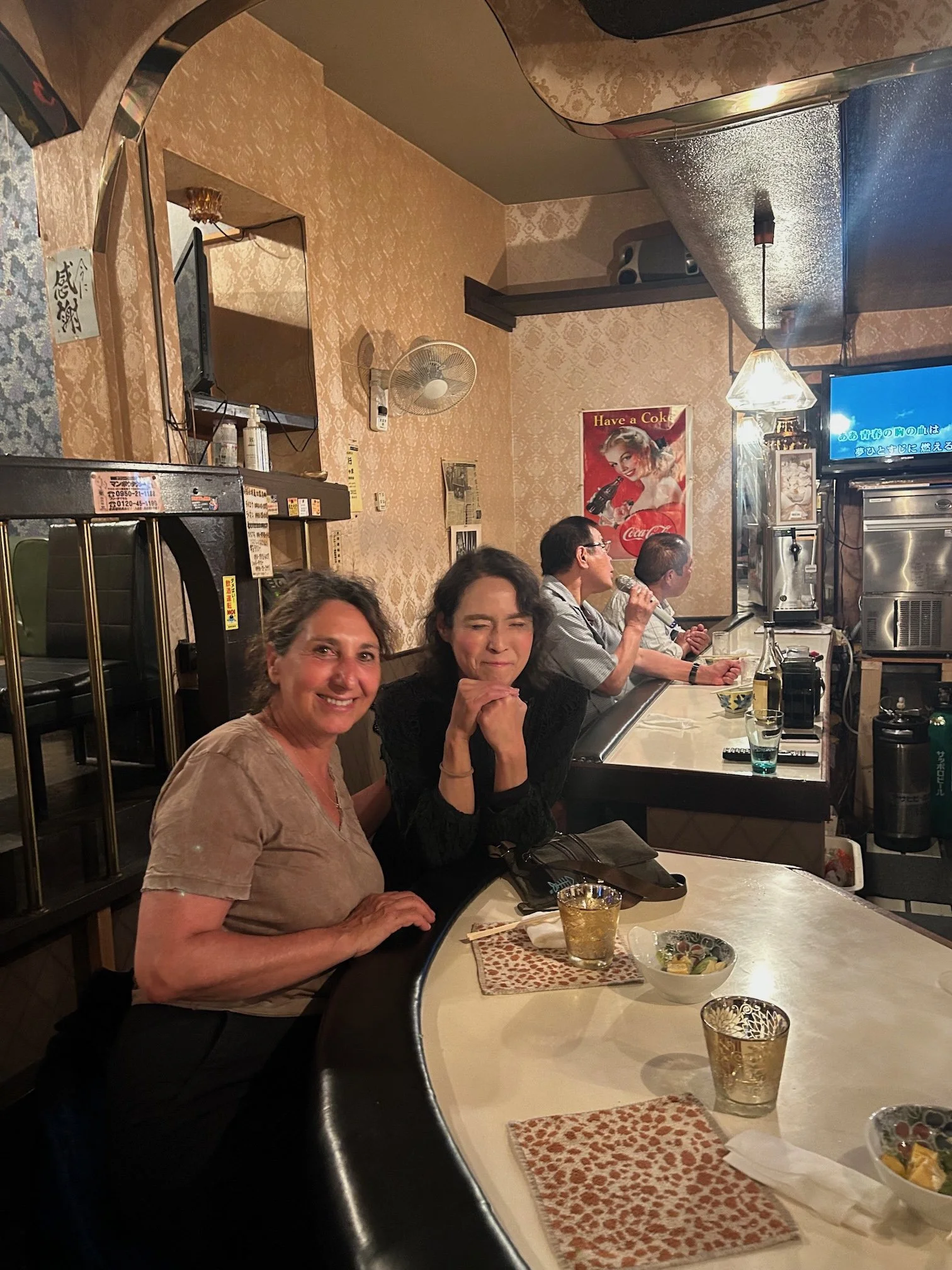
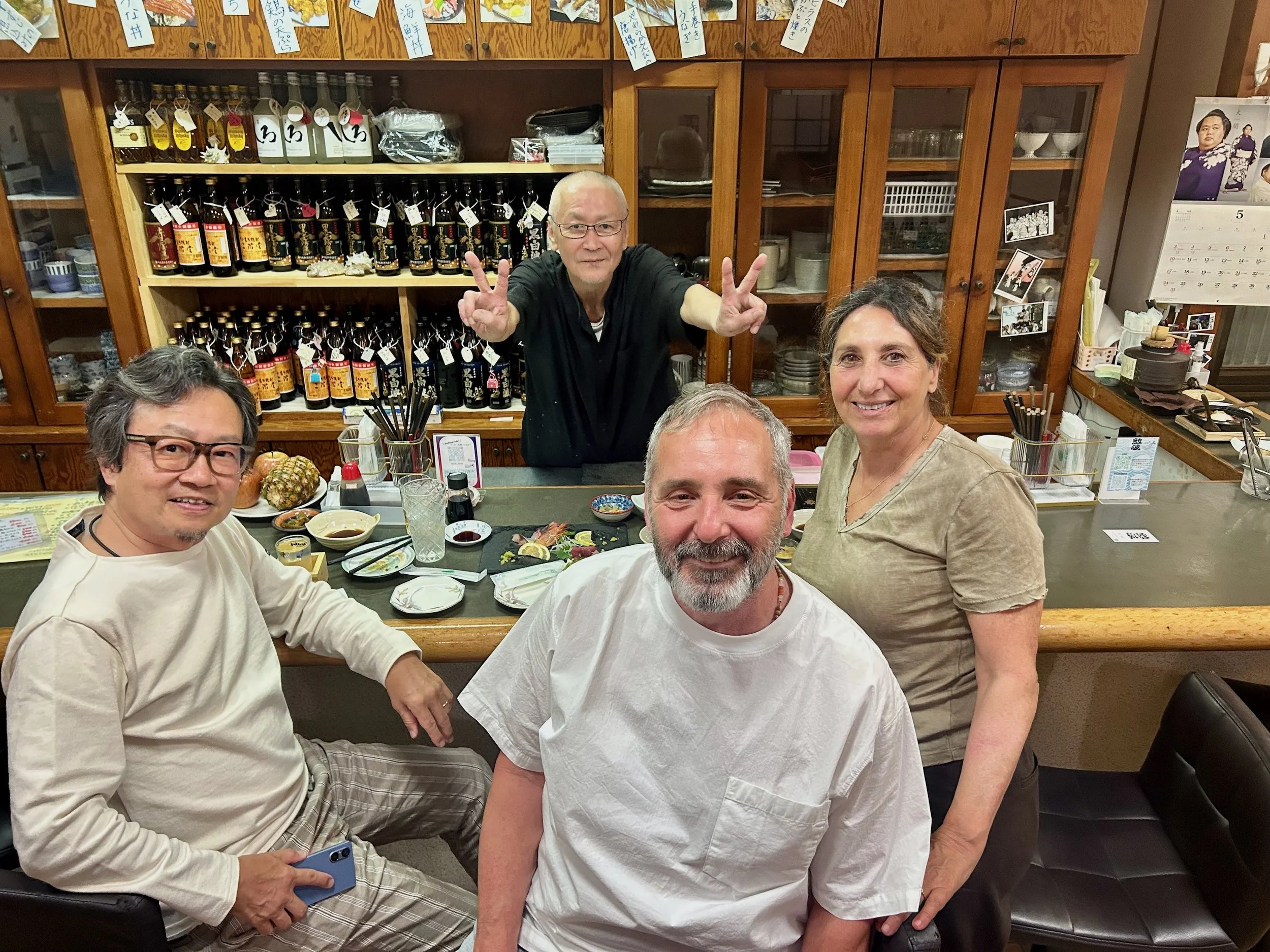
We travel especially to Kagoshima to hear the concert, and also to meet up and chat over a drink in a local izakaya.

I asked myself—and even thought about it—why we get so excited about meeting a friend abroad, sometimes even more than we do in Israel.
Perhaps because we're not meeting him abroad. We're meeting him in a place he is passing through himself. A space that is not geography but rhythm. A moment in which distances lose their authority, the boundaries between here and there soften, and something in us truly opens. We stop arguing with the world and begin listening.

Because in that meeting, as we move toward one another, we set aside radical thoughts, loose ends of uncertainty, and old disagreements. All the chatter about the country, the war, the cost of living, and everything taken for granted hums in the background like mosquitoes. And we become modest. We discover that poetry can be made not only from ourselves, but also from our seemingly unpoetic homeland.

Grand Finale
"When you walk, just walk. When you sit, just sit. But above all, don't dawdle." (Some Zen or other.)

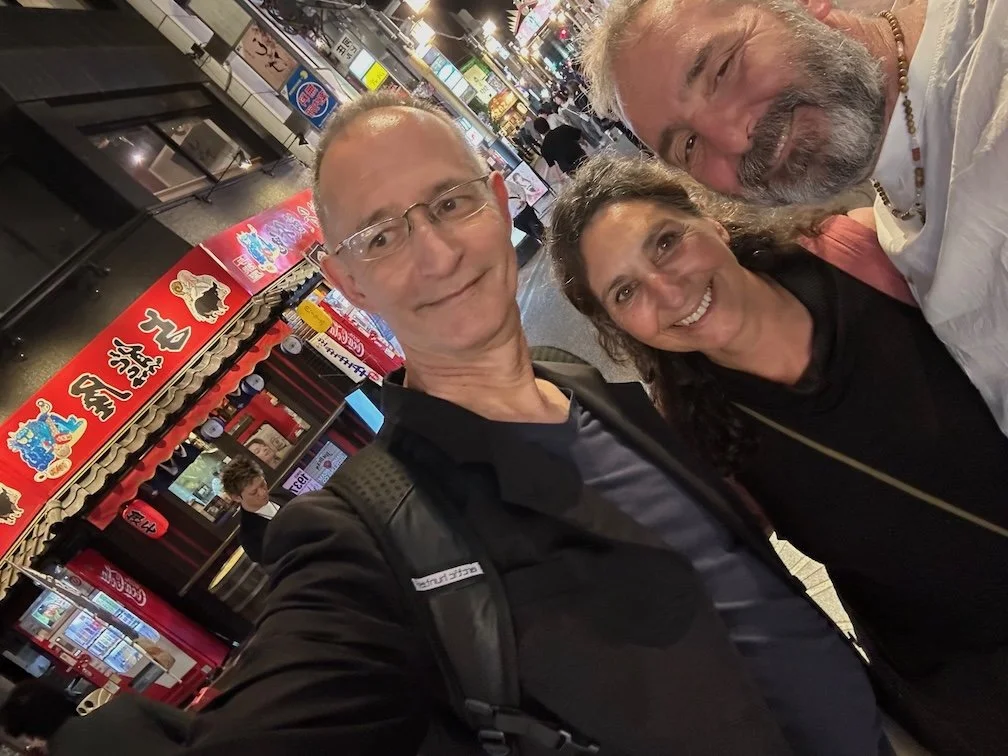
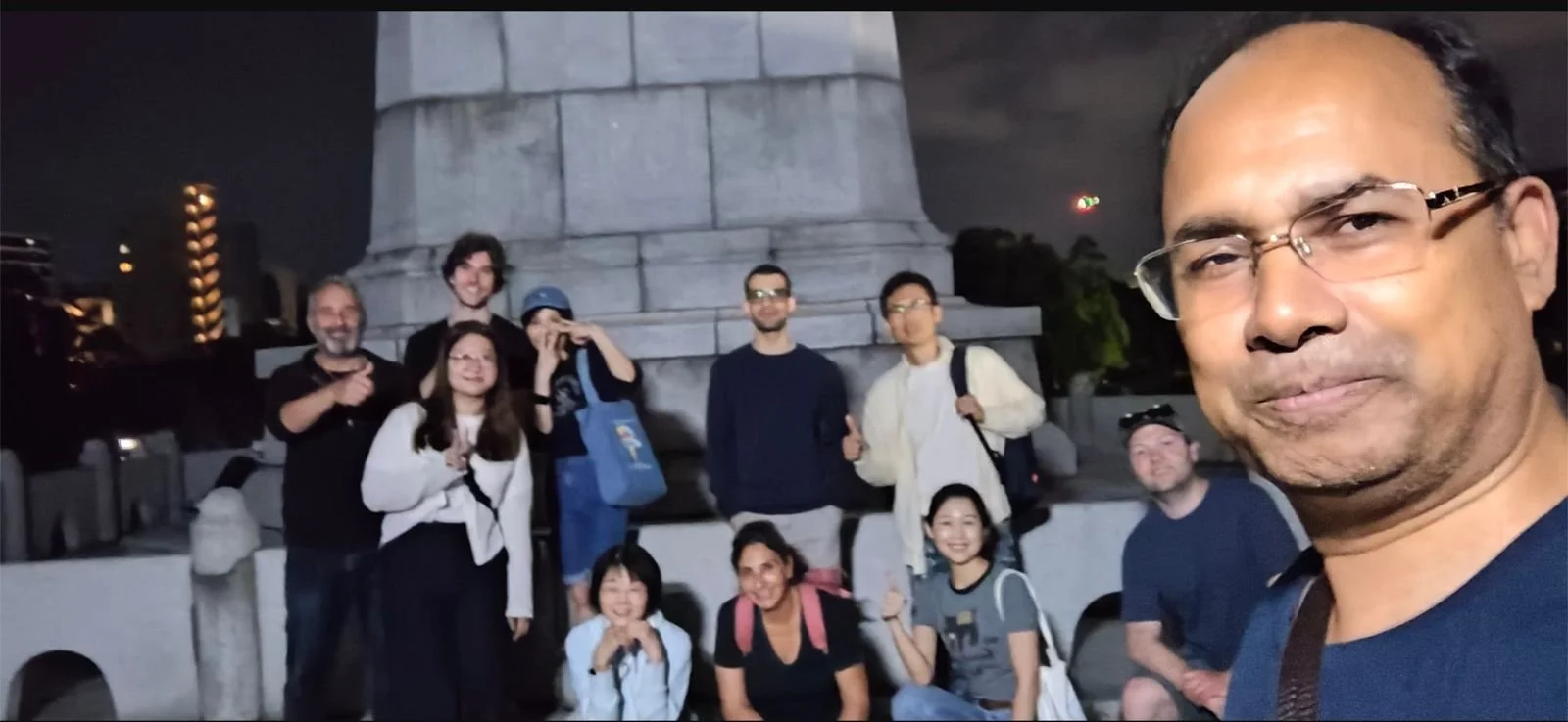
It seems everyone says it in their own way. Even the Bengali we meet again in a park in Fukuoka for a Walk & Talk, as we walk four laps of the park with him, alongside old friends and new, and take one ridiculous selfie.

And if you ask what truly makes me set out on this journey through Japan—I have no explanation.

Thank you, Sigalit
The Station Dwellers-Japan

Listen to The Station Dwellers-Japan

A sea breeze lands on me out of nowhere. Just enough to ruffle a dog. Only that, together with it, comes a heavy subtropical heatwave. Not nice.

We continue by fast ferry to Sasebo, a port city with a mild identity crisis.
On one side—Japan. On the other—Americana, thanks to the US naval base operating here since the end of World War II and the famous Sasebo Burger, which arrives in sizes that fit less with Japanese minimalism and more with an inflated American ego. And it turns out that hanbaga is a hamburger in a bun, while hanbagu is a patty served on a plate. I order hanbagu. gu gu.

At the Toyota agency we pull out a fan of licenses.
The clerk scans, studies, staples, and occasionally widens her eyes. Sumimasen! A small click on the iPad and into a conversation that doesn’t quite start, an Avatar-translator joins in behind a Covid mask, explaining that we won’t be able to get a car as the international driving permit wasn’t issued within the last year.

Surprisingly. Or maybe not. We both breathe out in relief, as if someone just removed our tail. Now it’s just us again, the road, and whatever is still unknown.

Sometimes freedom arrives precisely when a door closes—even if it’s only a paper partition.
Sayonara, Toyota.

With Backpacks on our shoulders, we turn lyrical.
Dror says he feels we’re on a migration route, without explaining where to.
I say I’ll come back slightly different, without explaining how. Only that Japan feeds my hungry receptors—hungry for cleanliness, for quality, for silence, for attention to detail, and for a kind of beauty that doesn’t need to shout to be seen.

Movement through space brings us closer, pushes us away, and confuses everything in between. Communication improves and language leaves its schizophrenic state of scattered words and becomes more functional.
No singular or plural, no masculine or feminine. Conversation flows somewhere between what I know how to say and what they try to understand.
Emoji for advanced users.

We move between shifting landscapes and people.
Sea Japanese and mountain Japanese, city Japanese and rural Japanese—and above all 120 million mushrooms caps floating high above it all: shrines, bamboo forests, feng-shui waterfalls, and mountains like paper-cut scenery.

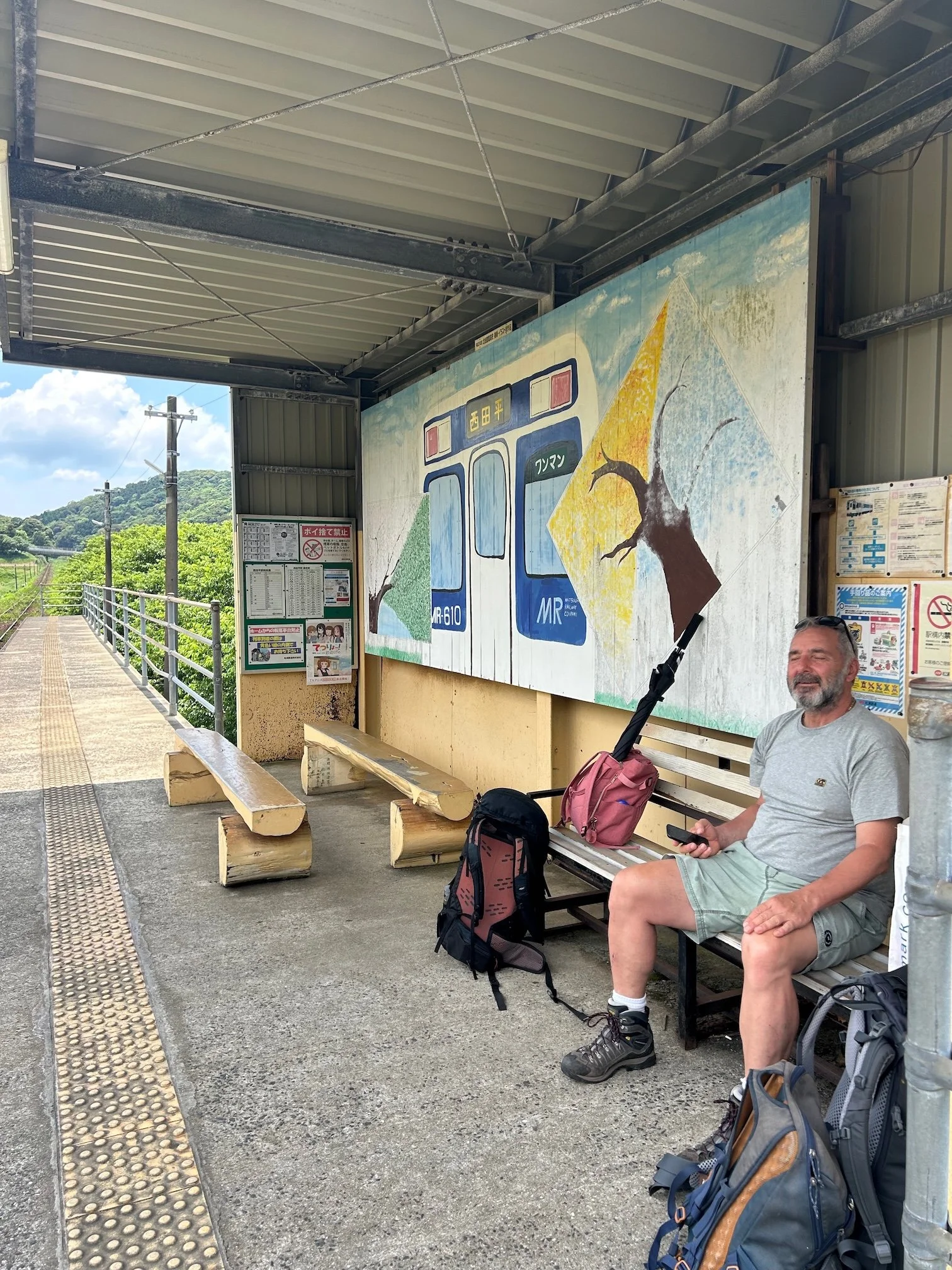
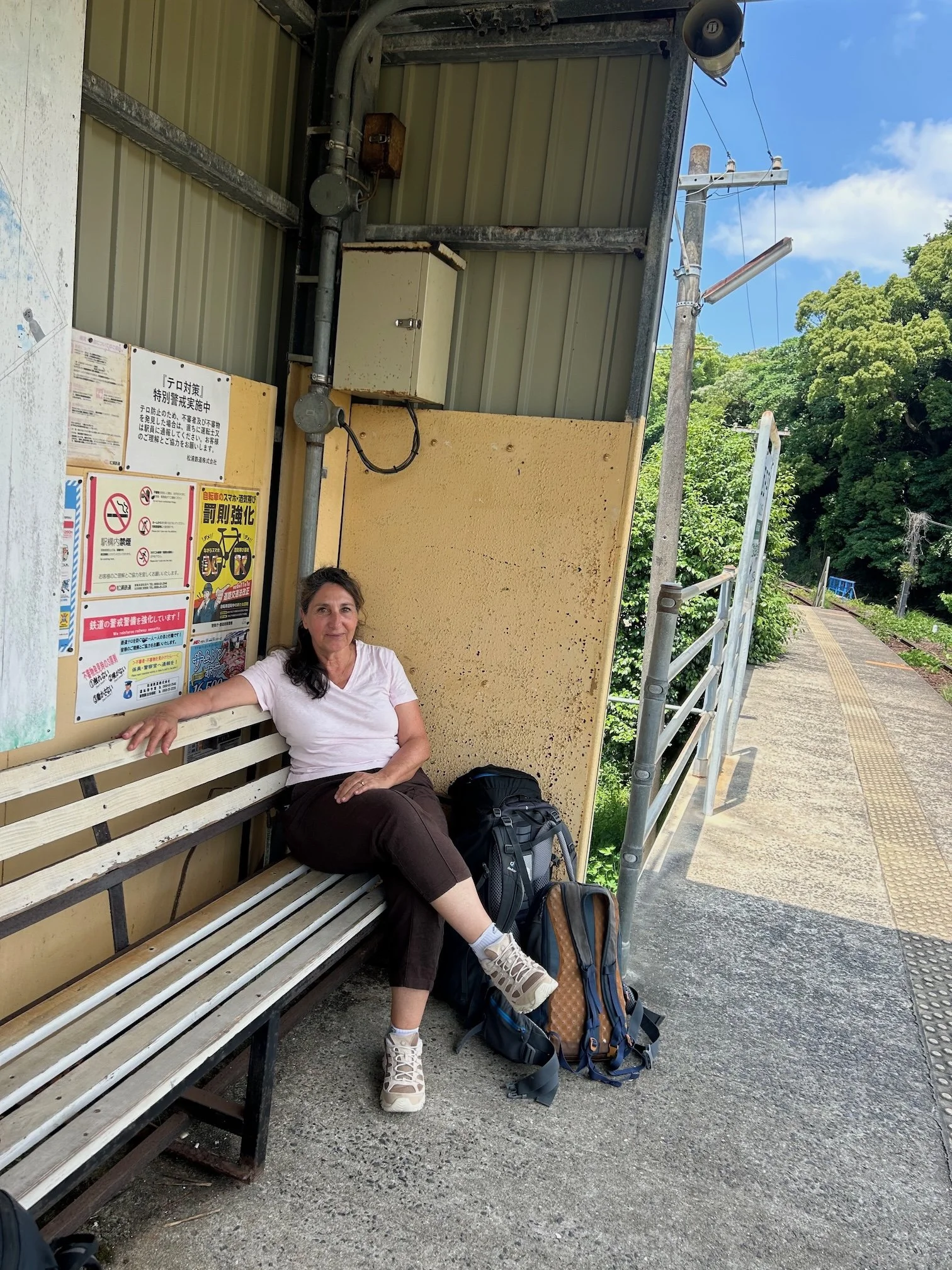
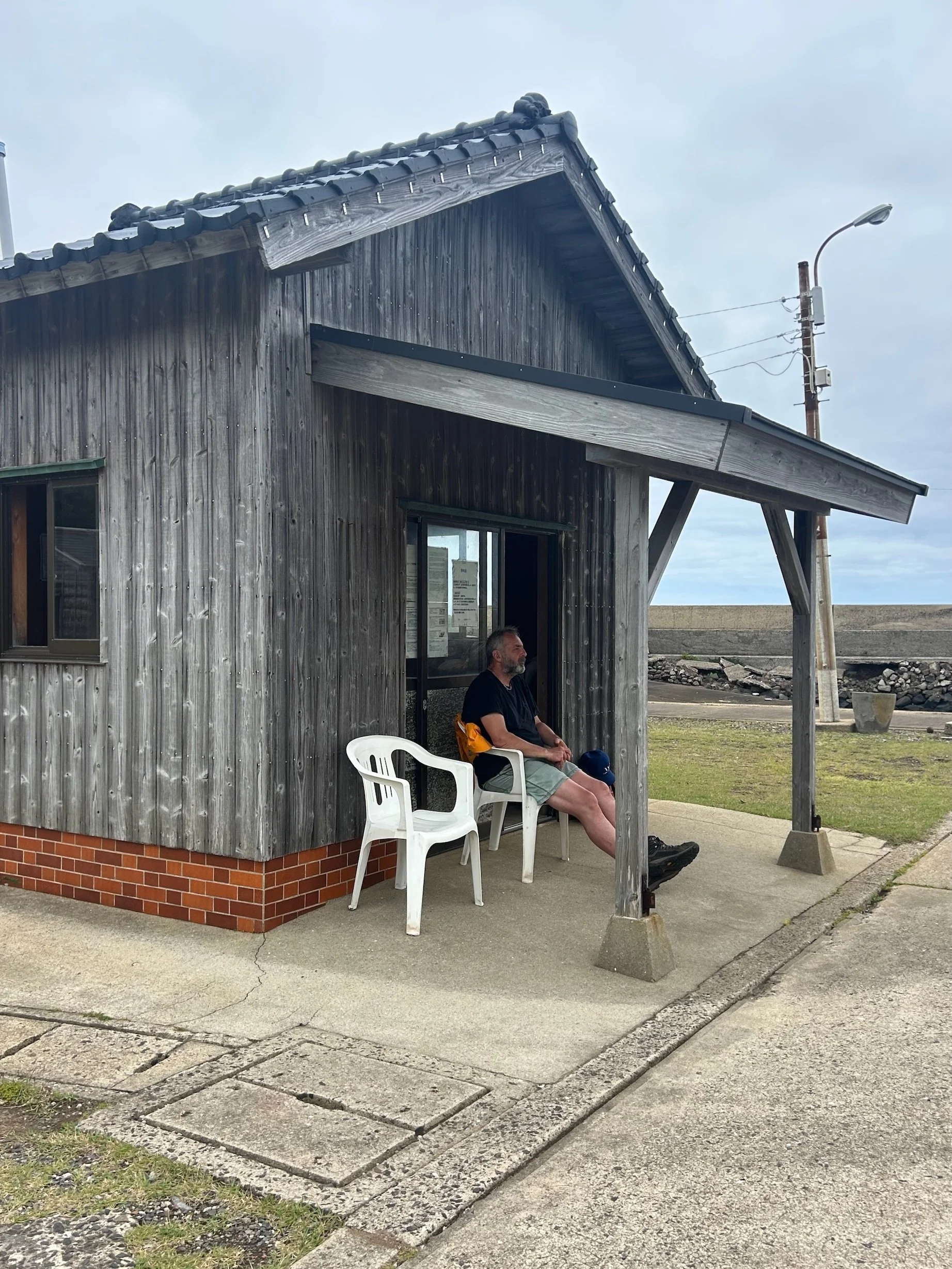
We get off for an overnight stop at Emukae, a tiny town built around a  tinier train station, which consists of a bench, a track, and a notice board with mugshots of wanted crooks. 

Once, during my romantic period, I thought these were photographs of missing persons—lost boys who left their homes for a Norwegian forest and never returned. Now I understand it is both — wanted and missing.
Pity. It could have been a beautiful story.

On the way to our guesthouse, an elderly man—of the Blue Zone type—stops us and asks us to wait, disappears for a moment, and returns with two bottles of water and a blessing for a safe journey. Kyotsukete!
A good Samaritan, the Japanese version.

Westward from here.
Hirado is one of Japan’s westernmost points. For years it was a gateway for foreigners entering the country, mostly Dutch traders. Along with sugar, silk, glass, and sponge cakes, they also brought world maps, medical books, telescopes, and new technologies.

The town feels like a place where history is still walking the streets. Samurai, Dutchmen, and Catholic missionaries left traces side by side. A hilltop castle, a Dutch pier, a small harbor, blue porcelain, and the sense that the wider world once anchored here—and then moved on.

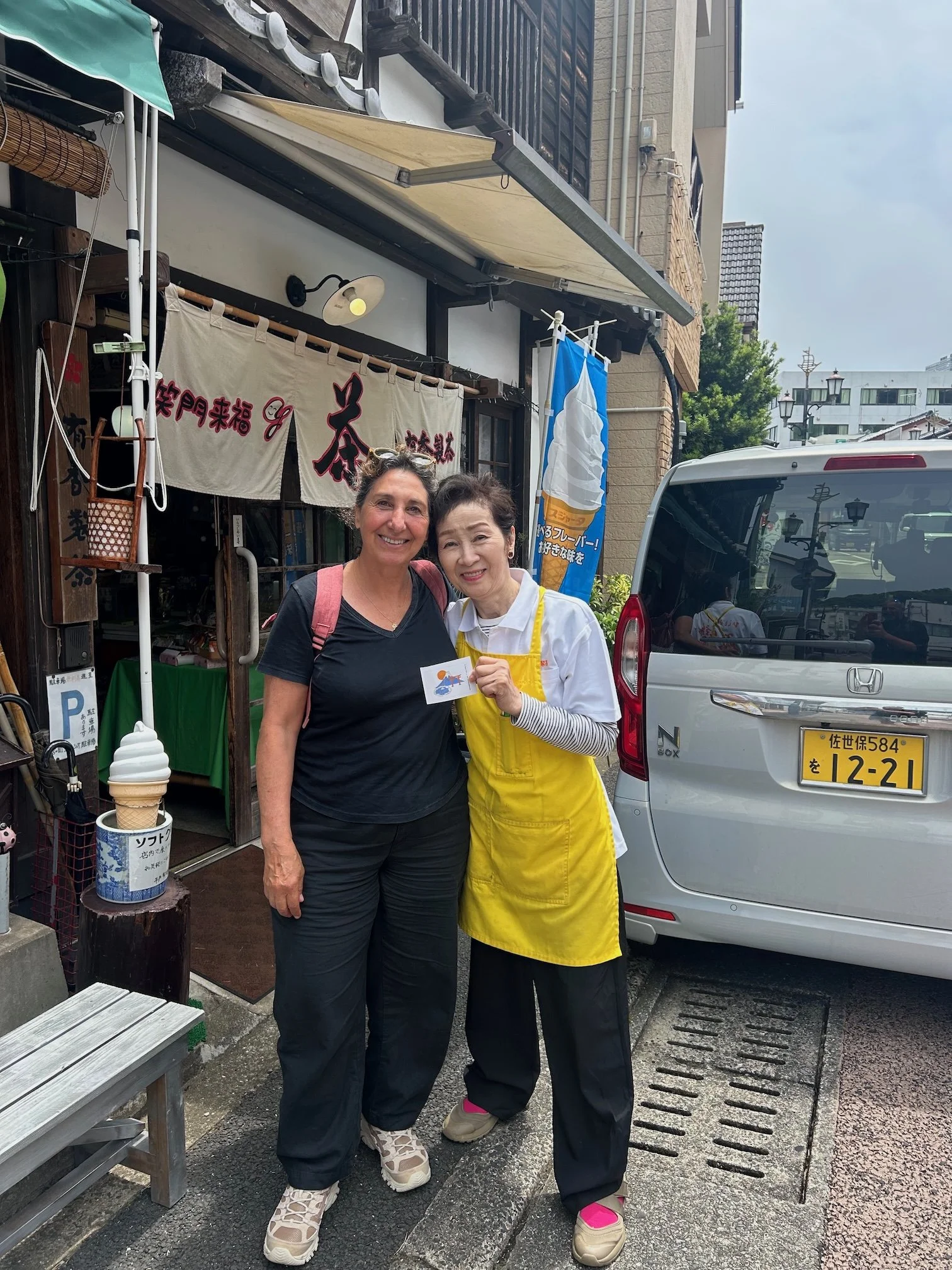
Even the women in the shops look like they stepped out of a 1940s film. Elegant, in yellow dresses and high Audrey Hepburn-style hairdos, they greet us with a slightly playful charm, offer green tea and local souvenirs. I buy. A kite for each grandchild.

Even our traditional hotel sits on a hill like a fortress. It’s so large it has bridges between wings and a maze of corridors. I get lost and consider sending my own location to myself—or at least scattering small stones along the way to the onsen in inner wing B, on the twelfth floor—the one that makes me feel as if I am bathing in a cloud onsen.

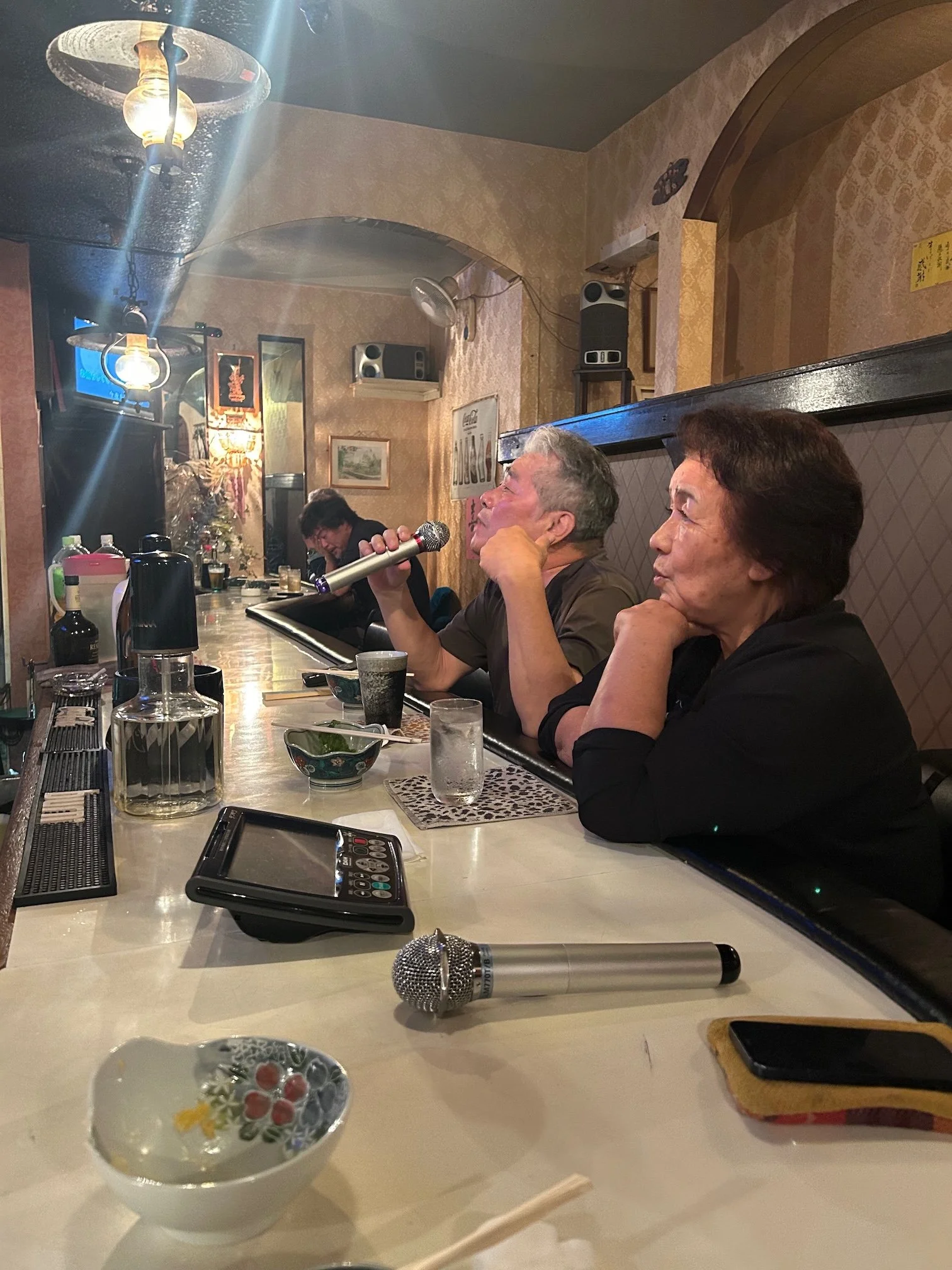
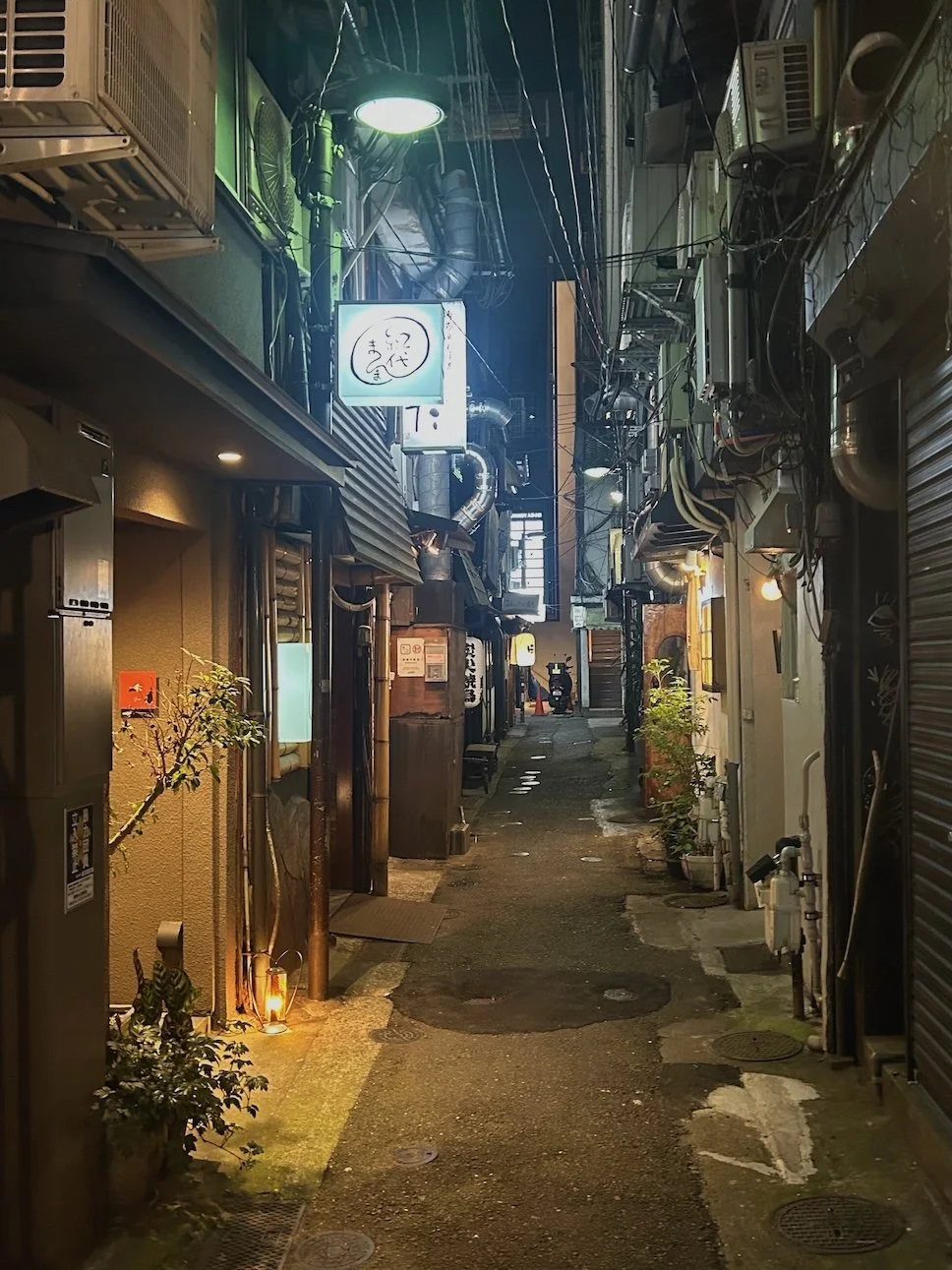
In the evening, on a street corner in Hirado, in a  small unmarked bar, we join the locals who arrive slowly, order drinks, and sing karaoke. The mama-san greets them, sits close, encourages singing, and even joins in on the chorus. 

She stays alert to everything, making sure no one is left out, pouring drinks and handing out bowls of Japanese sweets and snacks.
We sing too. Billy Joel. And drink. And listen to Japanese versions of Sea wives’ ballads. And feel close.

Did you know? The word karaoke is made of ״kara״, meaning empty, and ״oke״, short for orchestra: an empty orchestra.

Kurume, as the singing chat says, is a real Japanese city. I wouldn’t single out Kurume in particular—every city I’ve visited in Japan was Japanese.

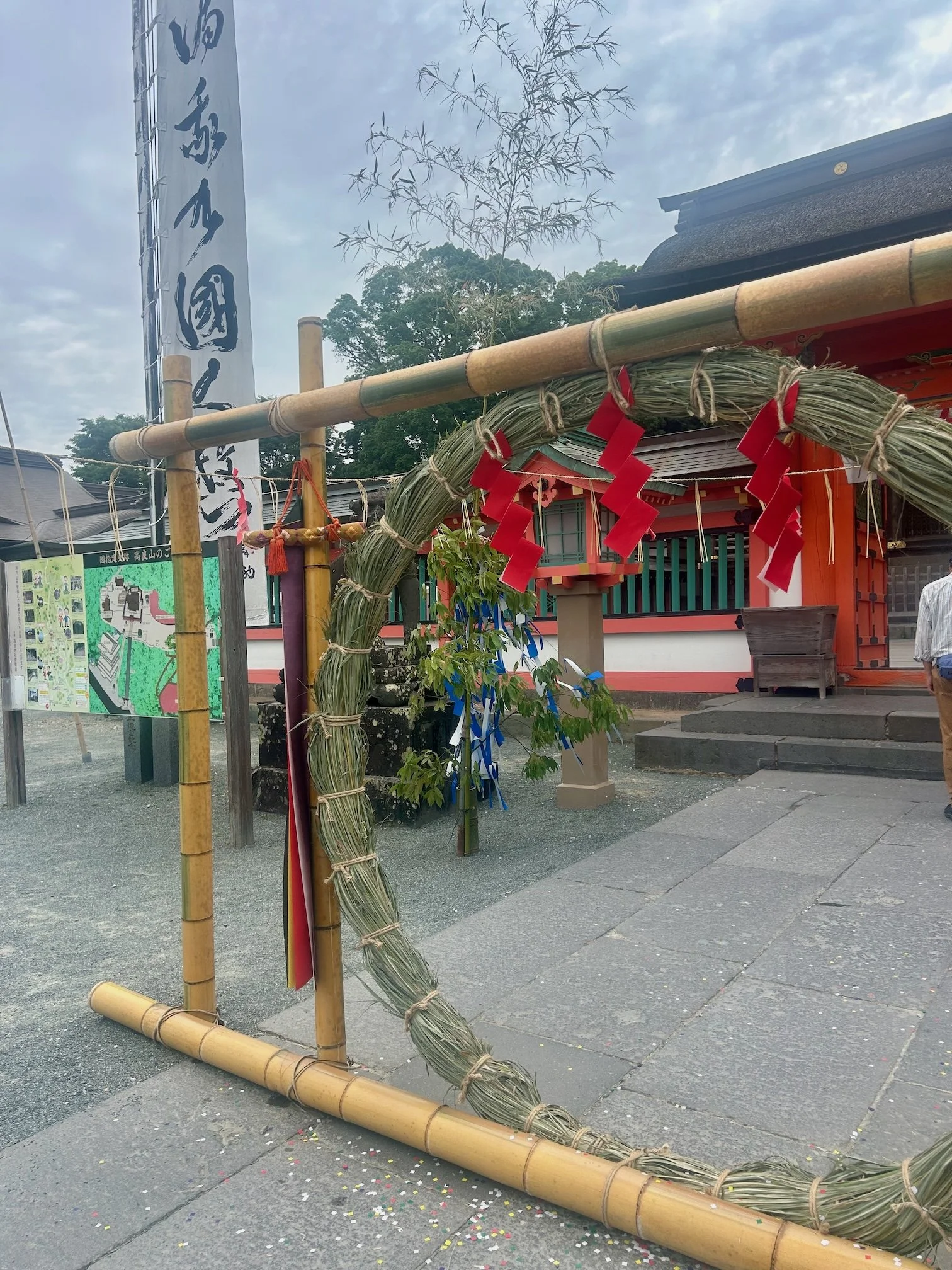
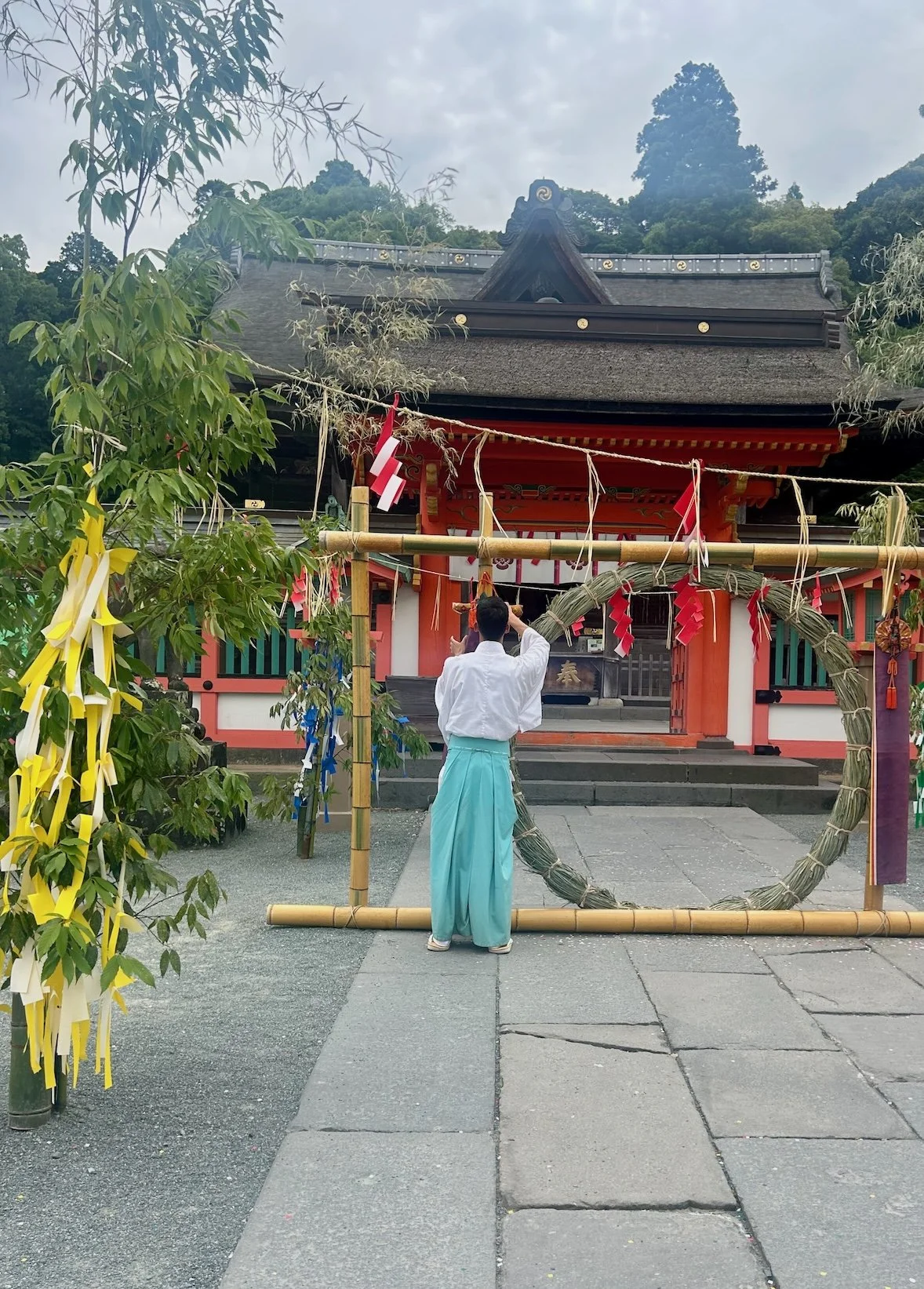
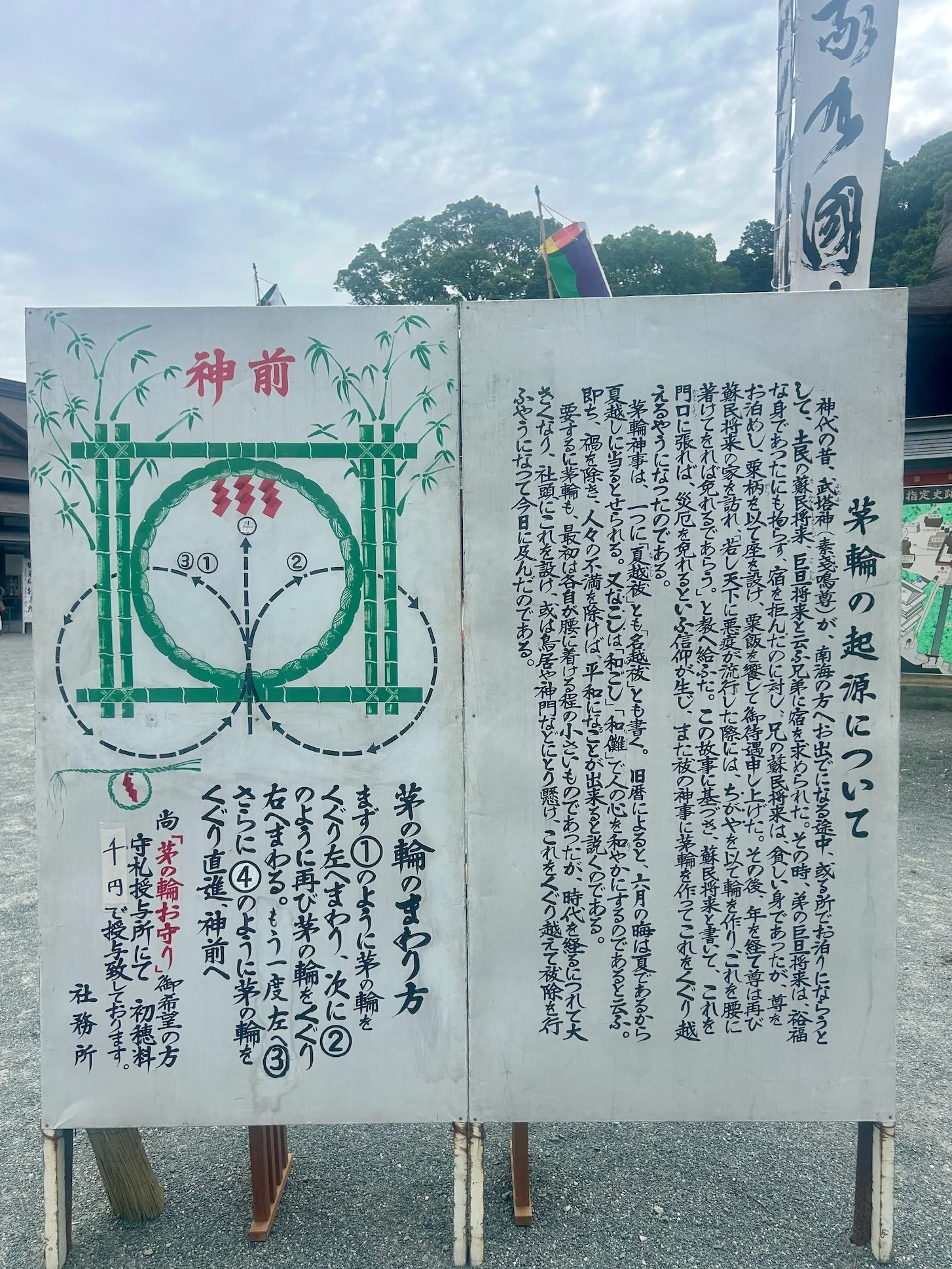
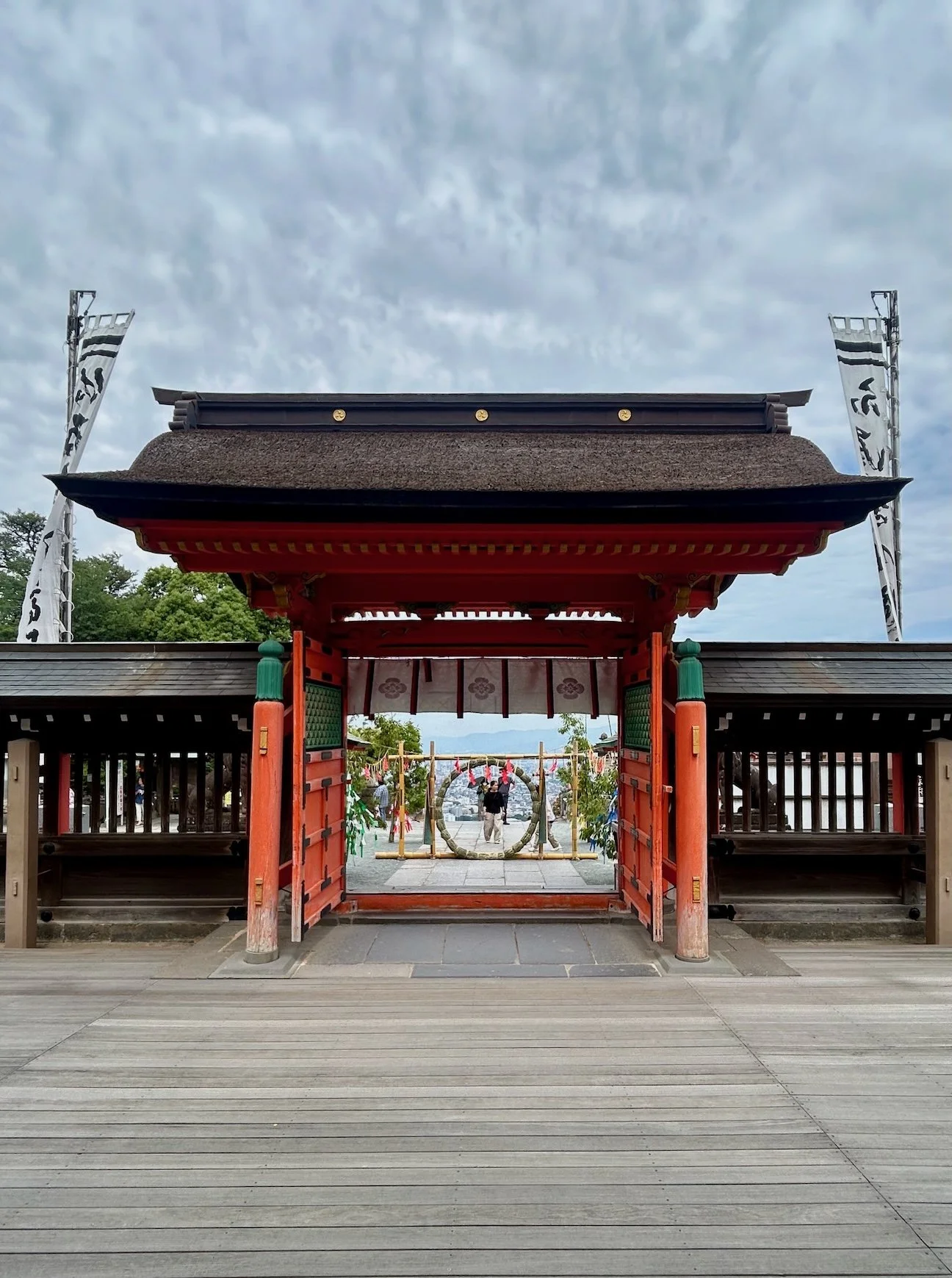
We stop there because of the ״Chinowa Kuguri״ ritual, held once a year in June as part of a purification ceremony and the removal of bad luck.

The participants—and I—move in a figure-eight circular path around and through a giant straw ring. A charm for health and longevity, leaving behind the six months that have passed and entering the second half of the year clean. The ritual carries elements of cycles and seasons, suggesting—life does not progress in a straight line but in small circles of return and renewal, only that with each turn we are no longer quite the same people anymore.

While walking, we chant: Harae Tamae, Kiyome Tamae—purify us, remove impurity, cleanse us. I thought, and without entering theological debate, how similar yet different this is from the Jewish pray ״we have sinned, have mercy upon us.״ Here there is no confession of sin or plea for forgiveness—only a request to remove what has clung to a person along the way and return them to a state of clarity and harmony.

Legend says that whoever passes the early summer purification ritual (June 1–2) will live for a thousand years. I took part in the June 1, 2026 ritual.
Save the date.

While walking around and through the ring of life, melancholic thoughts rose in me, with a faintly morbid scent. I remembered my parents, the silence of death on their faces, the places I once went with them that no longer exist, and everything that can no longer be asked or said.

When the deep beats of the taiko drums sounded, meant to summon the gods, my mood lifted slightly and I walked with a greater sense of vitality and less of death. I even felt something of the purification and elevation promised in the brochure.

There are only four declarations required to convert to Shinto: family and tradition are values; nature is sacred; cleanliness matters; and festivals are a form of faith. I join.

Side thoughts.
Room size is measured in tatami mats. I counted eight. That’s big.

The Japanese have a way of appearing exactly when help is needed, like fairies.

Bamboo symbolizes life, growth, and renewal. It grows in segments, each segment both an ending and a beginning. But even bamboo has an end.

Post offices in Japan are an experience—part pharmacy, part stationery shop, part community center. There are packing corners, postcards, souvenirs, and postal teddy bears. Who remembers that Israel’s postal symbol is a deer?

Japan still explains itself in paper. Everything has a manual, a laminated sheet with tables, illustrations, and flowcharts. And at the right moment, the relevant page is pulled out of a folder as if someone had already thought of every possible question in advance. Yes. Someone did.

The Milky Way.
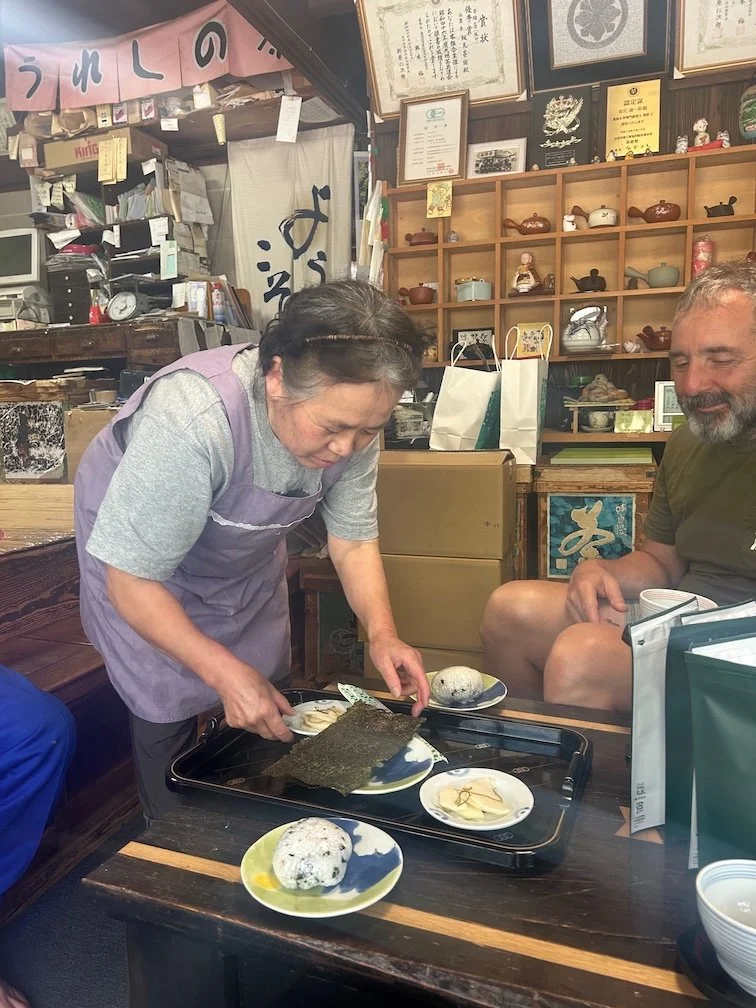
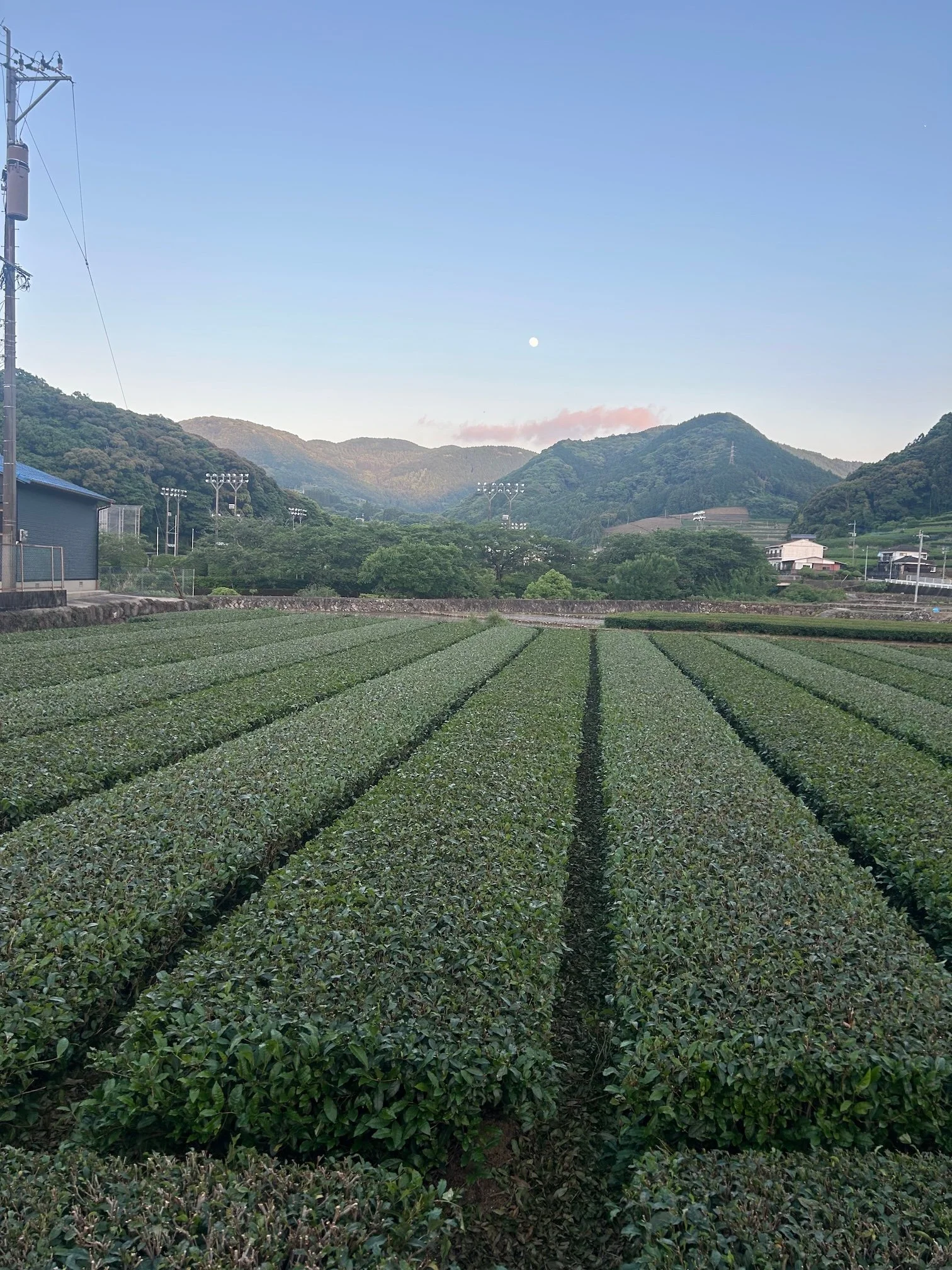
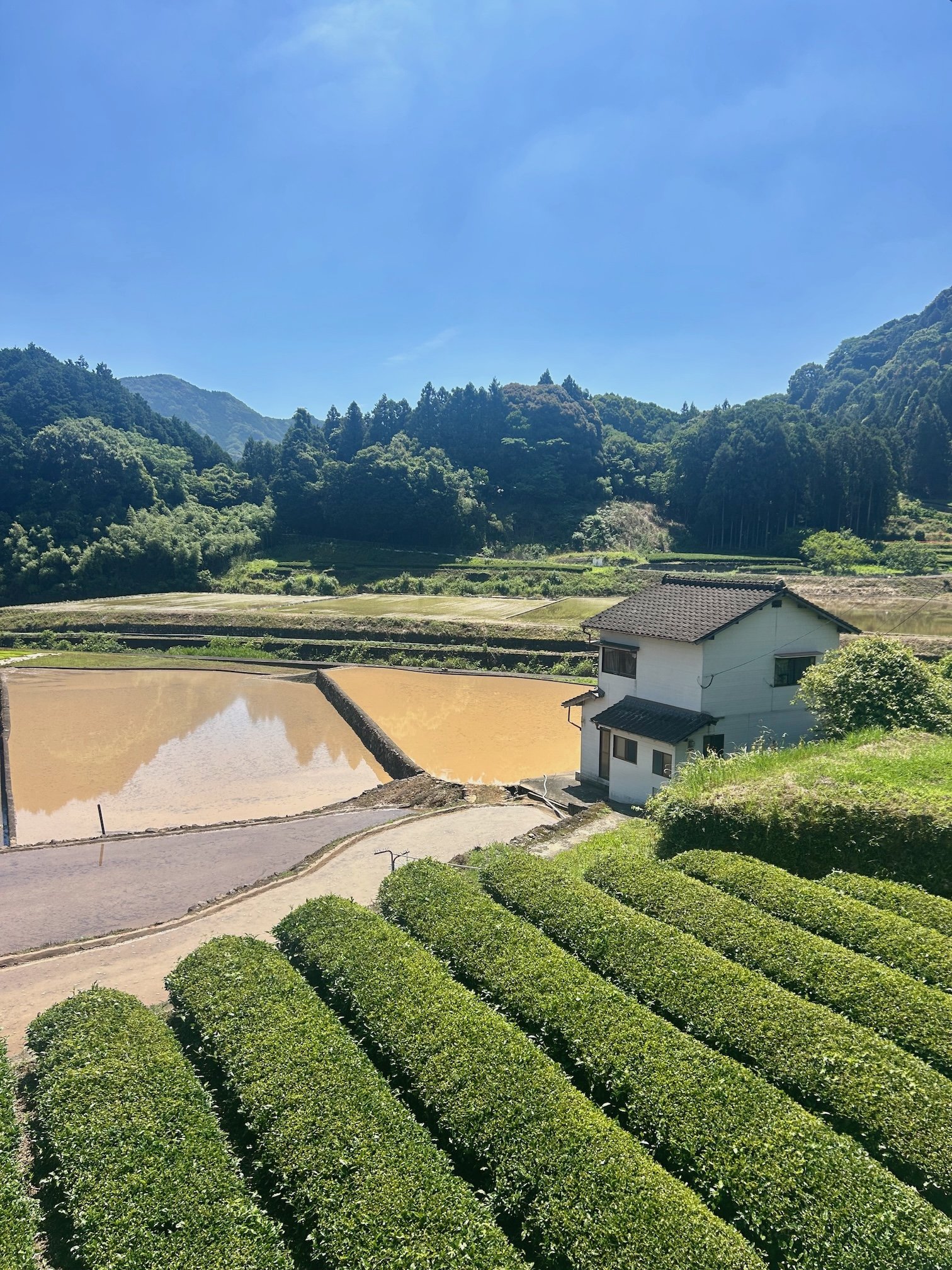
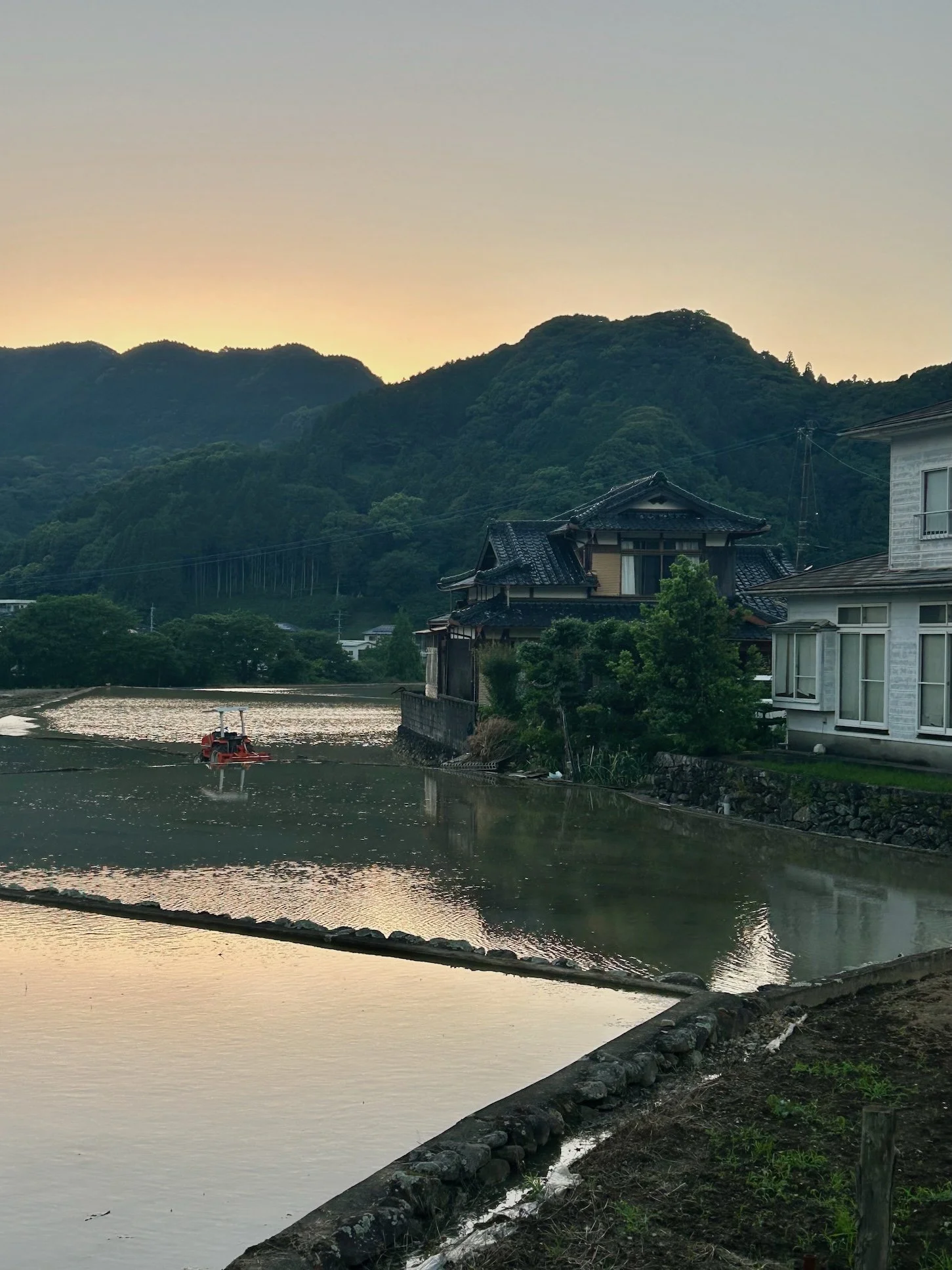
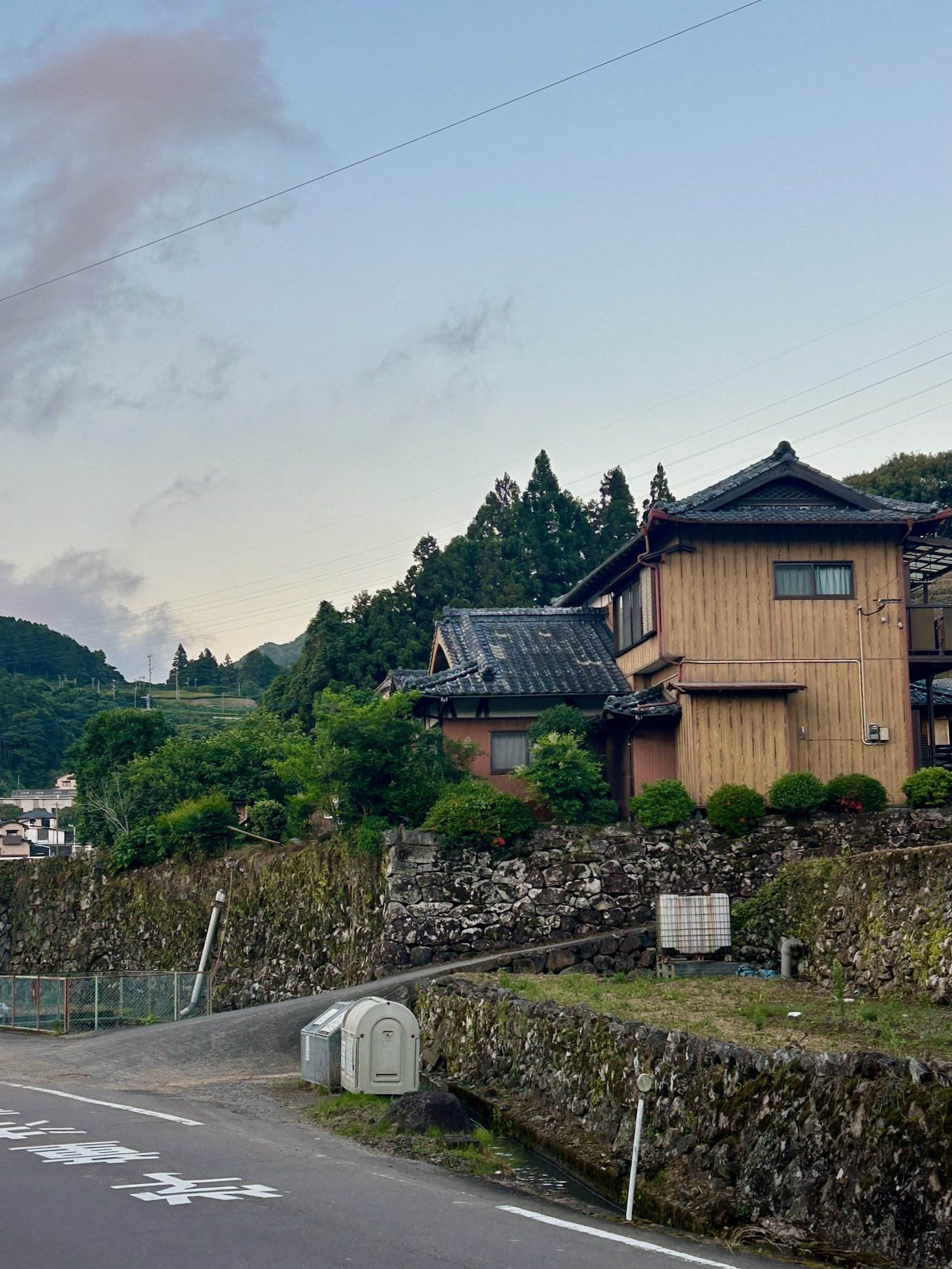
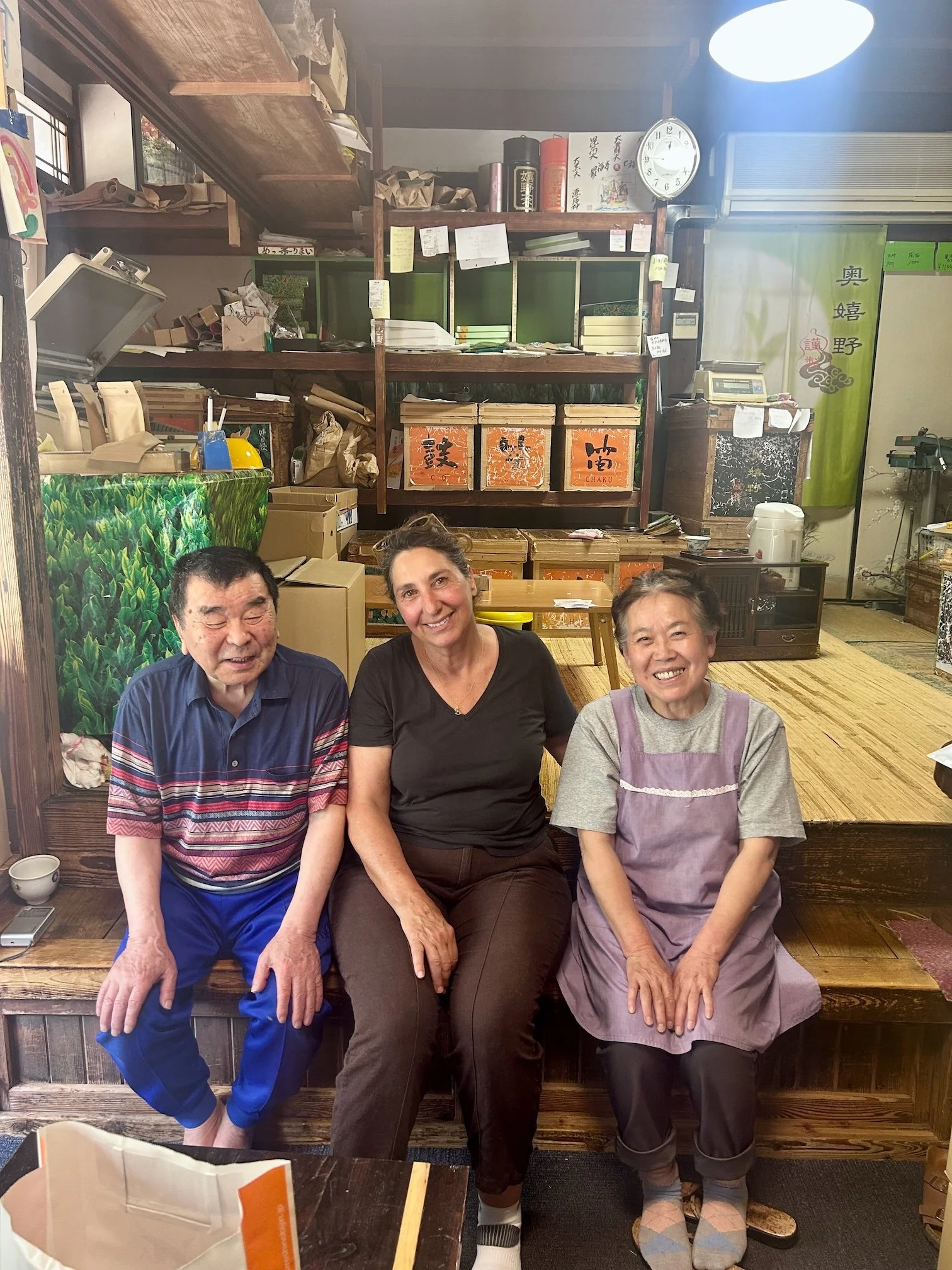
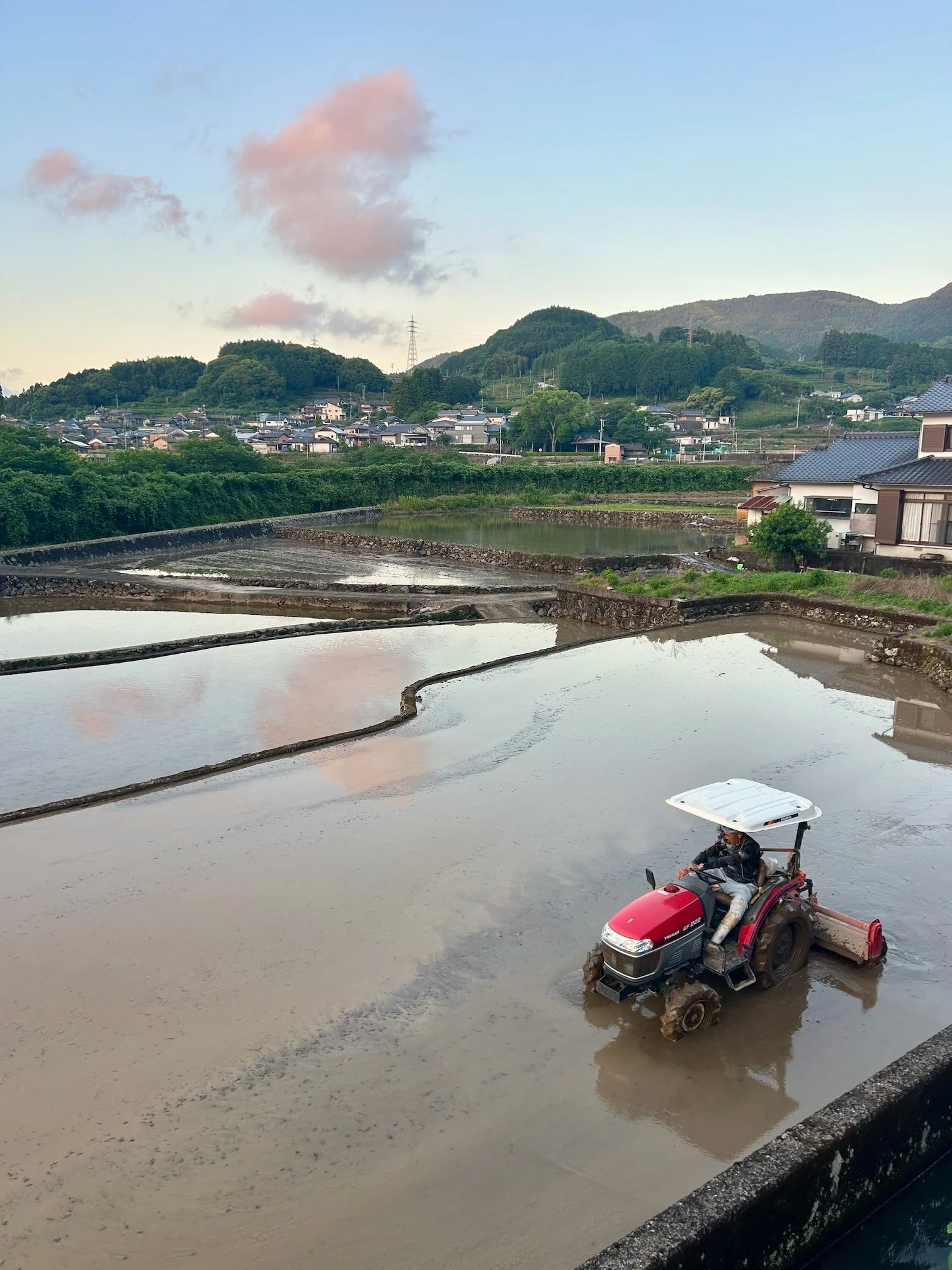
We continue by bus to Ureshino Onsen. The landscape opens into long symmetrical beds of green tea fields. Intense shades of green cover the mountains, rising and falling like a large woman stretching her limbs. We wind through her swelling curves.
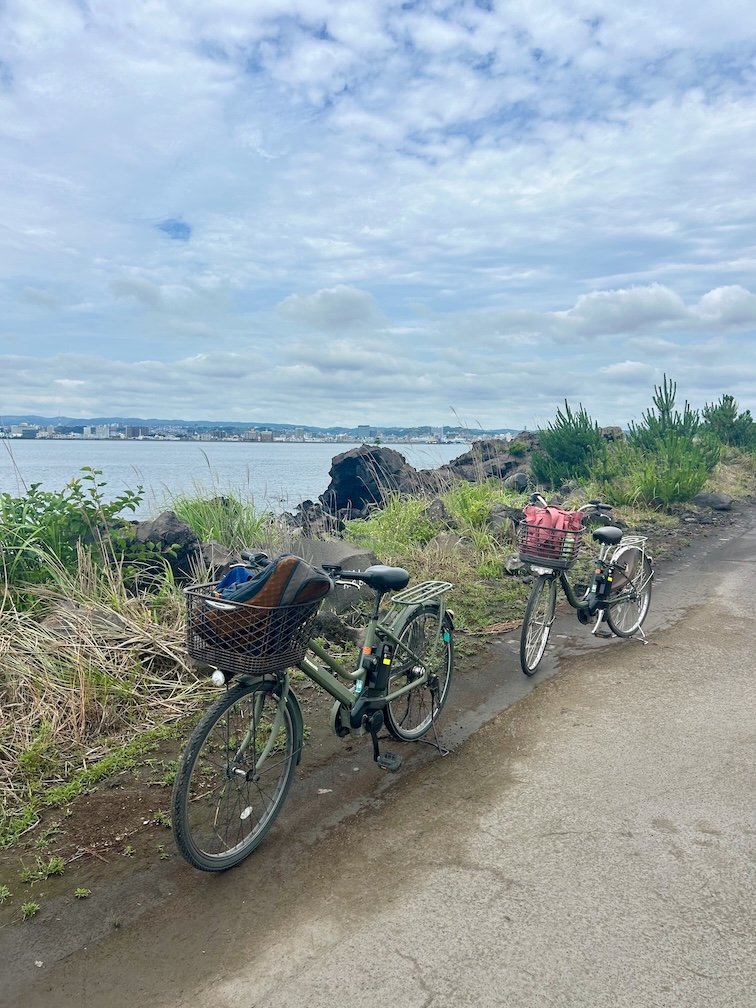
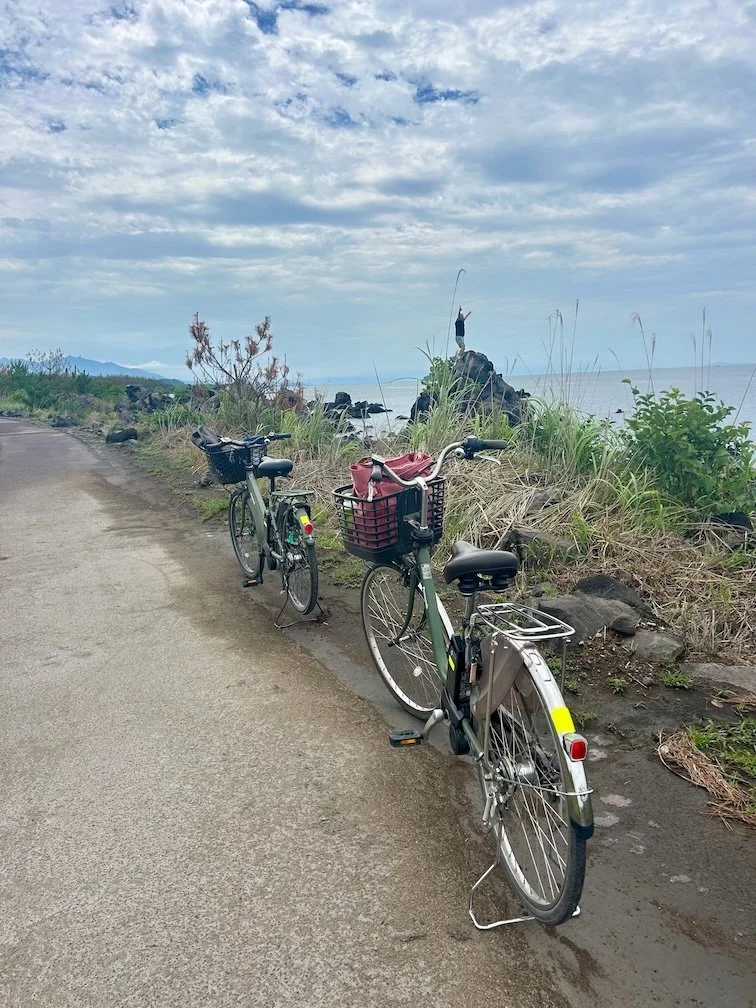
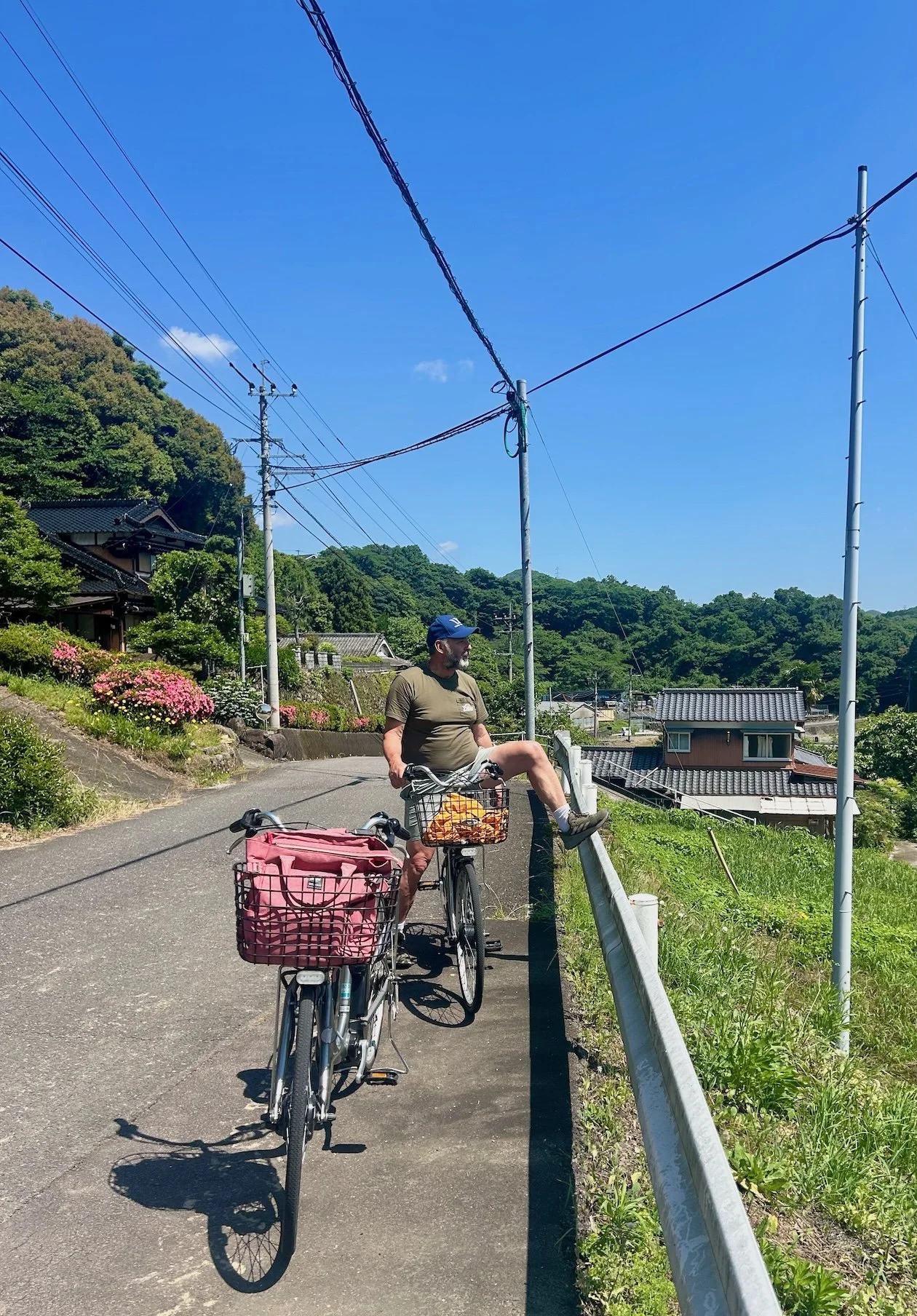
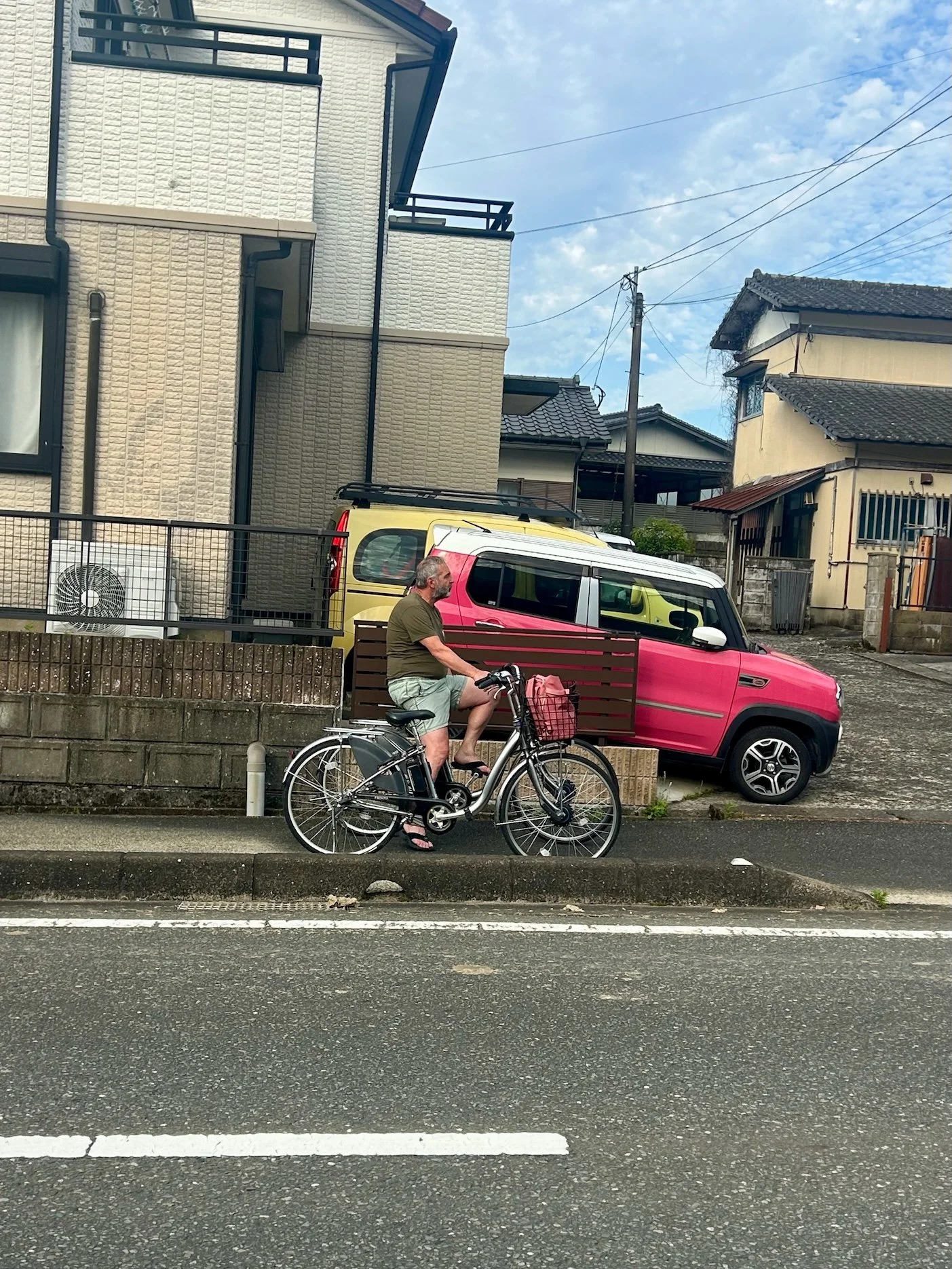
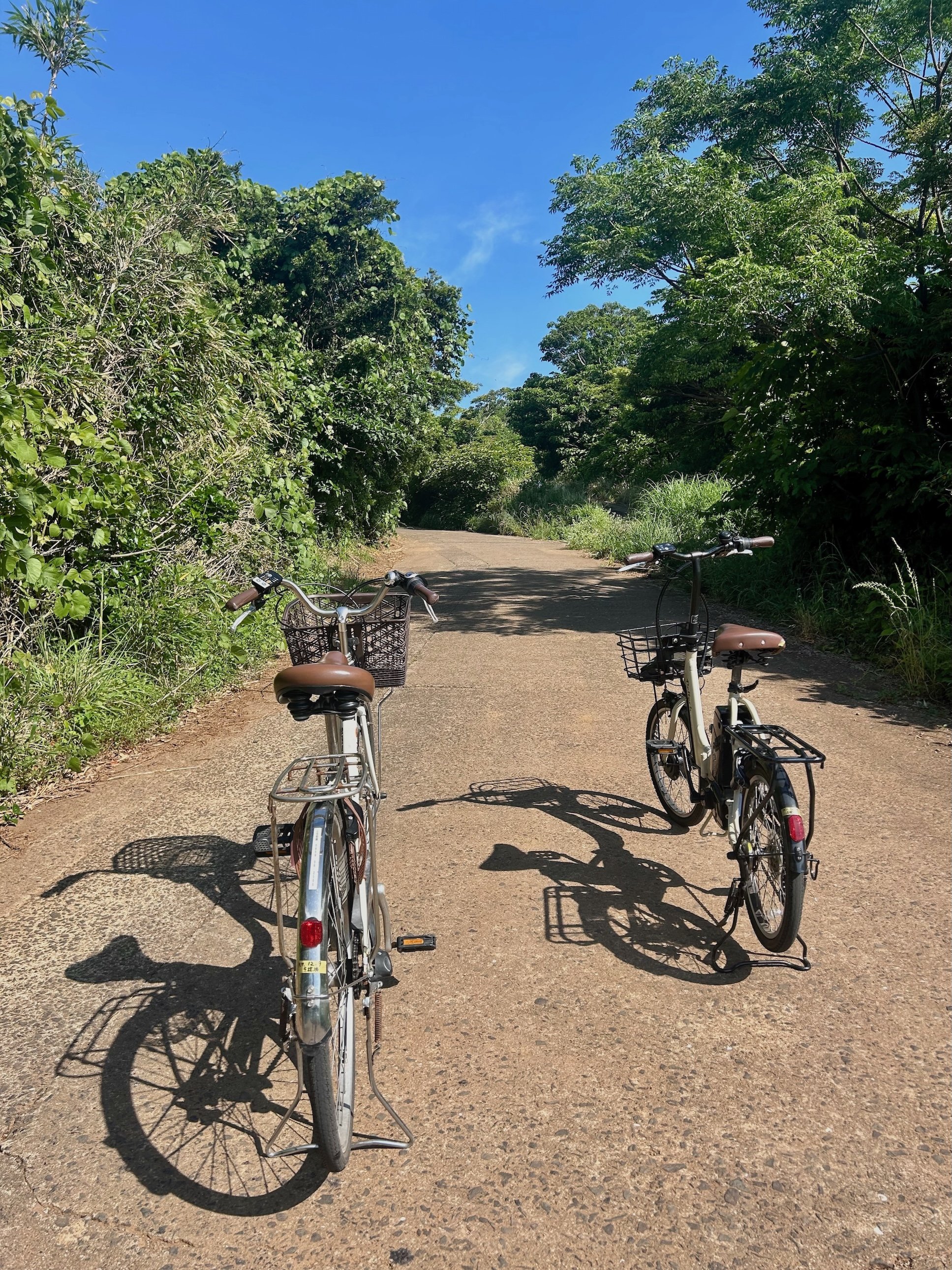
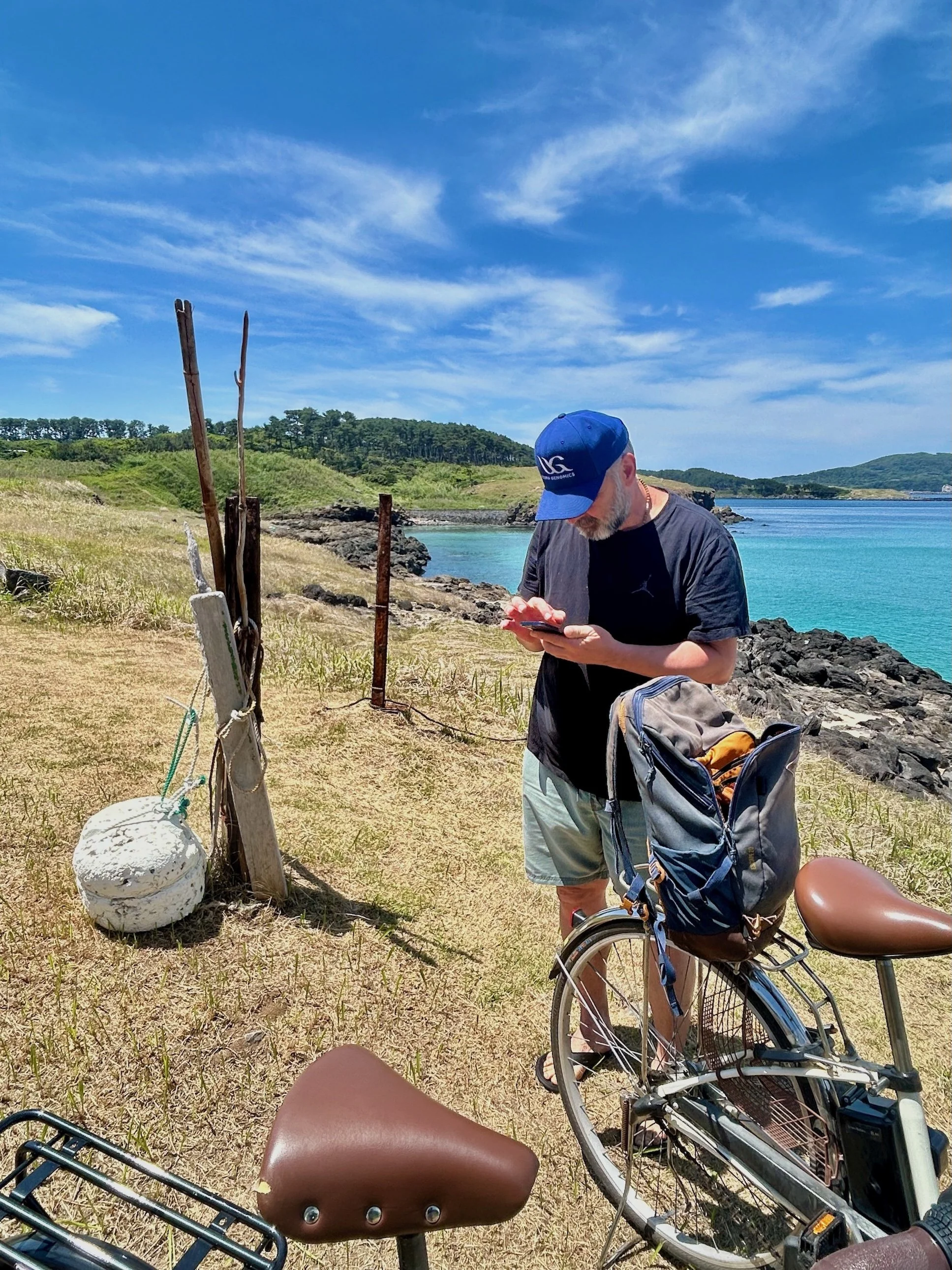
What a joy bicycles are.

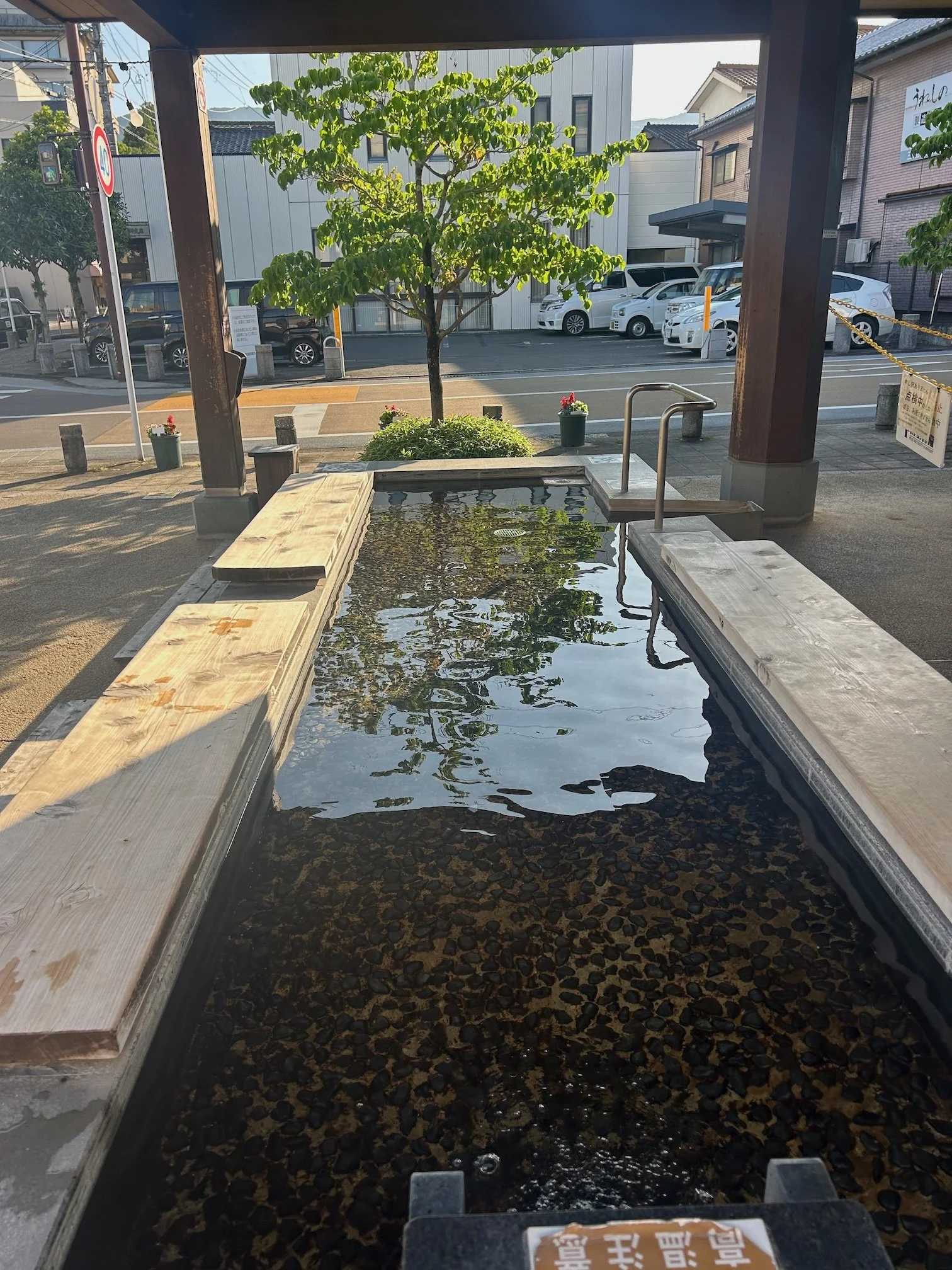
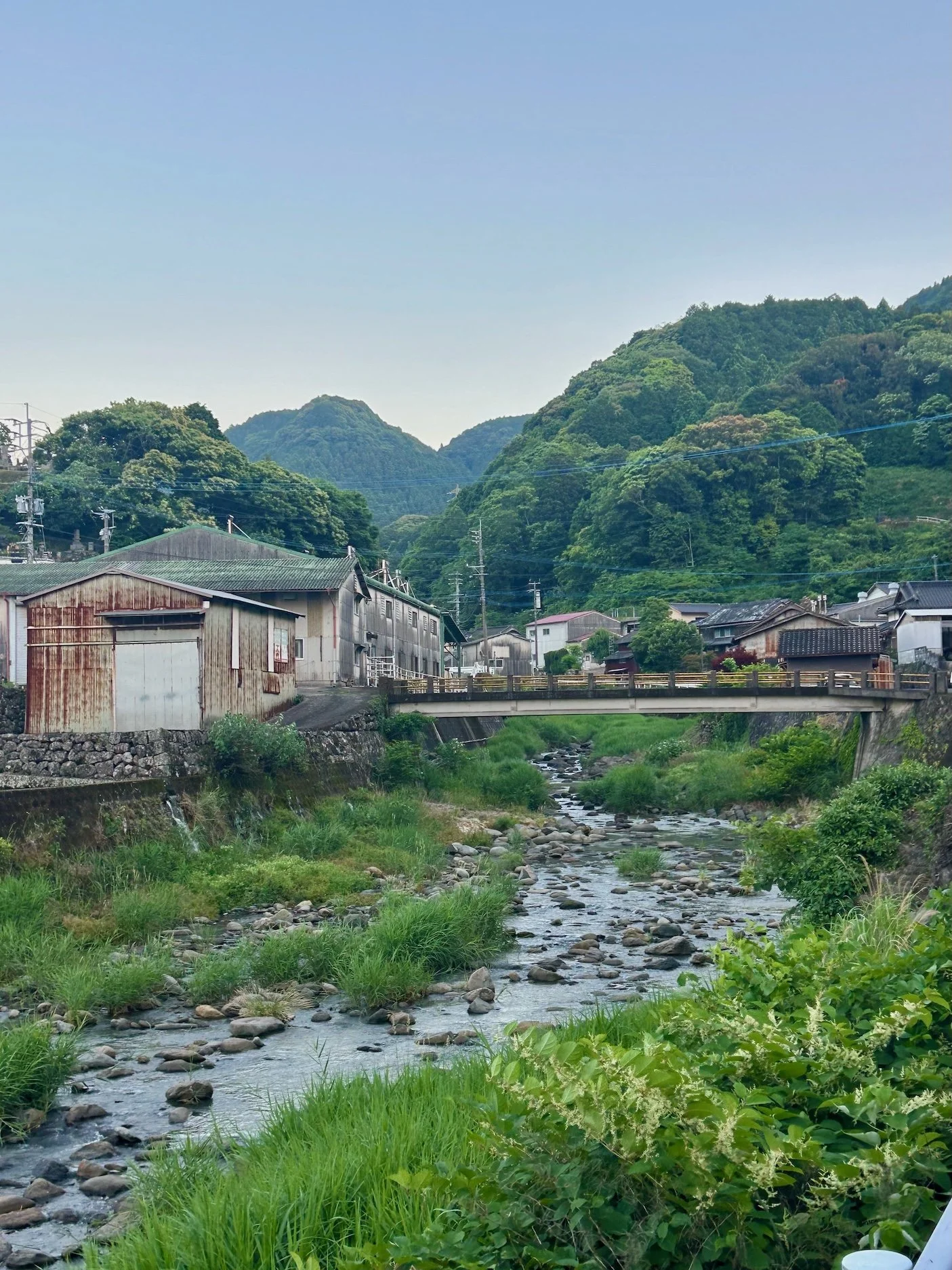
Ureshino is famous for its hot spring waters—mineral-rich, with a silky milk-like texture, considered beauty waters—and for the tea fields surrounding it from all sides. The whole town is a large bathing pool you can hold gently in your hands. A river, small bridges, and misty steam wrapping the houses.

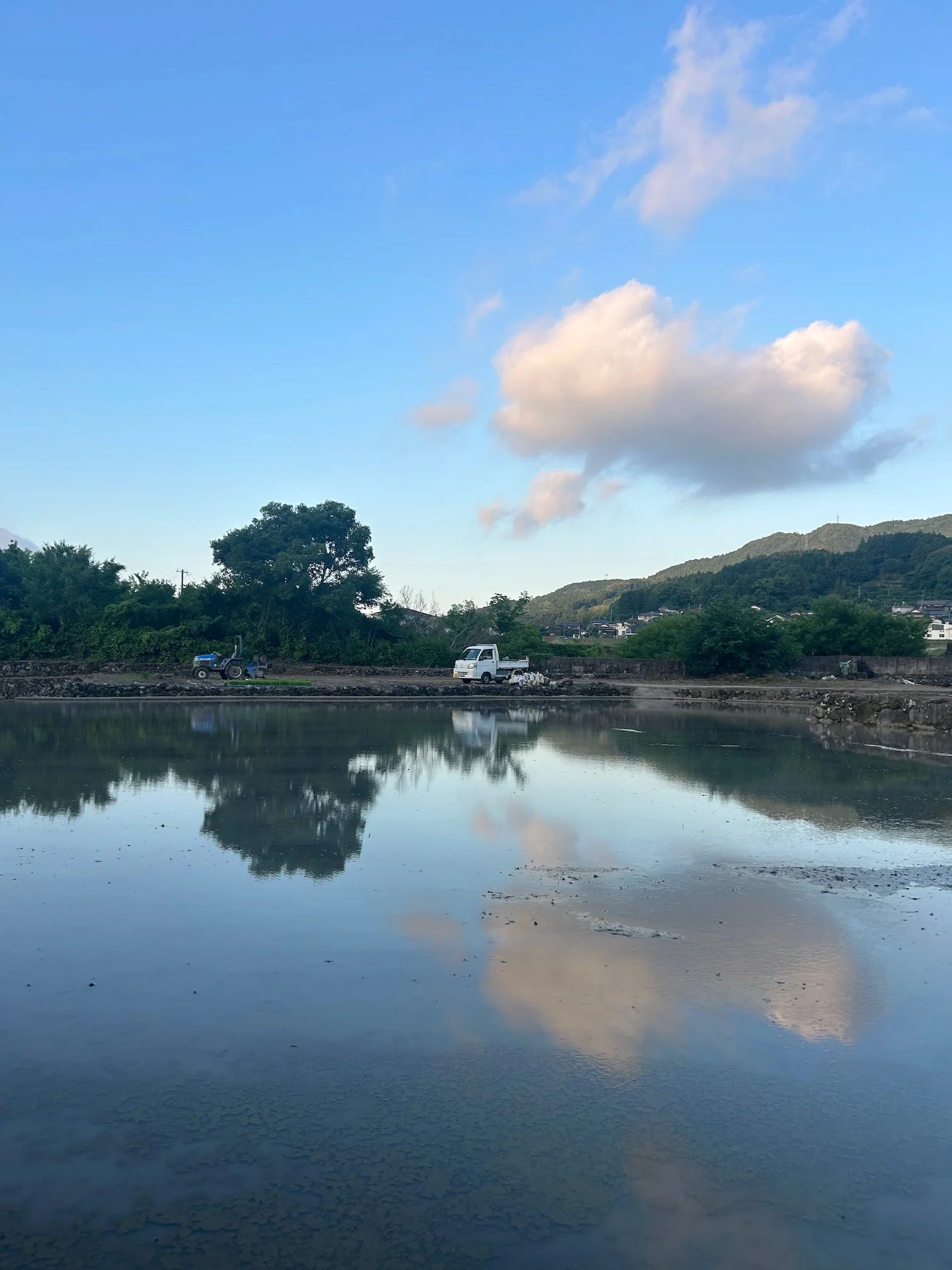
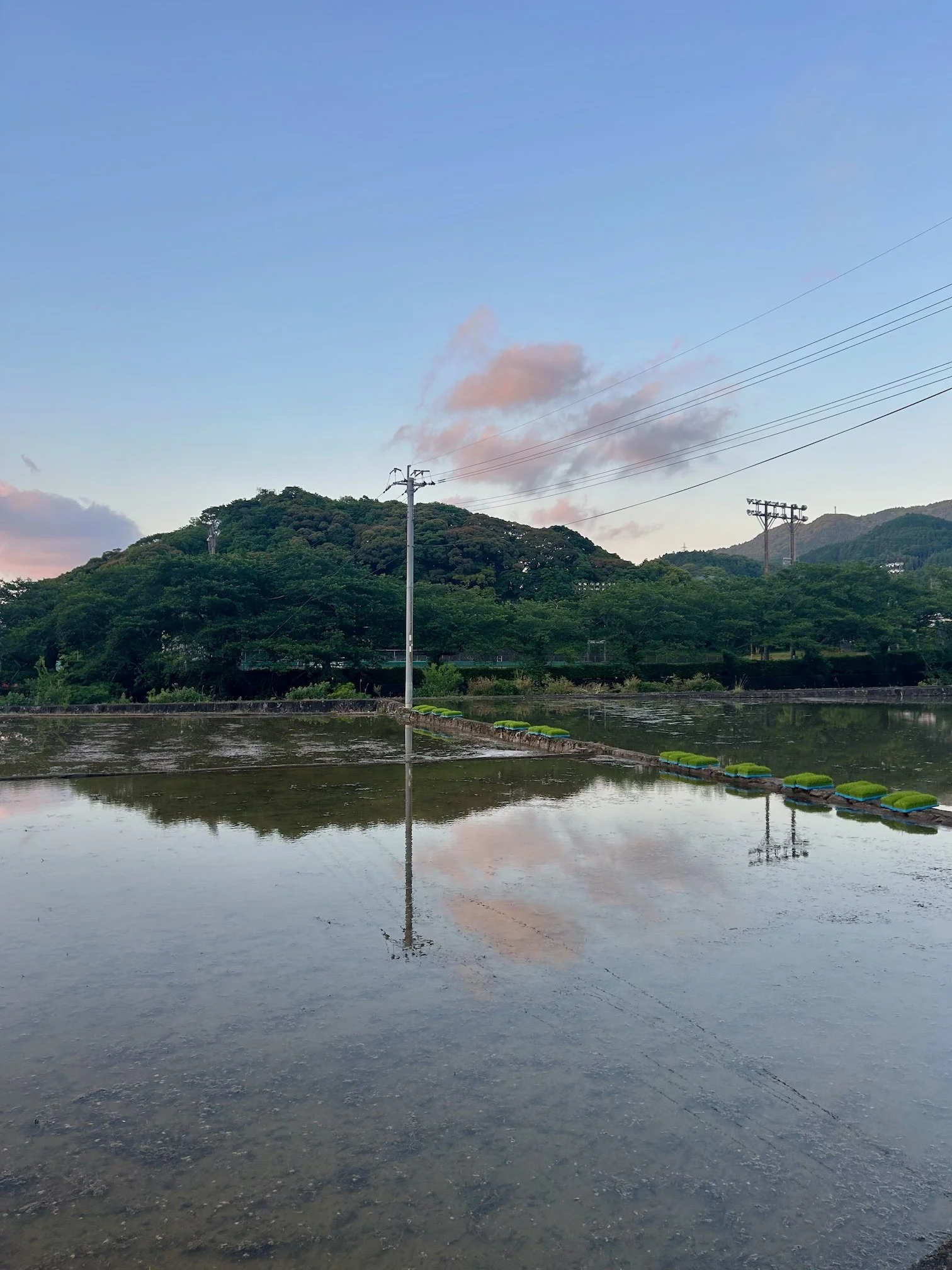
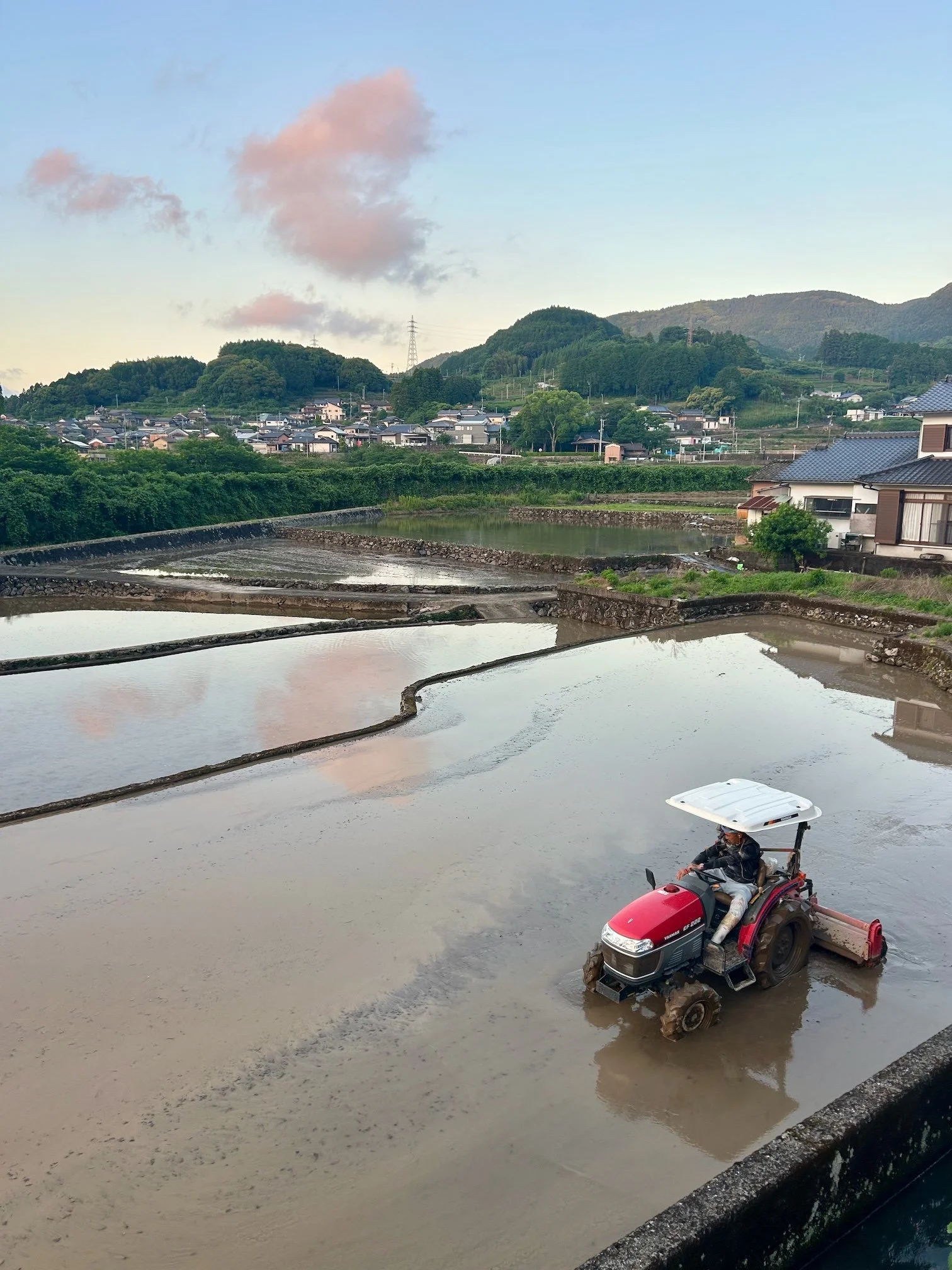
About an hour before sunset, when the light softens—this is the magic hour. The sky truly falls into the water, reflecting in a soft milky pink hue, just as my father wrote in his poem: ״Onto the puddle

A piece of sky, fell down to snuggle
A reflected world, drifting high
A Mirror sky with clouds float by״

Oyasuminasai—good night 🌙
We will continue along the Milky Way to another path.

Sigalit
Japanese Seas and Bows

Listen to Japanese Seas and Bows

I've noticed that winter is over. Now will come everything that good weather brings with it.

I take a long breath, one that will last an entire month, and step into my favorite role—Mary Poppins on a bicycle, E-bike edition, in the Land of the Rising Sun. This time, I'm returning to Japan carrying a creation that was born almost entirely out of Japanese inspiration.

The road to Japan passes through Ramello, our old house in the Italian village whose walls received the first scribbled sketches of the book ״On To the Puddle״. Here, among peeling plaster and exposed layers of paint, a quiet dialogue began and continued—between places, time and longing, between Israel, Italy and Japan.

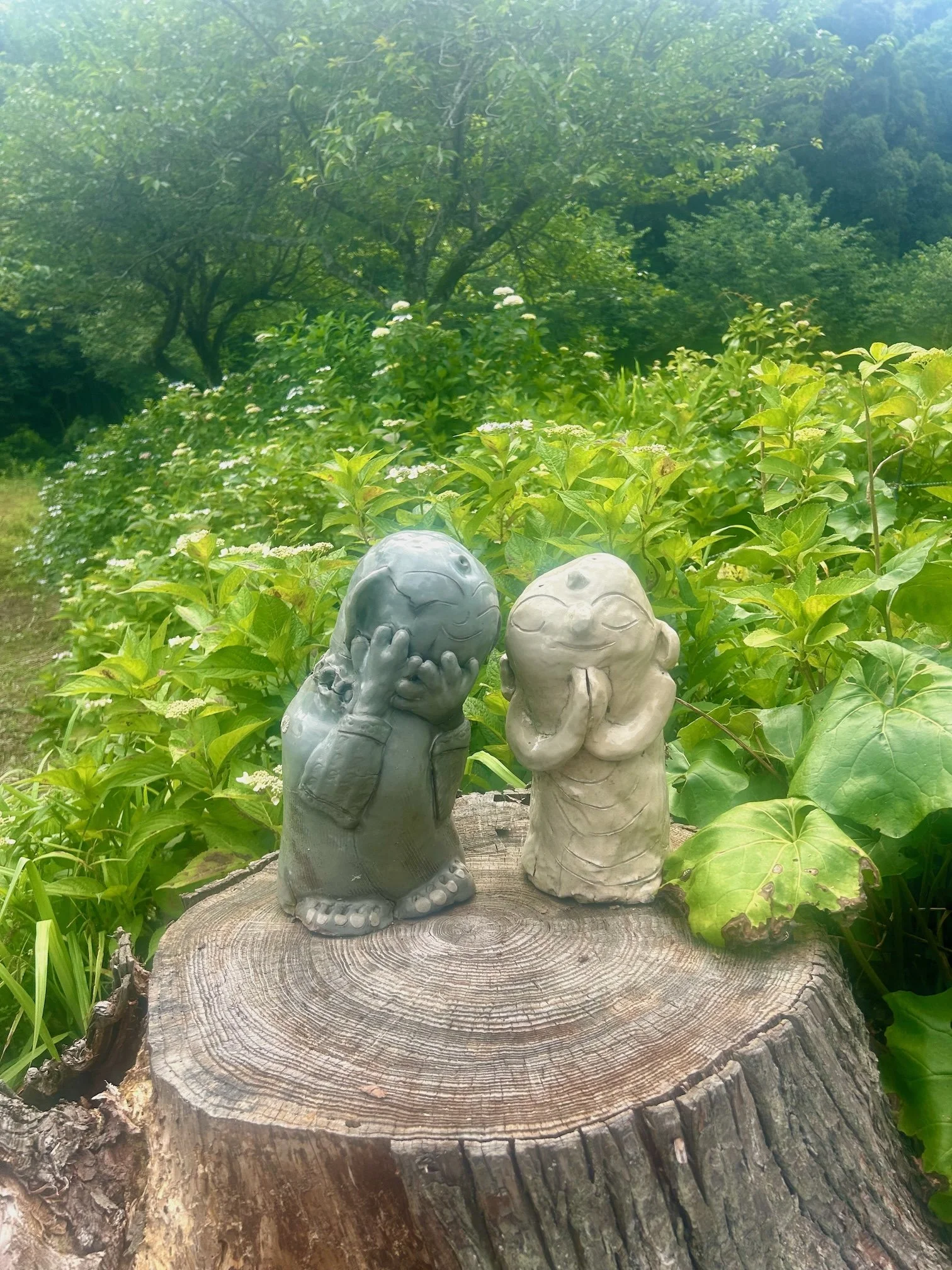
I travel together with the little figures from the wall, toward the landscapes he once breathed, so they may look back at him—even if through narrow slanted eyes. And to meet once again the people who embraced and wrapped us in their generosity during our previous visit.

And also—
I want to take care of myself, of basic needs. To be in a place where silence remains unbroken, to eat fresh and healthy food, to curl up beneath a soft duvet on a tatami floor and awaken sleeping skin pores and forgotten memories inside the steam of the onsen.

Speaking of forgotten memories.
Lately, small and marginal memories have been rising to the surface. As though the ״Little Match Girl״ is sitting in one corner of my mind, lighting a random match every now and then. Memories that are almost unnecessary, seemingly devoid of character or importance. 

I wonder what to do with them. Sometimes I give in and pull one out, examine it, mark it, and try to understand why it chose to wake from among the cobwebs of the brain, and how it connects to me—to who I am now.
Does this happen to you too? or has my mind finally gone astray?

Our flight goes through Taipei, with an airline that feels like from another era, complete with a generous meal and flight attendants who tiptoe through the aisles like a troupe of fireflies, giant lotus pins adorning their hair.

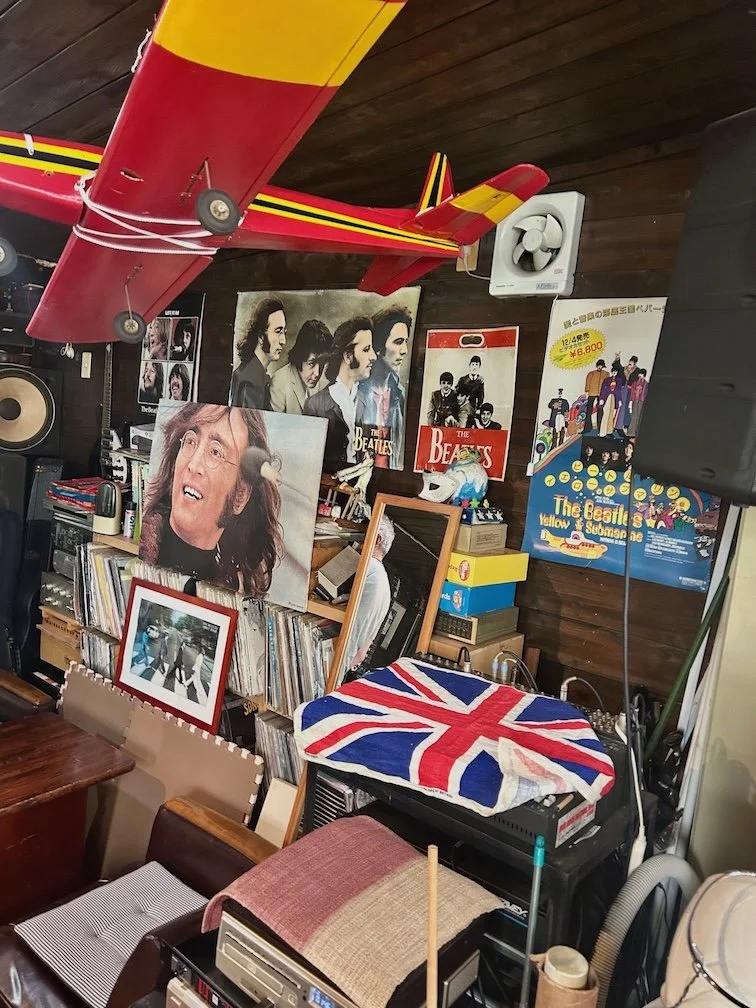
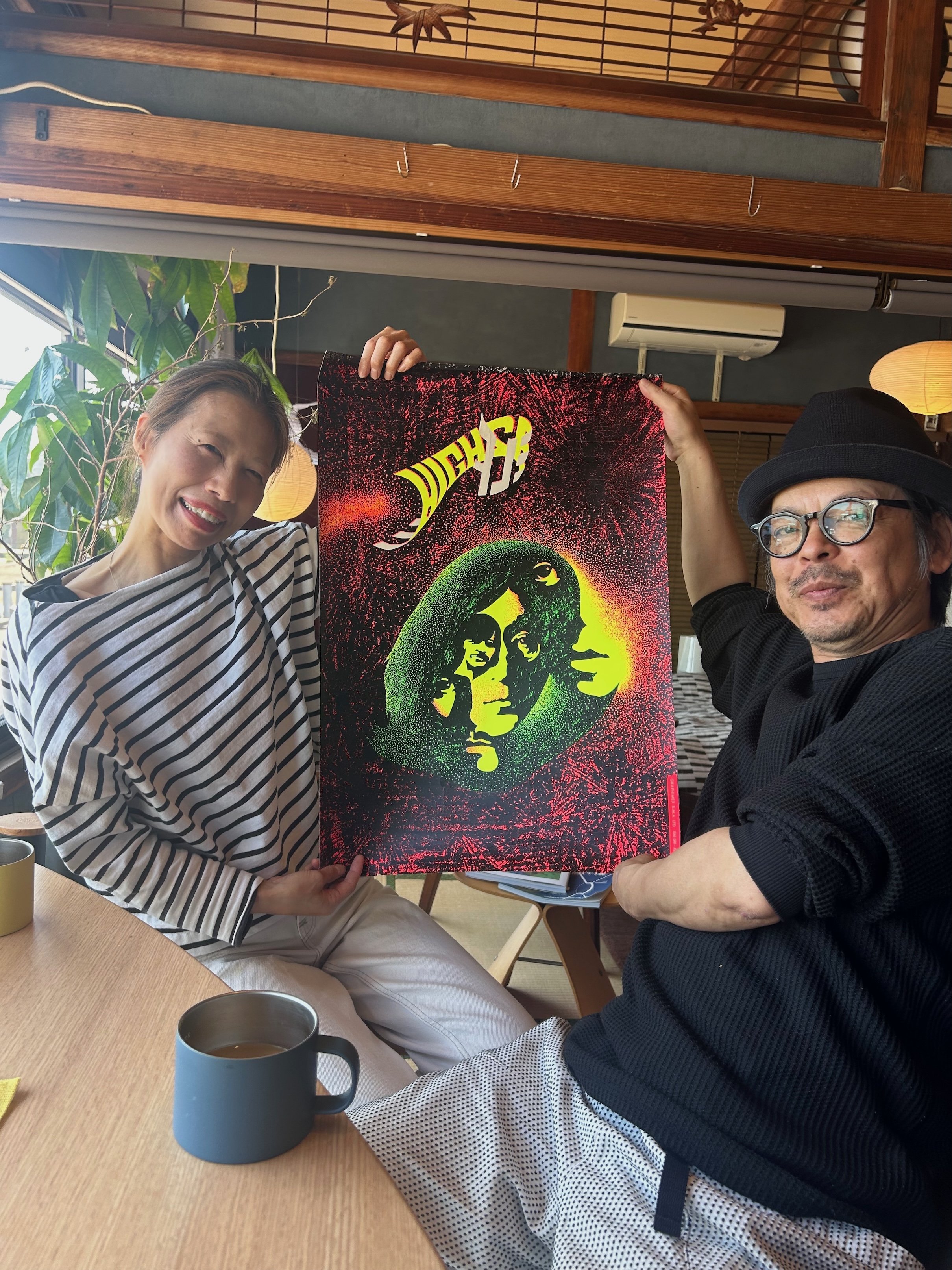
Danny, our collector friend, who lives somewhere on the line between Givatayim and the flea market, was delighted to equip us with a rare Beatles poster designed by Israeli graphic artists in the 1960s in psychedelic style. A gift for Bebe, owner of the Izakaya on Ojika Island, who dreams John Lennon and is it merely coincidence that his partner's name is Yoko?

Ojika is a small island in the Goto archipelago we visited about a year and a half ago. We will return there, and you will get to know it too, if you surrender and hold on long enough, at least as long as I do.

I love islands. Just saying.

And now—Japan.

Meetup in Fukuoka
First stop Fukuoka, the largest city in Kyushu and Japan's southern gateway. We settle into Gion, a small historic district not far from Uniqlo.

At seven-thirty this evening we are due to meet at Higashi Park for a Meetup event that Dror-san signed us up for. I have no idea what is about to happen, but then again, I'm jet-lagged and upside down, and when I'm upside down—I surrender. Meetup is an app that allows people to meet new people in a foreign city through a shared hobby or common interest.

The gathering is run by Maruf, a Bengali professor at Fukuoka University who has been living in Japan for thirty years. The Bengali has initiated a weekly “Walk & Talk” gathering consisting of four laps around the park—roughly two hours plus a healthy serving of jet lag.

The participants—Foreigners wishing to improve their Japanese, and conversely, Japanese wishing to improve their English.
A Tinder for languages.

The rules—Each lap you switch partner, walk on the left side to unblock the path. At the end of the laps everyone climbs, somewhat laboriously, to Japanese monument for concluding remarks. We part at exactly nine-thirty. Not a minute earlier. Thus spoke the Bengali.

Maruf is excited. Seven participants have arrived, most of them are new. A young Portuguese anime and manga enthusiast looking for a legal way to work from Japan. A retiree from Los Angeles with distinctly imperial manners who travels around. I didn't particularly like him. And two ageless Japanese women—an accountant and a tax consultant—regular members of the group who are trying, with a shyness I personally find somewhat excessive, to improve their English.

I am shy too. Just not quite that shy, and I even manage to earn a small round of applause when I complete an entire sentence in Japanese without making a mistake. Excited by this gathering of scattered worlds and the intimacy it creates, we exchange Instagram, WhatsApp and email, and briefly long for world peace.

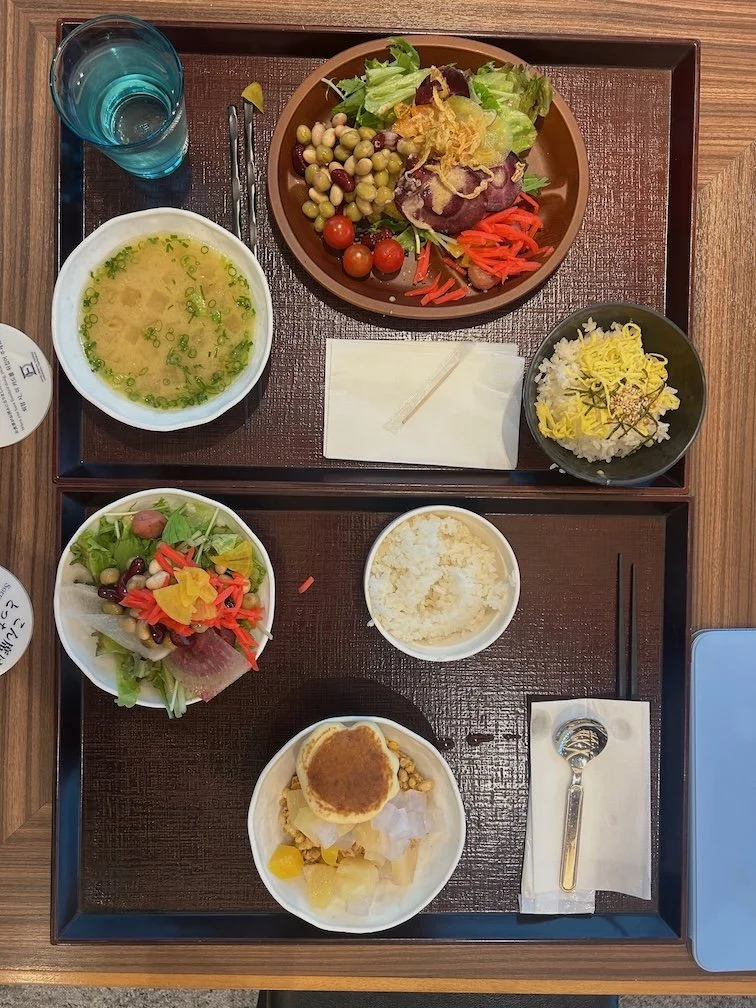
As jet lag defeats us, we begin our morning at noon, replacing coffee and pastries with miso soup and a full Set-meal. A composition of small surfaces of color arranged across a tray, for barely twenty shekels—including conversion fees. How delicious. How inexpensive.

Fukuoka provides everything one might ask of a city, without hysteria and without queues. I love this city, especially its residents, who somehow seem even more welcoming, warmer, and modest.

Dror-san and I split up and reunite as we wander through the city. Each of us is looking for our own Japanese experience.

Japan has many layers.
Even on my fourth visit, I make no claims. I simply observe.

The men in black who spend their days rushing to provide service and their evenings swaying slowly with drunkenness.

The little Lego-like workers in uniforms, directing pedestrians with white gloves and offering slight bows, as though movement itself were a ritual.

The women dressed modestly in monochrome shades of black and soft cream muslin.

A group of teenagers crossing a street without a traffic light and, as one body, bowing deeply to the driver who stopped for them.

Even the simplest dish feels as though someone lingered over it for one moment longer. The meal tray resembles a painting in a frame, the ingredients, arrangement and variety of the food are aesthetic, colorful and harmonious like a spring garment, transforming every simple ingredient into an occasion—and me into a poet of vegetables.

There seems to be no connection between the simplicity of the product and the luxury of its wrapping which makes me want to spend eternity opening the package.

Our route is only partially planned. A few days in Fukuoka. A train to Sasebo. A ferry to Ojika, a magical bead in the pearl necklace of the Goto Islands. And after that—we'll see. Depending on mood and momentum.

Yanagawa – The Venice of Kyushu
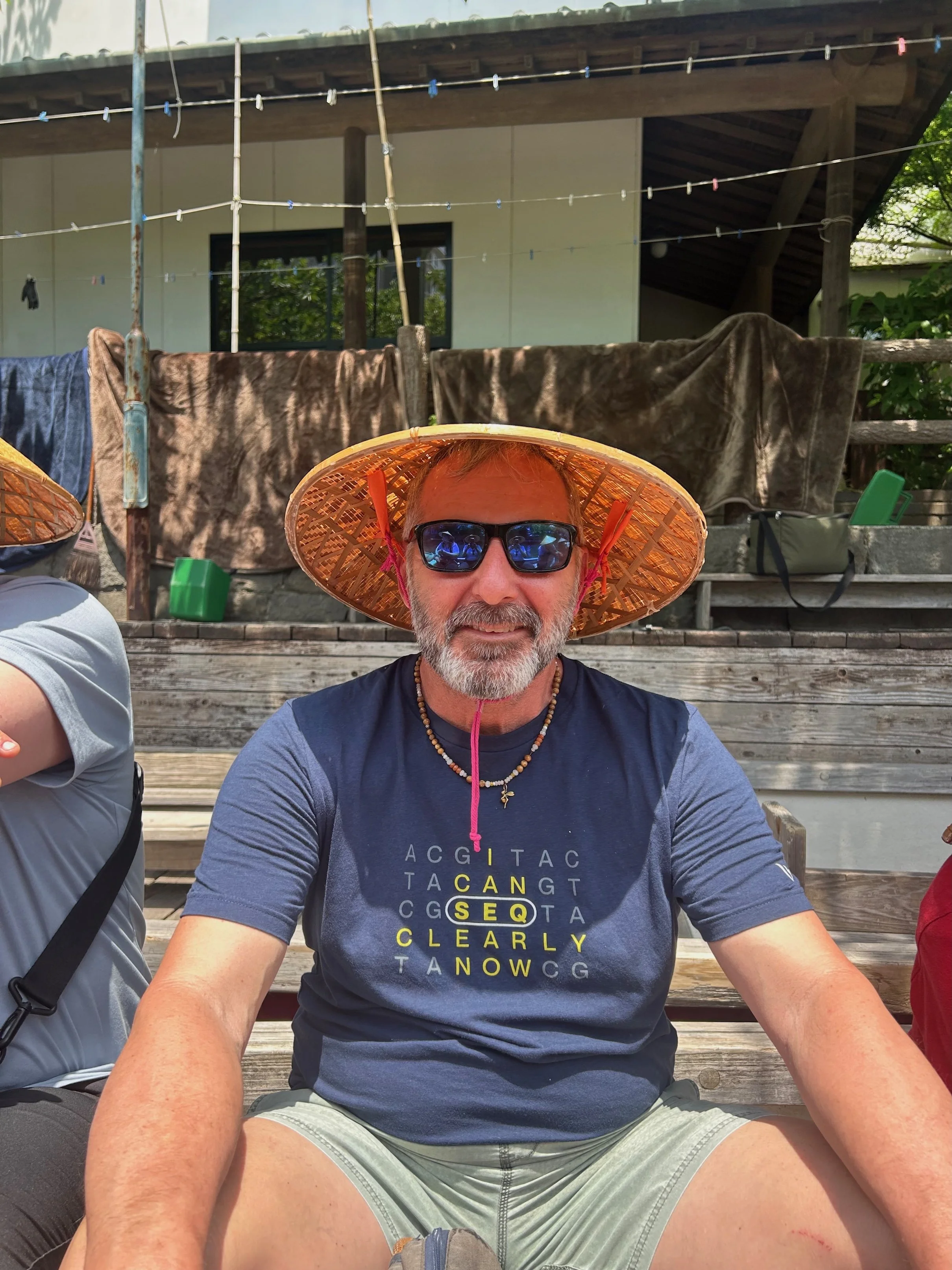
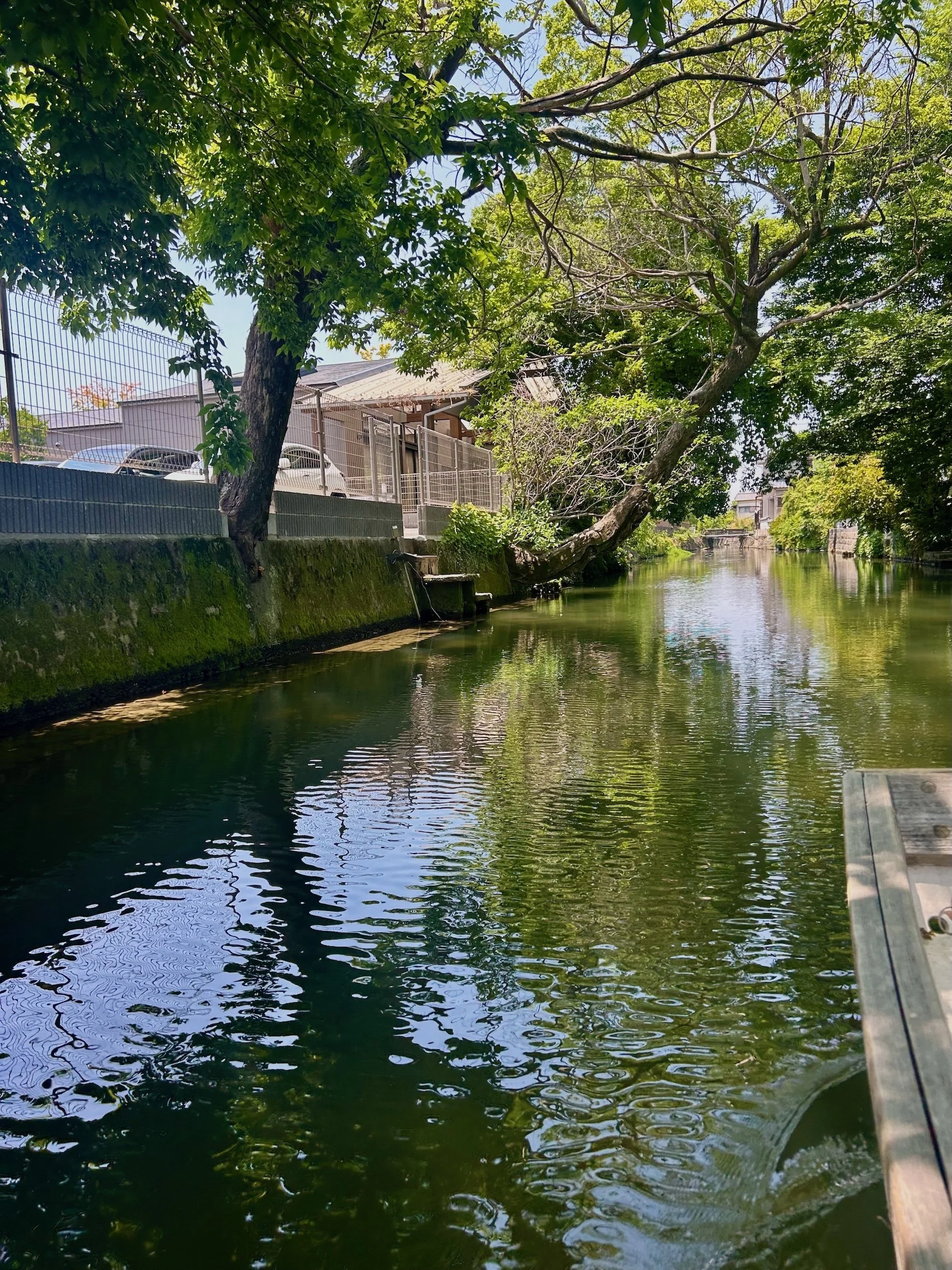
In Yanagawa, known as the ״Venice of Kyushu״ thanks to its extensive network of historic canals originally built for irrigation, we join a sleepy little tourist interlude. It includes a traditional straw hat and a boat ride among weeping willows (Yanagi), bridges and wooden houses. The boat is steered by a Japanese Venetian who handles a long bamboo pole and breaks into folk song whenever we pass beneath a low bridge, letting the structure echo his voice back to him.

The cruise is pleasant, though perhaps a little boring. Most of the time we were occupied with trying to determine the genealogical relationship of the tourists seated beside us. Was she the daughter or the mother? and who, exactly, was married to whom?

It is hot in Venice.
At the sight of tiny beads of sweat dotting our foreheads, Dror-san's senses spring into action and lead us straight to a cold beer in a hidden second-floor bar overlooking the main street, where people continue to pour out of the train station toward the local Venice. 

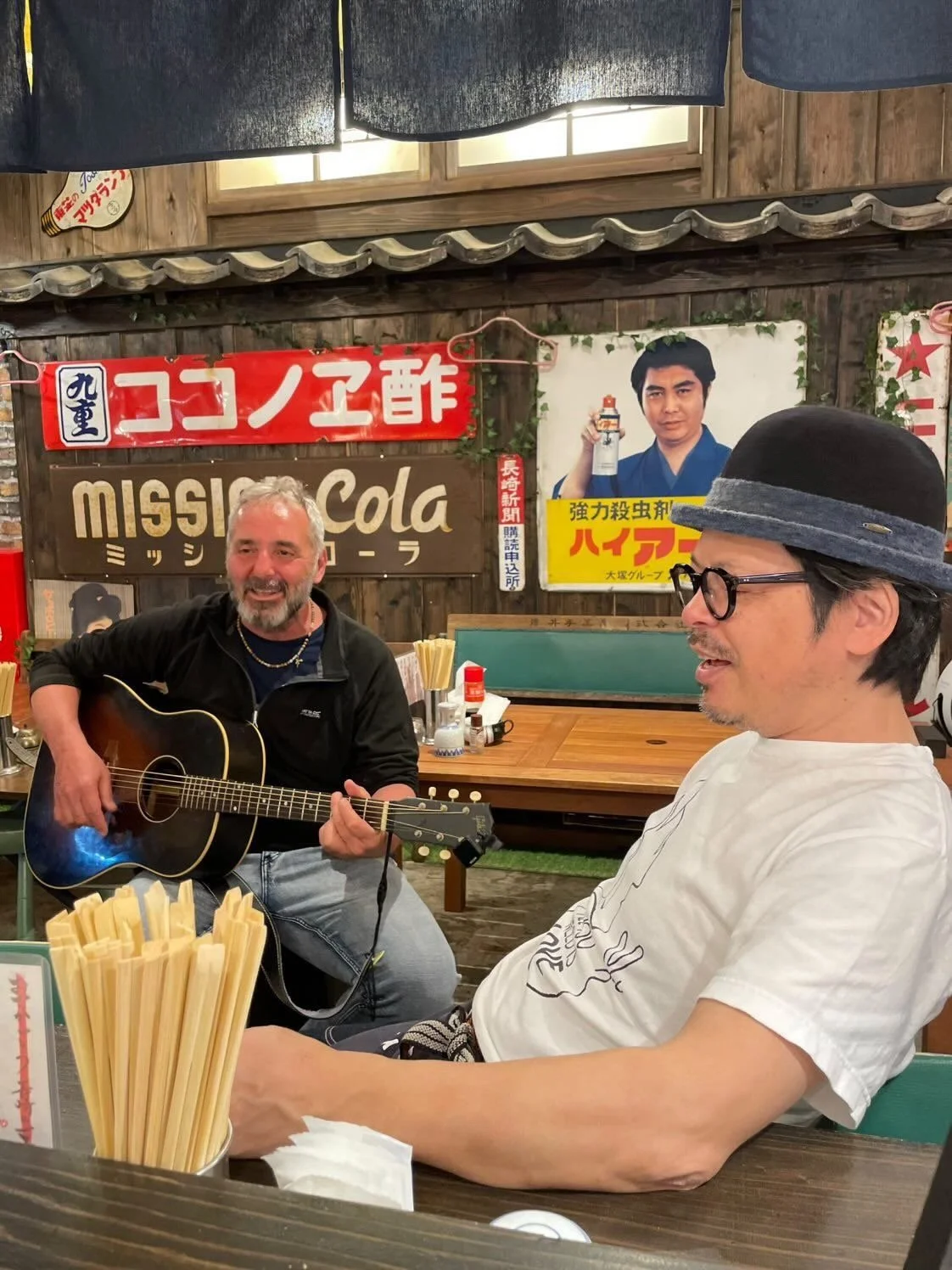
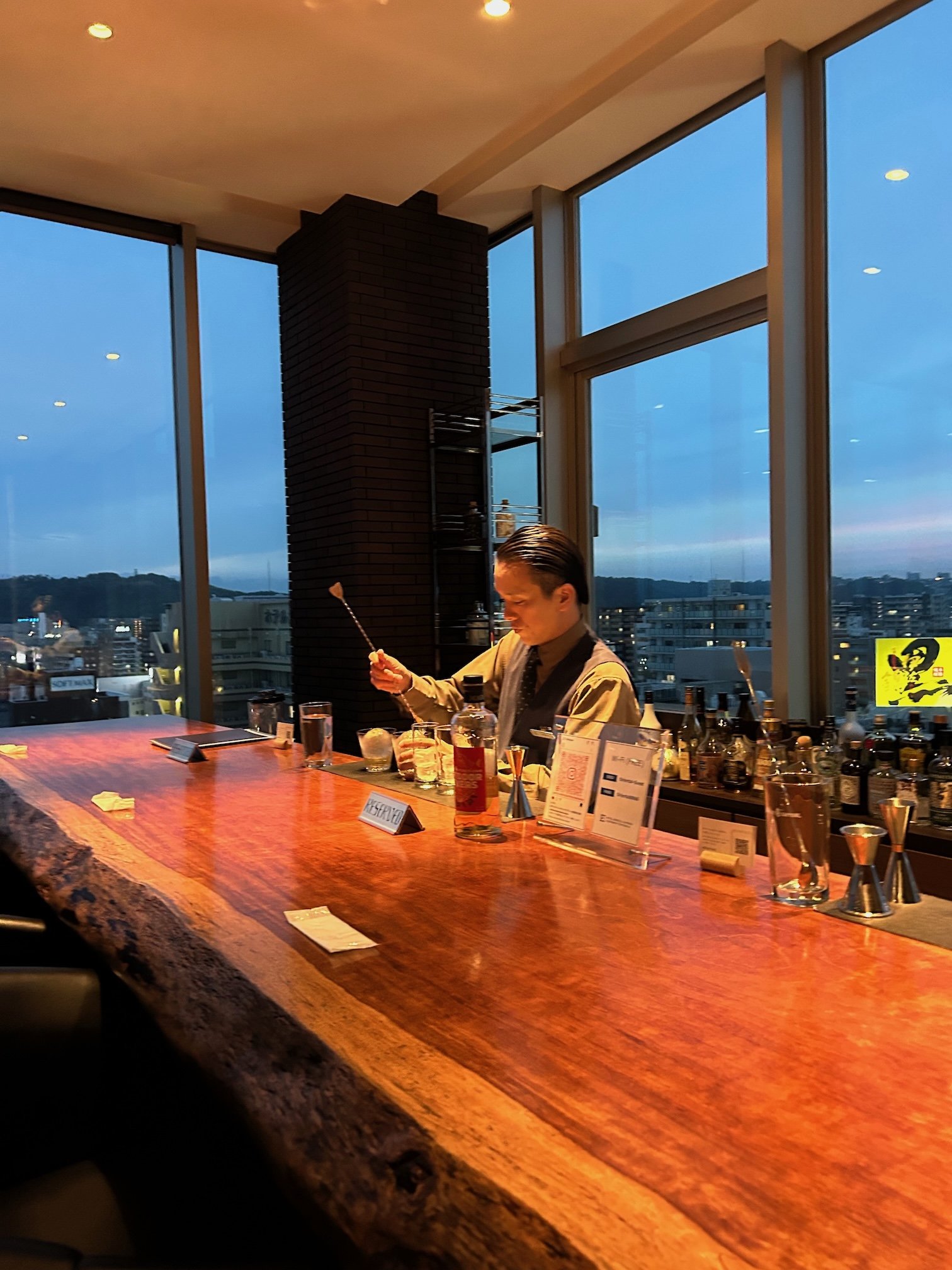
We are alone here. Which feels like an excellent opportunity to take a decorative guitar off the shelf, strum a few lazy chords, and chat with the friendly bartender in broken Japanese. We learn that the word ״Otsumami״ means the snacks served alongside beer.

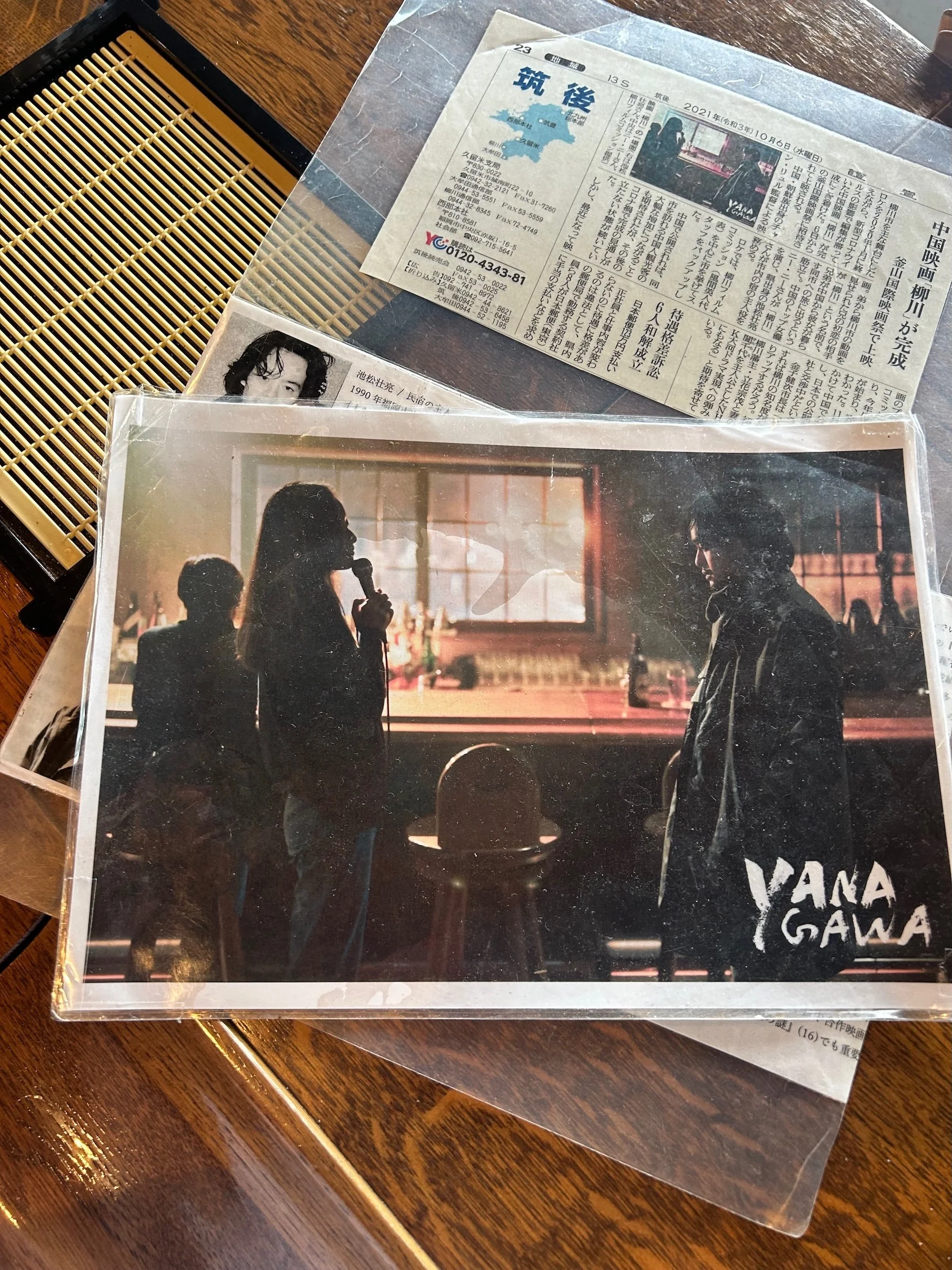
We also discover that the bar—and the bartender's rugged neck included—served as a filming location several years ago for the romantic movie ״Love in Yanagawa״. While we admire the laminated photographs from the film and produce exaggerated Japanese sounds of appreciation, a couple enters the bar. The ״konnichiwa״ gives them away. And us as well. Israelis.

A former CEO of ZIM in China, now retired and living in Hong Kong, and his wife. It is a rare, surprising and heartwarming thing to find yourself slipping into a conversation that flows naturally from one table to another.
A Meetup at the bar.

Ojika – Before the End of the World
The Goto archipelago, southwest of Nagasaki, was born from geological upheavals and volcanic activity, stretching across a chain of islands that extends for nearly one hundred kilometers. 
Ojika is a small island at the end of that chain. Home to approximately 2,300 residents. And this week—2,302.

We return here to see once again the warm people who believed us when we said we would come back.

To the tiny women who seem to have stepped straight out of a ״Mrs. Pepperpot story״, hurrying about all day in aprons with oversized pockets and pressing seasonal fruit into our hands.

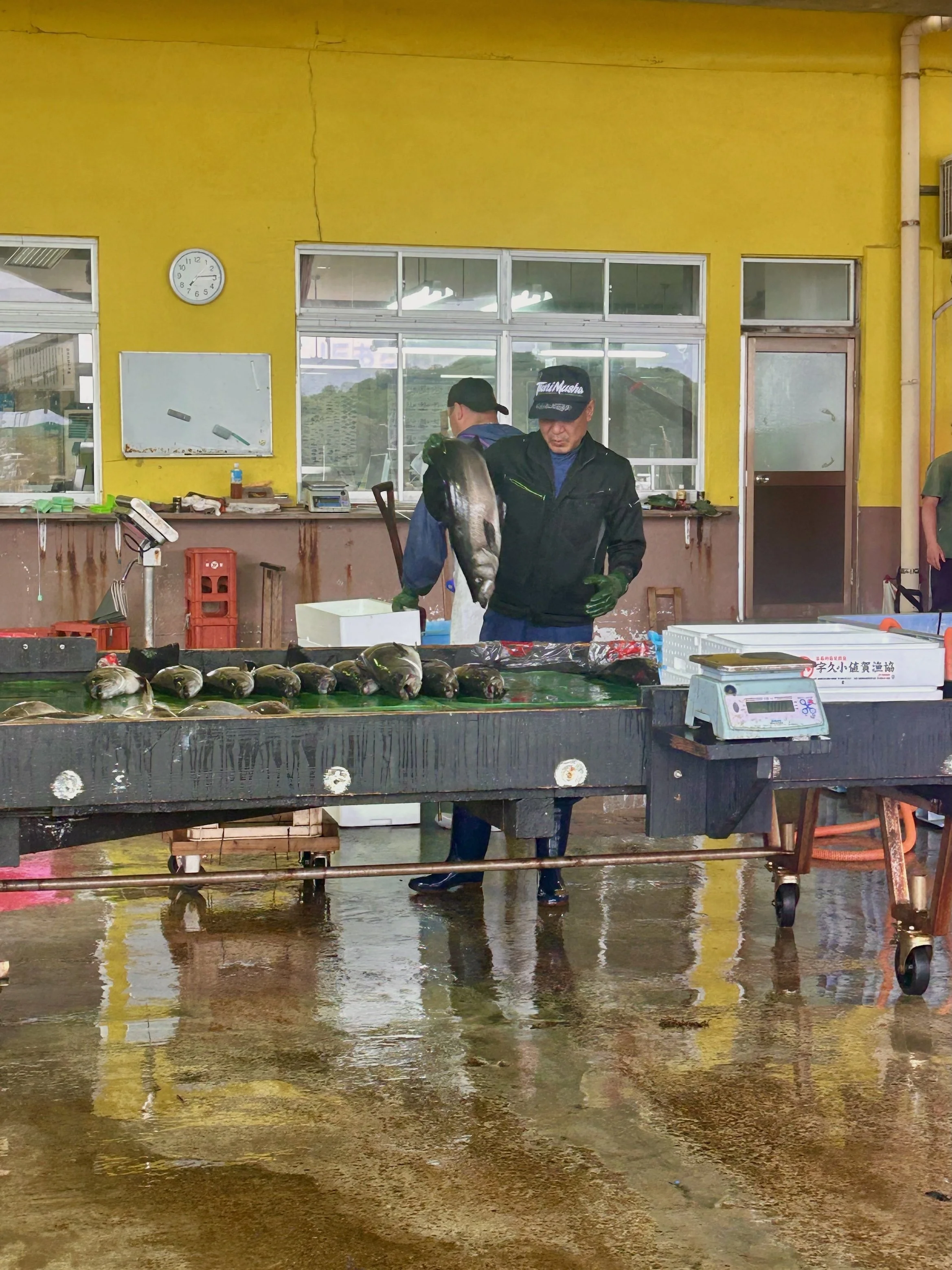
To the fishermen unloading fresh fish in rubber boots with practiced diligence. The fish we will eat tonight. And to marvel at the giant octopuses twisting slowly inside their nets. Those, fortunately, we will not be eating tonight.

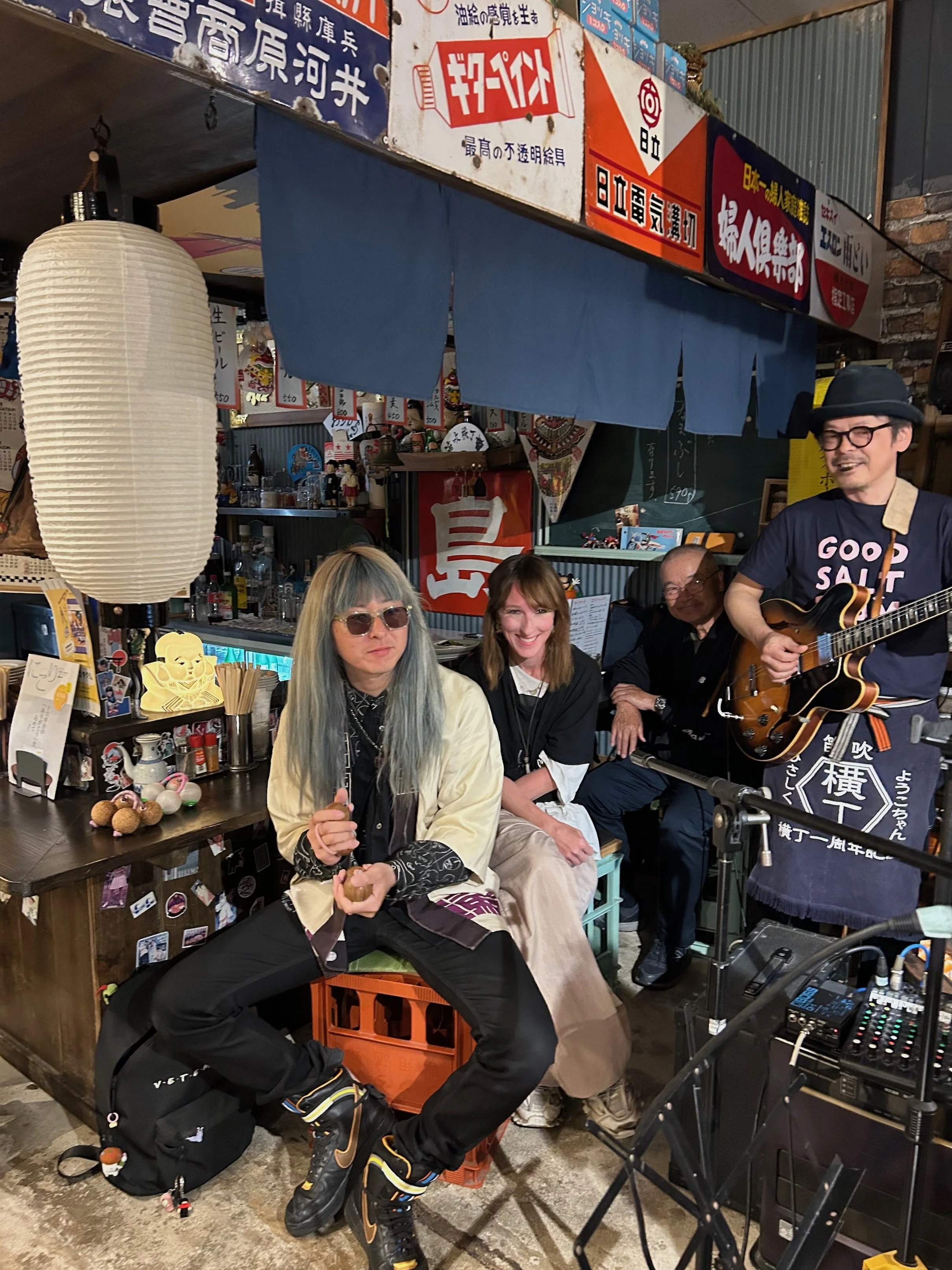
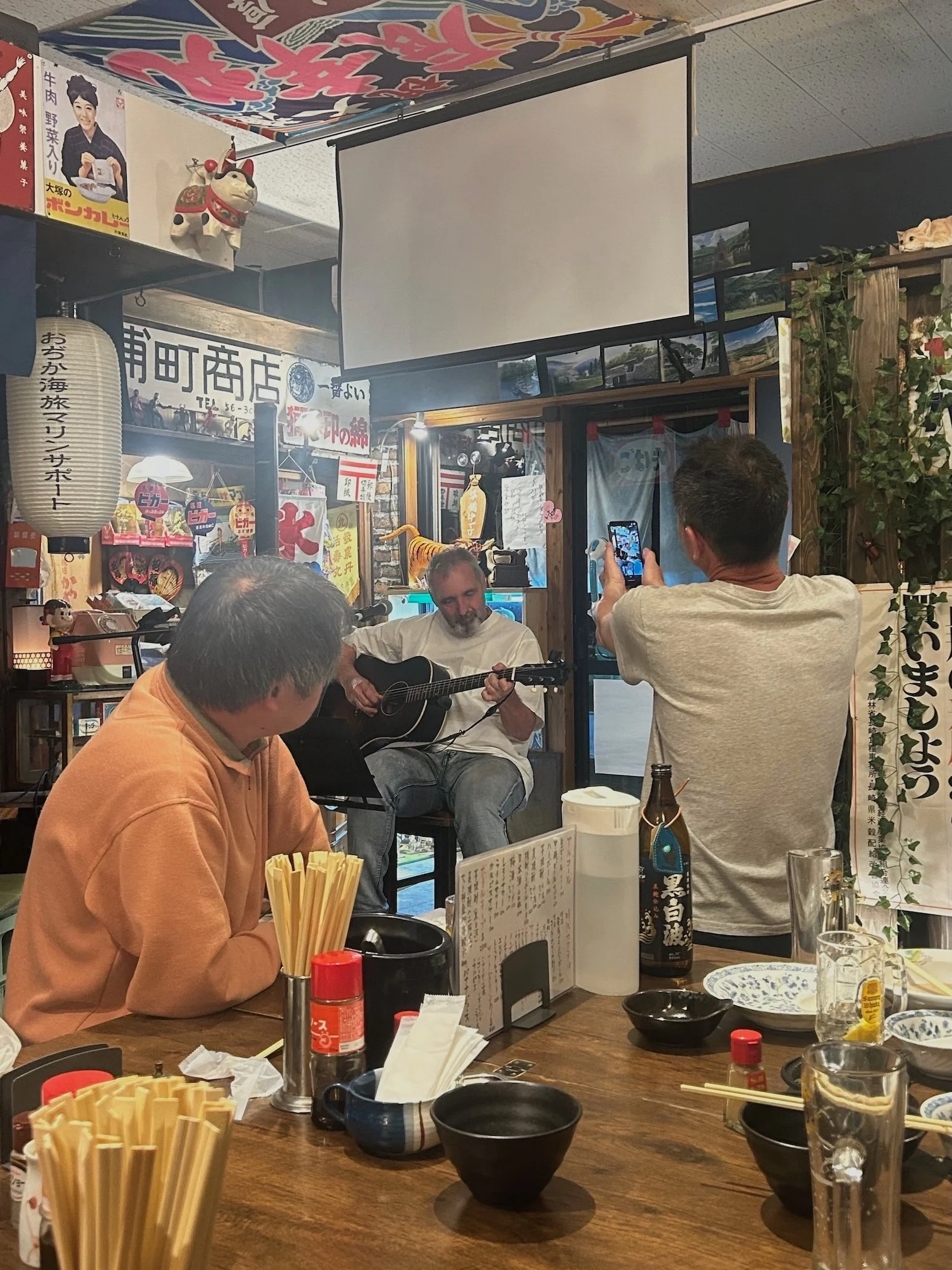
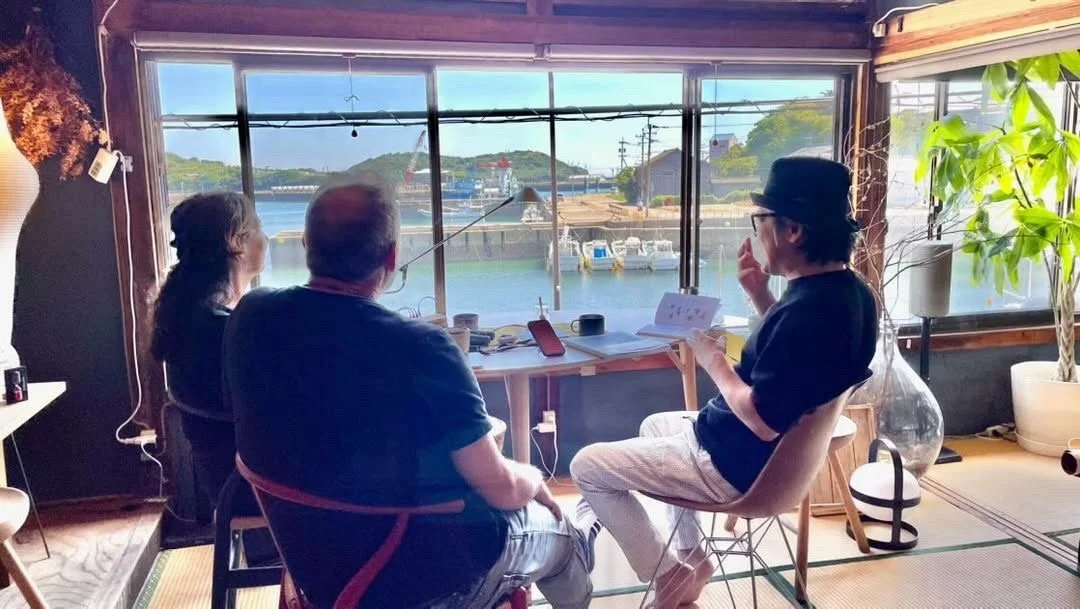
To the evenings at ״Yokochō״, Bebe's pleasure-filled izakaya, which shines like a lighthouse over both the pier and the heart. The place that embraced Dror and his guitar night after night with bows, gestures, and calls of "Masta! Masta!"—their Japanese-accented version of "Master! Master!"

There are sights and human encounters that cannot truly be told. Only lived.

Thoughts from the End of the Pier
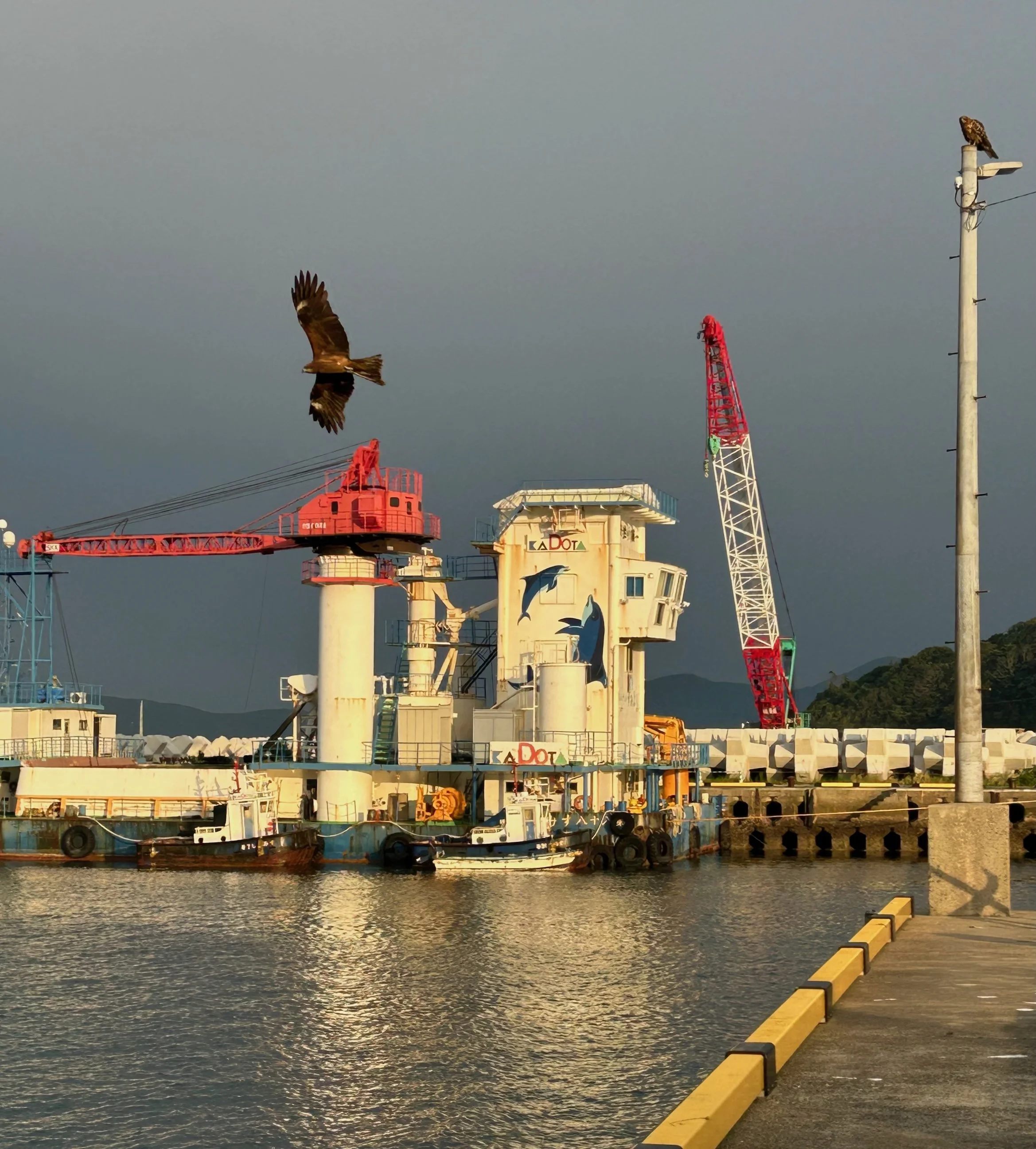
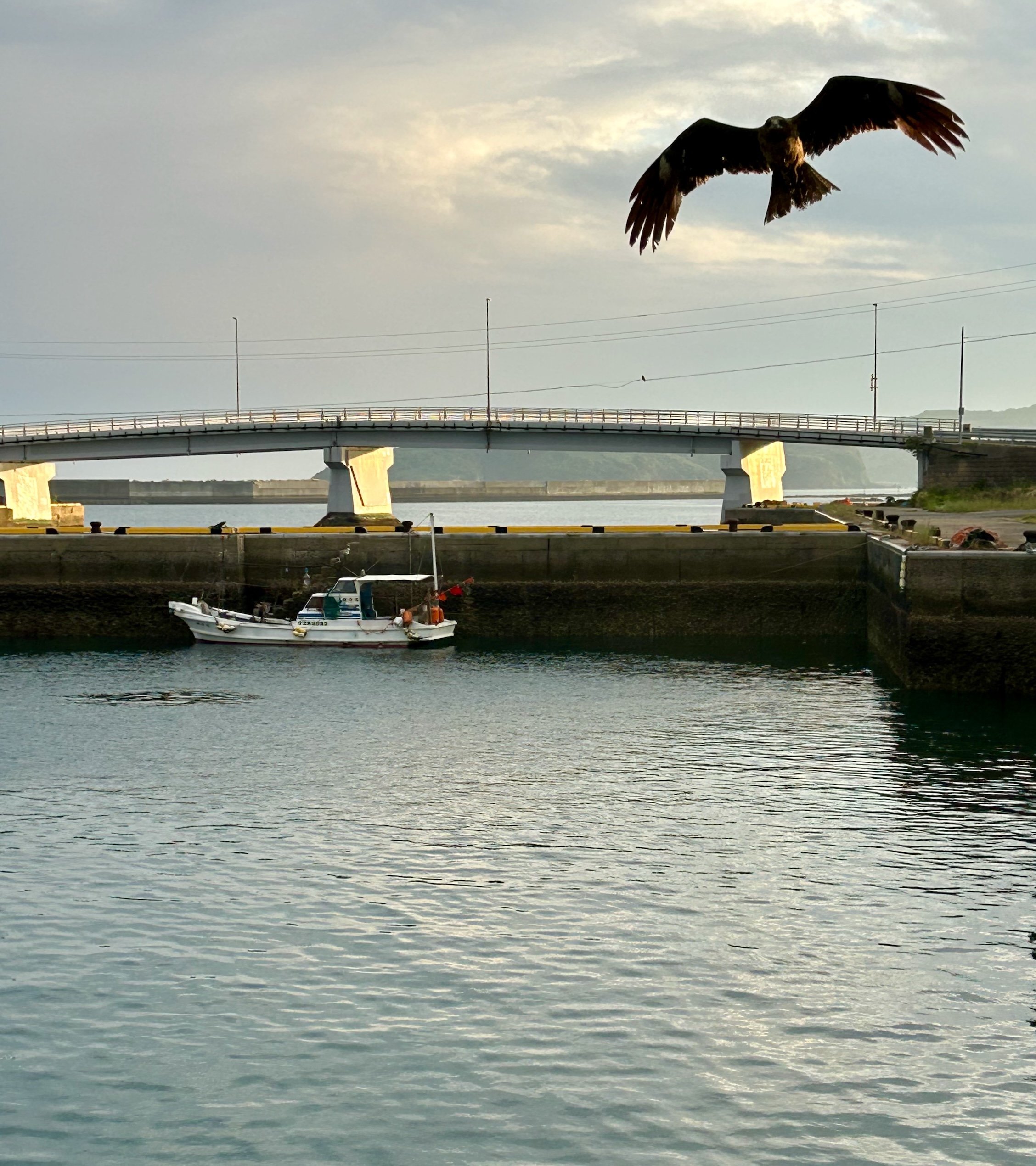
I've grown accustomed to waking to the burbling of water between the boats and the ghostly flight of black kites above the lagoon.
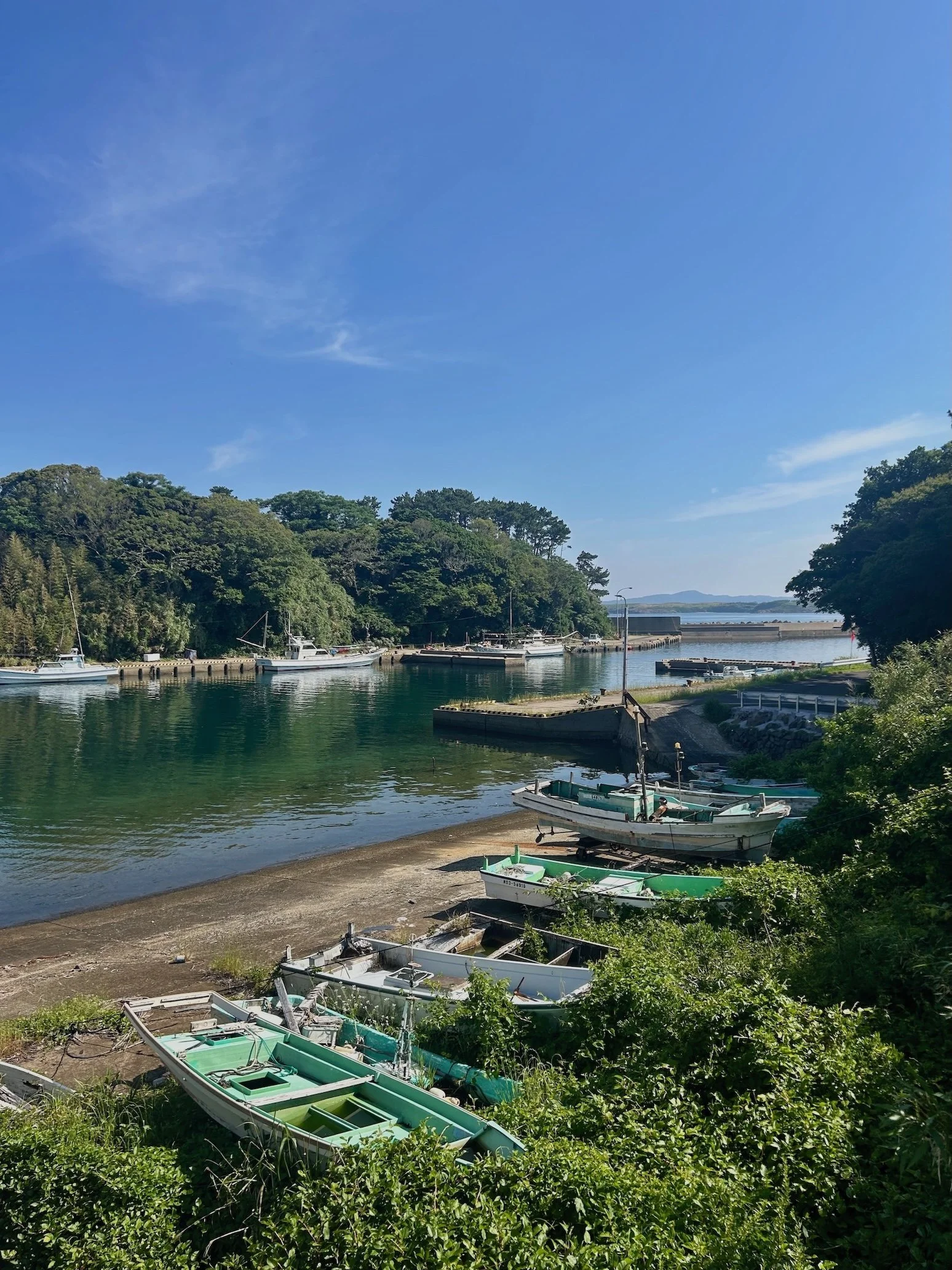
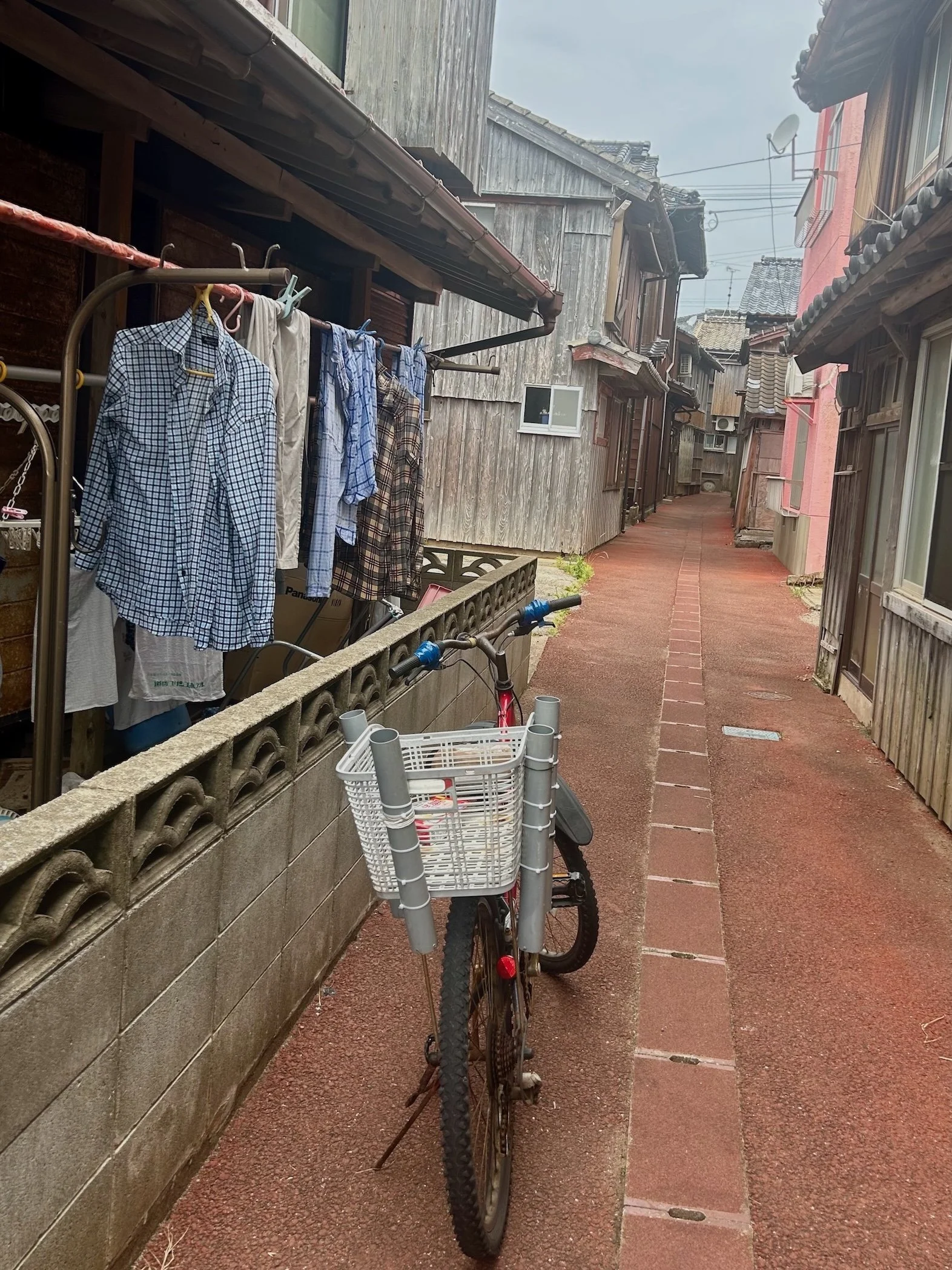
To walking toward the pier through strips of torn fog hovering above rooftops, narrow streets and bridges. And to surrendering myself to the limited movement contained within the borders the sea draw around the island.

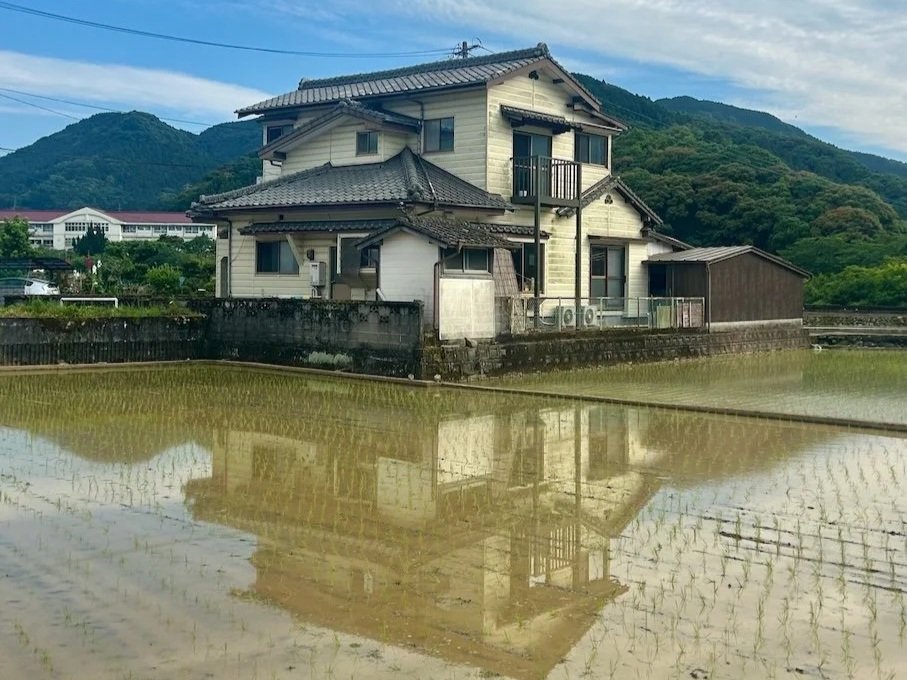
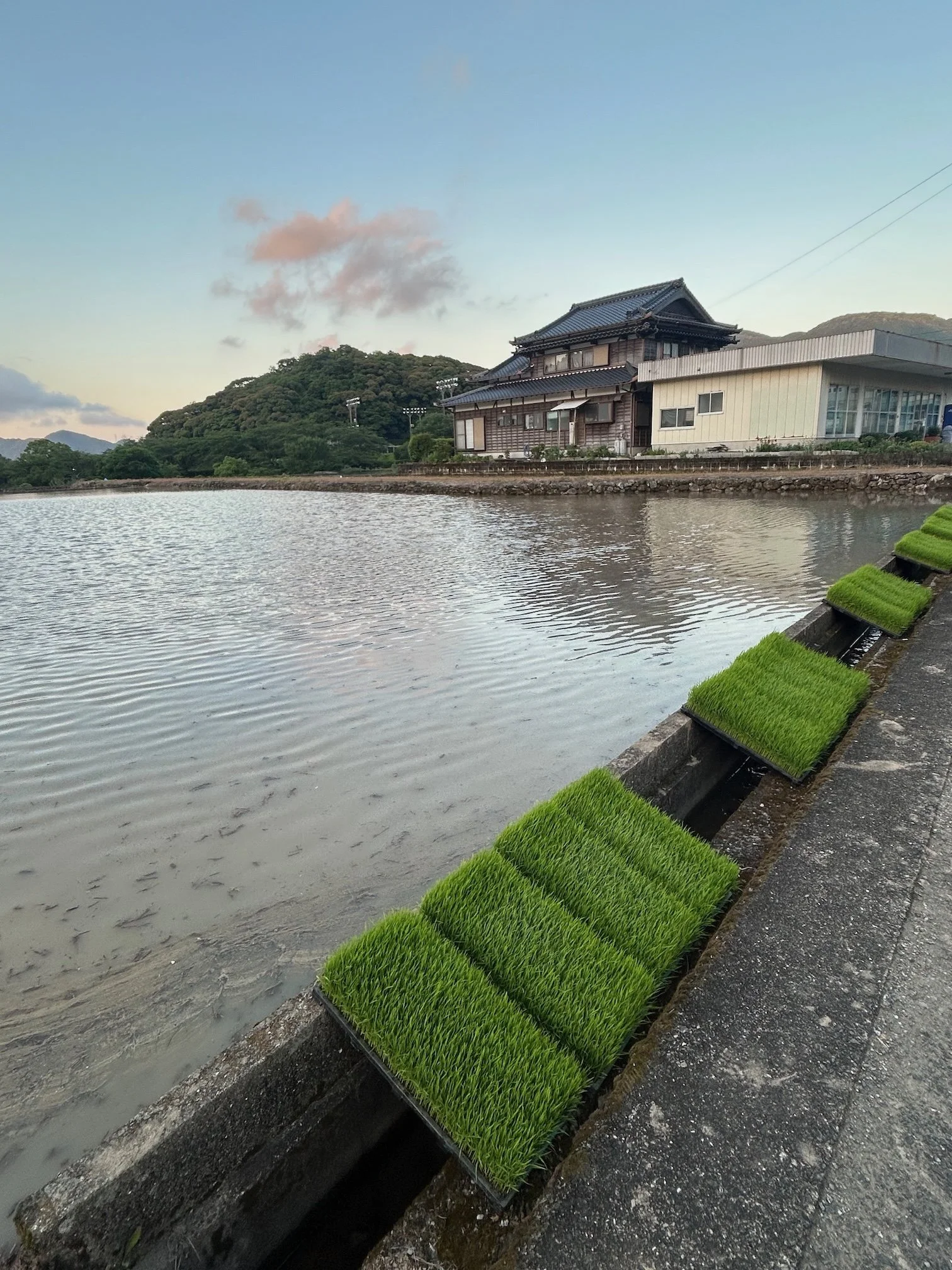
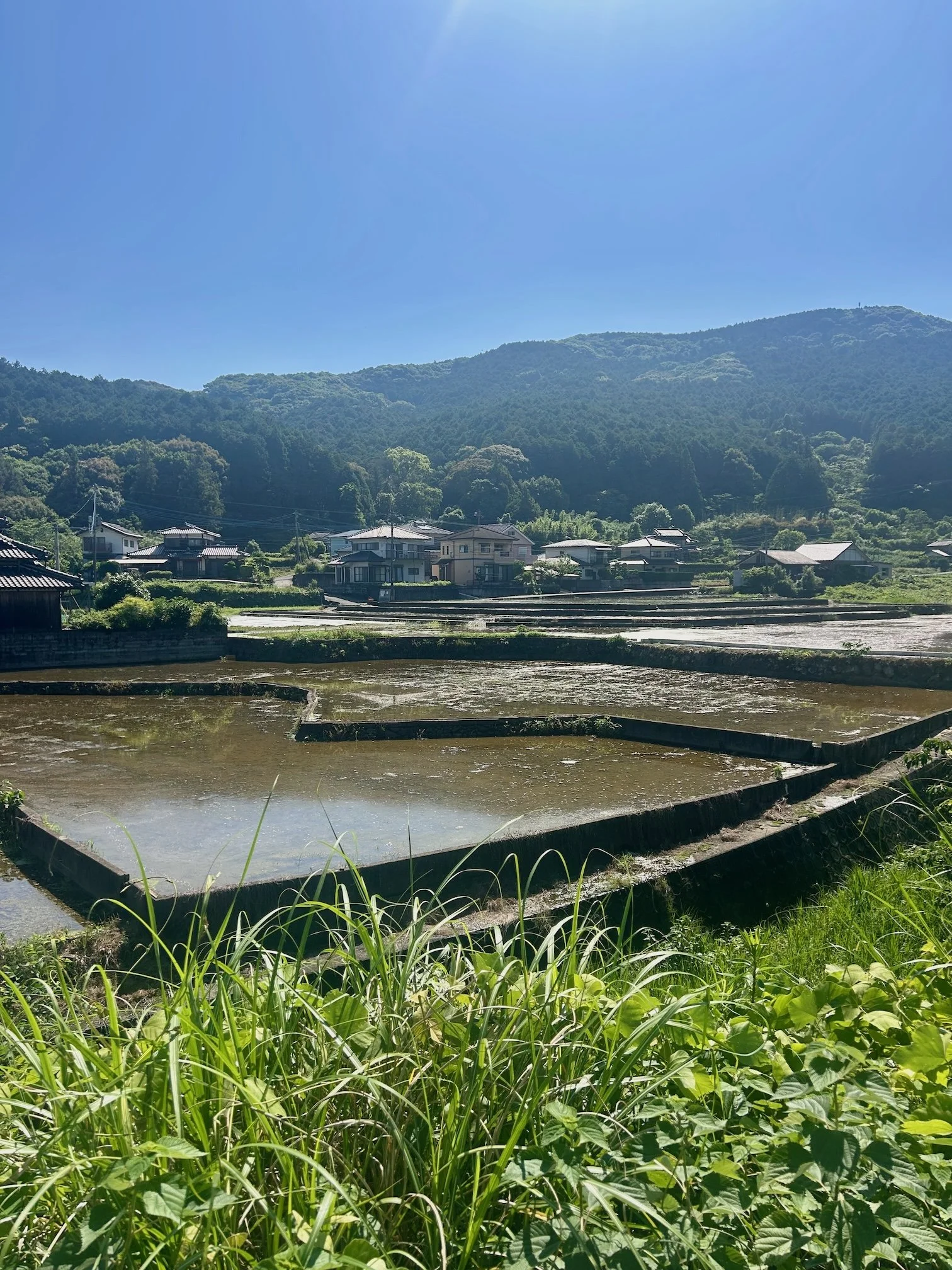
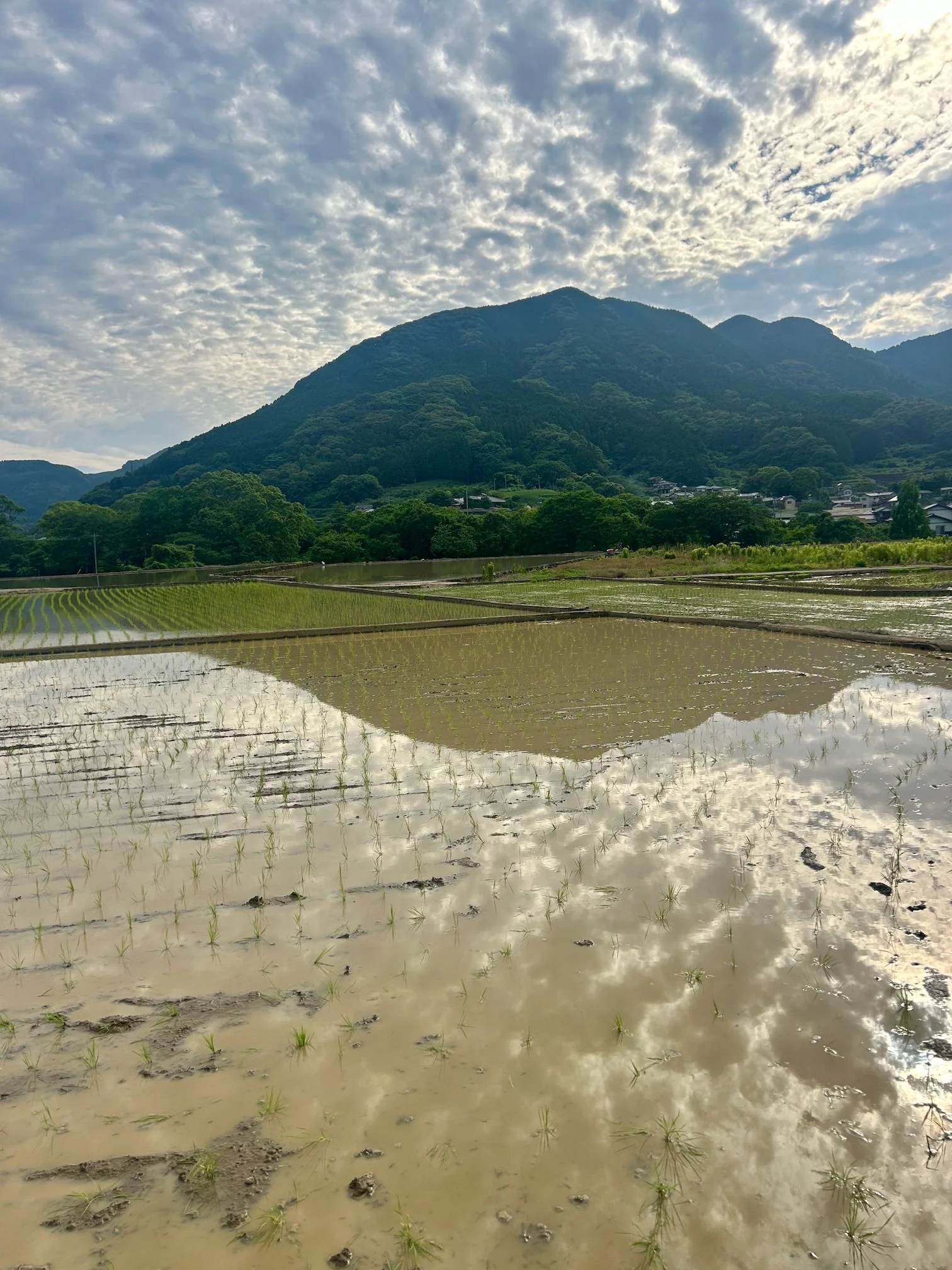
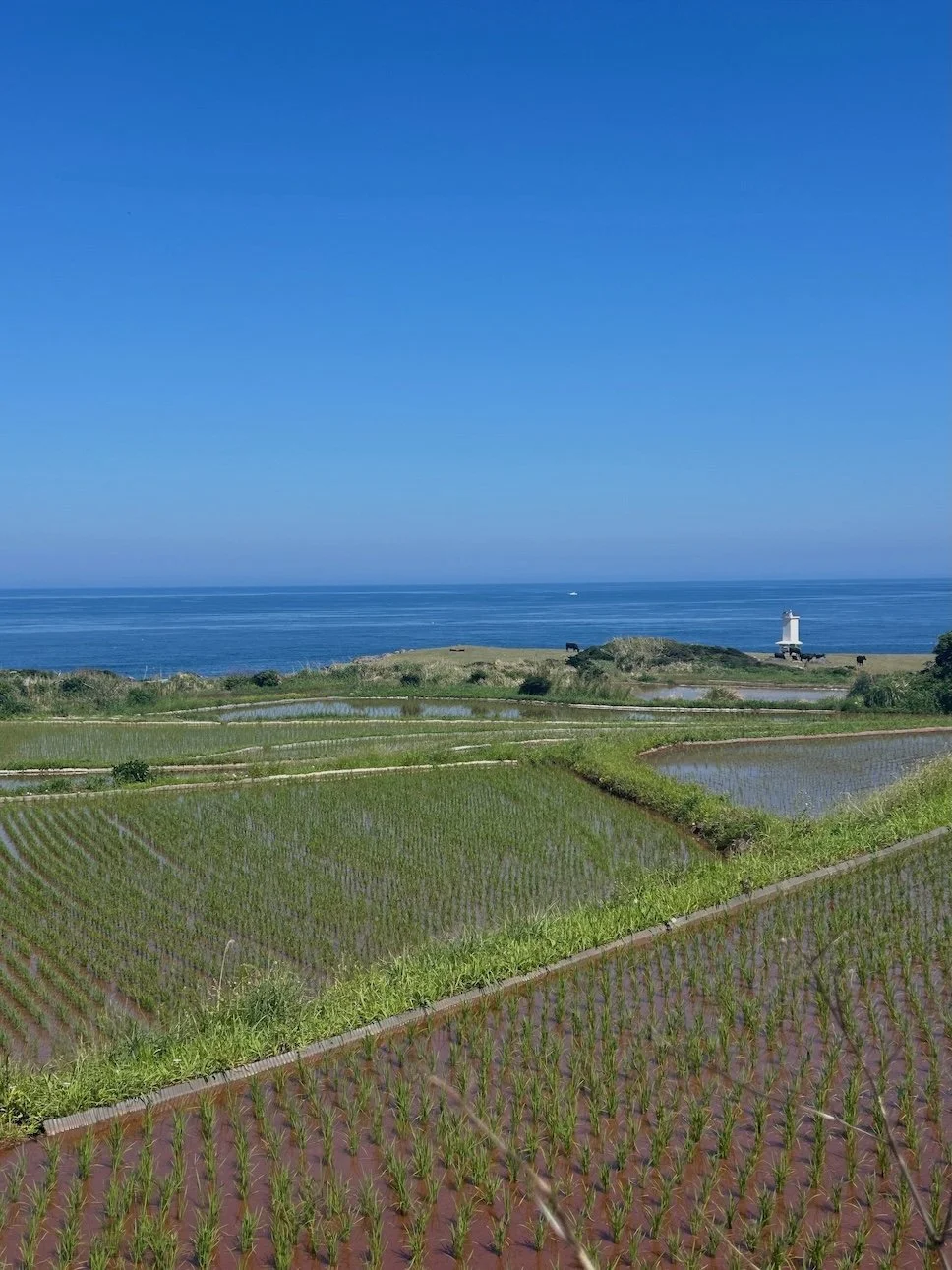
On the side roads descending toward the shore, the landscape opens slowly. Long, symmetrical rice fields, clustered like rows of artificial eyelashes dipped in water, reflect flashes of clouds and light.

Rice fields are a beautiful sight.

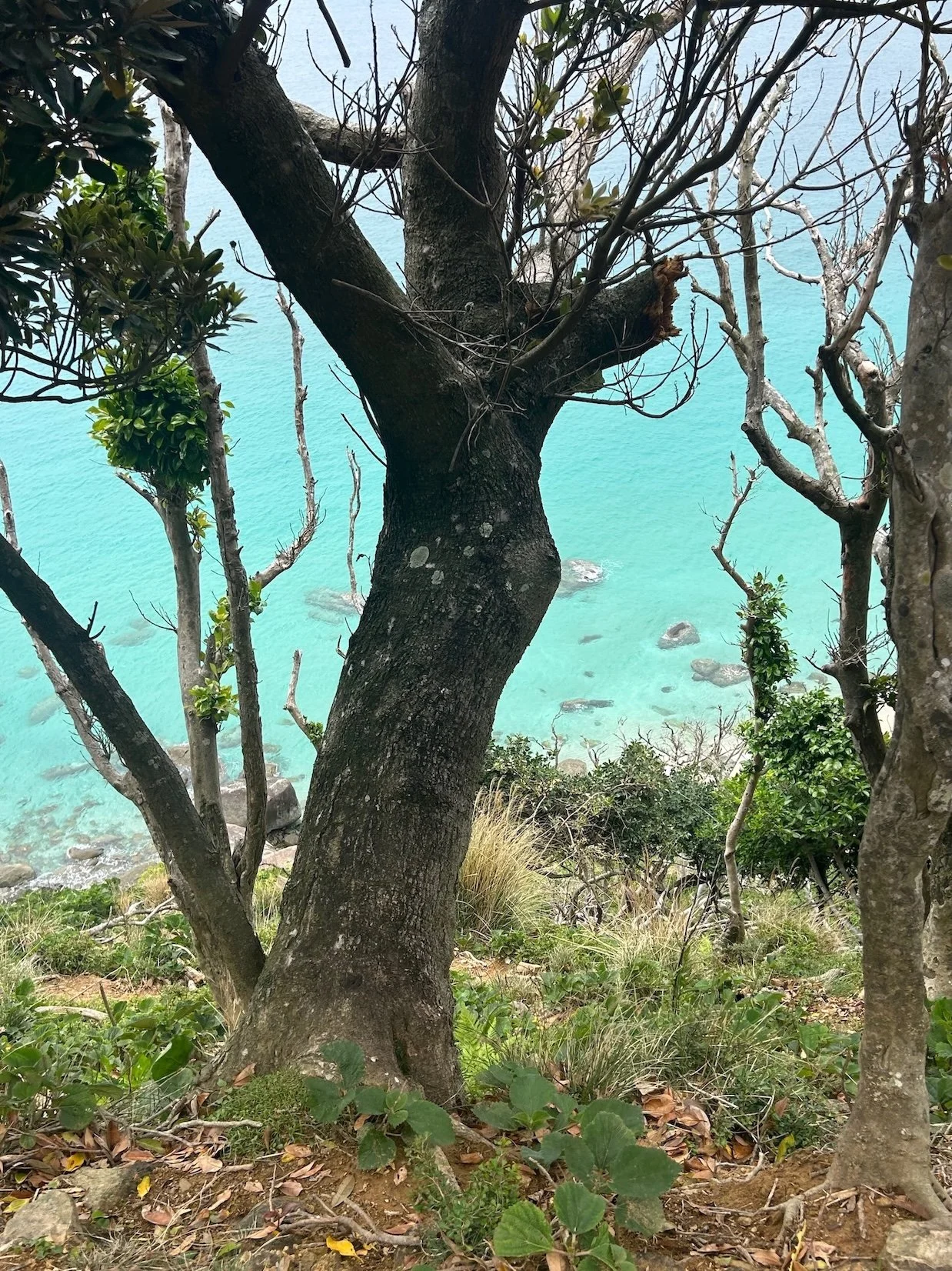
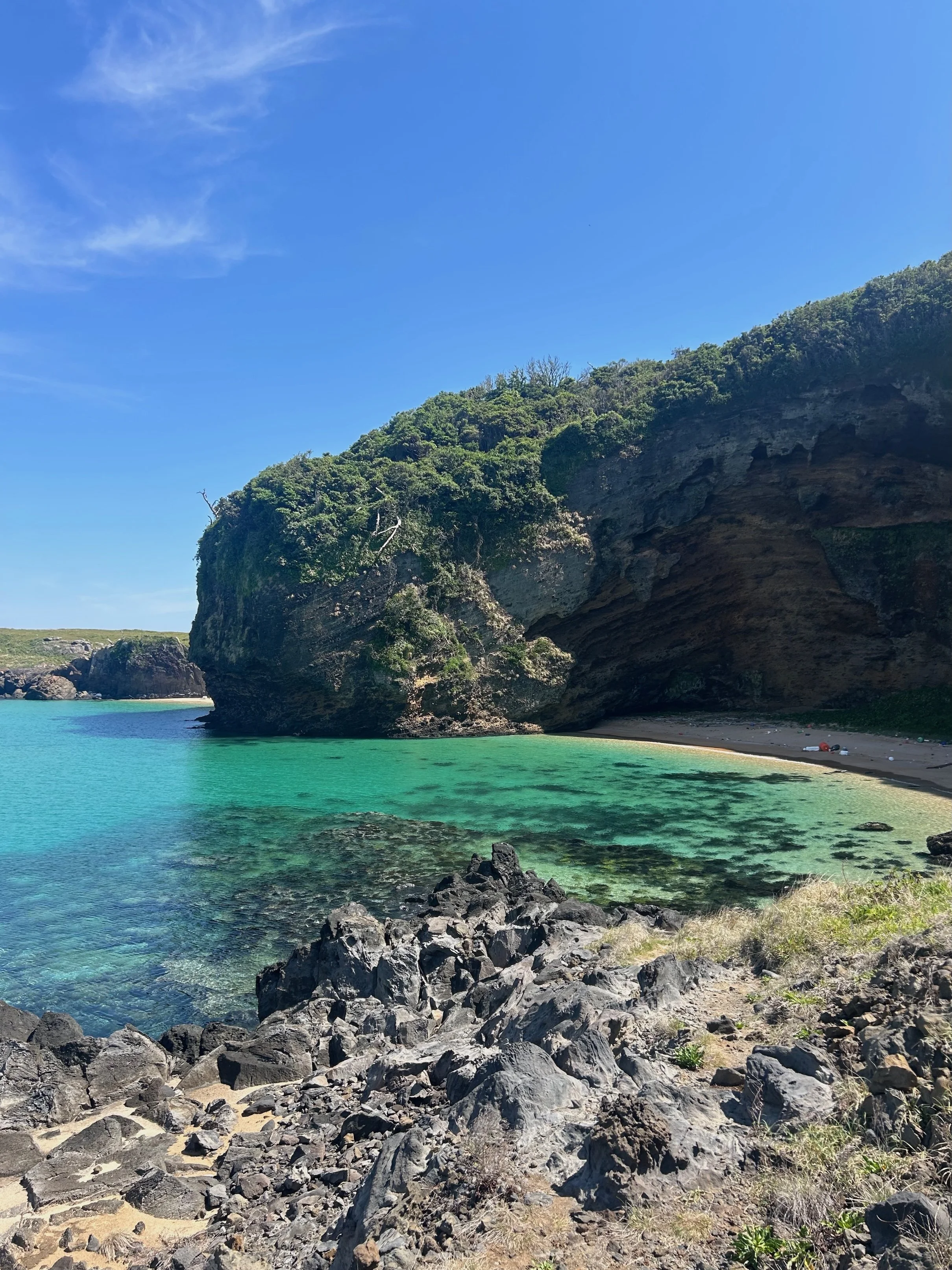
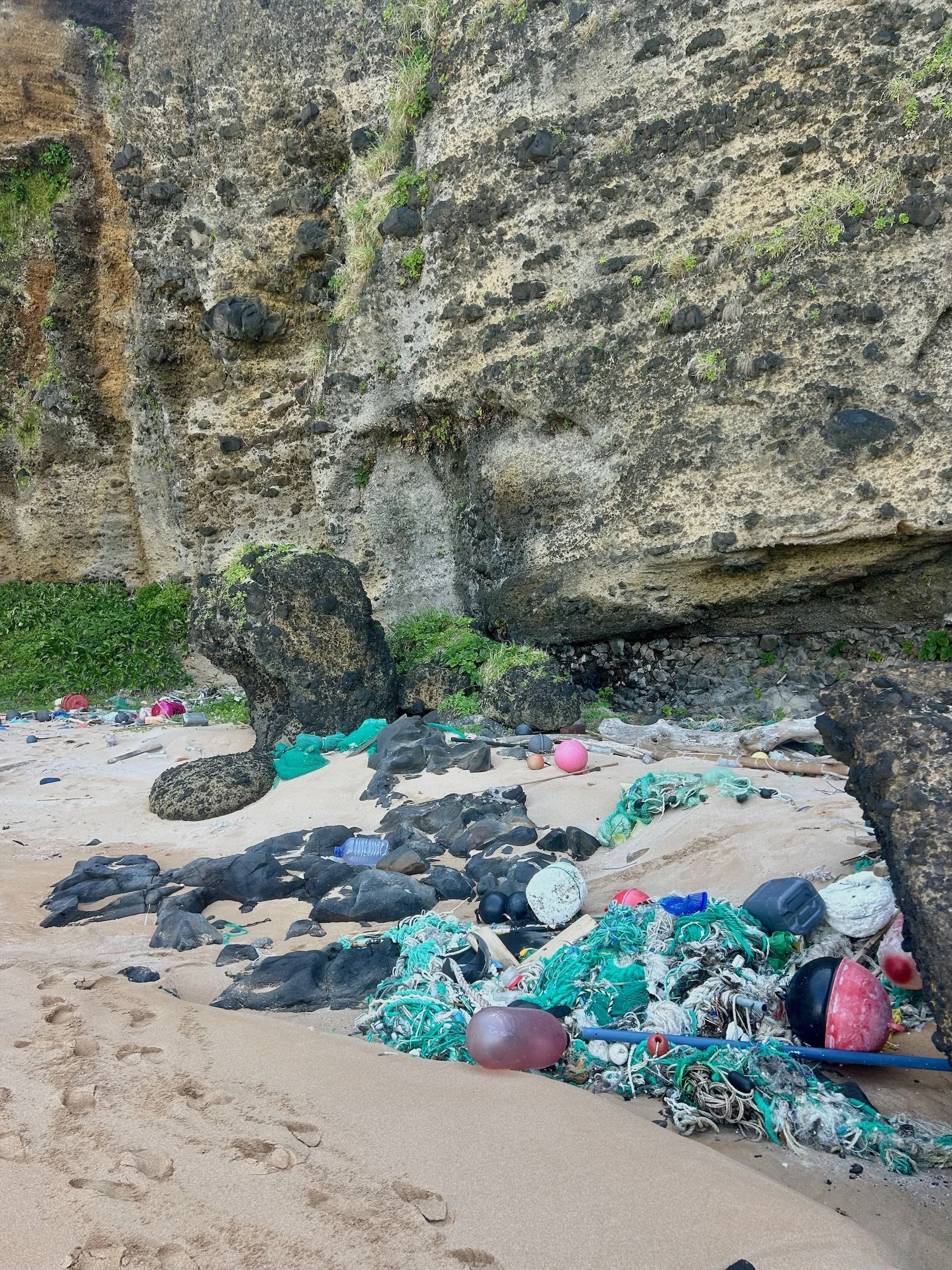
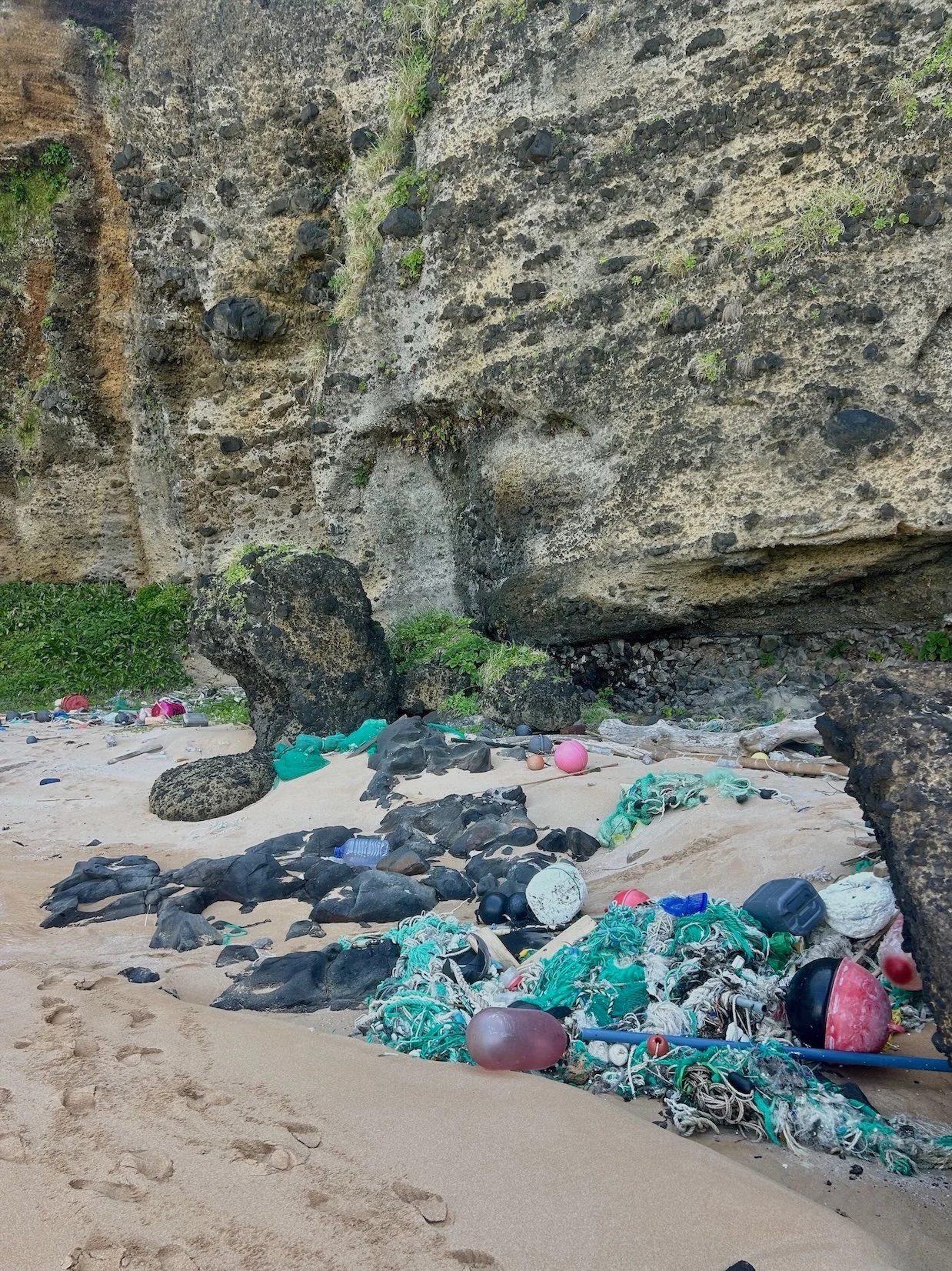
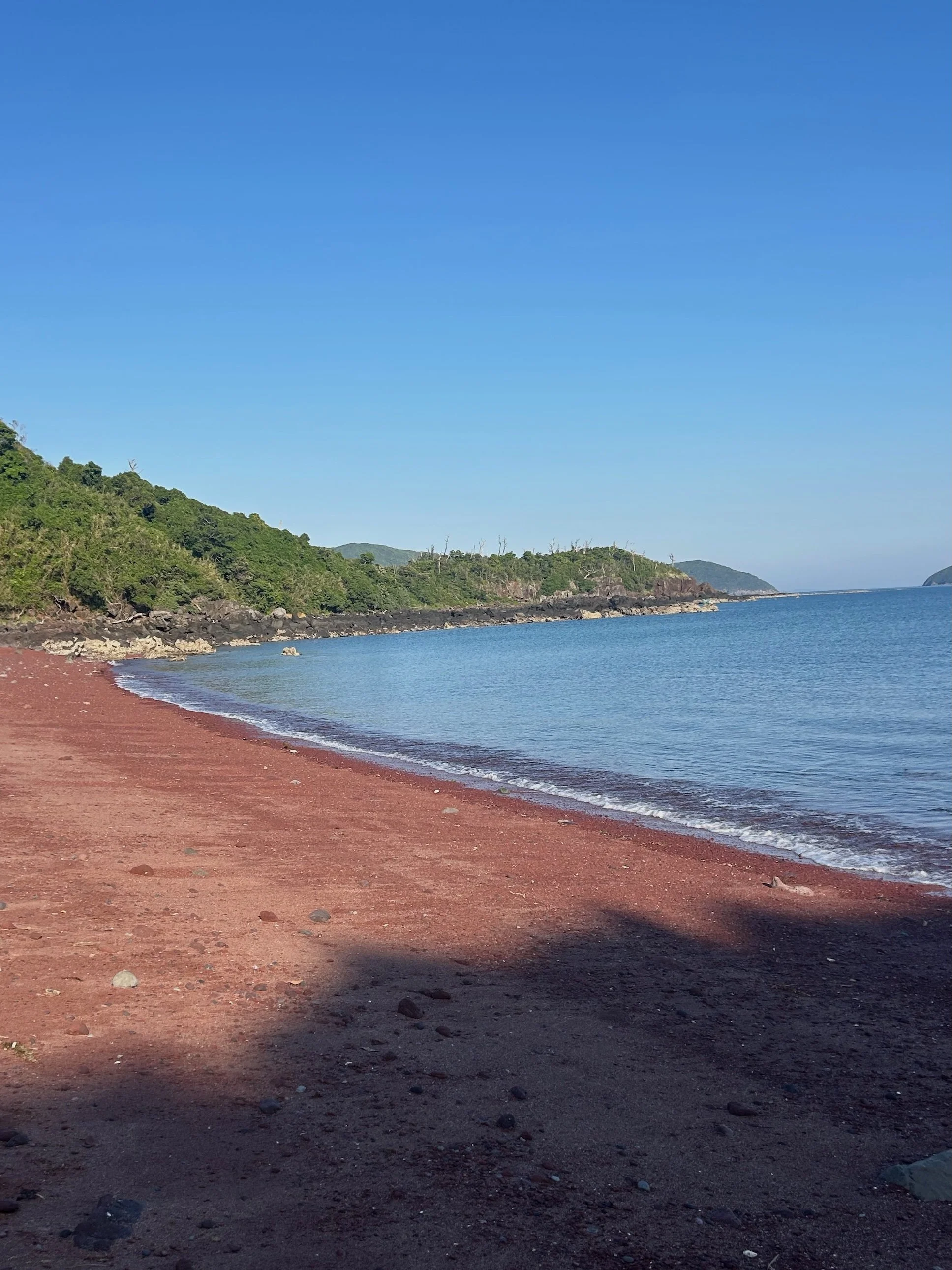
My breathing expands. My legs grow stronger. My eyes become accustomed to this endless blue that appears from every direction. We swim in turquoise waters along white and red beaches surrounded by volcanic rocks rising from the sea and collecting debris from shipwrecks, fishing nets and faded buoys bleached by the sun.

Nozaki Island – What Remains of Life
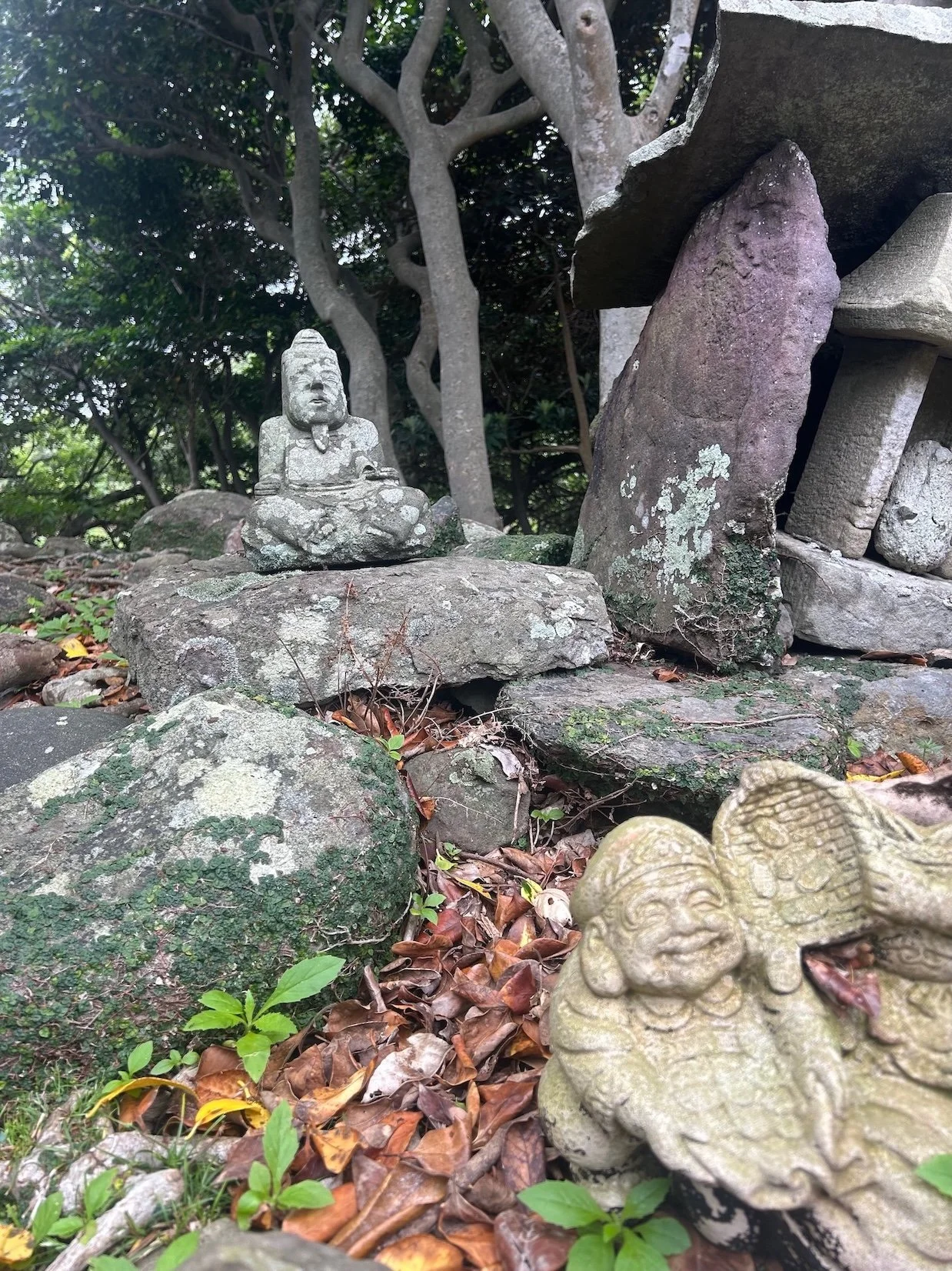
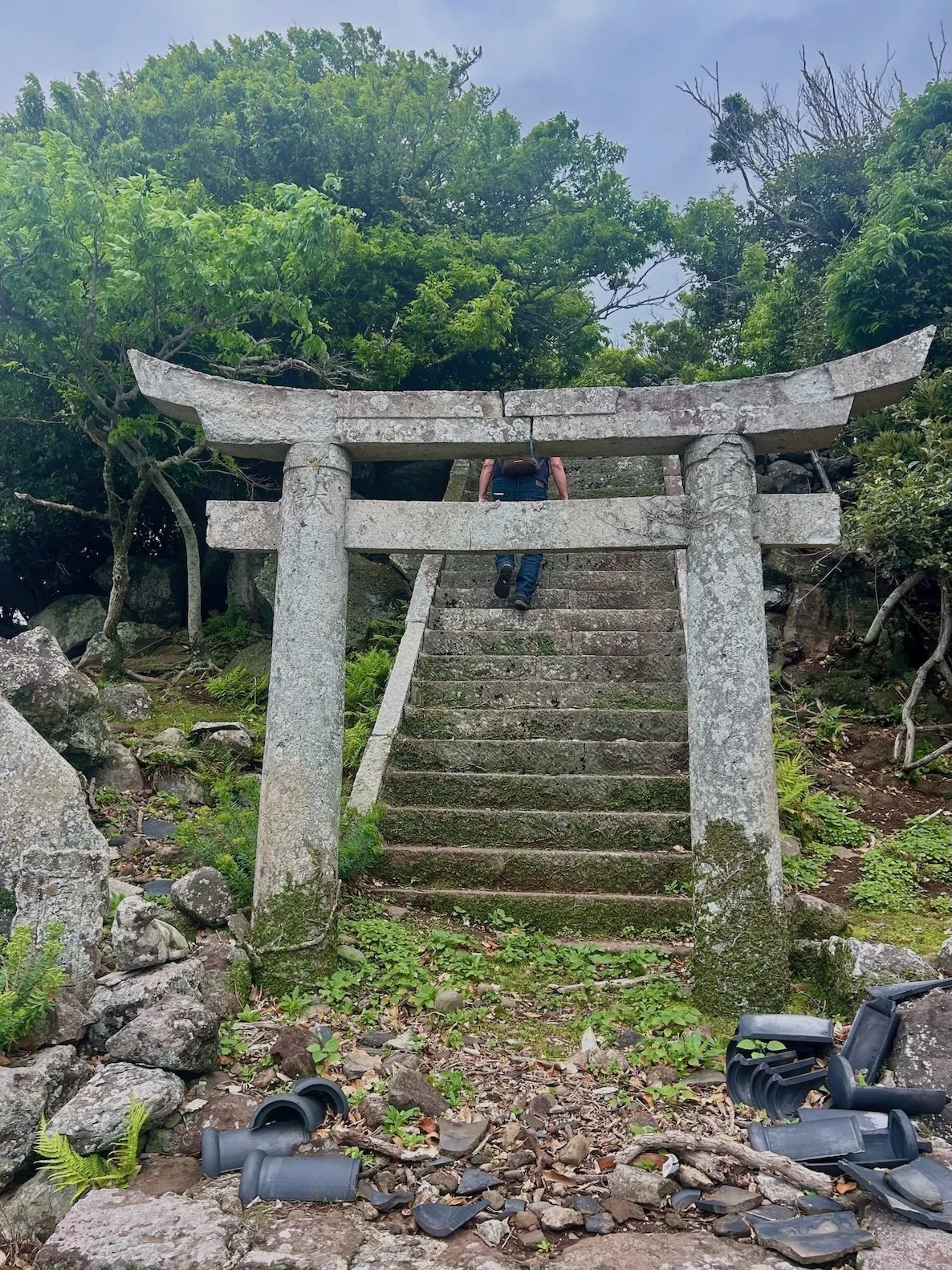
We take a short ferry to Nozaki Island, an island that was gradually abandoned by its residents until the final inhabitant left in 2001. The last resident was a Shinto priest who had cared for the island's shrine.

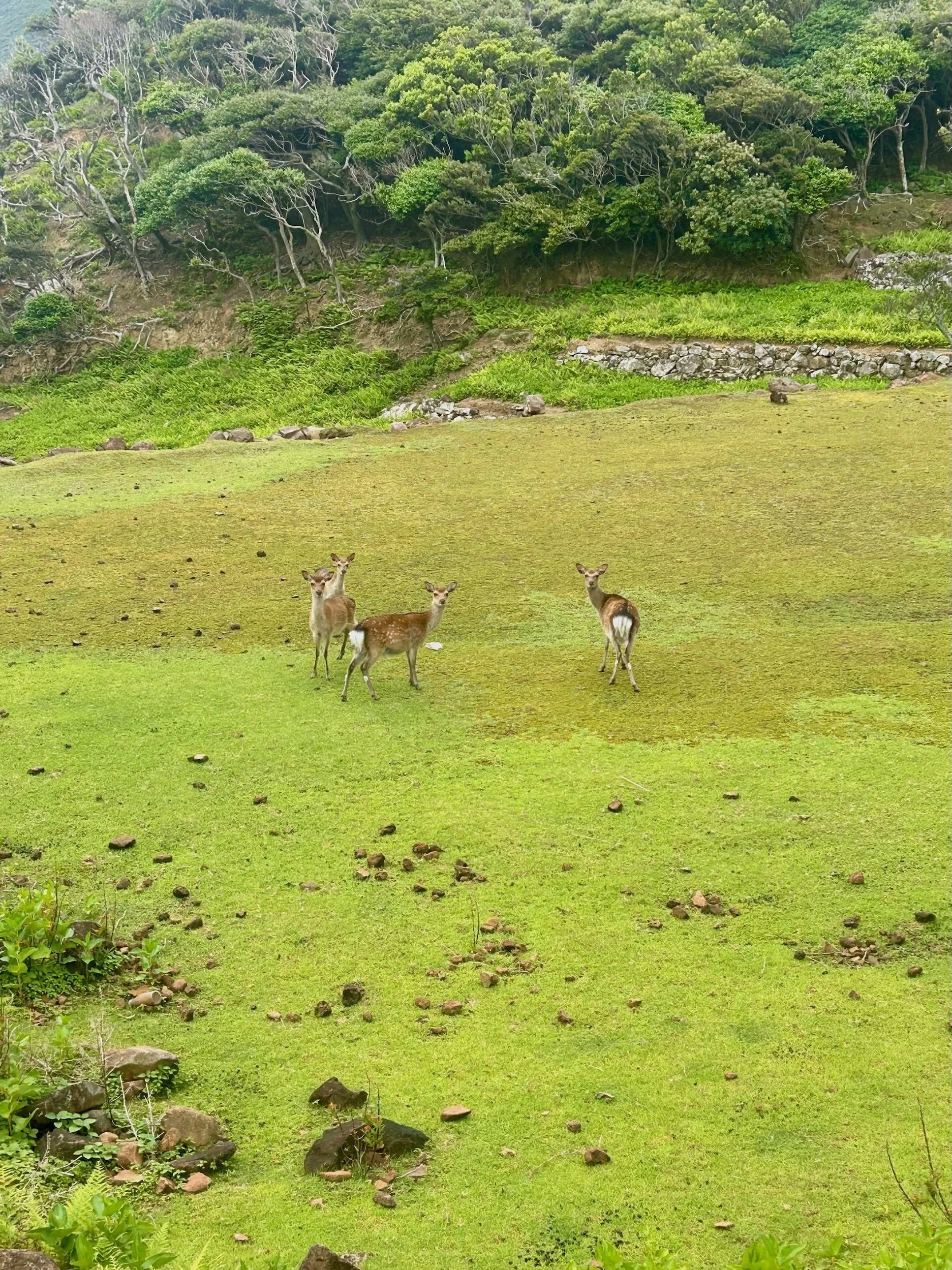
Wandering through Nozaki feels surreal. Like a stage set left standing long after the play has ended. Over time, nature crept inward through balconies and windows, slowly covering the traces of human life and reclaiming the place for itself. Herds of deer roam freely along the paths. They peek out from among the trees and fix visitors with alert stares before disappearing again into the landscape. The bare branches lean toward the blue of the sea. So much blue.

A Rashomon of Tides
Bebe mentions that he will turn sixty in April 2027. He adds that in Japan, sixty is considered a significant milestone called ״Kanreki"—a return to the original cycle. When a person reaches sixty, the astrological cycle into which they were born resets, as though life begins again. A rebirth. A combination of the twelve zodiac animals and the five elements. Twelve times five equals sixty—by astrological arithmetic.

Bebe plans to record and produce one hundred songs he has written and composed before his own rebirth arrives and asks Dror, the Master, for advice.

And I find myself thinking: Damn. How did I miss my own rebirth? Apparently all that's left is to wait for one hundred and twenty - Not fair.

Fifty residents of the island passed away last year. Only ten babies were born. Come to think of it, I haven't seen the persimmon seller who used to sit in the corner of the fish market. May her memory be a blessing.

Amazon delivers to the island.

Only nine days each year are designated for collecting shellfish. Nine full-moon days, when the tide retreats farther than at any other time and exposes the seabed. People purchase a permit from the local fishing office. In return they receive a small onsen towel. The towel is worn around the neck as proof that one has earned permission to gather shellfish.

In neighboring Oshima Island, only a single child remains in the elementary school. Five part-time staff members are responsible for his education. Only after he completes his studies will the school close.

Enthusiastic participation in karaoke nights at Melody Bar—run by a Japanese woman with the mannerisms of a geisha-house madam—managed to increase my Instagram following by a single-digit number. I am completely Big in Japan. It is difficult to know whether they are genuinely enthusiastic, like the long, drawn-out “Ehhhhhhhhhhhhhhh!" they release while their lips contract to approximately sushi diameter, or whether this is simply what Japanese kawaii culture looks like in action.

Weigh anchor.
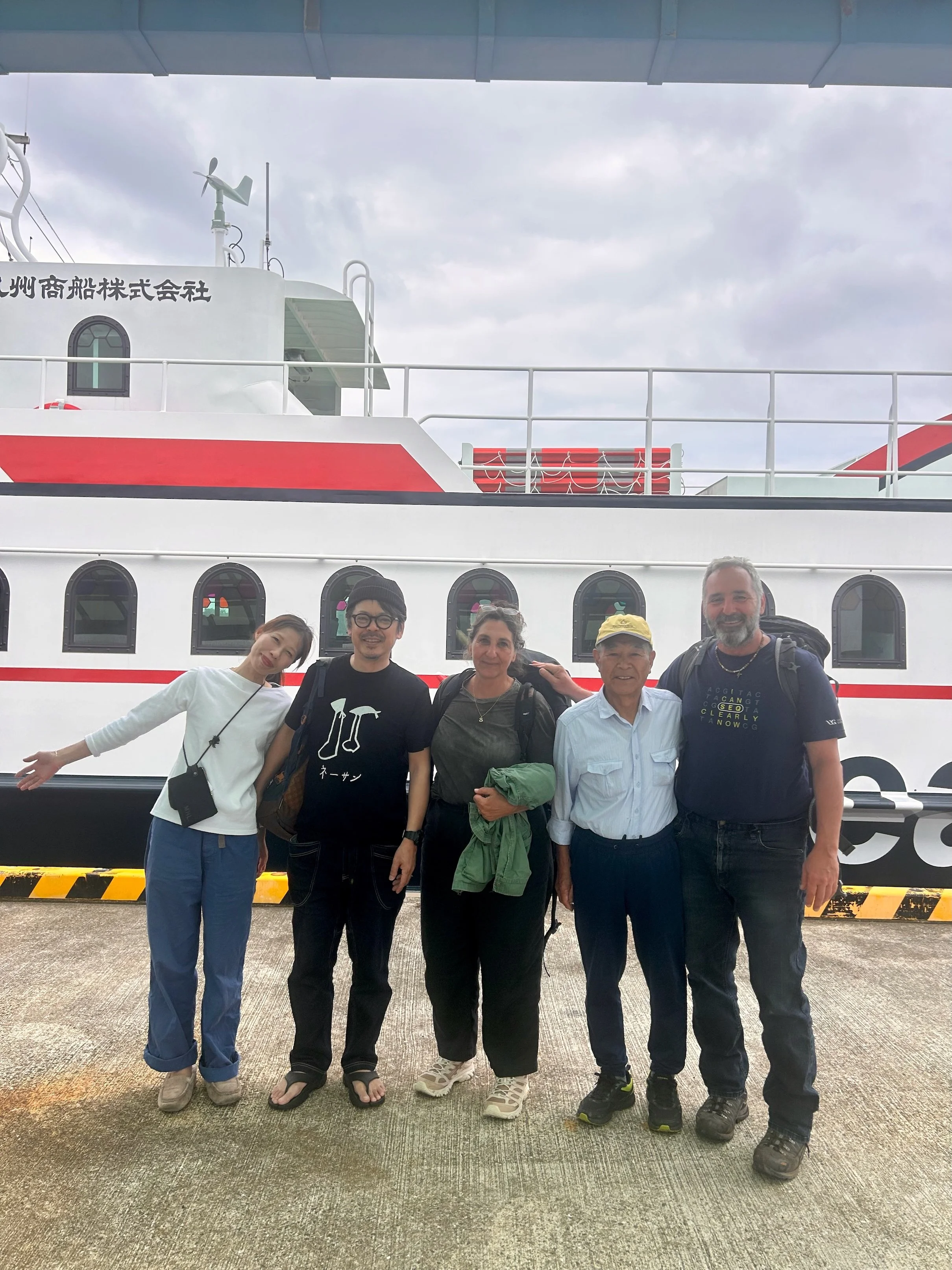
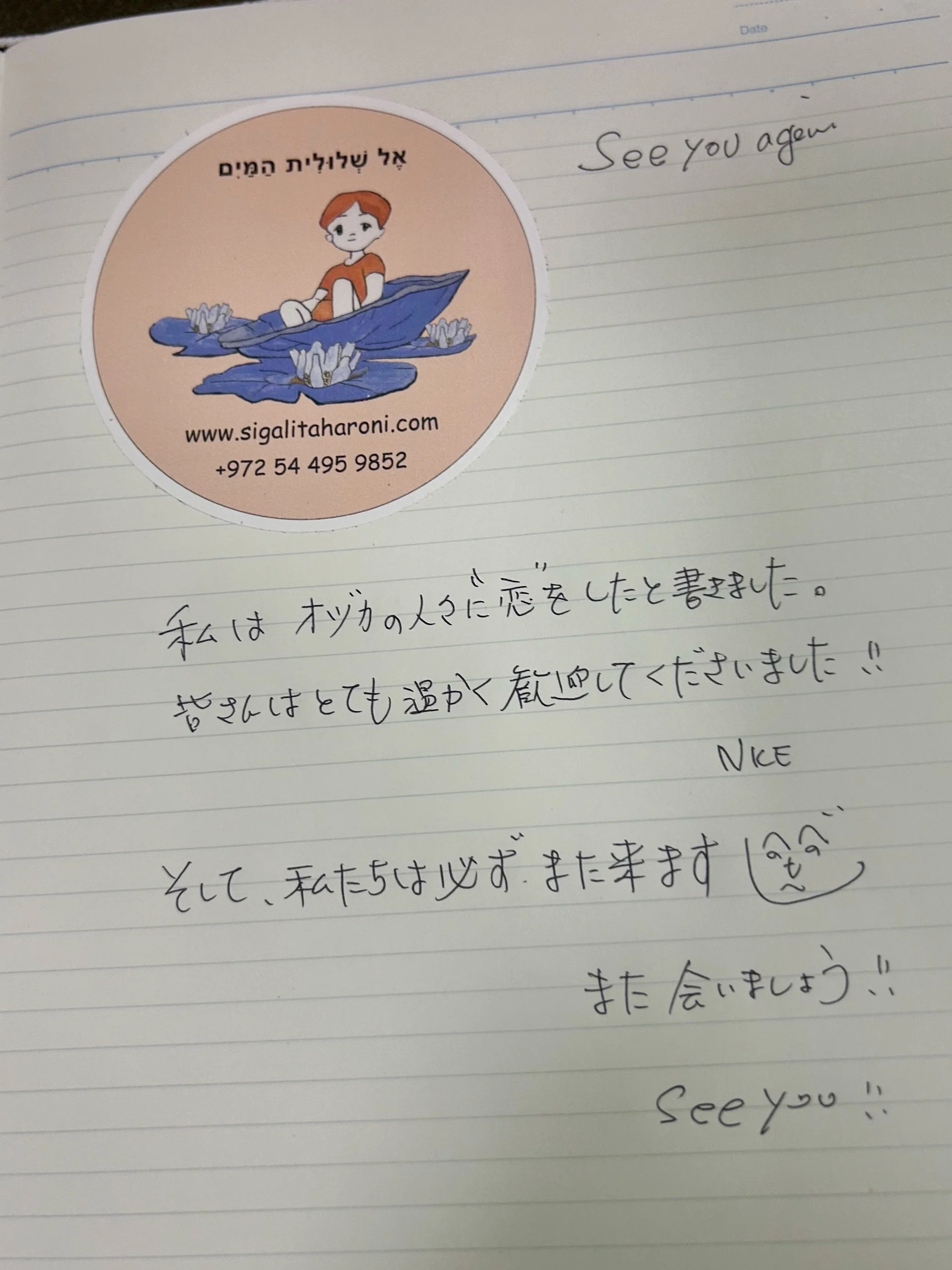
We part, quite literally, in tears, collapse into one another in sumo-sized embraces and wave wildly as the ferry sounds the final chord of this chapter.

Yoko spent the entire night sewing gifts for us from kimono fabric. At a level of craftsmanship bordering on haute couture—A pencil case embroidered with my name in Japanese—Shigarito and a small pouch for Dror's guitar picks. How delicate. Afterward, she read a blessing she had written and memorized in Hebrew, transcribed into Japanese phonetics. She delivered it in a careful, moving accent.

The owner of the little shop that sells absolutely everything slipped a tube of ״Made in Japan״ hand cream into my hands, as though it were a travel charm, or perhaps a promise that we would return.

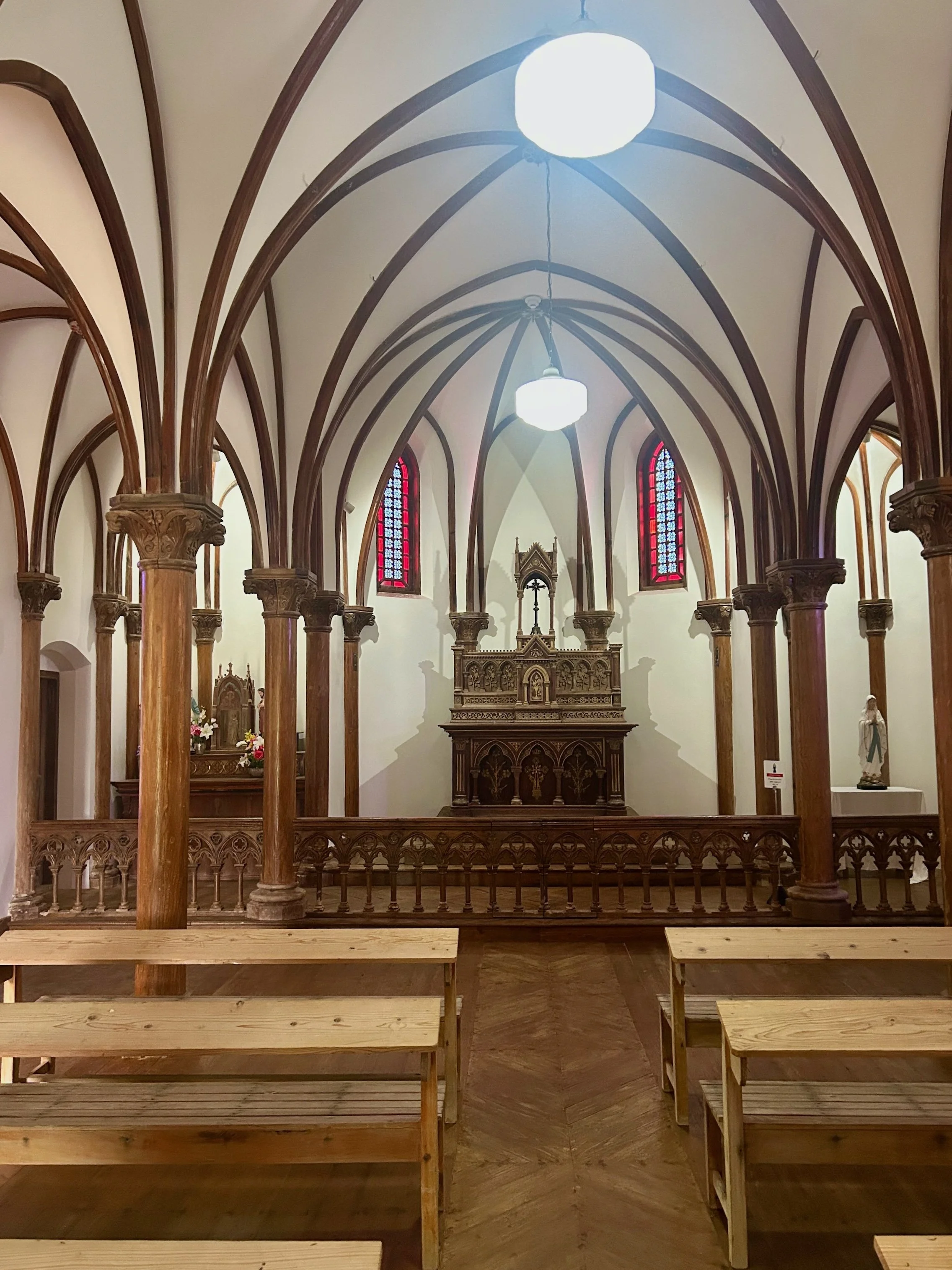
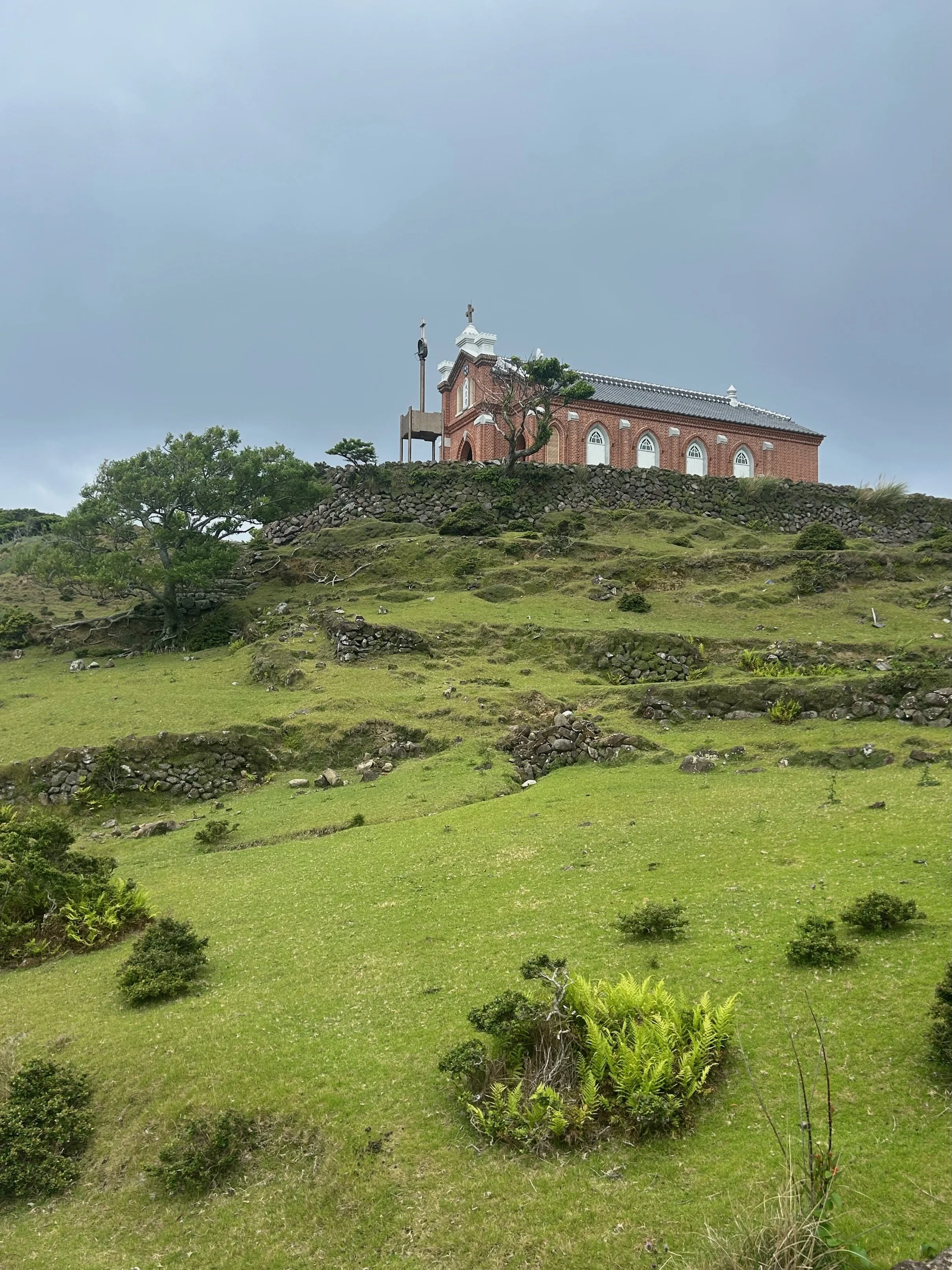
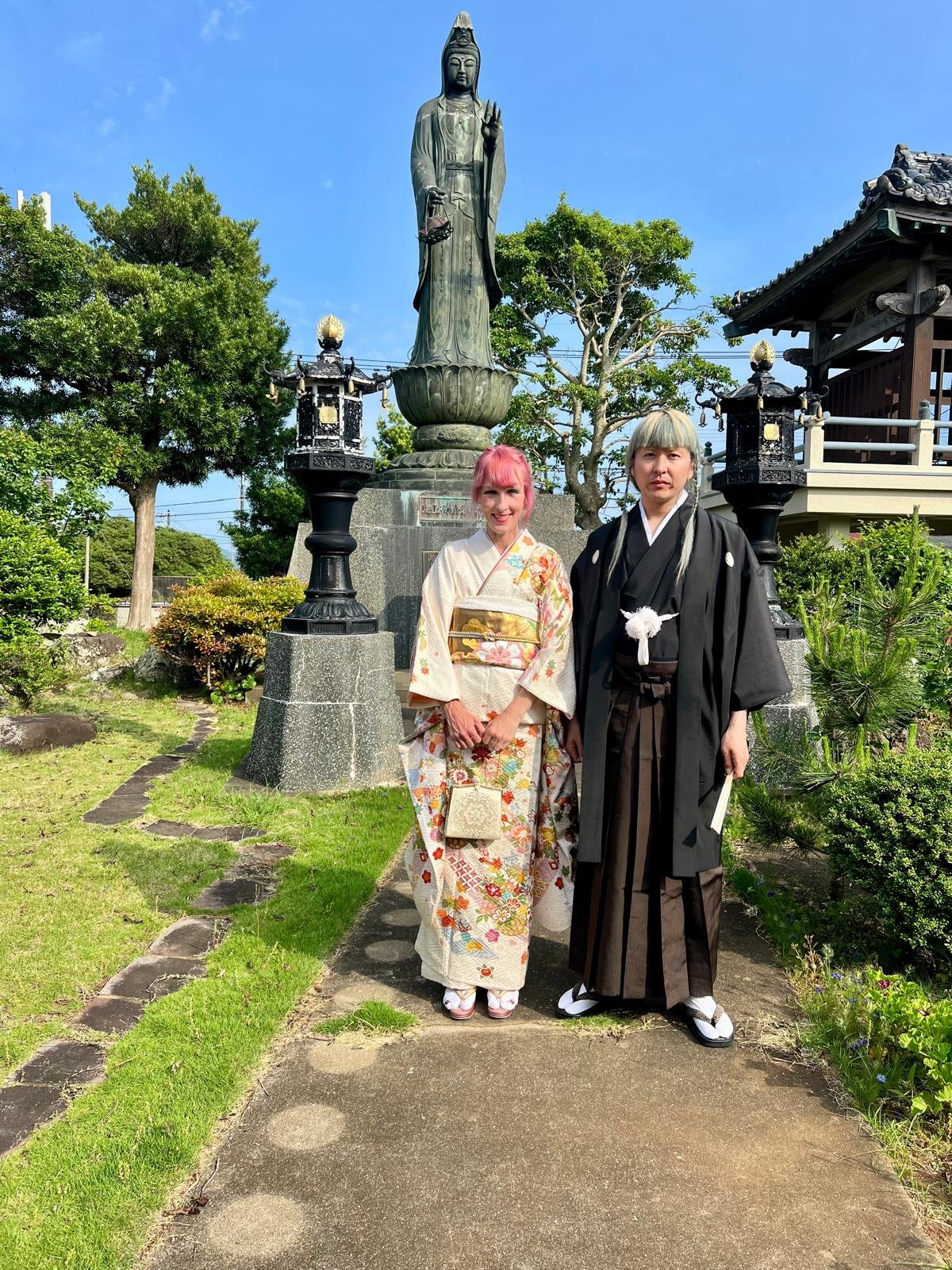
Even Lilly and Yowie, who were hurrying to their traditional wedding ceremony at the church, made a point of coming down to the pier to say goodbye and to give us a gift: African percussion instruments, which Yowie plays with remarkable talent.

Like a pair of Japanese cranes who choose each other for life - We promise to return. We still have another two and a half weeks packed into our backpacks. What a joy to realize that it isn't over yet.

״Mata ne״ - See you again.
Thank you for reading. 
If the spirit moves me, I'll continue writing.

Sigalit (Shigarito-san)