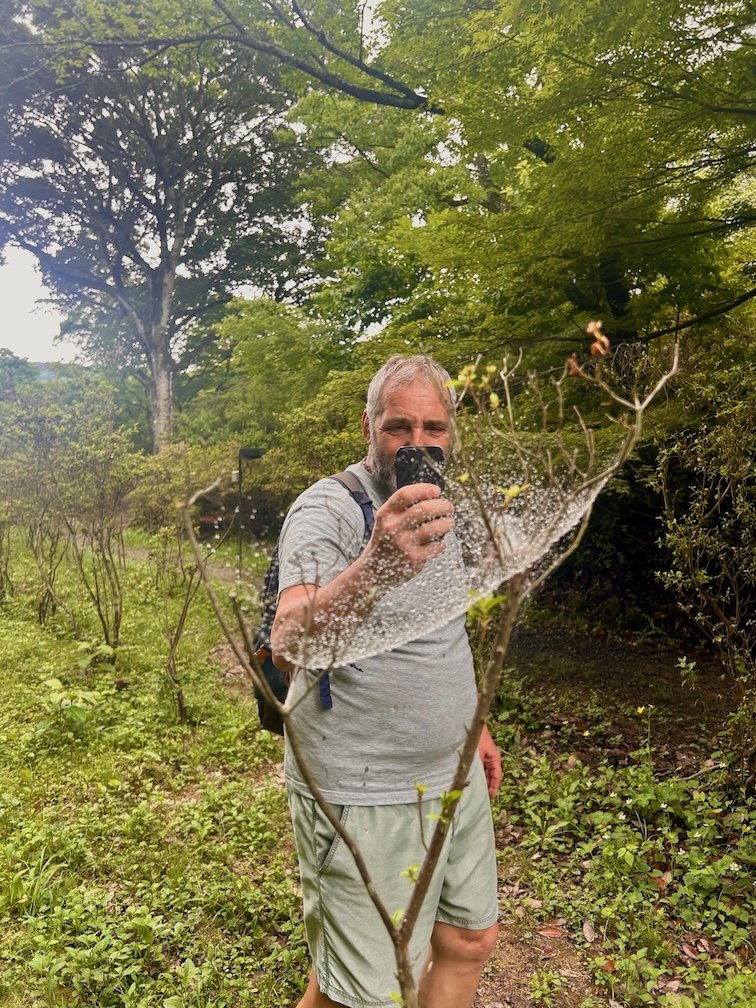
Facing the night, writing invites me to notice the moments of the day once again. Those waking hours that encourage me to keep my eyes open and look. Observation not only helps me find my way through the world, but also gives rise to expression, connection, and the strength to shake myself off and move on—as every day does, as always.
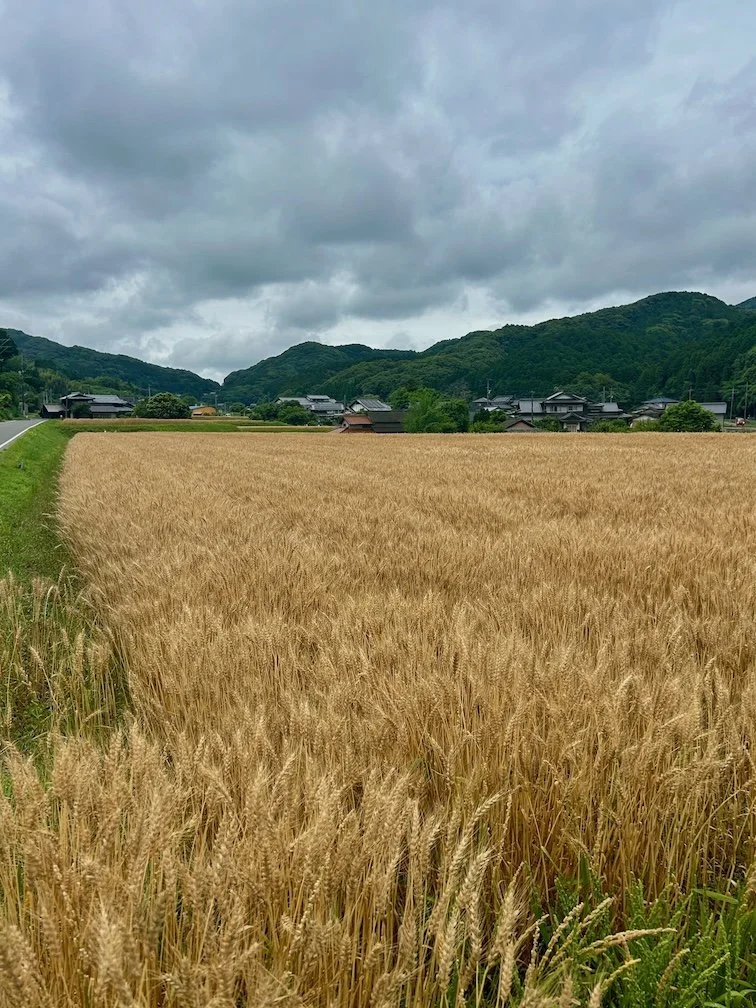
We are deep in the side of the countryside. There are hardly any tourists here, apart from the occasional bus from a Nagasaki retirement home. Certainly no Western tourists.
And us? Let's be honest—we're not particularly Western either. Two natives from Jaffa.
And as such, we allow ourselves to make decisions, even irrational ones, like zigzagging farther south into the south, using the best railway network in the world, just to meet a friend performing in a concert in Kagoshima. That's how it turned out.
But before the zigzags. The shortest Shinkansen. Seven minutes. Whisks us from the Milky Way of Ureshino to Takeo, in Saga Prefecture, on Yoei's recommendation.
Takeo Onsen is a small town with the self-confidence of a big city. It reveals itself gently, like a delightful babushka of surprises. And every morning we extend our stay by another night, just to enjoy them all.
The first surprise is the municipal library. An architectural dream. Something between a temple, a cathedral, and a futuristic library. Bookshelves climb two stories high, light pours in from every direction, wood and glass alternate, inviting us to establish a settlement with a book, a coffee, and a pastry.
Dror declares a workday and opens his laptop. So do I. Open. Close. And without any declaration, I get up, moon-struck, and begin wandering through the library, flipping through books and running my fingers over their covers the way one examines fabric. And slowly and quietly, I drift into the library shop, toward shelves crowded with small Japanese inventions—clever, elegant - and entirely unnecessary.
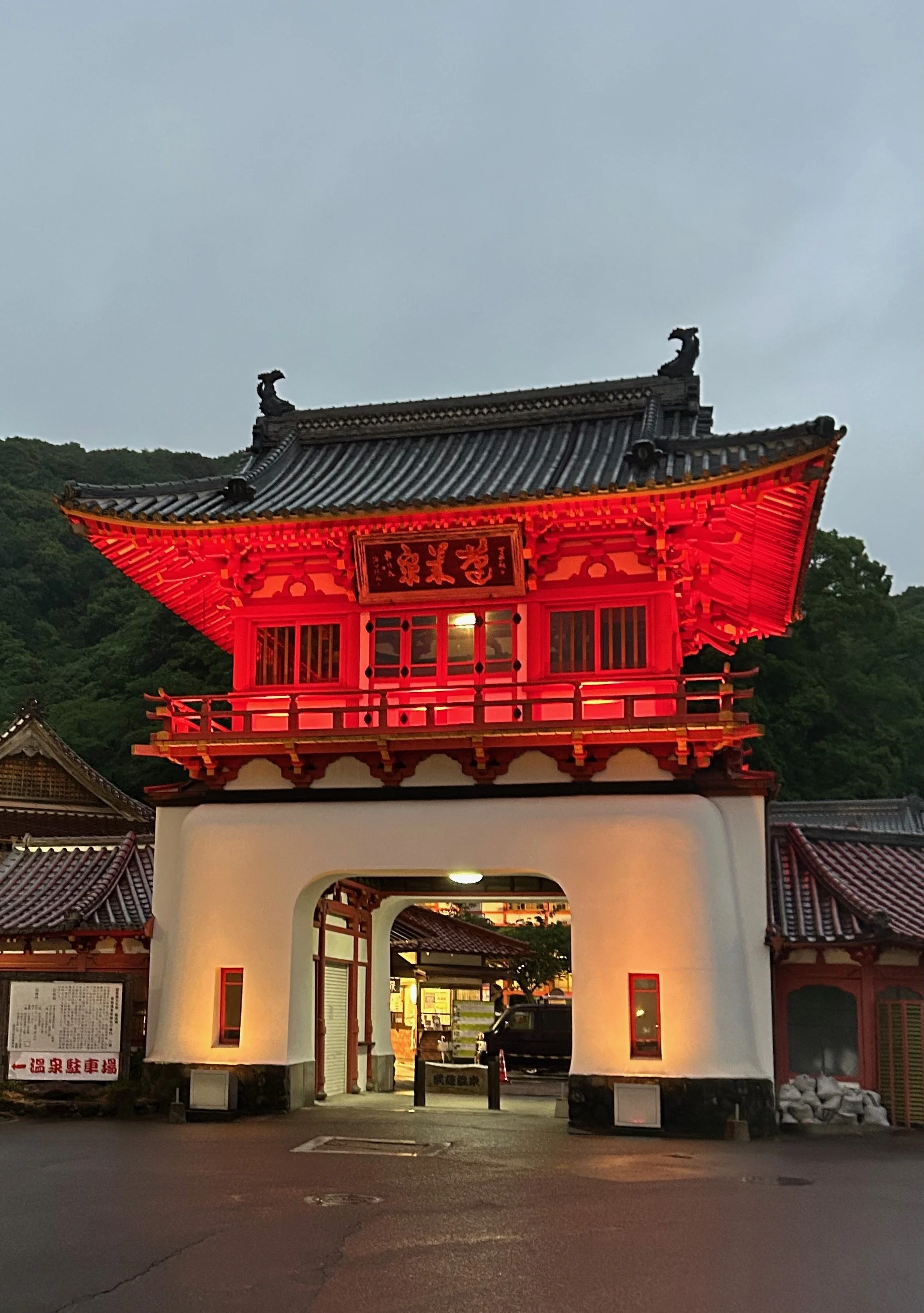
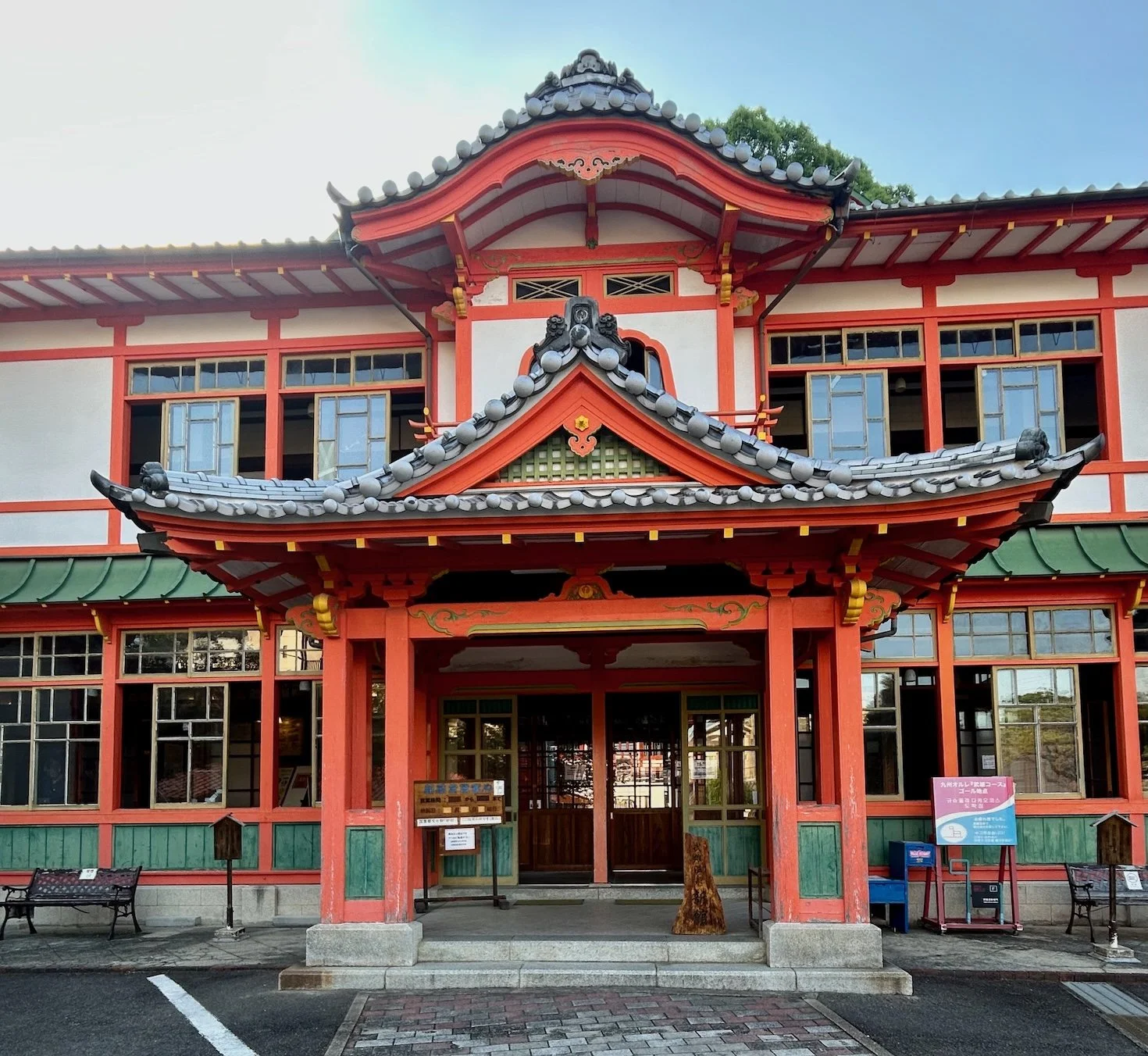
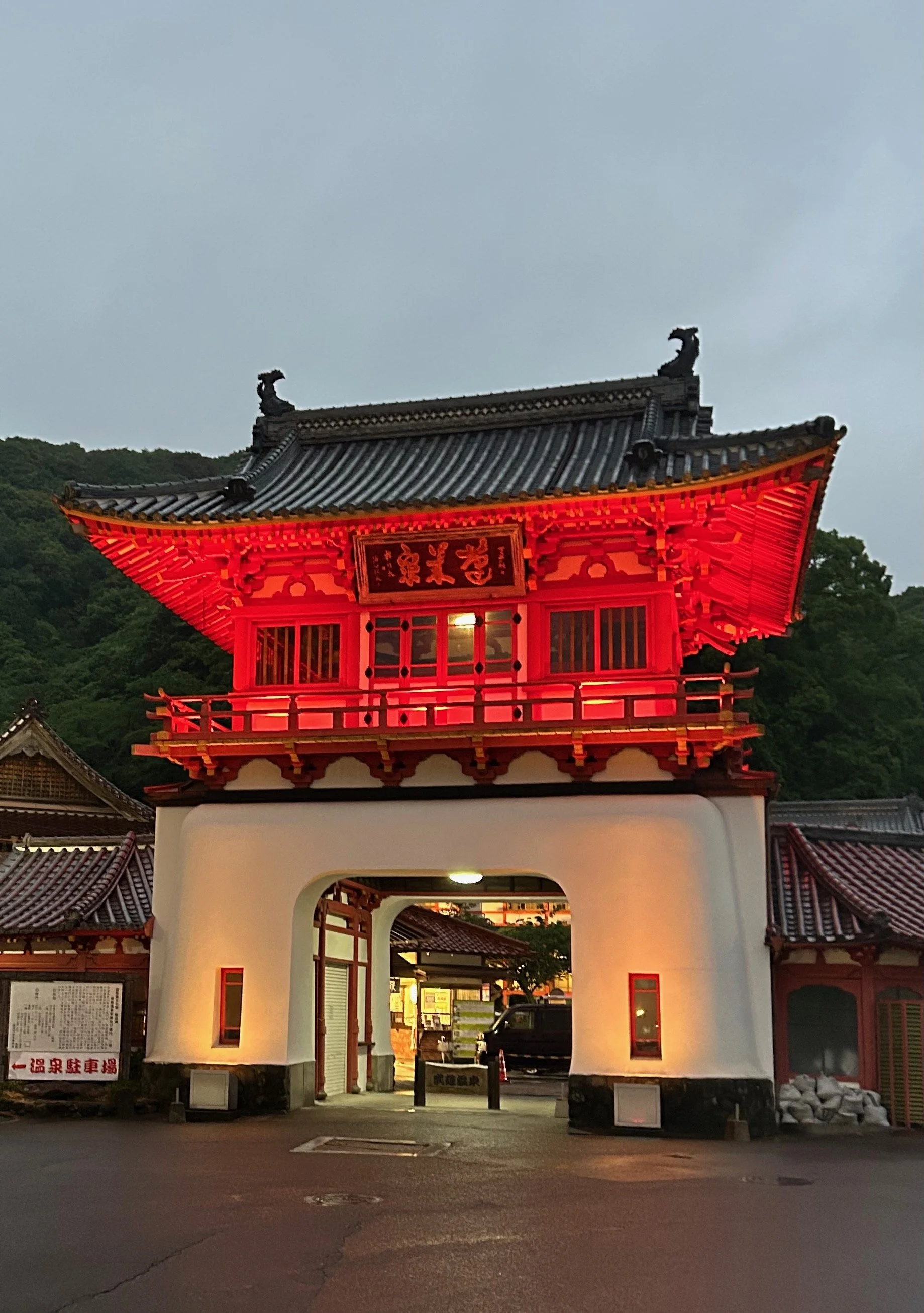
There is also the bathhouse gate, more than a hundred years old, painted a brilliant crimson.
In Japan, gates like these mark a passage from one state of consciousness to another.
In this case—from the street outside our hotel into an onsen more than 1,300 years old.
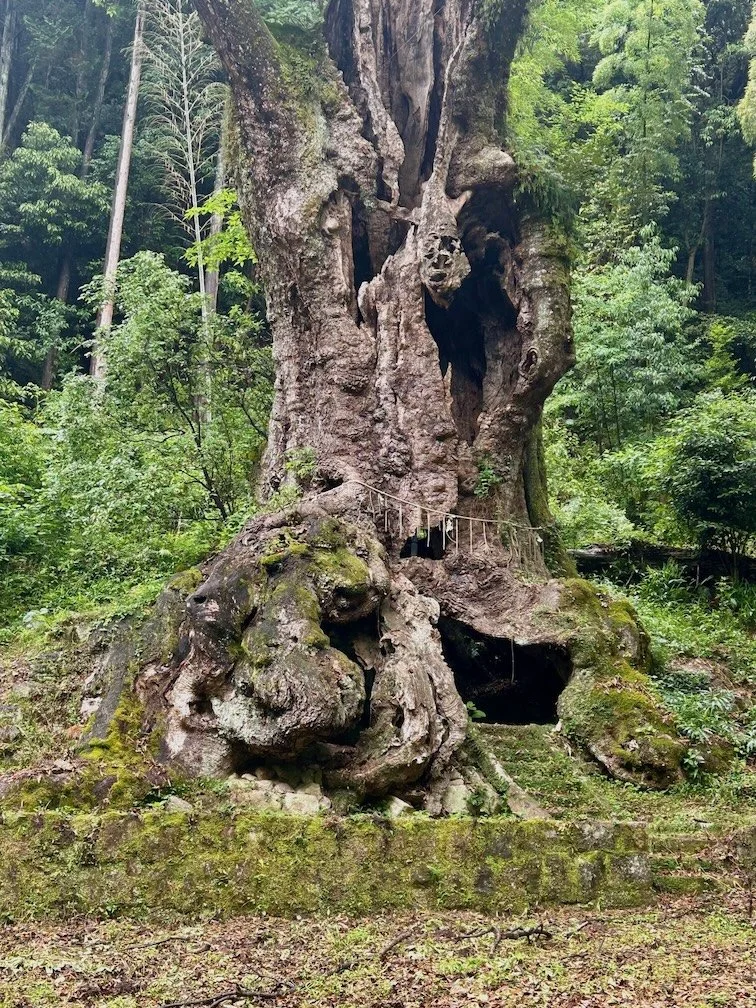
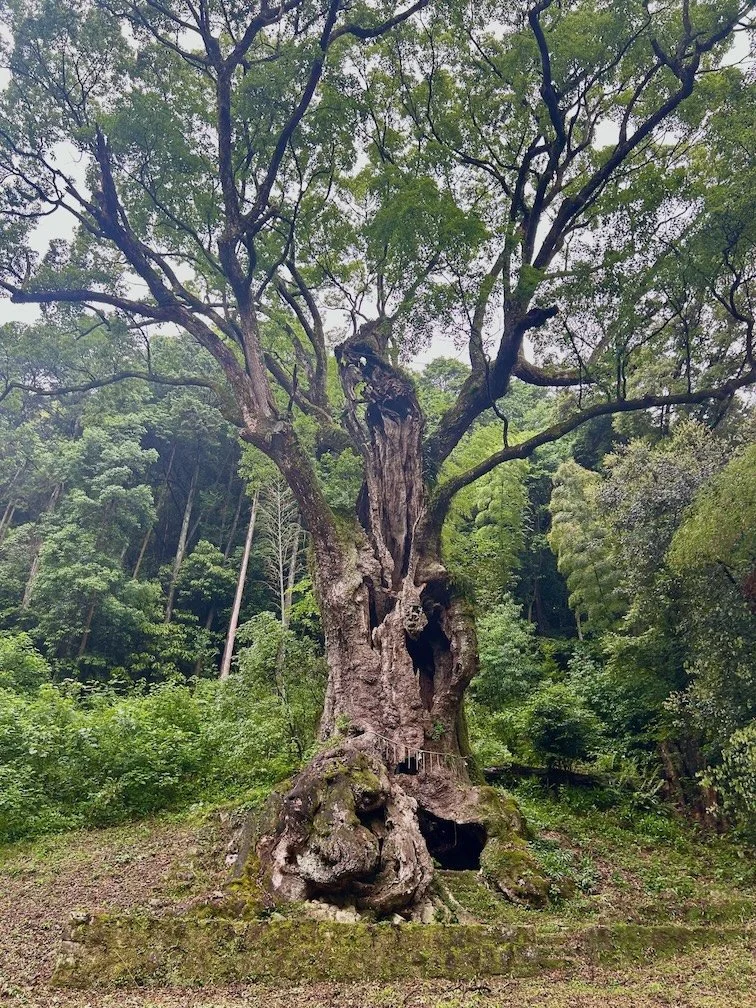
And further up the hierarchy—a 3,000 year-old camphor tree. And if a tree falls in the forest and nobody hears it, it is probably not this tree. Camphor. A beautiful word. I will use it again.
Camphor trees look like they have spent centuries negotiating with wind, rain, and time.
Their trunks are thick, twisted, and hollow. Their bark is furrowed and wrinkled, and their branches spread into a dense green canopy that casts deep shade and fills the air with a faint scent of camphor. This Methuselah of a tree sits high above, after dozens of steep steps and protected by a rope enclosure, as befits a national treasure.
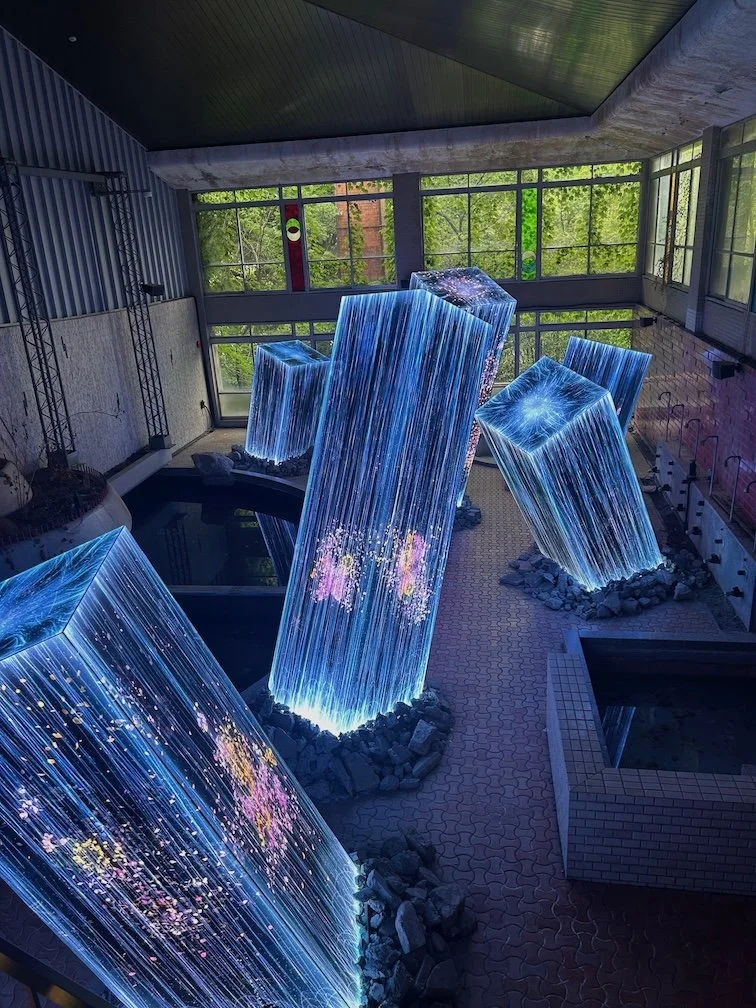
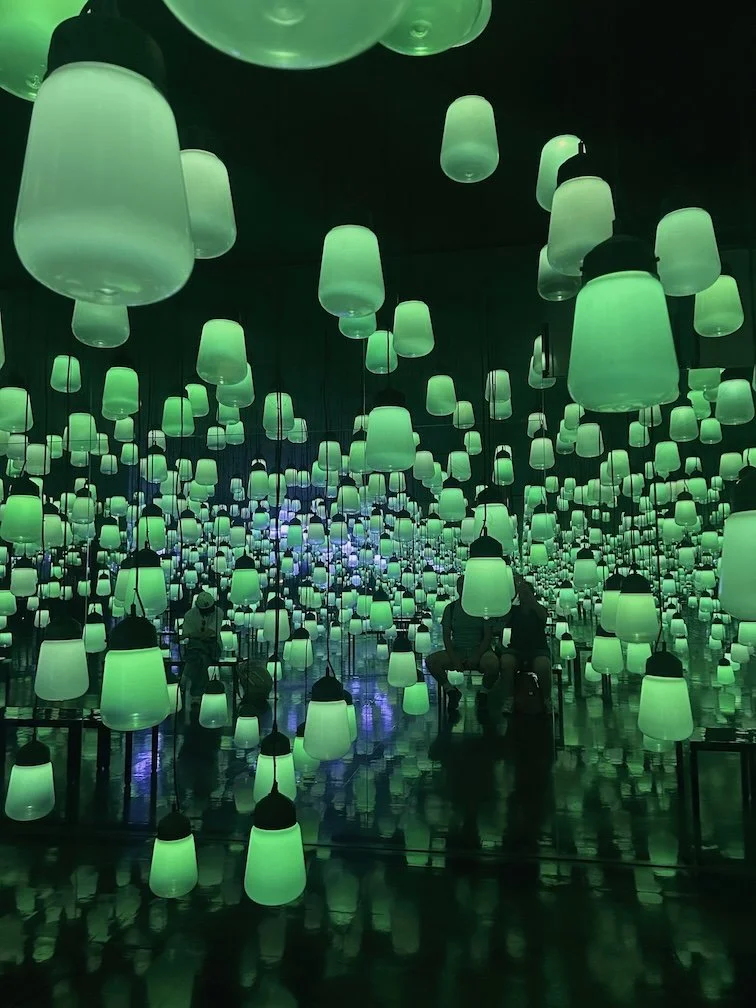
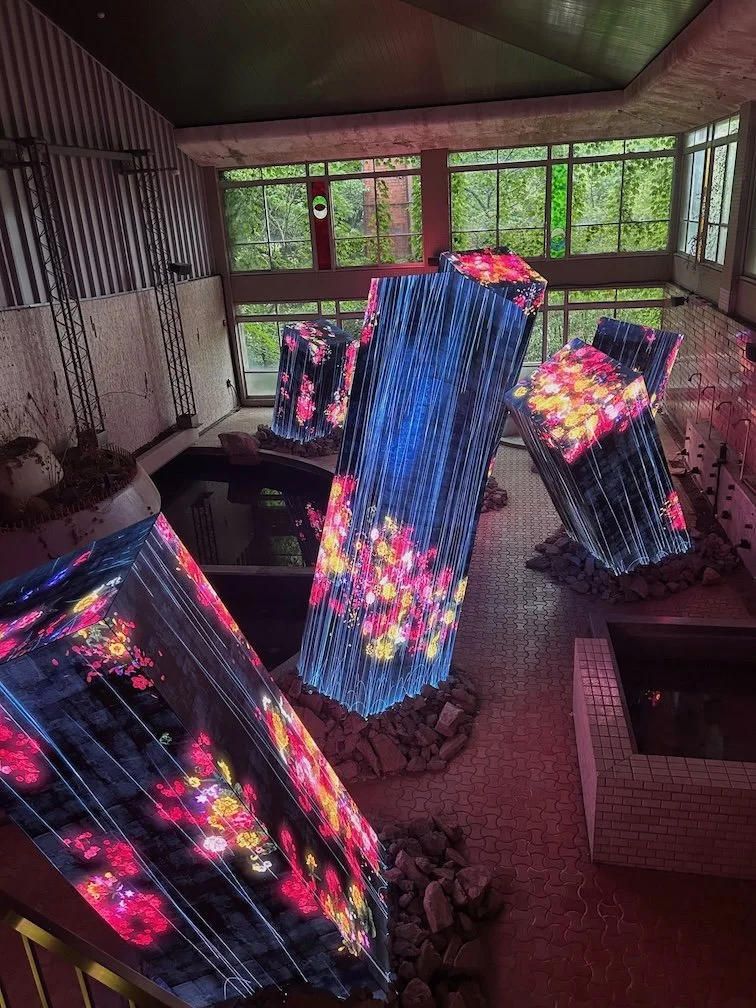
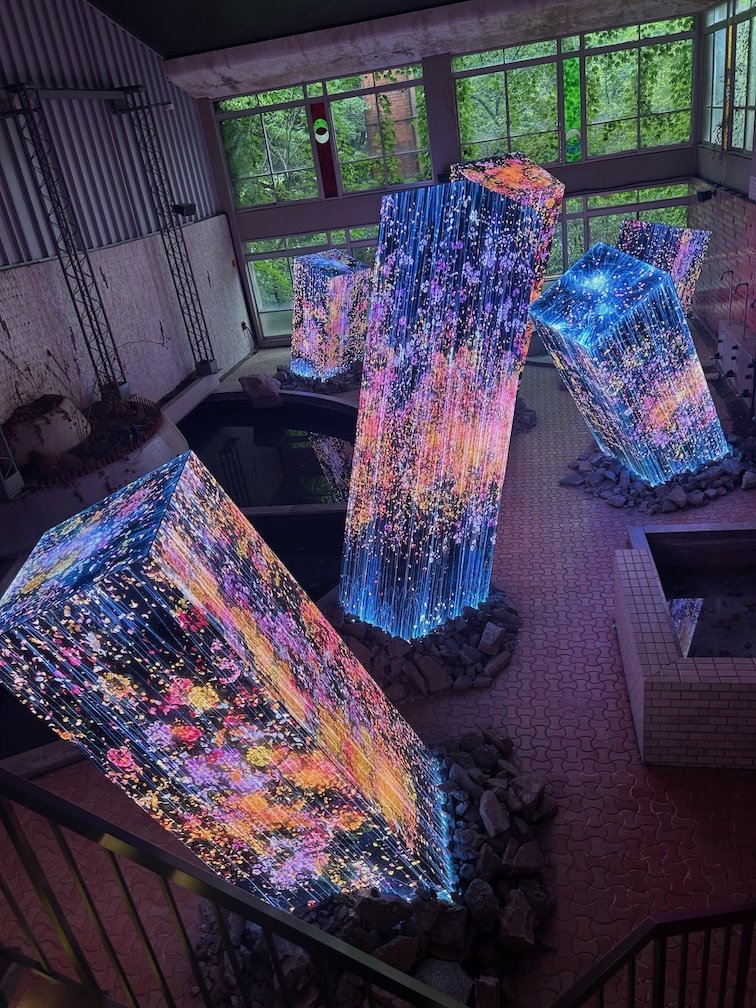
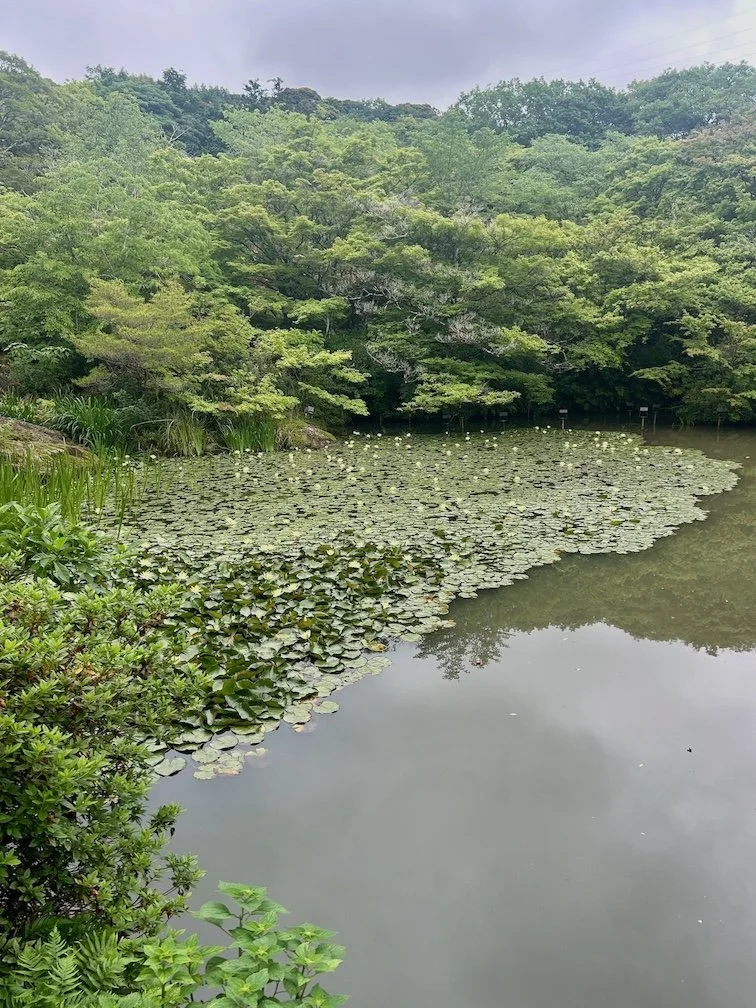
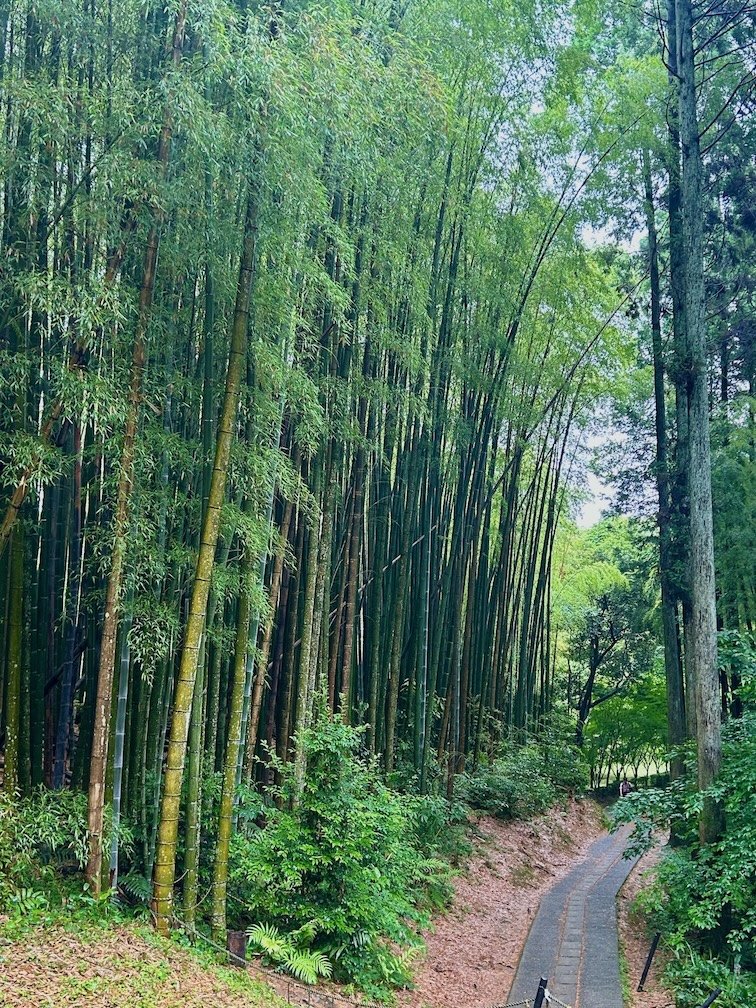
There is also TeamLab's sound-and-light installation in a bamboo forest that shelters an ancient bathhouse. As darkness falls, the entire forest becomes a screen. Trees, rocks, ponds, and stone walls fill with light and sound. Seasons and strange figures appear, drift by, and disappear again, as if out of a dream, until it becomes difficult to tell where the artwork ends and the forest begins. Photoshop in nature. I loved it.
TeamLab is a Japanese collective of artists, programmers, and engineers that has spent years trying to blur the boundary between nature, art, and technology. They succeeded.
Even our hotel, Kyotoya, feels slightly enchanted. It is built around nostalgia for Japan a hundred years ago—the Taishō era, when the country opened itself to the West while fiercely guarding its Japanese soul.
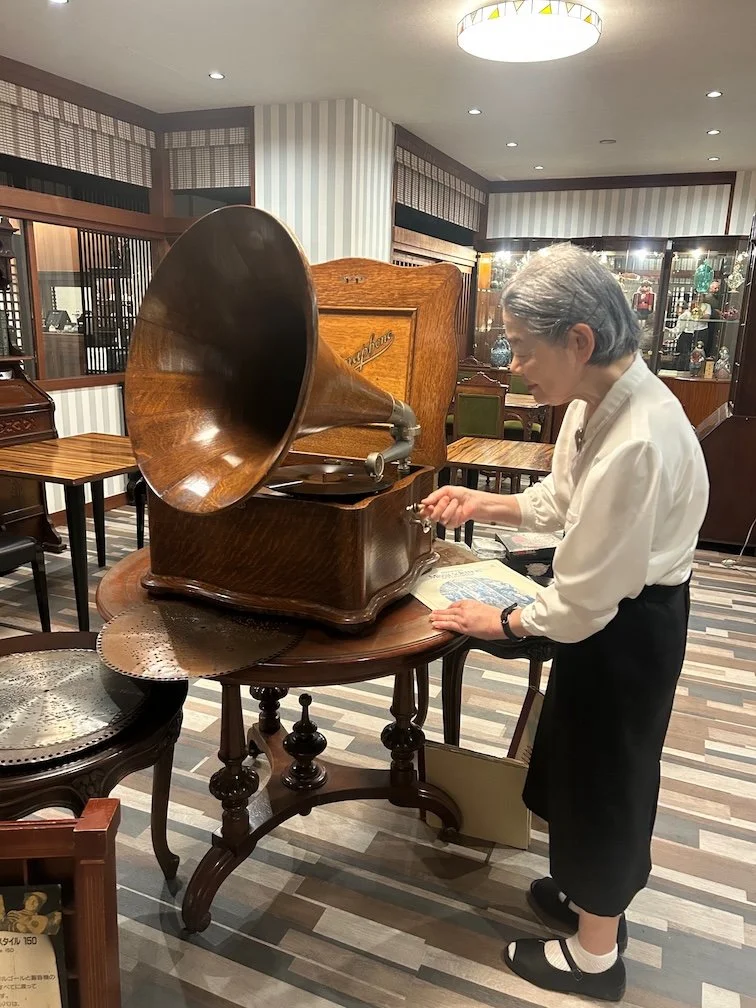
Entering the lobby feels like stepping into a living, singing museum. Old clocks tick in the background, music boxes scatter birdsong through the air, and at the center of the room stands an automatic piano playing itself endlessly. Beside it stands a miniature Japanese lady in a perpetual bow, as though folded from a sheet of origami paper, offering her porcelain smile, with the rhythm of a metronome, to everyone who enters.
The piano reads a perforated paper roll and produces music by mechanical means. Once, this was the height of progress—a way of bringing music into the home even when there wasn't a Japanese pianist nearby. Today, it is simply magic.
Nature is indifferent to our presence.
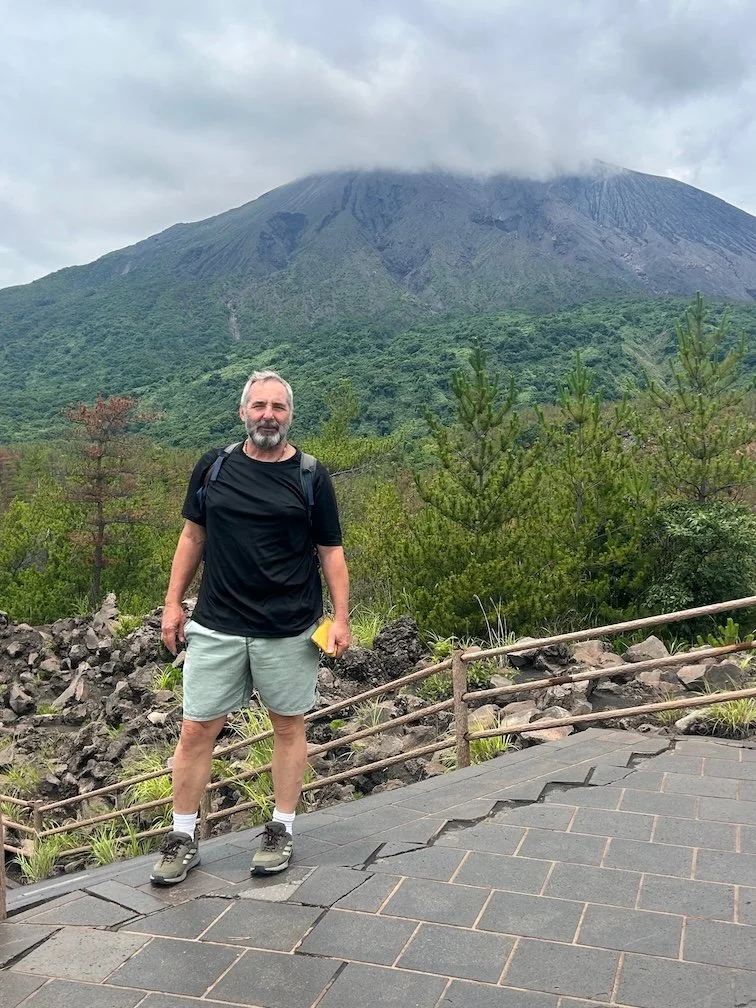
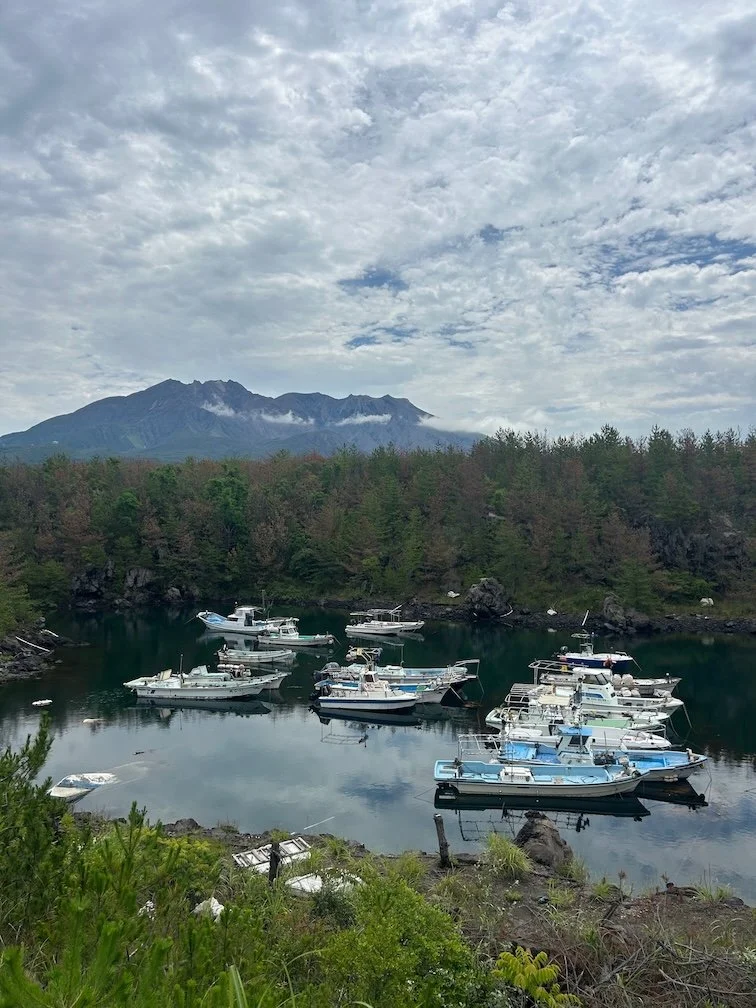
Kagoshima is a city living in the shadow of a natural nuclear reactor. It sits beside a quiet bay while above it hovers—and appears on every T-shirt, towel, and keychain in sight — Sakurajima, an active volcano with deep wrinkles around its ever-smoking mouth.
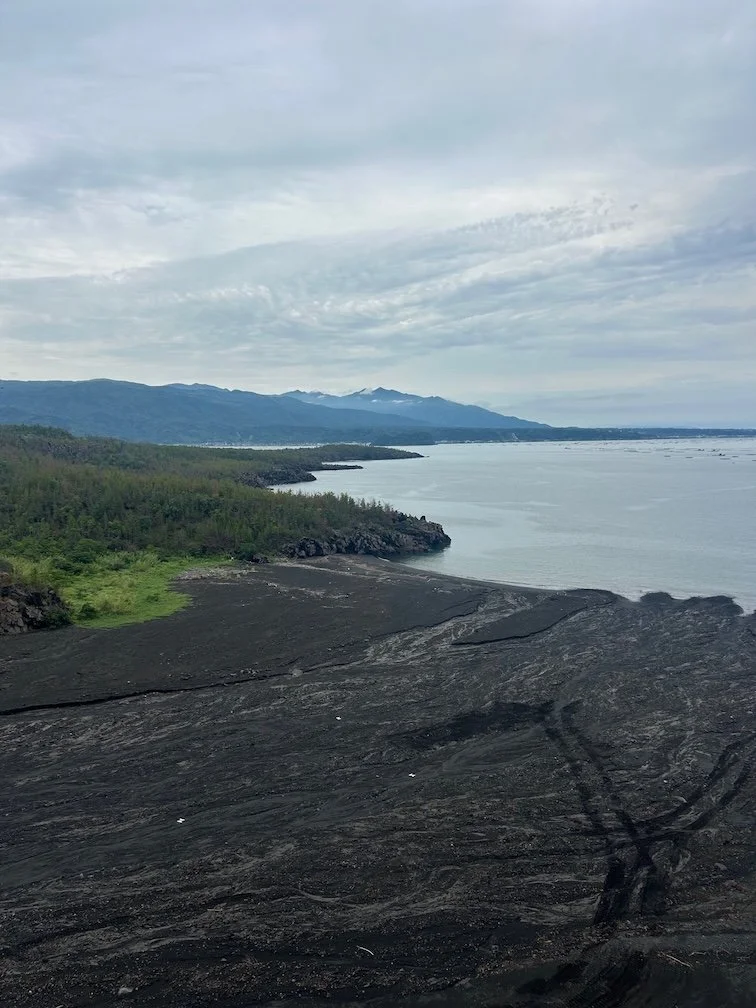
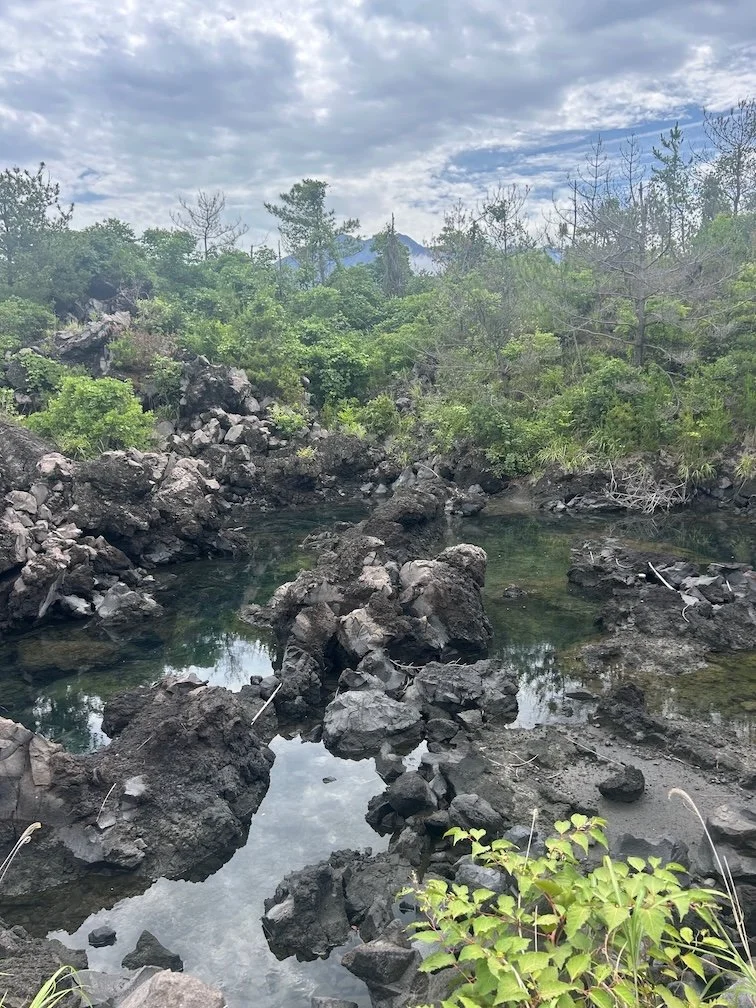
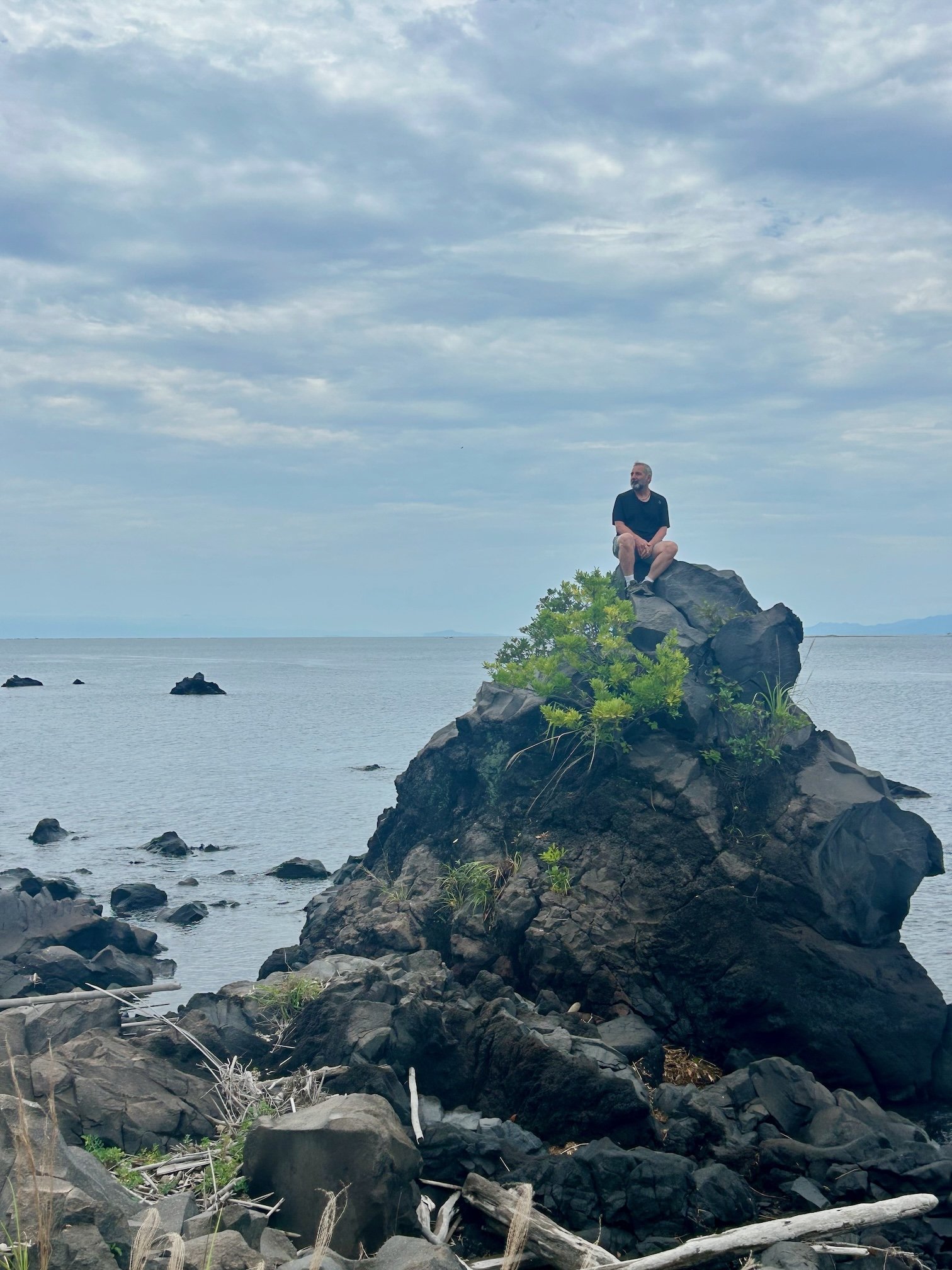
The landscape is raw and unpolished. As though everything is being held together by the force of some ancient substance. Jagged basalt shelves line the coast like a giant washboard.
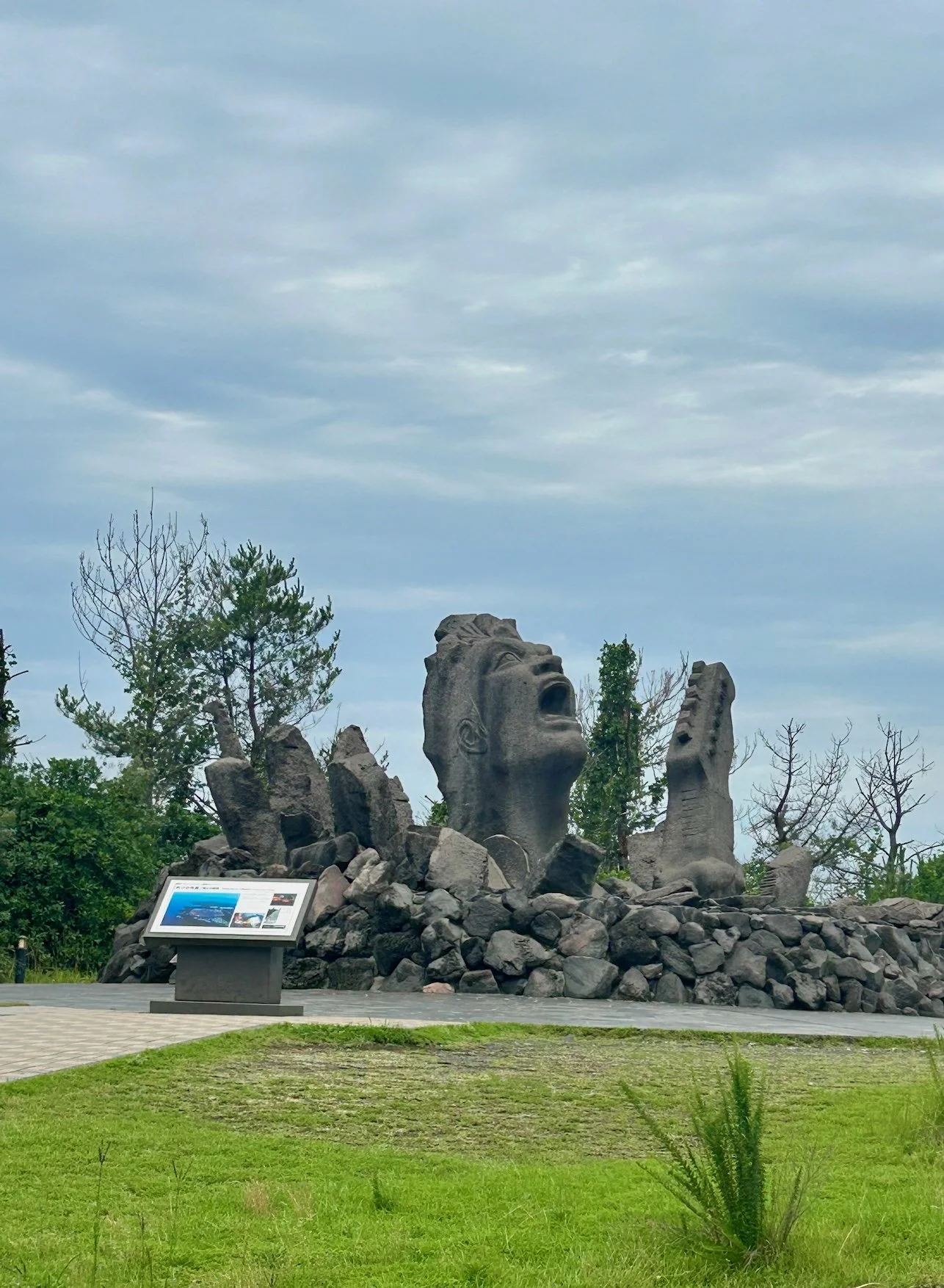
In 1914, the volcano erupted with such force that lava flows connected it to the Ōsumi Peninsula in Kyushu. Several thousand people live on Sakurajima at the foot of the volcano, and volcanic ash is part of daily life here. There is something very Japanese in the way they live alongside the threat—a daily coexistence that does not seek to defeat nature, only to get along with it.
I am beginning to think that my father's book ״On to the Puddle״, which sees the world through weather, landscape, and nature, was a kind of spoiler for this journey. Because somehow we have experienced almost every possible weather event. As though reality itself were turning the pages of the book, poem after poem, bringing my father back to life.
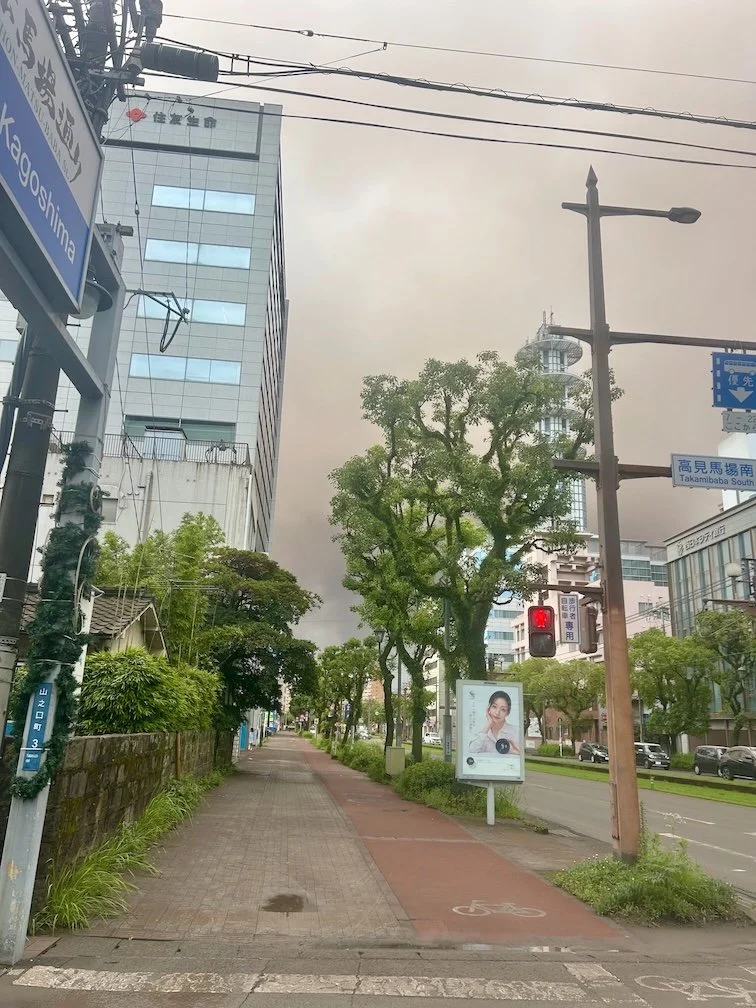
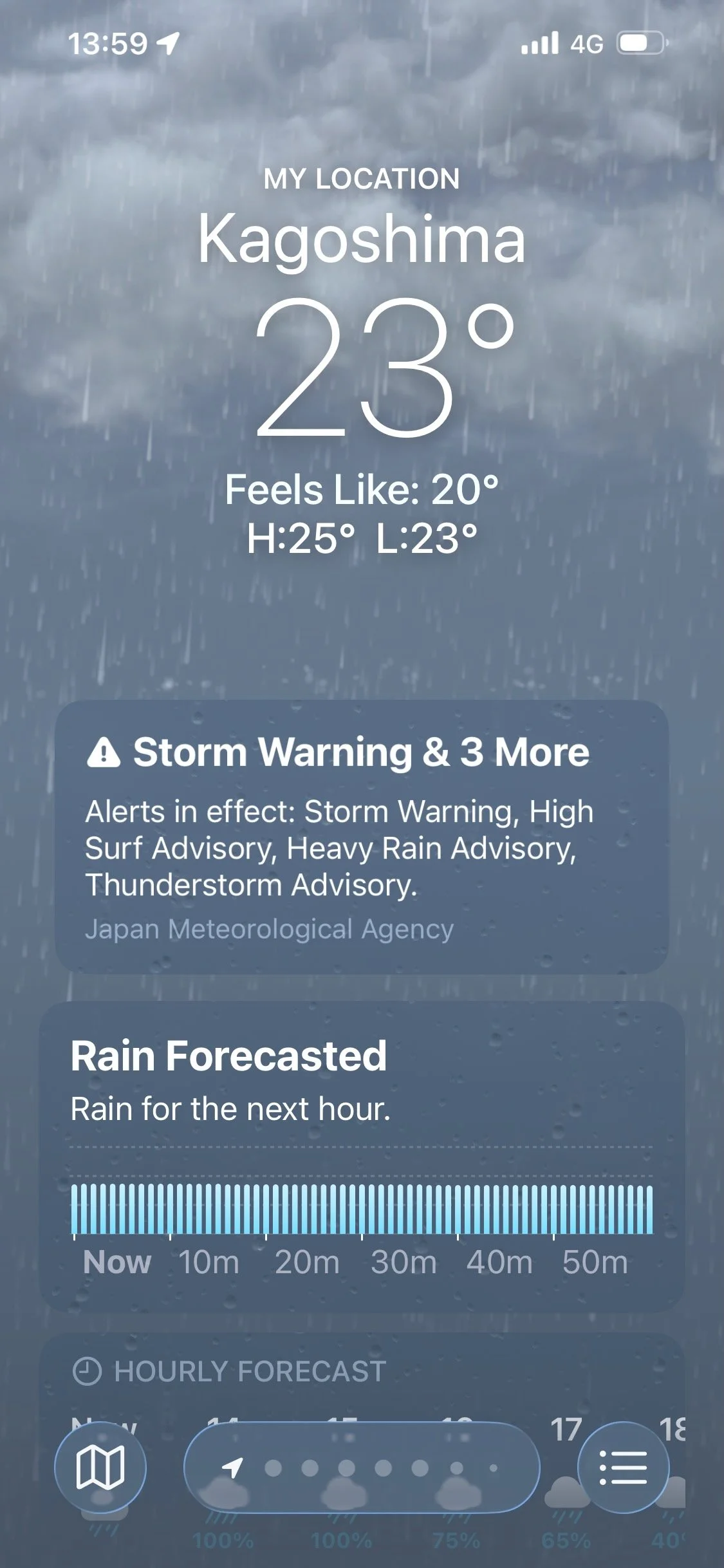
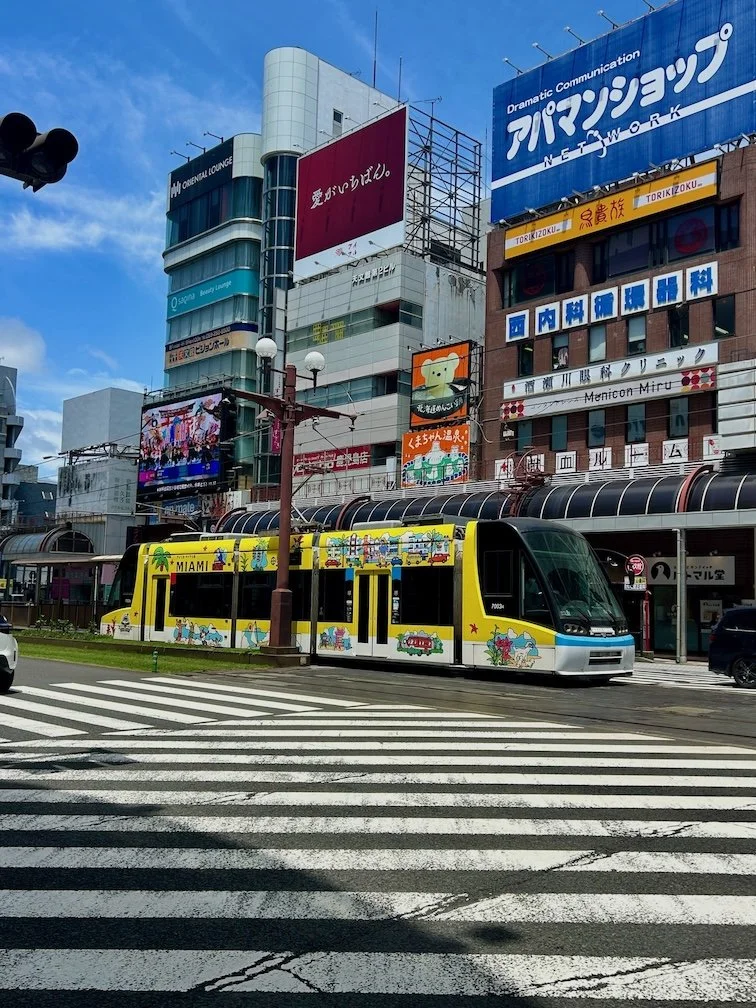
The moment we step off the train in Kagoshima, a typhoon warning devours our urban plans to stroll angajeh through the southern city. Instead, we walk beneath umbrellas among sandbags scattered throughout the streets. The shops are shuttered. Transportation is suspended. A drizzly rain falls charmless, unnecessary, and mildly irritating.
An emergency procedure without prior notice.
Volcanic Forecast
Morning. I look out the hotel window and am startled by a dark reddish-black cloud approaching like the Pillar of Fire. Or the Pillar of Cloud. Or both. I tell Dror, who is casually tapping away at an algorithm while still wearing his post-onsen yukata, that I think another storm is approaching in the wake of the typhoon. Without waiting for a response, I leave the room and ride ten floors down in the elevator like a storm chaser.
Only when I stand before the enormous cloud and smell sulfur in the air do I begin to understand that this storm is coming from Sakurajima itself. And that this cloud is not about to bring rain. More like nuclear fallout.
It turns out this happens here about once every two weeks. Sakurajima releases a reddish-black cloud of ash that covers everything in a thin layer of dust—cars, balconies, sidewalks. Just like the lines of my father's poem ״When Nature Gets Angry.״ Only here, angry nature is called Sakurajima.
״And sometimes the mountains too
Grow angry, wild—and rumble through
They open wide a fiery mouth
Flames and smoke are rushing out
A volcano is its fearsome name
And in its rage, it roars in flame״
And speaking of clouds.
There is a Japanese expression known as ״Kokura‘s Luck.״ The city of Kokura was the primary target for the second atomic bomb in August 1945, but clouds and smoke covered the city. The plane circled overhead again and again, unable to identify its target, and continued on to its secondary target—Nagasaki.
Since then, the expression has become a metaphor for someone who escapes great disaster through a chance turn of events, without ever knowing how close they came.
Sometimes history is written by generals. And sometimes by a cloud.
And if Kokura symbolizes a fate determined by chance, then the kamikazes of Chiran symbolize a fate consciously chosen. Between chance and choice stretches the entire human story.
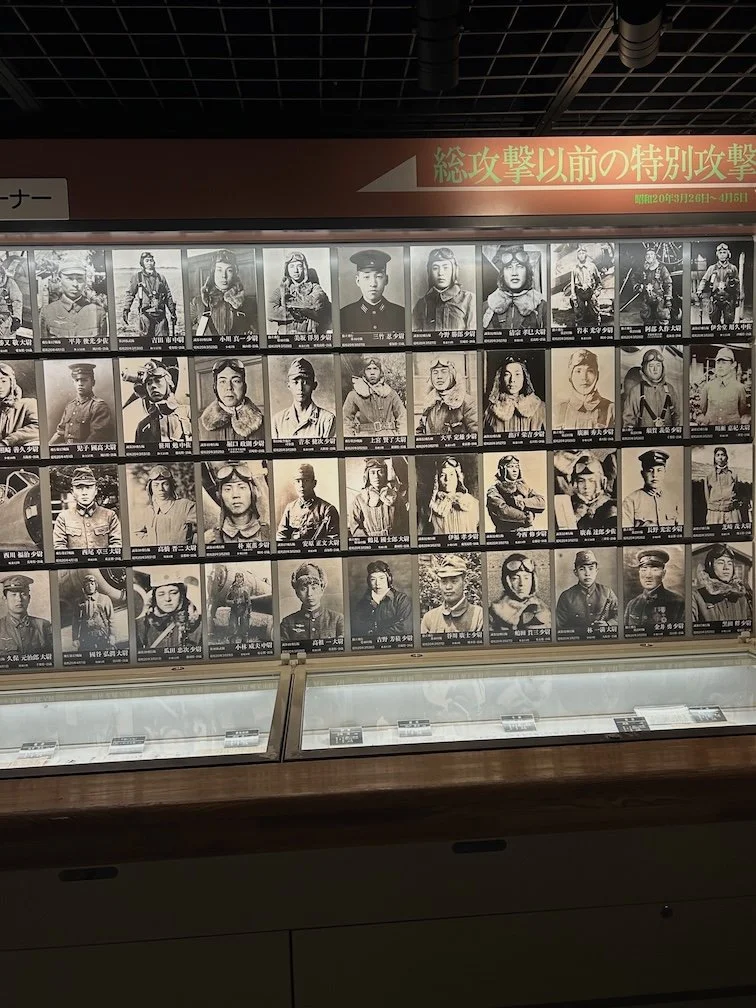
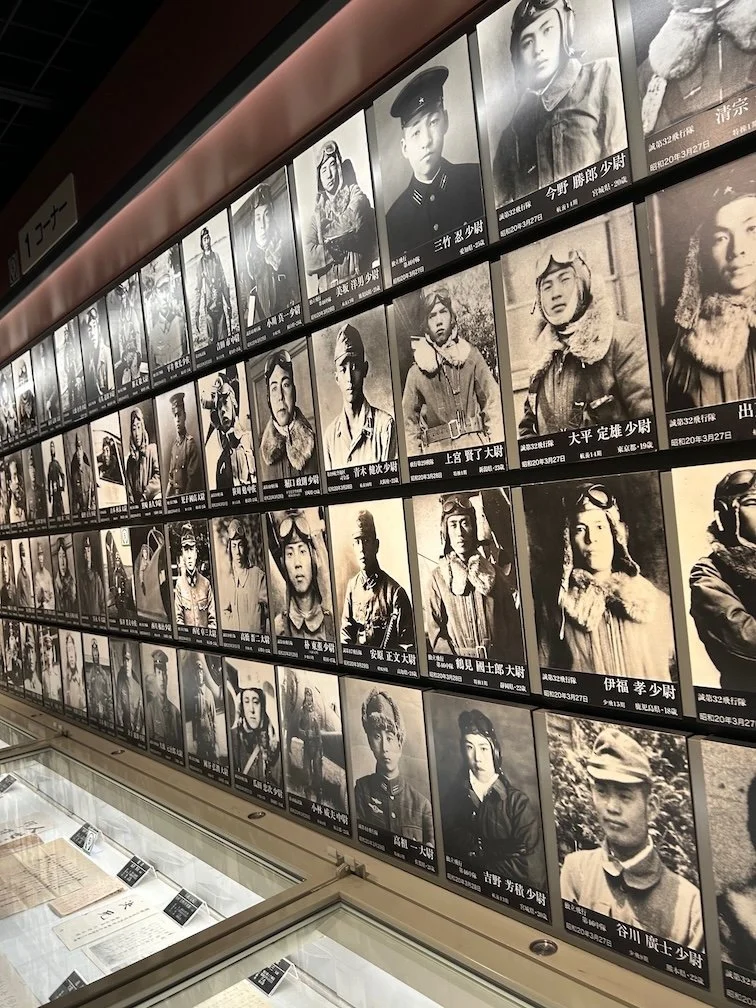
Chiran is a quiet town where one of Japan's most painful chapters was written. From here, in the spring of 1945, hundreds of kamikaze pilots departed on missions from which there was no return. Most were young men, barely twenty years old.
At the Chiran Peace Museum, one encounters faces. Not a concept. Not a myth. Faces. Hundreds of photographs, final letters to parents, short poems, personal belongings. ״Kamikaze״ ceases to be a word. Like those insects drawn to light until they lose their bearings. It becomes a collection of young lives cut short.
The sadness seeps through. The memorial also awakens memories of October 7. We shake them off. When we step back outside, reality whispers itself anew through the gods of the smallest details.
And these are they:
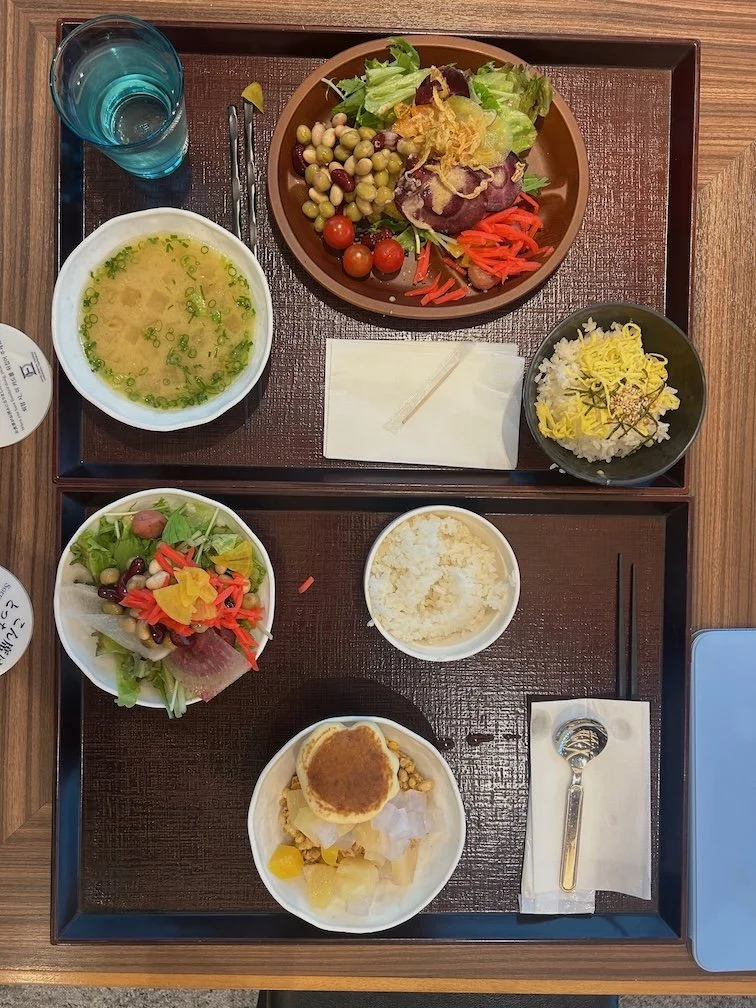
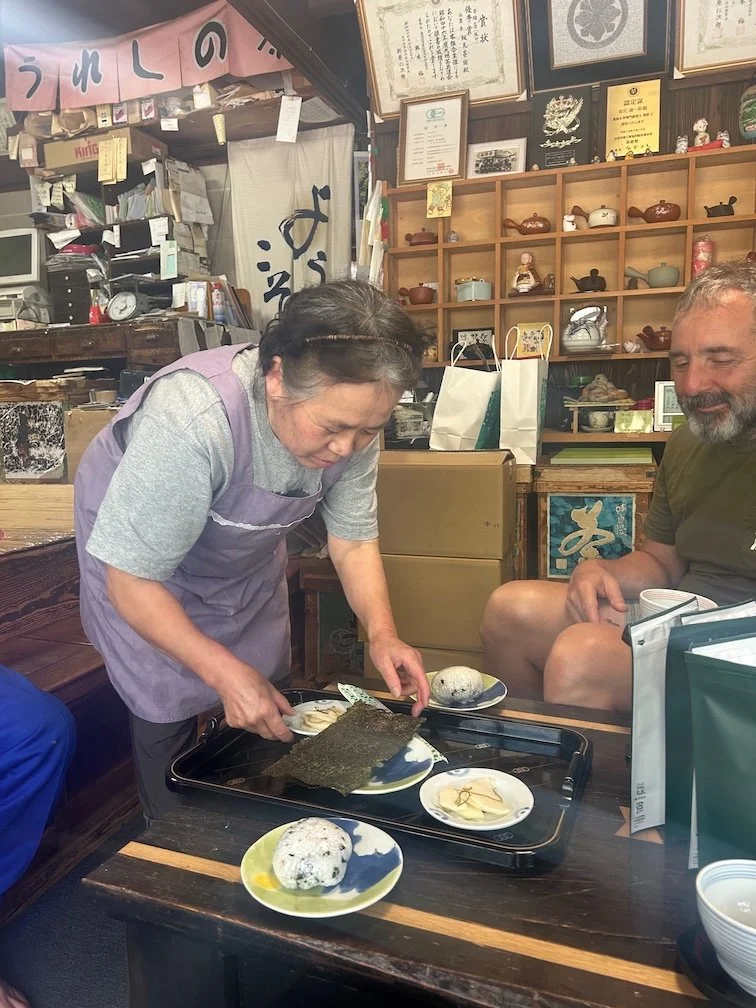
After successfully ordering food at a restaurant, a sense of relief settles over us, as though we have solved the daily puzzle.
I love the fact that you don't need to buy a bottle of juice to use a restroom. There is a veritable inflation of public toilets here. Really—since when did toilets become a luxury?
Asking "How old are you?" is an integral part of introducing oneself. They do not hesitate to ask me either. I round down. Slightly.
At Canal City, at the entrance to a build-it-yourself toy store, faces are scanned to prevent shopping addictions. You are allowed to buy a toy only once a day.
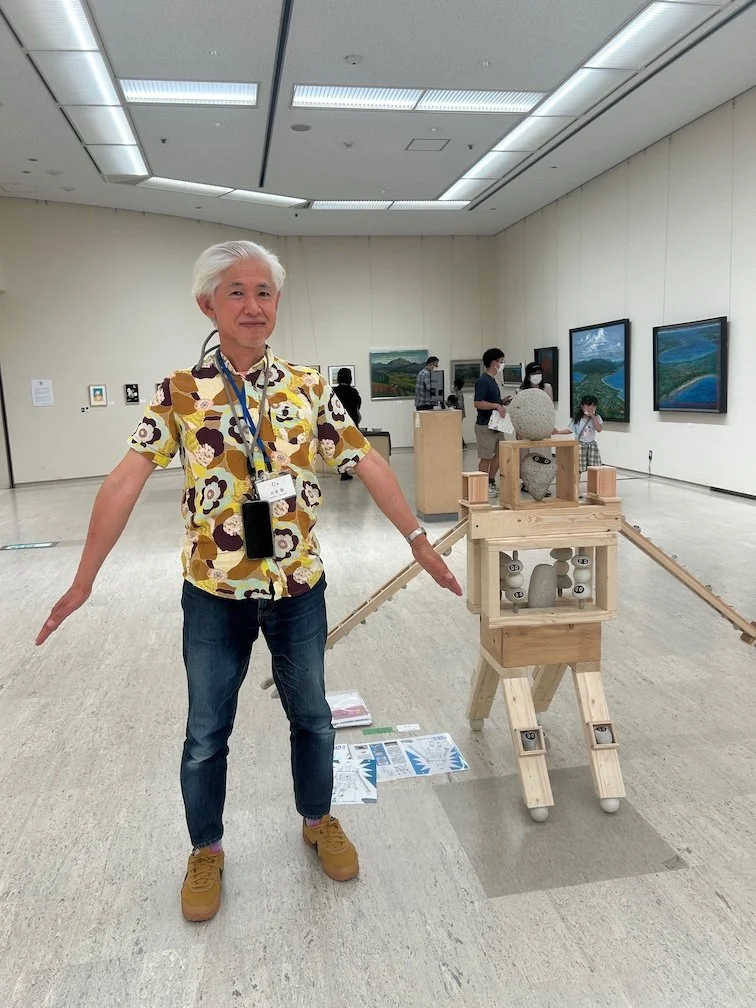
In a gallery, I saw a man searching for a telephone number in a telephone directory. Who said rare breeds no longer exist?
All the things that are missing here—I do not miss them.
Japanese puddles make me believe in fairy tales.
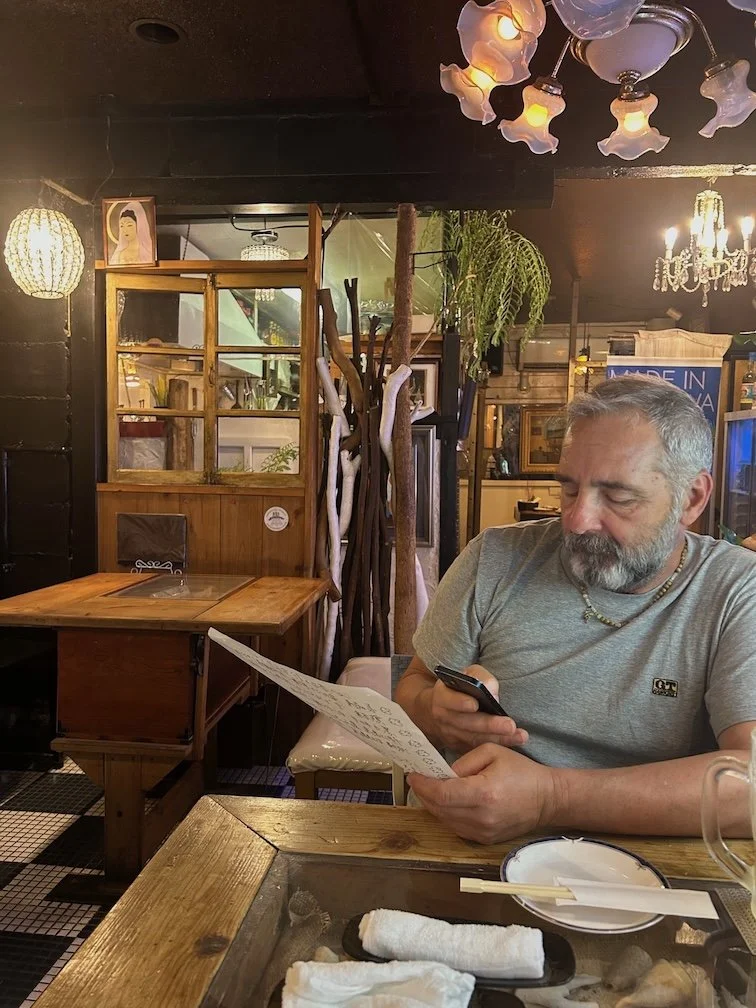
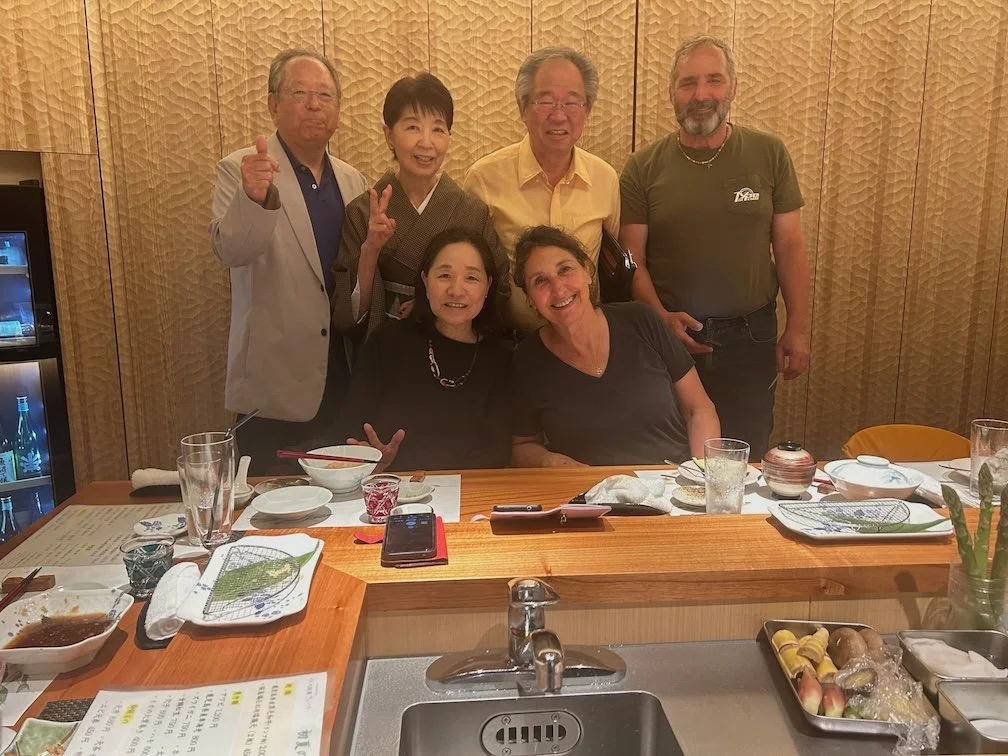
For two evenings in a row we eat at a restaurant run by a woman who looks like Zelda the poet.
The Human Factor
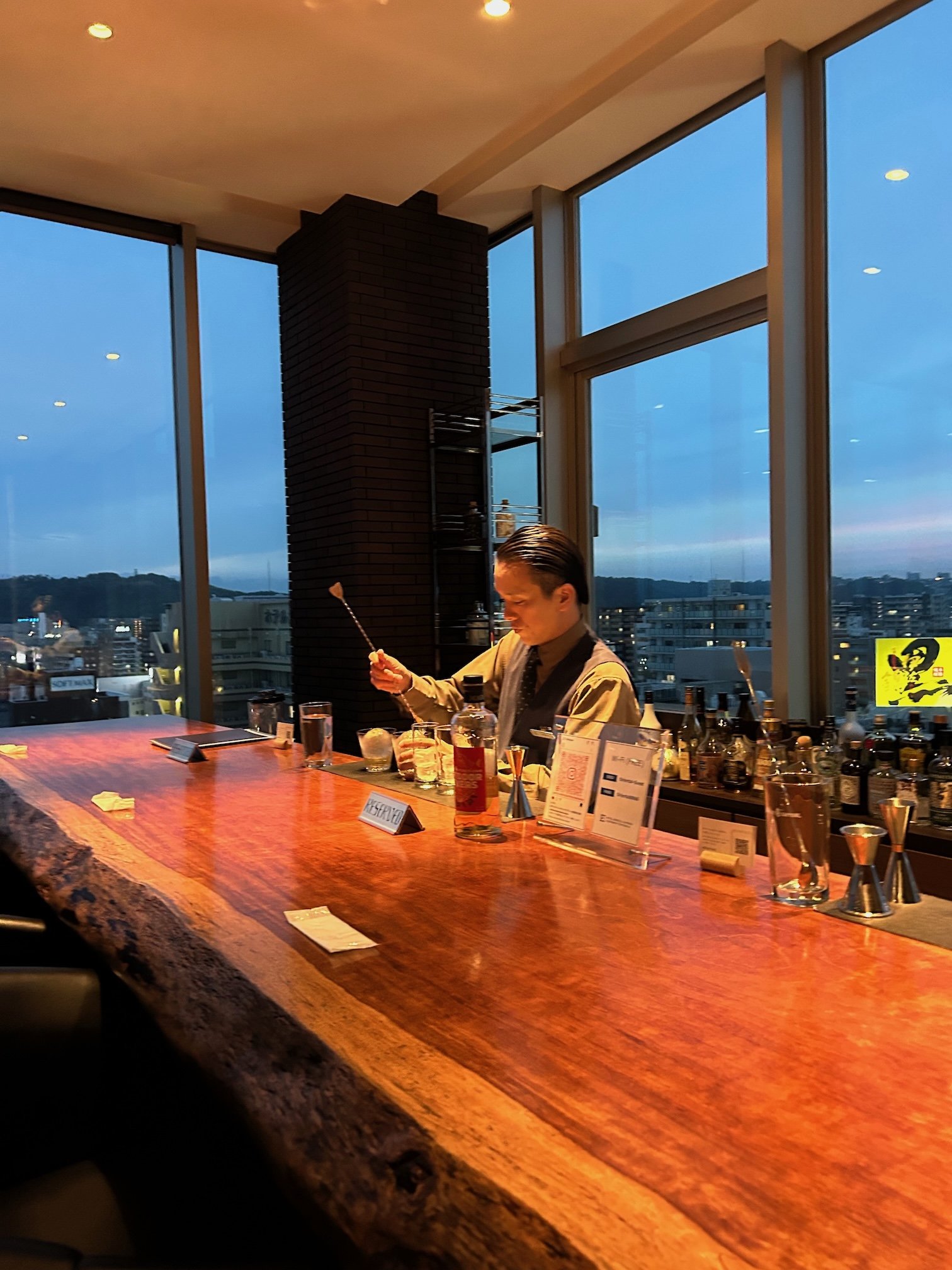
Kagoshima, June 2026. We are excited about Shalev's concert, a celebrated harpsichordist of the Berlin Orchestra, who moves from concert hall to concert hall and has arrived for a series of performances across Japan. We travel especially to Kagoshima to hear the concert, and also to meet up and chat over a drink in a local izakaya.
I asked myself—and even thought about it—why we get so excited about meeting a friend abroad, sometimes even more than we do in Israel. Perhaps because we're not meeting him abroad. We're meeting him in a place he is passing through himself. A space that is not geography but rhythm. A moment in which distances lose their authority, the boundaries between here and there soften, and something in us truly opens. We stop arguing with the world and begin listening.
Because in that meeting, as we move toward one another, we set aside radical thoughts, loose ends of uncertainty, and old disagreements. All the chatter about the country, the war, the cost of living, and everything taken for granted hums in the background like mosquitoes. And we become modest. We discover that poetry can be made not only from ourselves, but also from our seemingly unpoetic homeland.
Grand Finale
"When you walk, just walk. When you sit, just sit. But above all, don't dawdle." (Some Zen or other.)
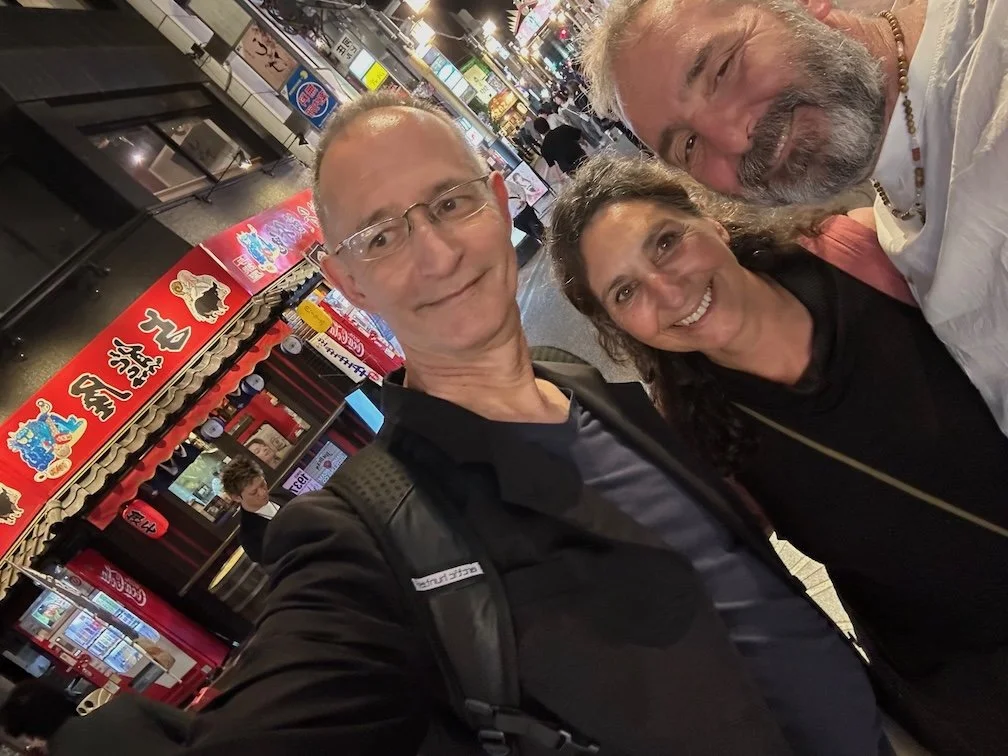
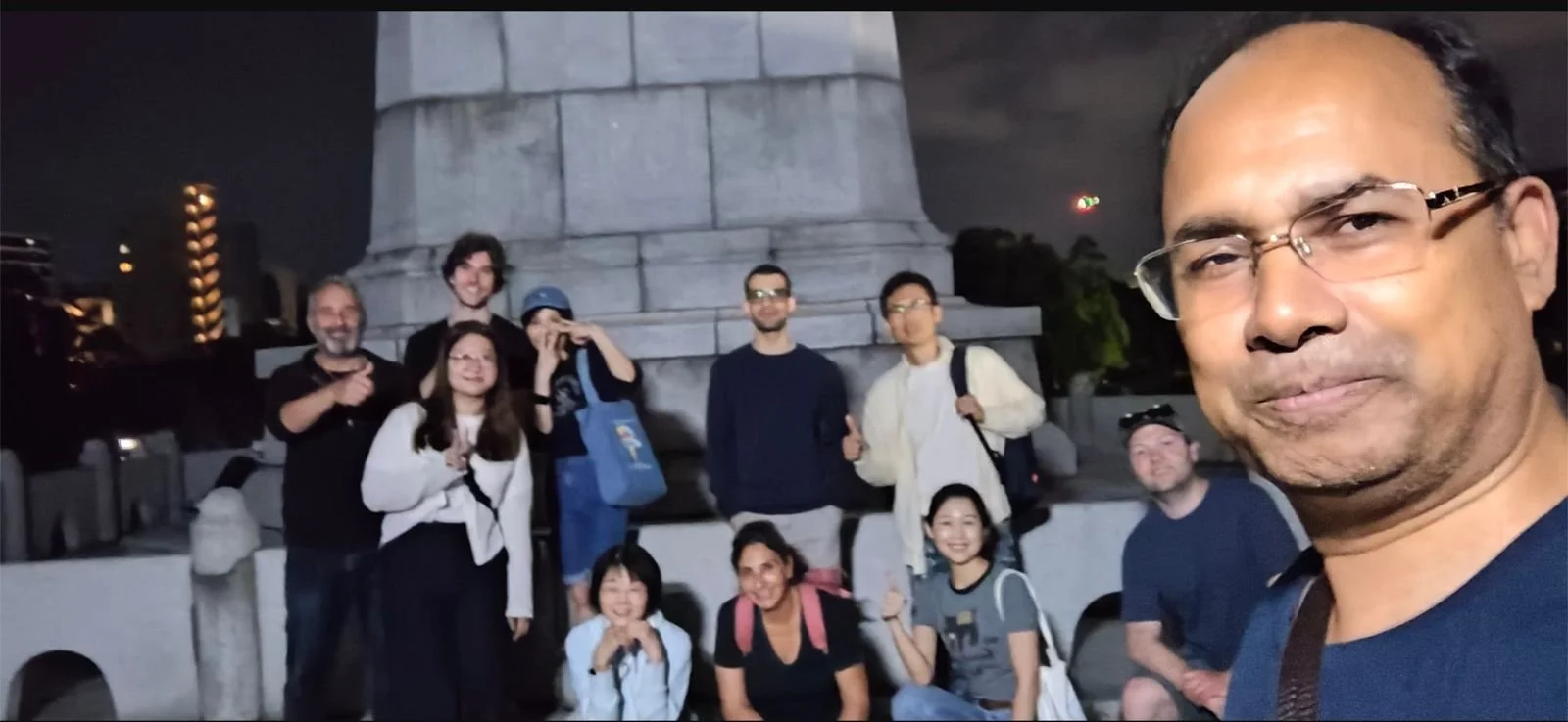
It seems everyone says it in their own way. Even the Bengali we meet again in a park in Fukuoka for a Walk & Talk, as we walk four laps of the park with him, alongside old friends and new, and take one ridiculous selfie.
And if you ask what truly makes me set out on this journey through Japan—I have no explanation.
Thank you, Sigalit