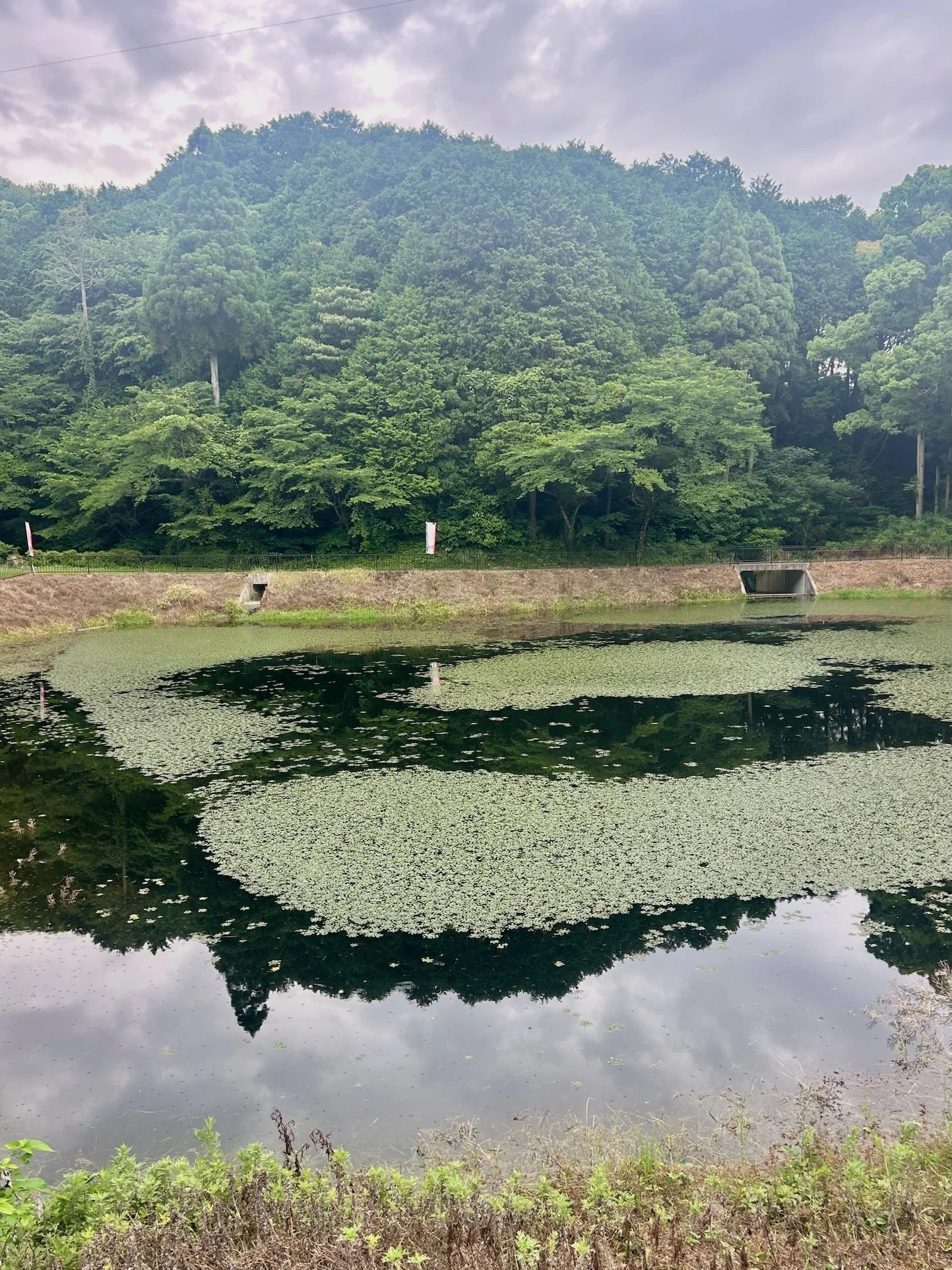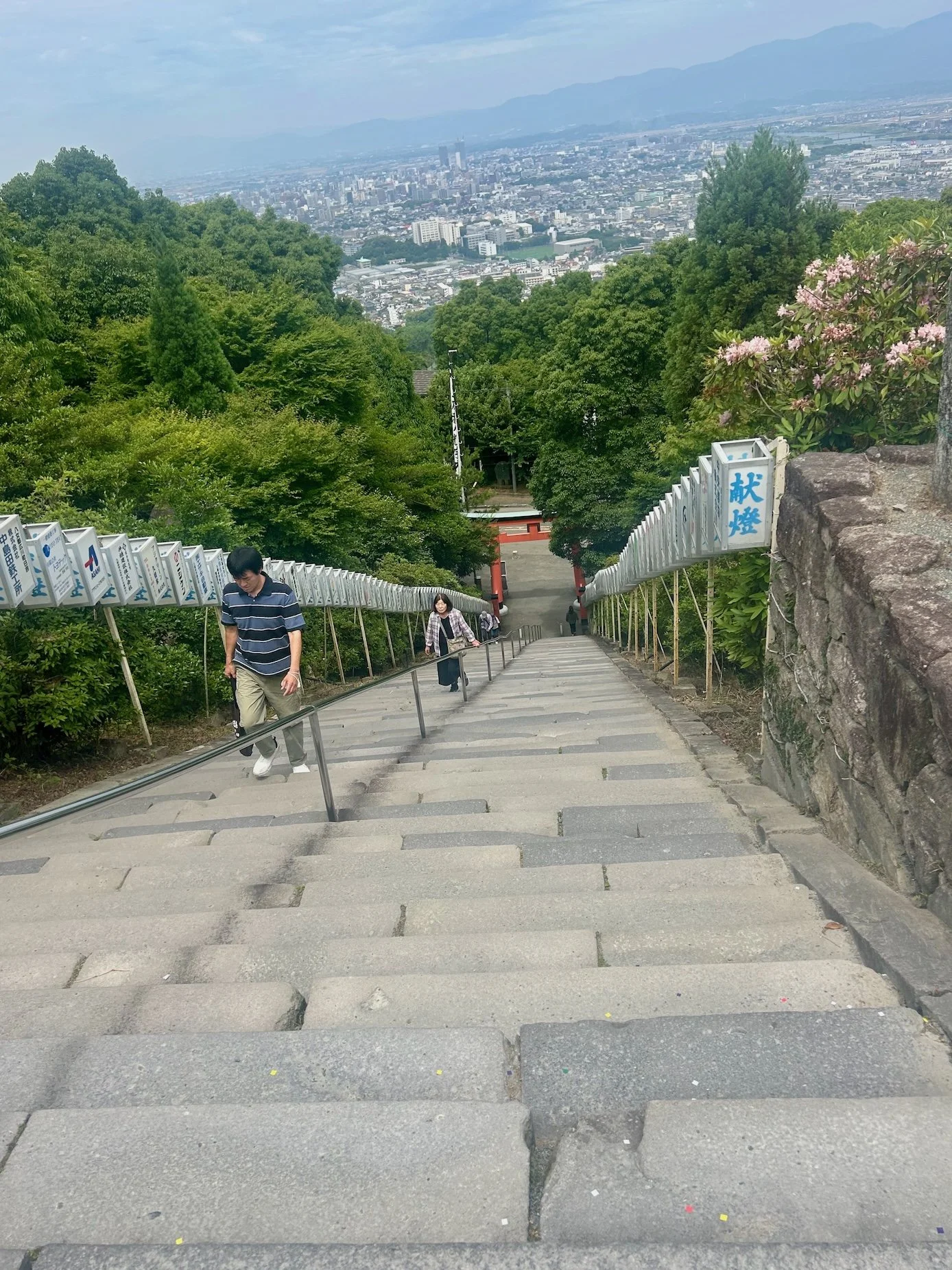
A sea breeze lands on me out of nowhere. Just enough to ruffle a dog. Only that, together with it, comes a heavy subtropical heatwave. Not nice.
We continue by fast ferry to Sasebo, a port city with a mild identity crisis. On one side—Japan. On the other—Americana, thanks to the US naval base operating here since the end of World War II and the famous Sasebo Burger, which arrives in sizes that fit less with Japanese minimalism and more with an inflated American ego. And it turns out that hanbaga is a hamburger in a bun, while hanbagu is a patty served on a plate. I order hanbagu. gu gu.
At the Toyota agency we pull out a fan of licenses. The clerk scans, studies, staples, and occasionally widens her eyes. Sumimasen! A small click on the iPad and into a conversation that doesn’t quite start, an Avatar-translator joins in behind a Covid mask, explaining that we won’t be able to get a car as the international driving permit wasn’t issued within the last year.
Surprisingly. Or maybe not. We both breathe out in relief, as if someone just removed our tail. Now it’s just us again, the road, and whatever is still unknown.
Sometimes freedom arrives precisely when a door closes—even if it’s only a paper partition.
Sayonara, Toyota.
With Backpacks on our shoulders, we turn lyrical. Dror says he feels we’re on a migration route, without explaining where to. I say I’ll come back slightly different, without explaining how.
Only that Japan feeds my hungry receptors—hungry for cleanliness, for quality, for silence, for attention to detail, and for a kind of beauty that doesn’t need to shout to be seen.
Movement through space brings us closer, pushes us away, and confuses everything in between. Communication improves and language leaves its schizophrenic state of scattered words and becomes more functional. No singular or plural, no masculine or feminine. Conversation flows somewhere between what I know how to say and what they try to understand. Emoji for advanced users.
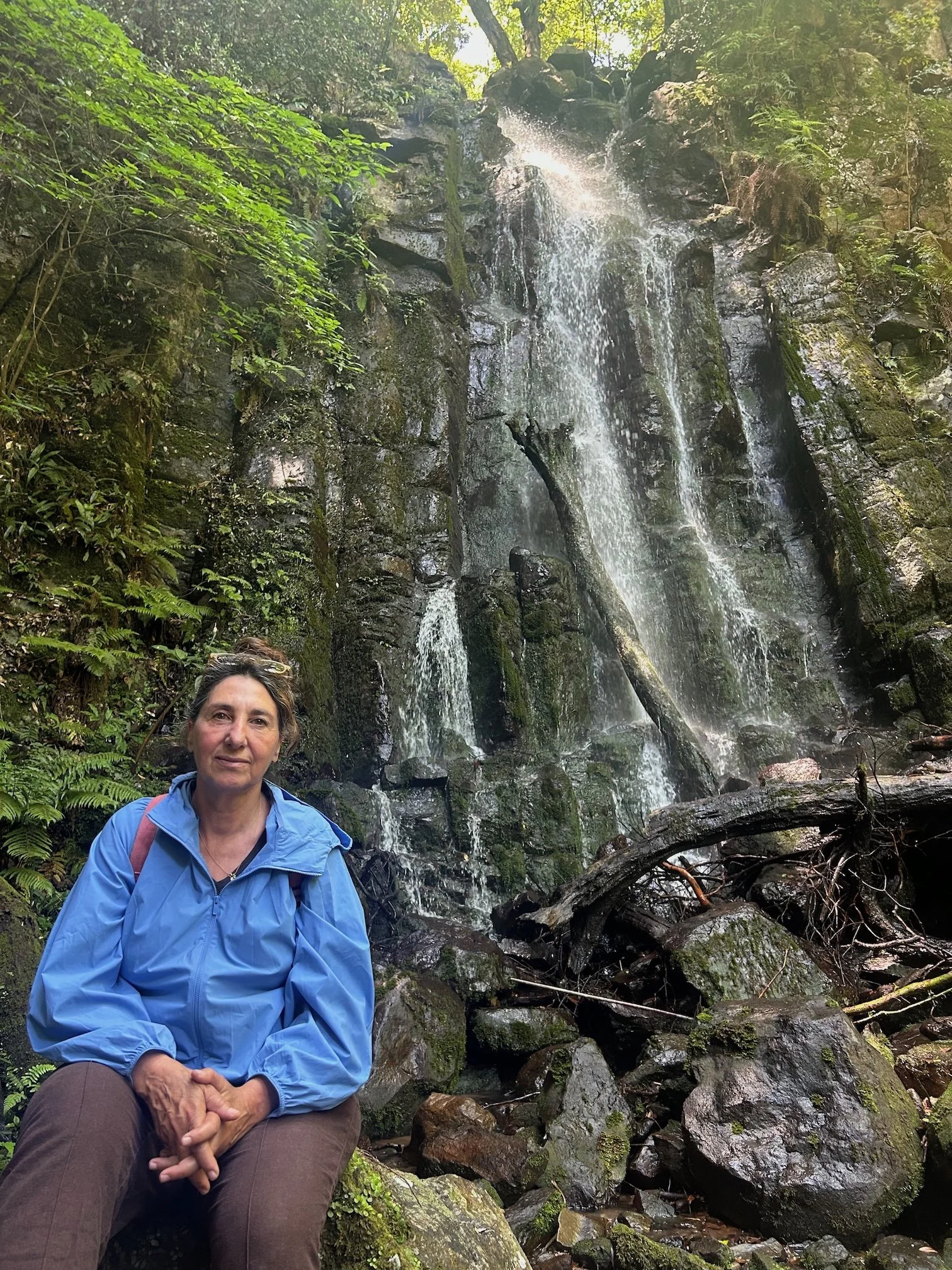
We move between shifting landscapes and people. Sea Japanese and mountain Japanese, city Japanese and rural Japanese—and above all 120 million mushrooms caps floating high above it all: shrines, bamboo forests, feng-shui waterfalls, and mountains like paper-cut scenery.
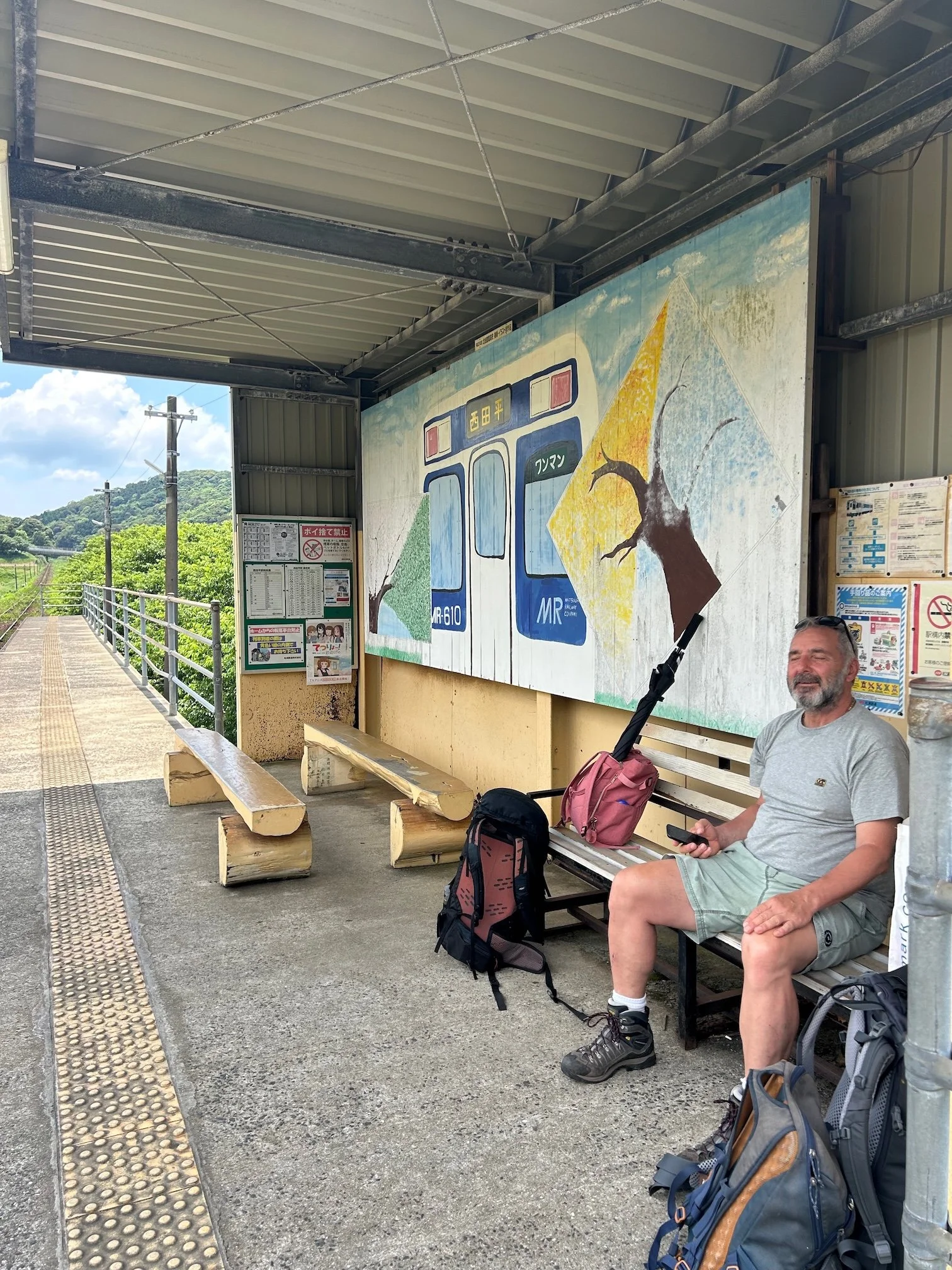
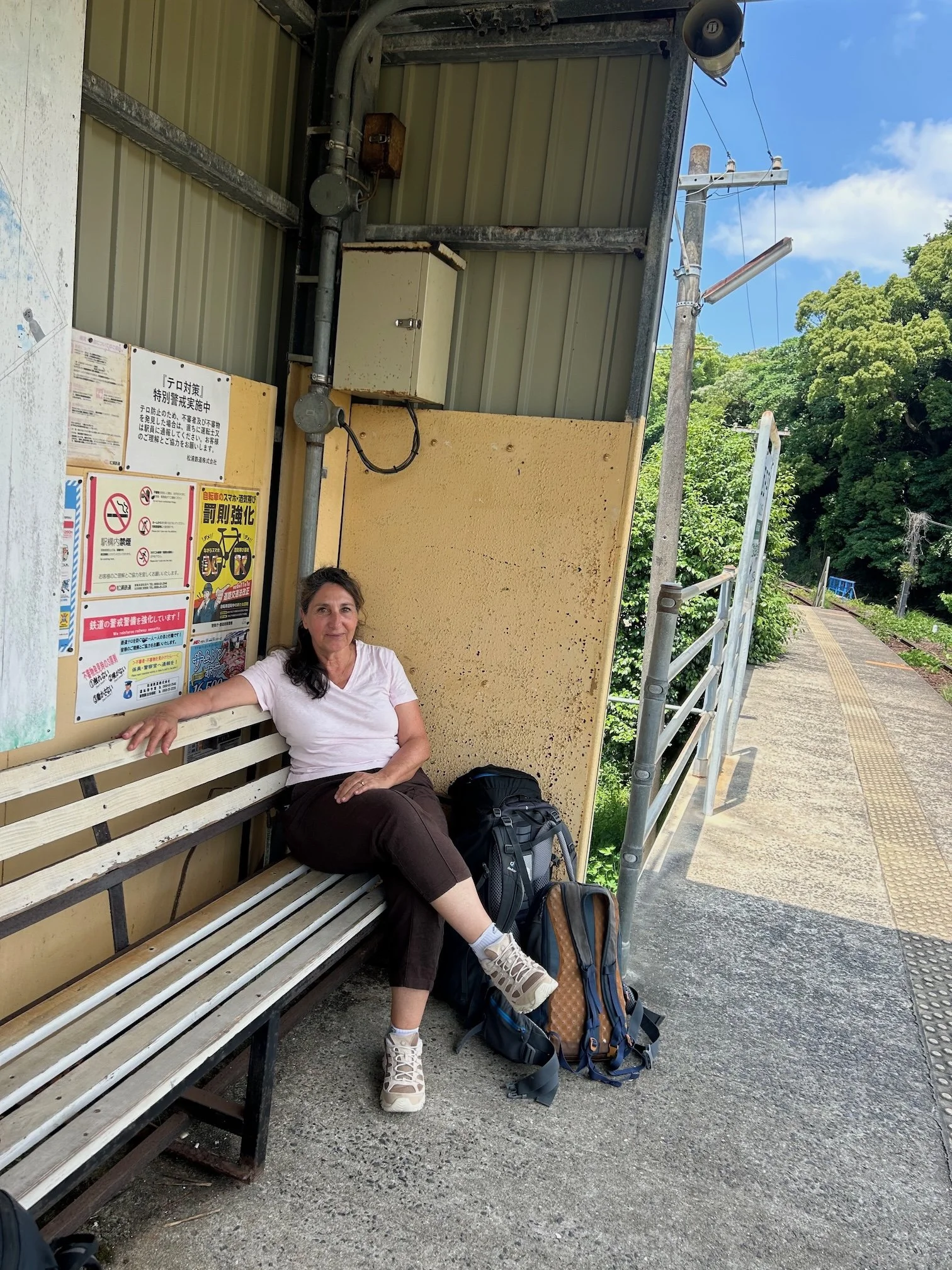
We get off for an overnight stop at Emukae, a tiny town built around a tinier train station, which consists of a bench, a track, and a notice board with mugshots of wanted crooks.
Once, during my romantic period, I thought these were photographs of missing persons—lost boys who left their homes for a Norwegian forest and never returned. Now I understand it is both — wanted and missing. Pity. It could have been a beautiful story.
On the way to our guesthouse, an elderly man—of the Blue Zone type—stops us and asks us to wait, disappears for a moment, and returns with two bottles of water and a blessing for a safe journey. Kyotsukete! A good Samaritan, the Japanese version.
Westward from here.
Hirado is one of Japan’s westernmost points. For years it was a gateway for foreigners entering the country, mostly Dutch traders. Along with sugar, silk, glass, and sponge cakes, they also brought world maps, medical books, telescopes, and new technologies.
The town feels like a place where history is still walking the streets. Samurai, Dutchmen, and Catholic missionaries left traces side by side. A hilltop castle, a Dutch pier, a small harbor, blue porcelain, and the sense that the wider world once anchored here—and then moved on.
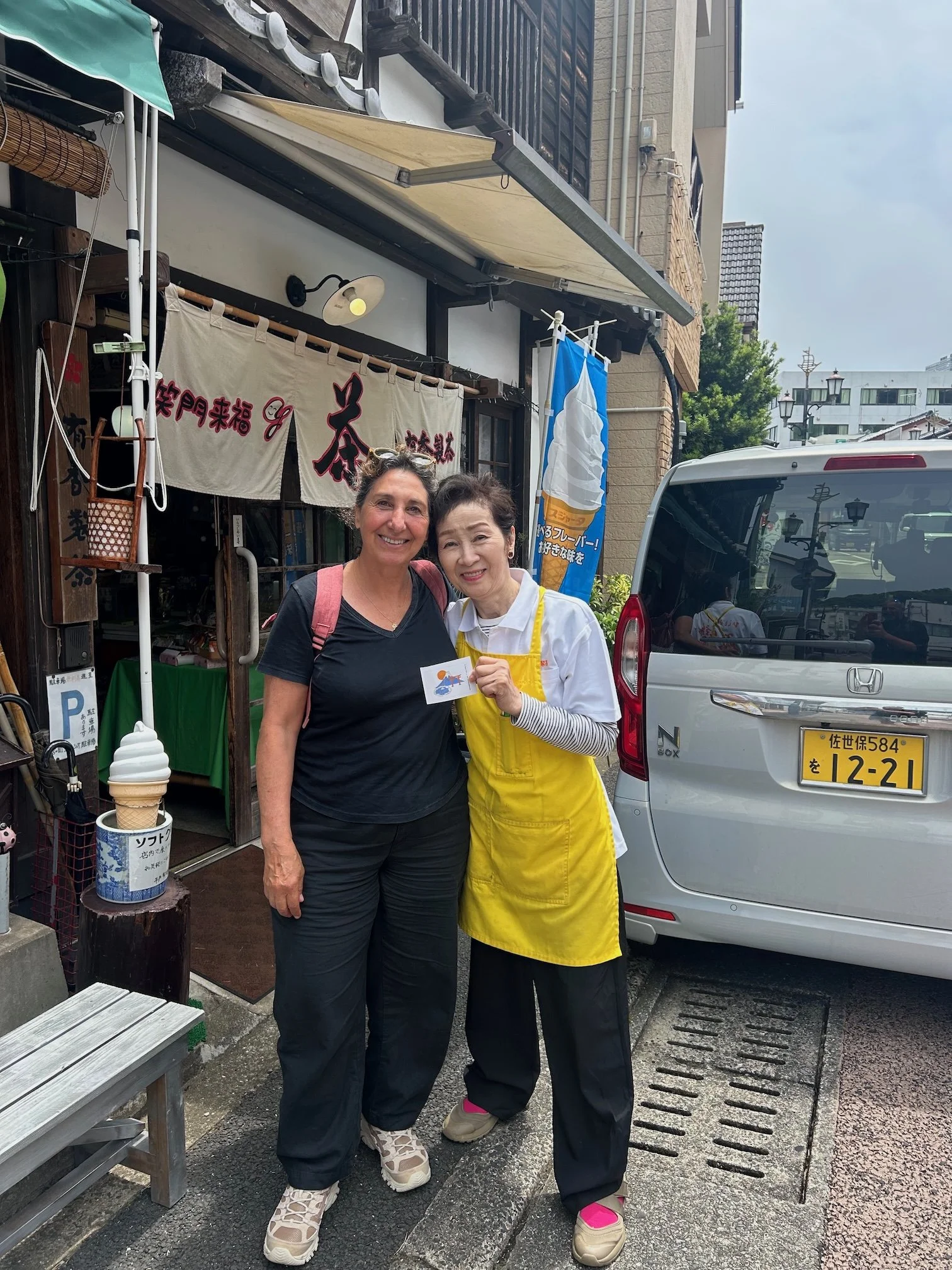
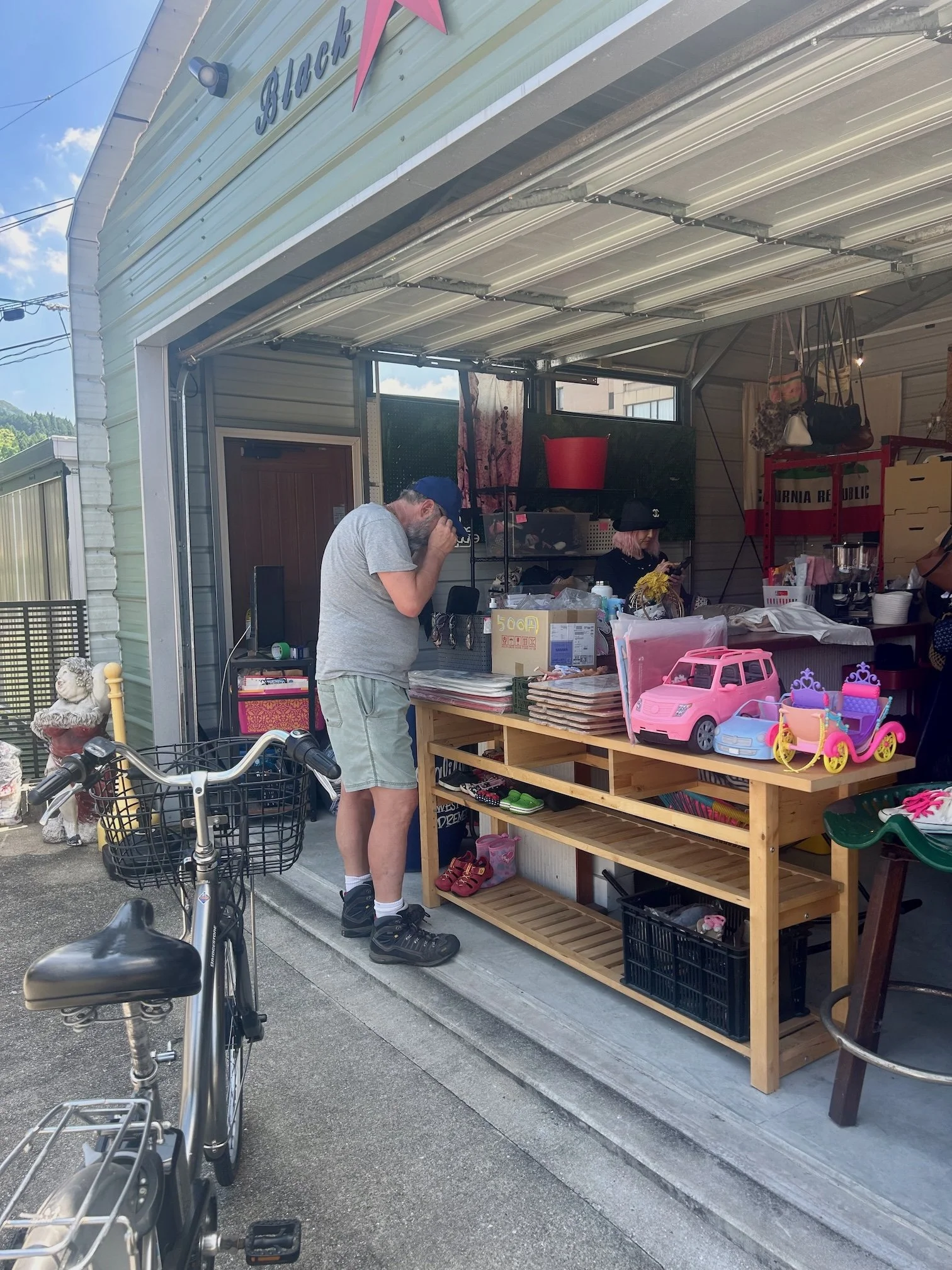
The women in the shops look like they stepped out of a 1940s film. Elegant, in yellow dresses and high Audrey Hepburn-style hairdos, they greet us with a slightly playful charm, offer green tea and local souvenirs. I buy. A kite for each grandchild.
Even our traditional hotel sits on a hill like a fortress. It’s so large it has bridges between wings and a maze of corridors. I get lost and consider sending my own location to myself—or at least scattering small stones along the way to the onsen in inner wing B, on the twelfth floor—the one that makes me feel as if I am bathing in a cloud onsen.
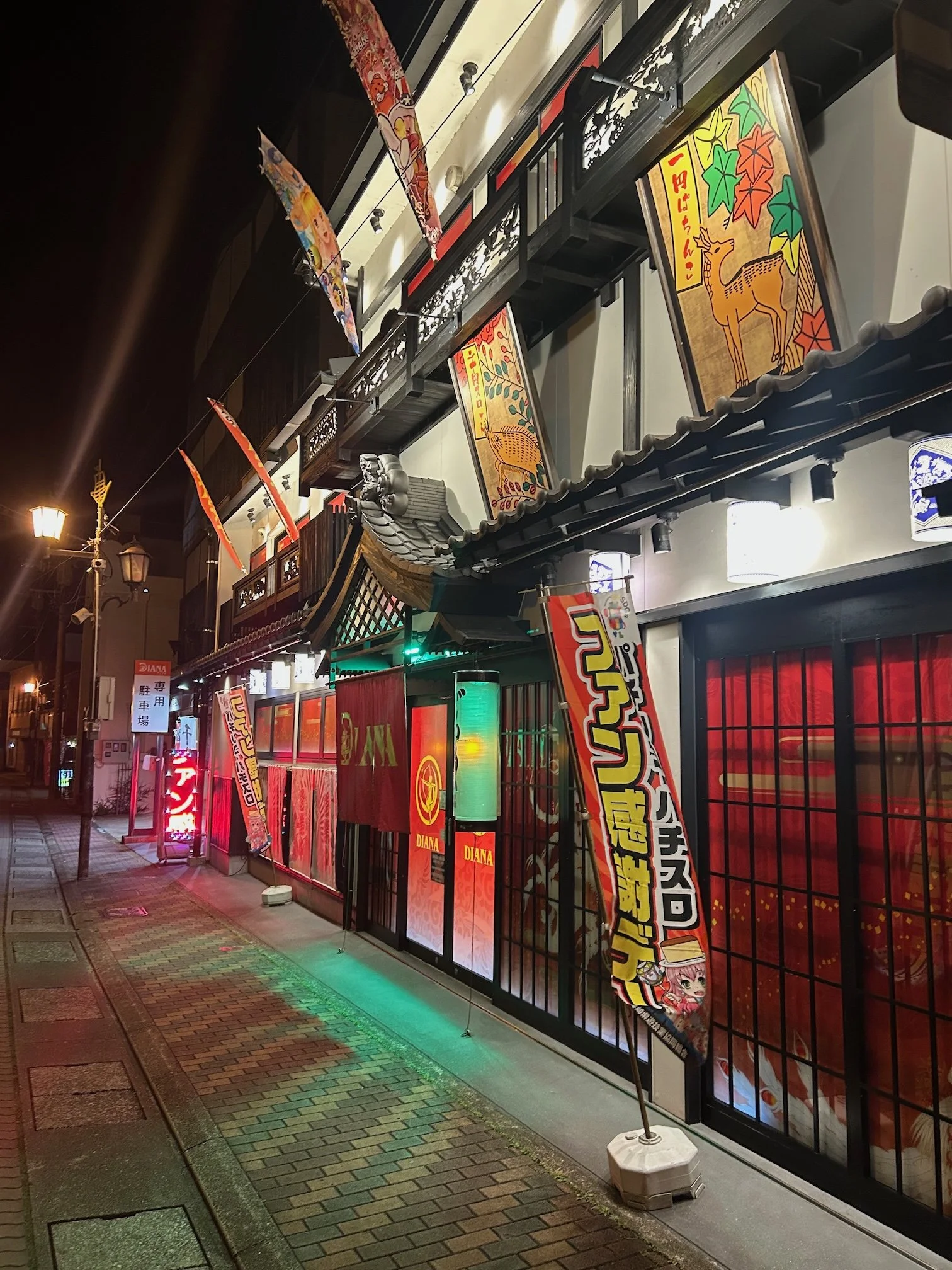
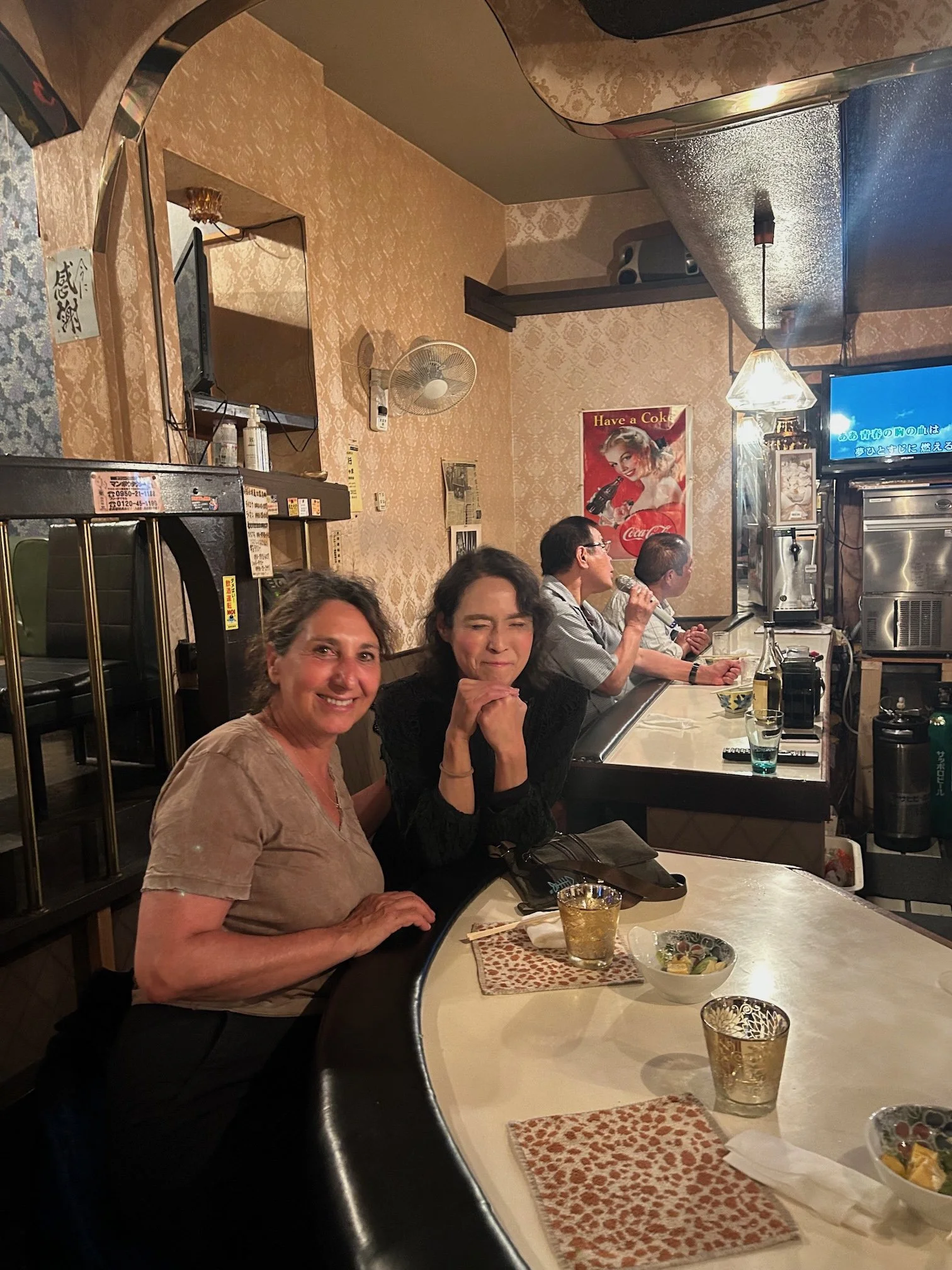
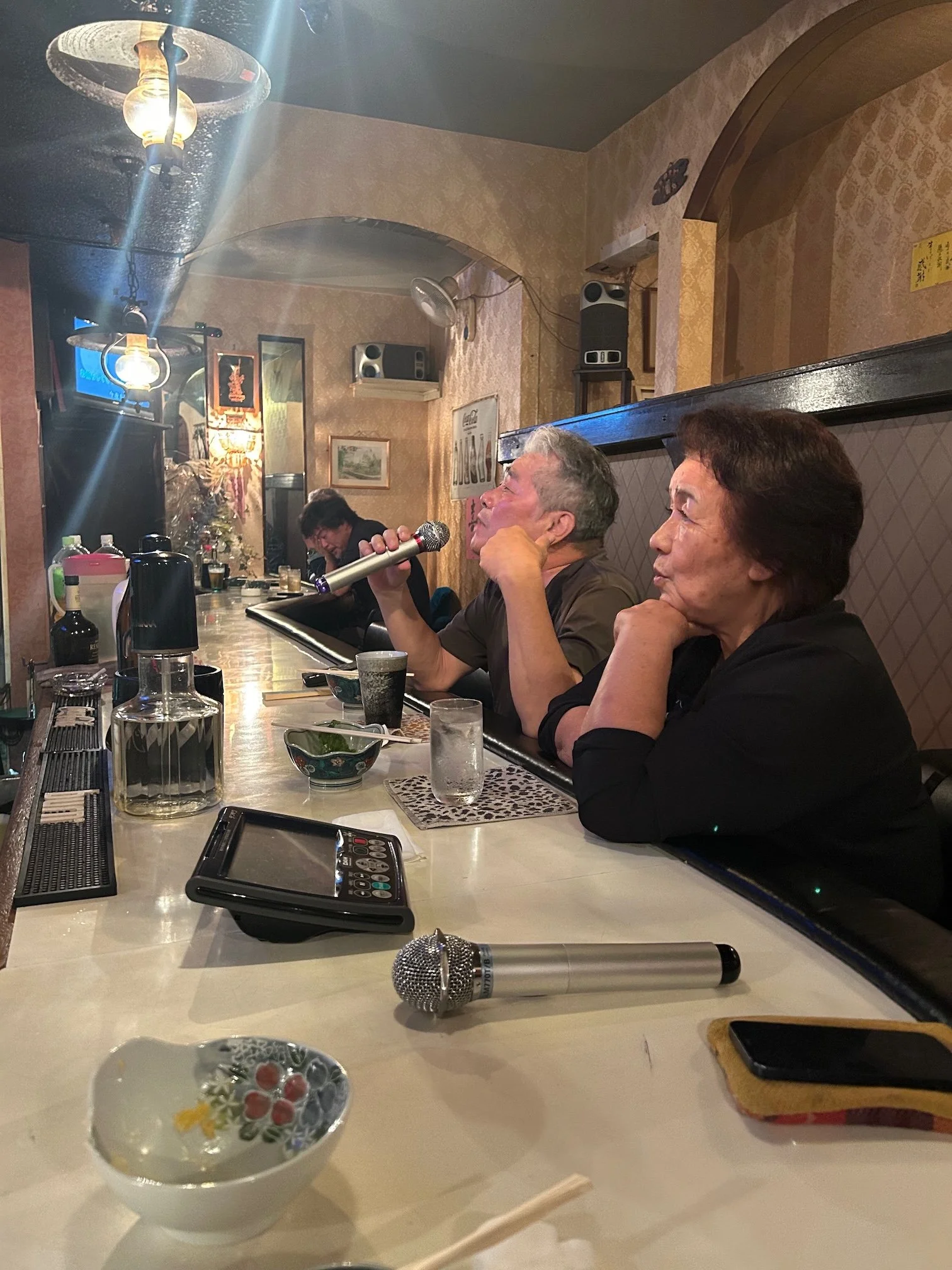
In the evening, on a street corner in Hirado, in a small unmarked bar, we join the locals who arrive slowly, order drinks, and sing karaoke. The mama-san greets them, sits close, encourages singing, and even joins in on the chorus. She stays alert to everything, making sure no one is left out, pouring drinks and handing out bowls of Japanese sweets and snacks.
We sing too. Billy Joel. And drink. And listen to Japanese versions of Sea wives’ ballads. And feel close.
Did you know? The word karaoke is made of ״kara״, meaning empty, and ״oke״, short for orchestra: an empty orchestra.
Kurume, as the singing chat says, is a real Japanese city. I wouldn’t single out Kurume in particular—every city I’ve visited in Japan was Japanese.
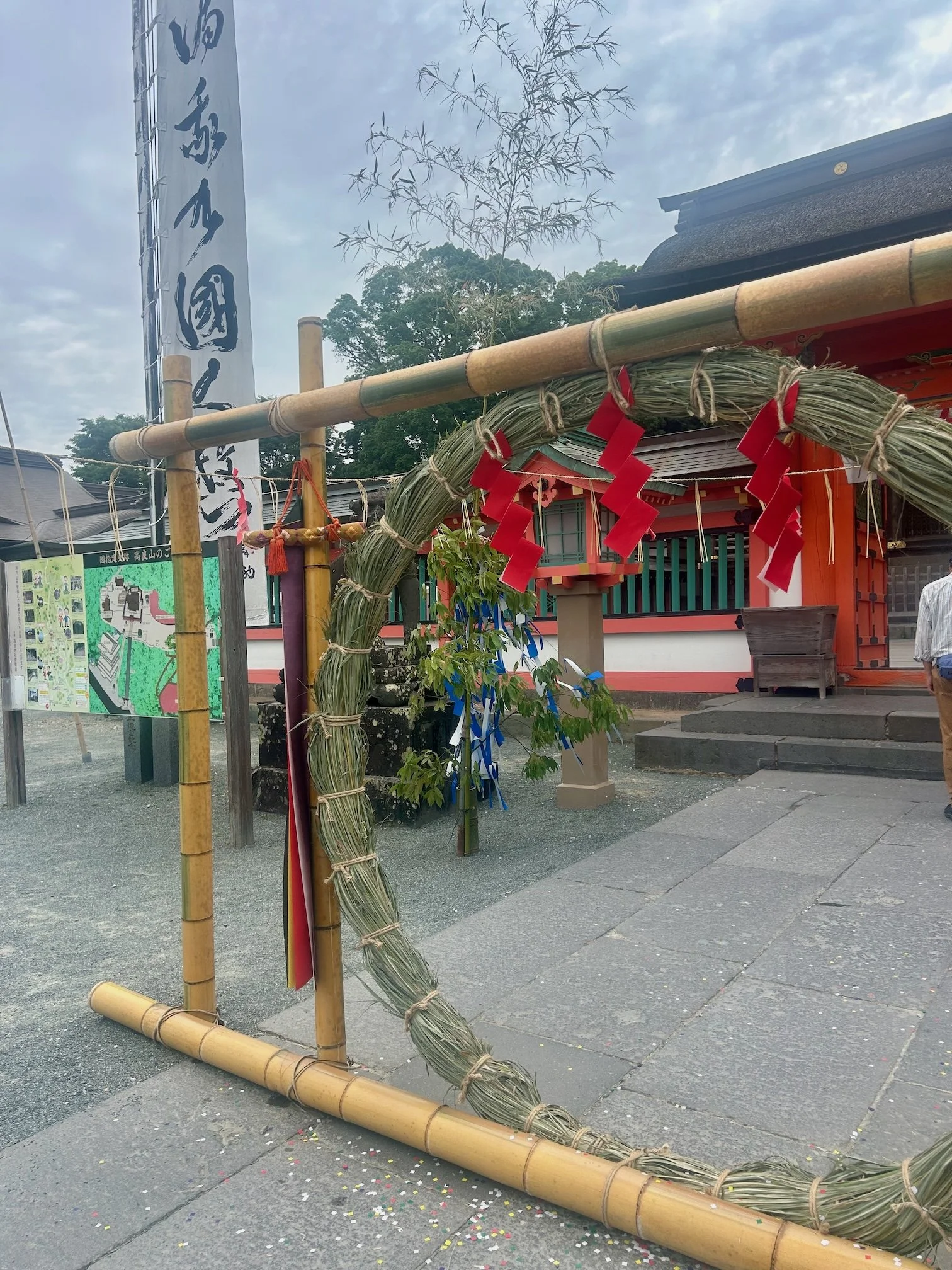
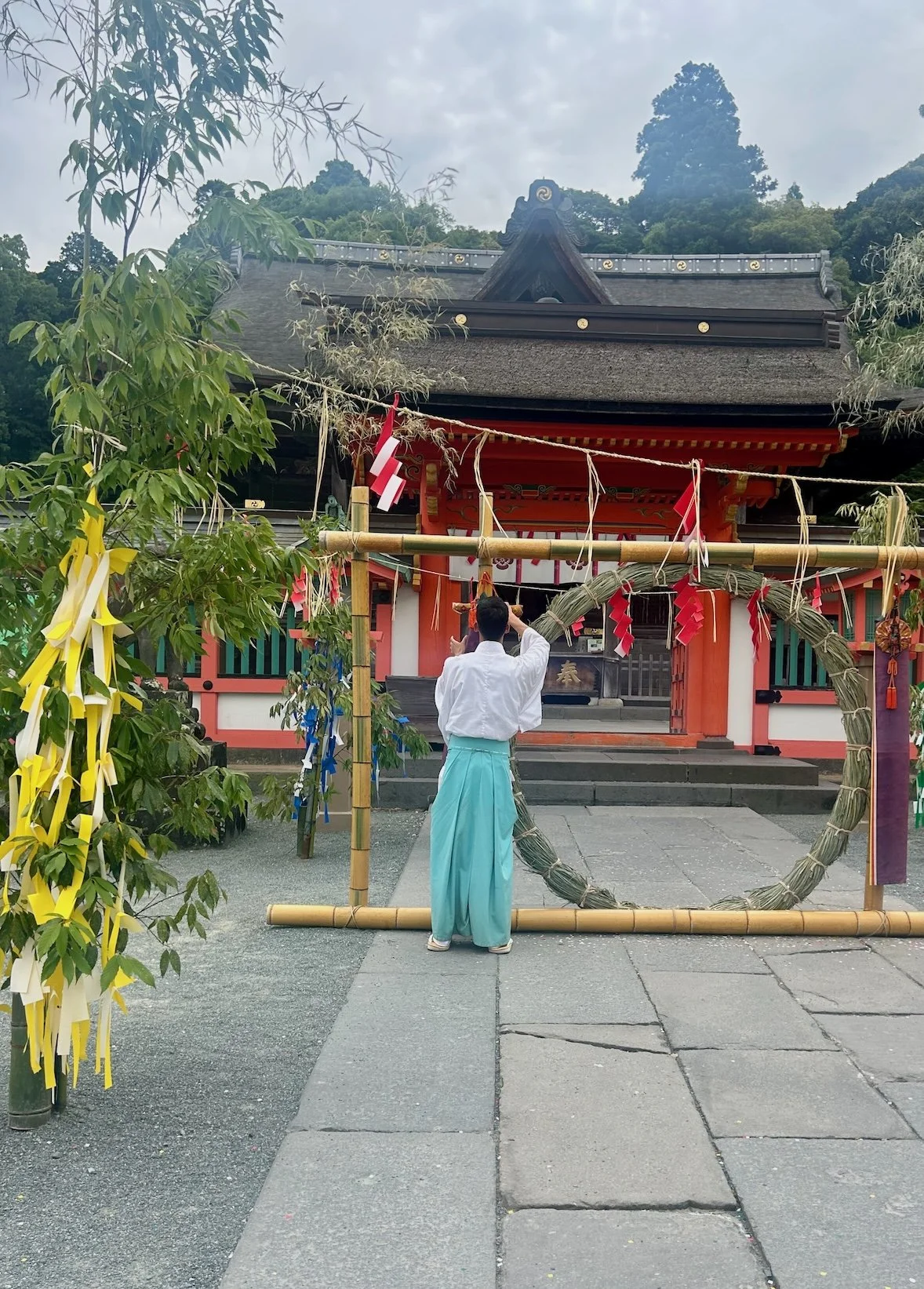
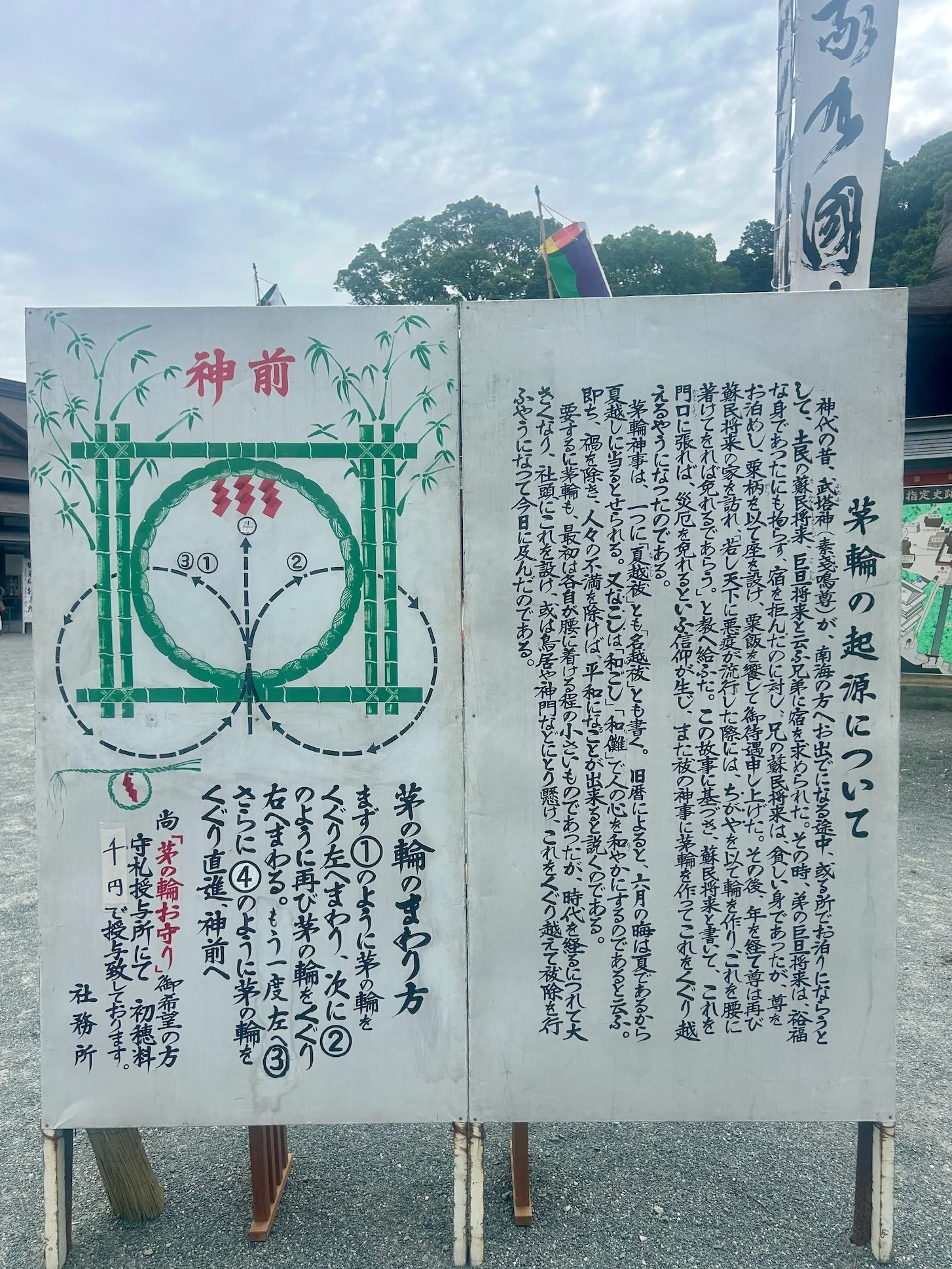
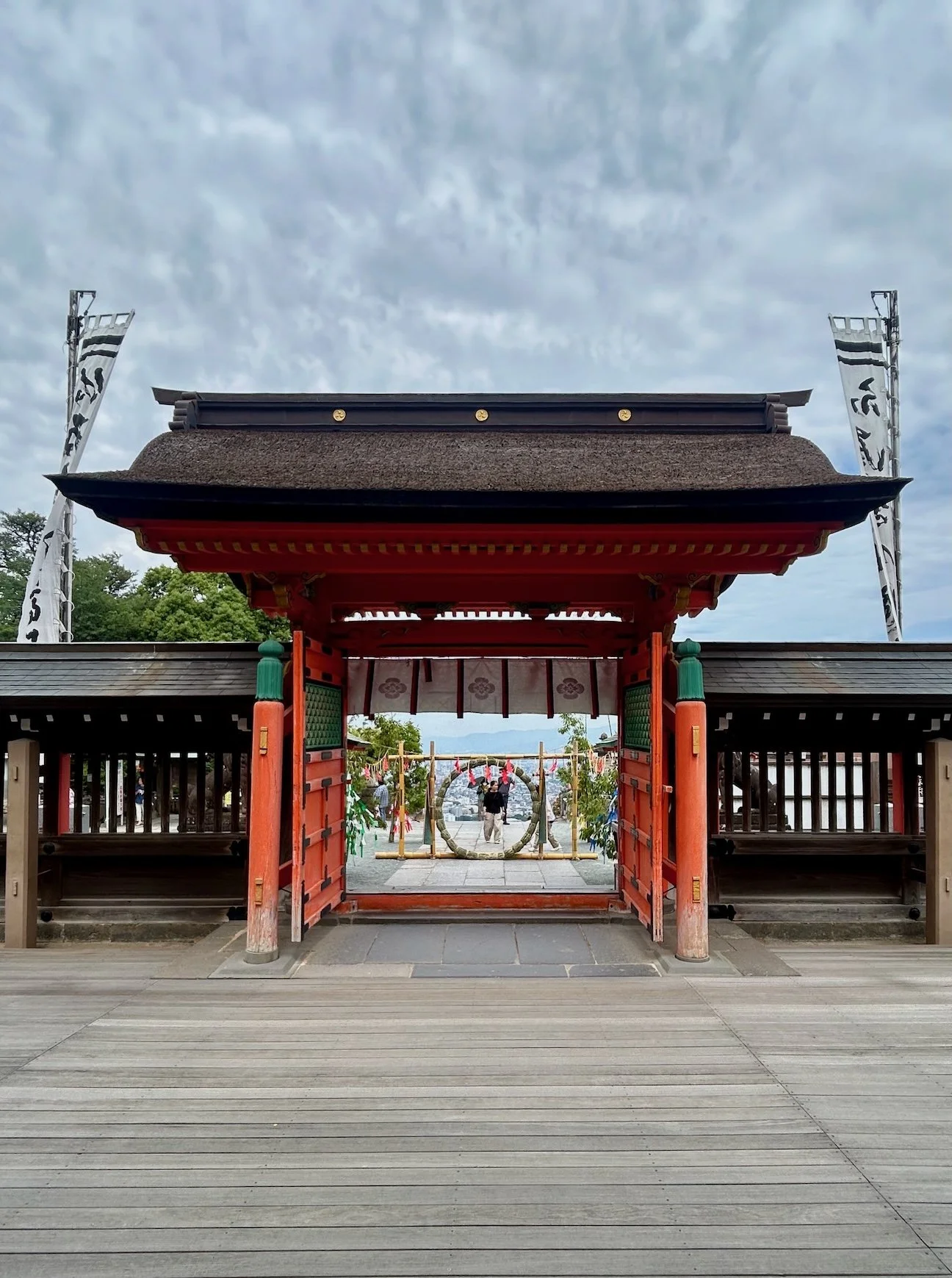
We stop there because of the ״Chinowa Kuguri״ ritual, held once a year in June as part of a purification ceremony and the removal of bad luck.
The participants—and I—move in a figure-eight circular path around and through a giant straw ring. A charm for health and longevity, leaving behind the six months that have passed and entering the second half of the year clean. The ritual carries elements of cycles and seasons, suggesting—life does not progress in a straight line but in small circles of return and renewal, only that with each turn we are no longer quite the same people anymore.
While walking, we chant: Harae Tamae, Kiyome Tamae—purify us, remove impurity, cleanse us.
I thought, and without entering theological debate, how similar yet different this is from the Jewish pray ״we have sinned, have mercy upon us.״ Here there is no confession of sin or plea for forgiveness—only a request to remove what has clung to a person along the way and return them to a state of clarity and harmony.
Legend says that whoever passes the early summer purification ritual (June 1–2) will live for a thousand years. I took part in the June 1, 2026 ritual. Save the date.
While walking around and through the ring of life, melancholic thoughts rose in me, with a faintly morbid scent. I remembered my parents, the silence of death on their faces, the places I once went with them that no longer exist, and everything that can no longer be asked or said.
When the deep beats of the taiko drums sounded, meant to summon the gods, my mood lifted slightly and I walked with a greater sense of vitality and less of death. I even felt something of the purification and elevation promised in the brochure.
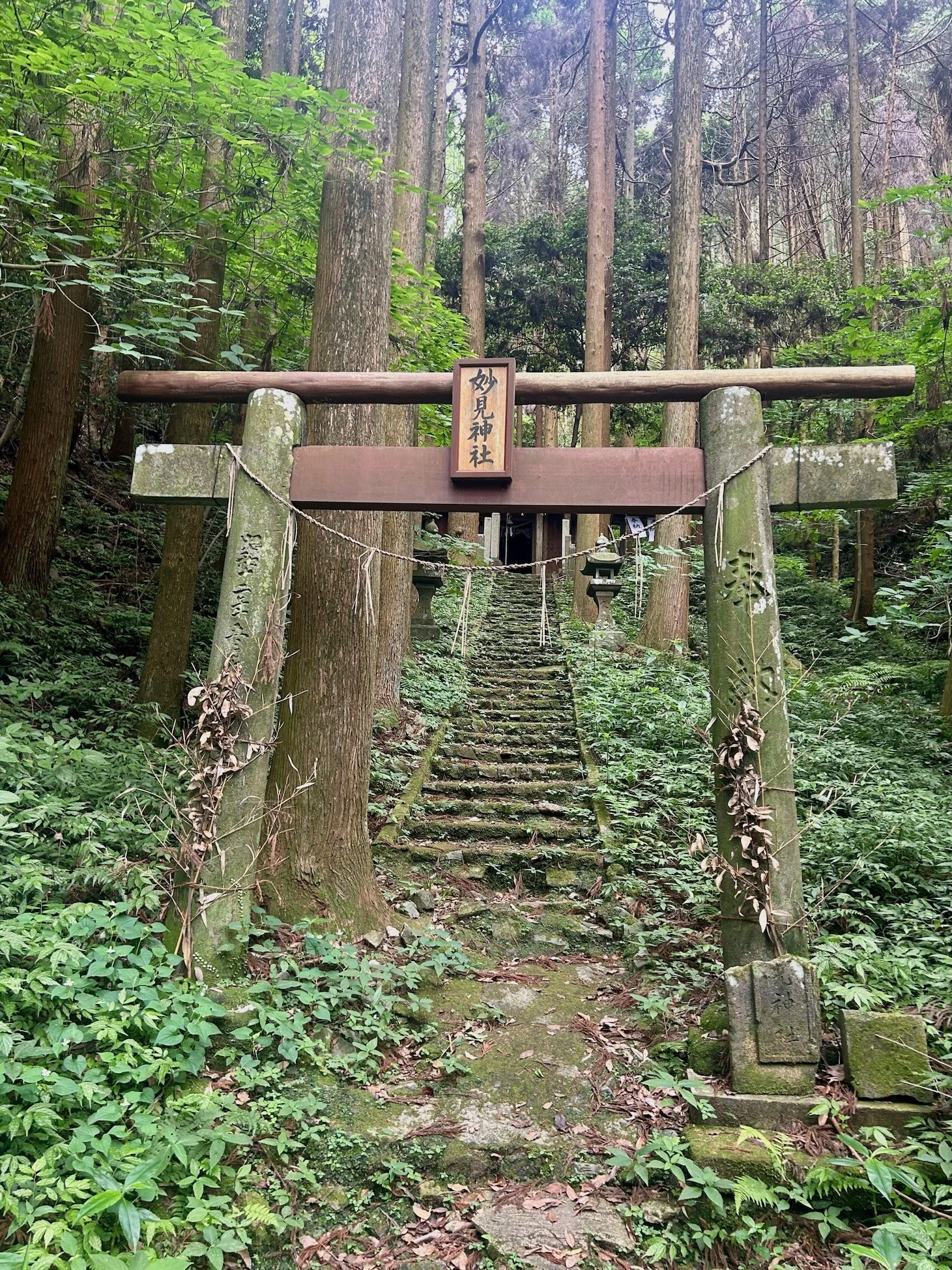
There are only four declarations required to convert to Shinto: family and tradition are values; nature is sacred; cleanliness matters; and festivals are a form of faith. I join.
Side thoughts.
Room size is measured in tatami mats. I counted eight. That’s big.
The Japanese have a way of appearing exactly when help is needed, like fairies.
Bamboo symbolizes life, growth, and renewal. It grows in segments, each segment both an ending and a beginning. But even bamboo has an end.
Post offices in Japan are an experience—part pharmacy, part stationery shop, part community center. There are packing corners, postcards, souvenirs, and postal teddy bears. Who remembers that Israel’s postal symbol is a deer?
Japan still explains itself in paper. Everything has a manual, a laminated sheet with tables, illustrations, and flowcharts. And at the right moment, the relevant page is pulled out of a folder as if someone had already thought of every possible question in advance. Yes. Someone did.
The Milky Way.
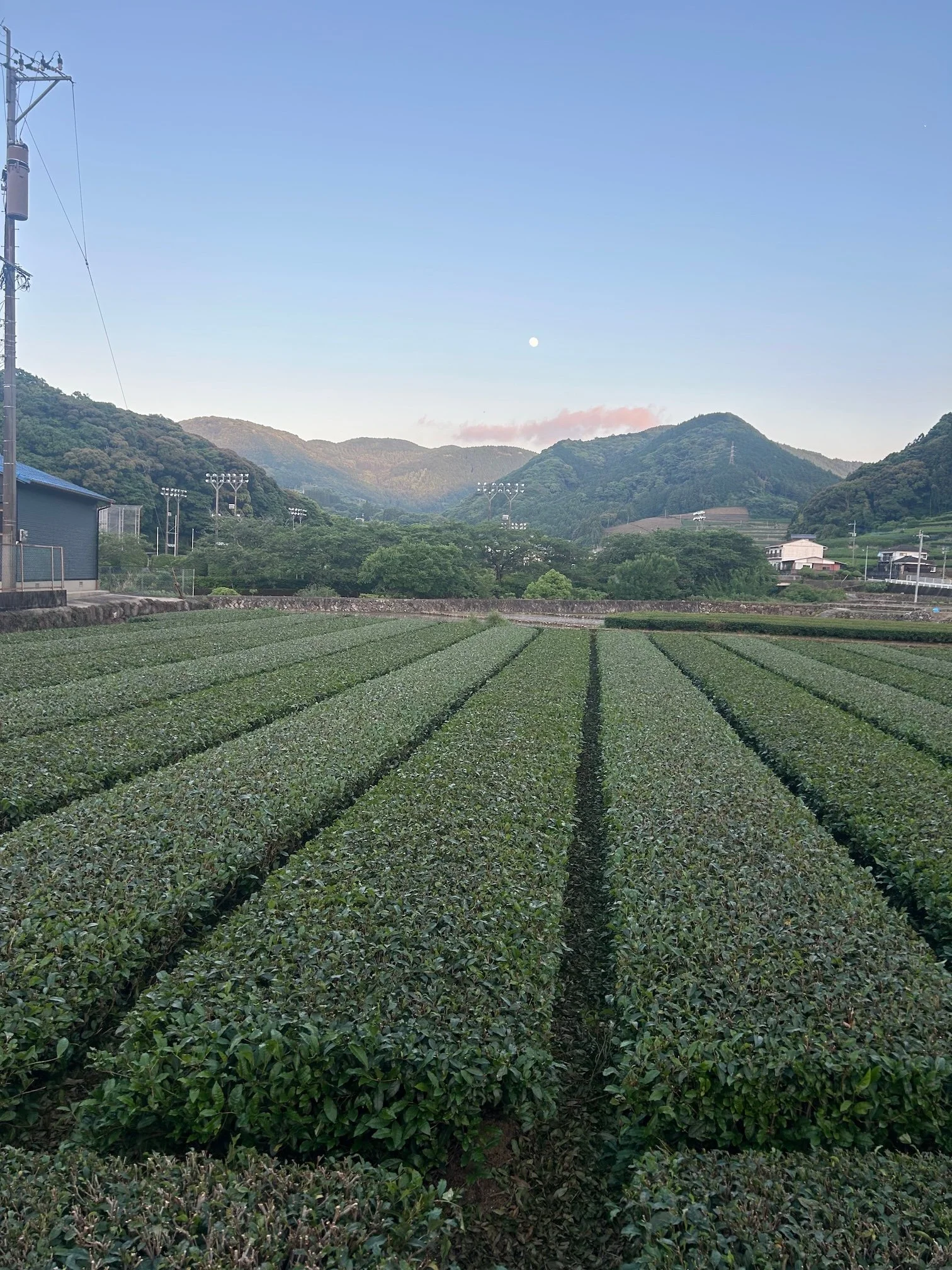
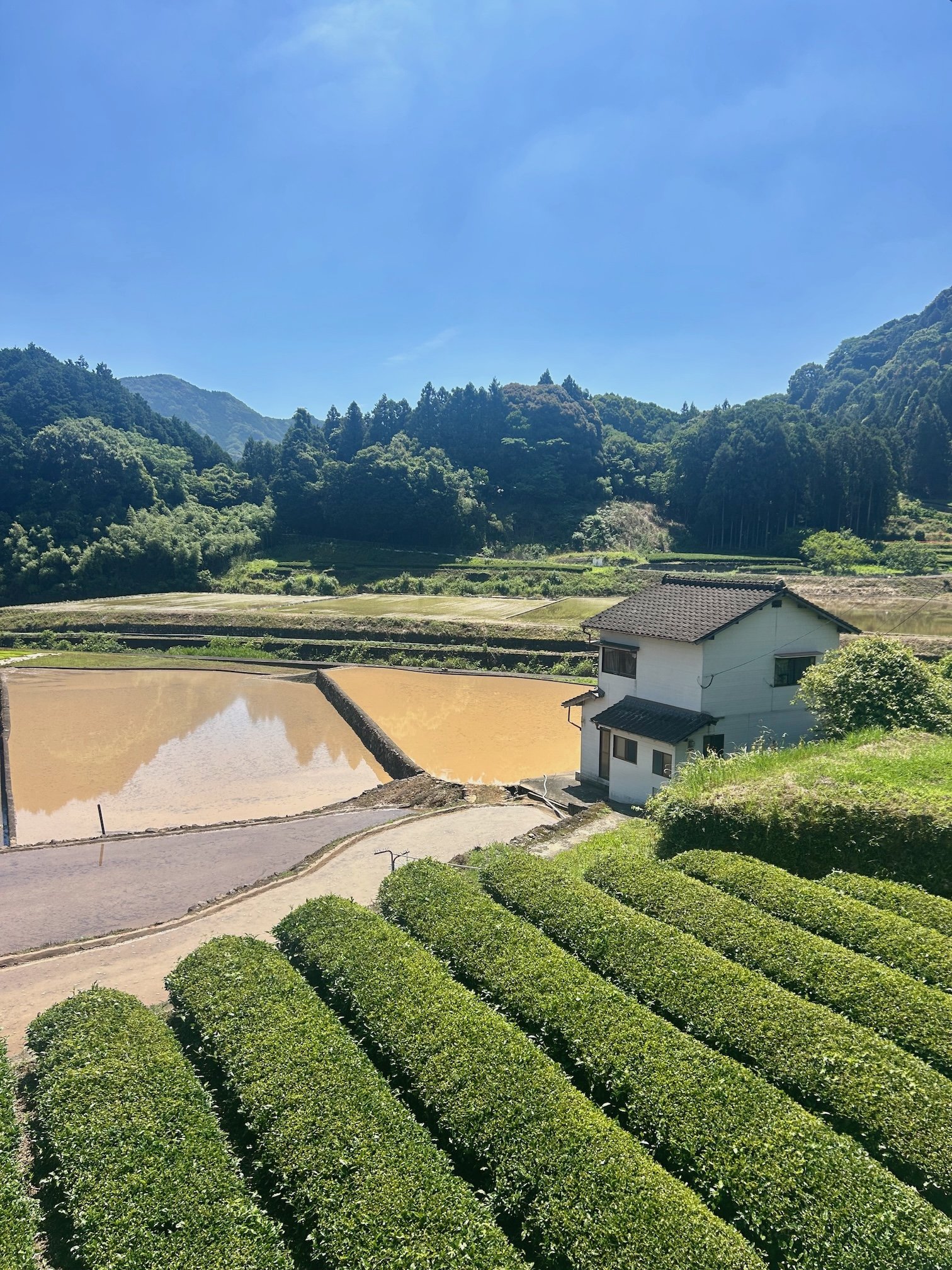
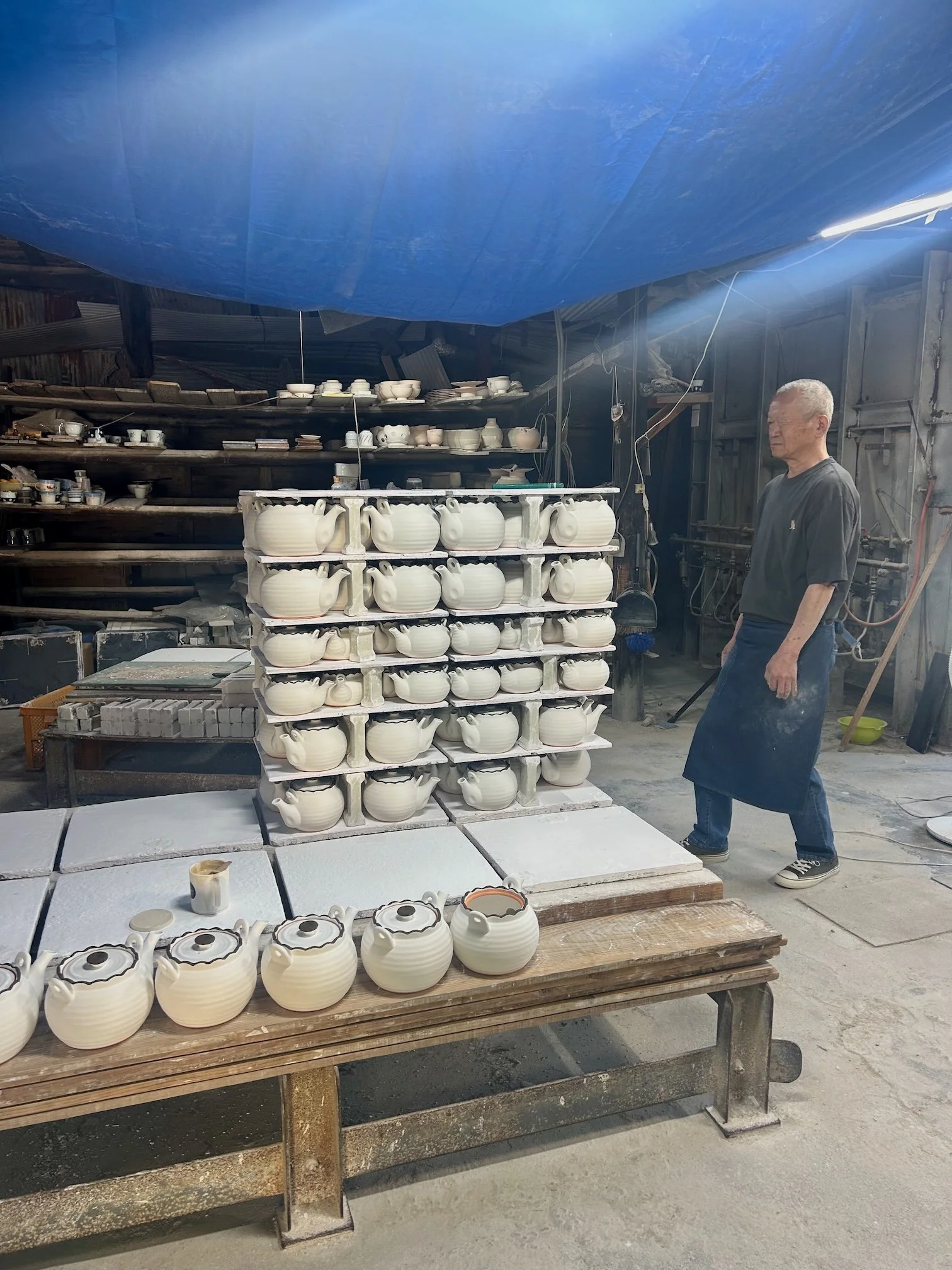
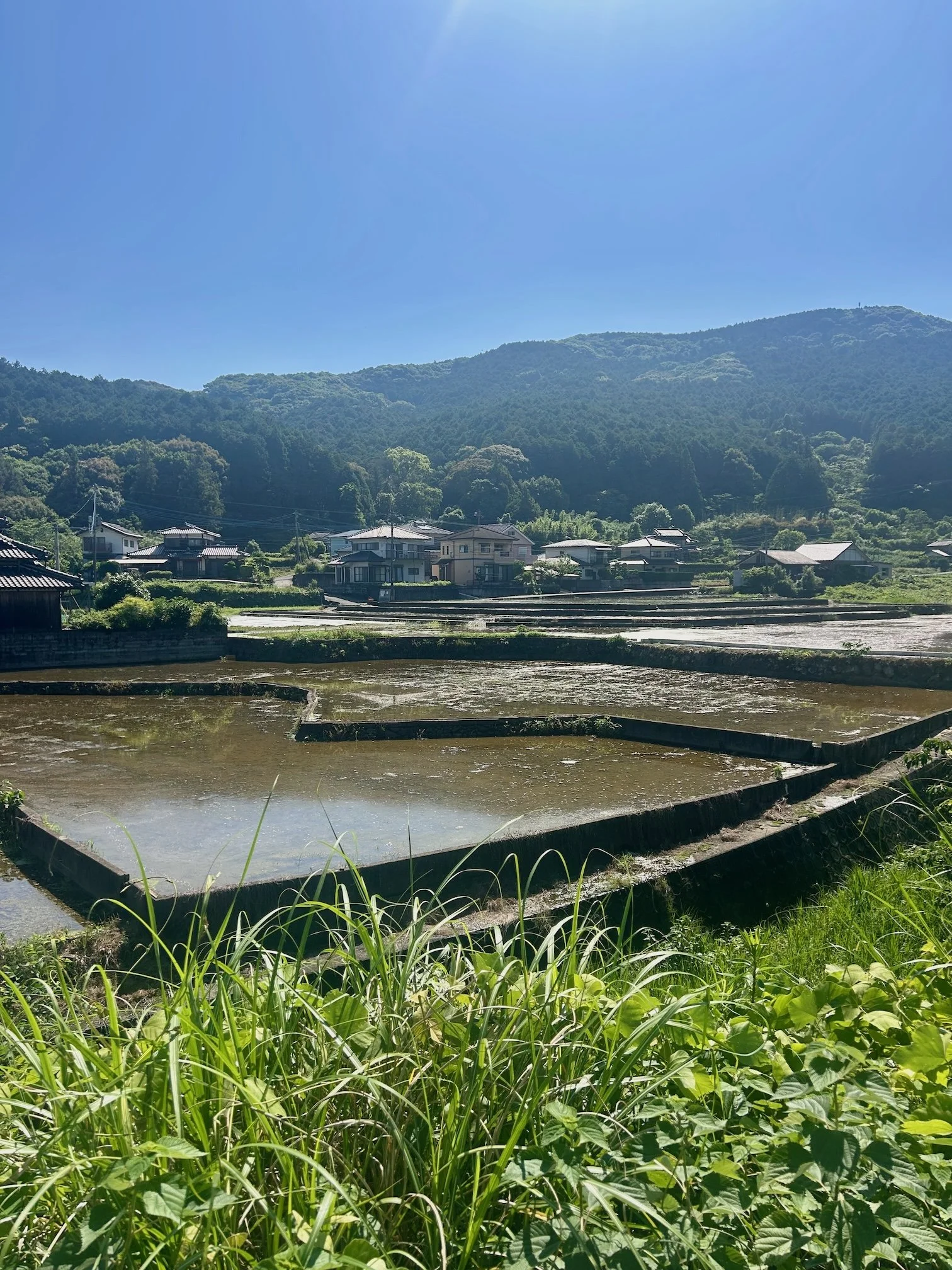
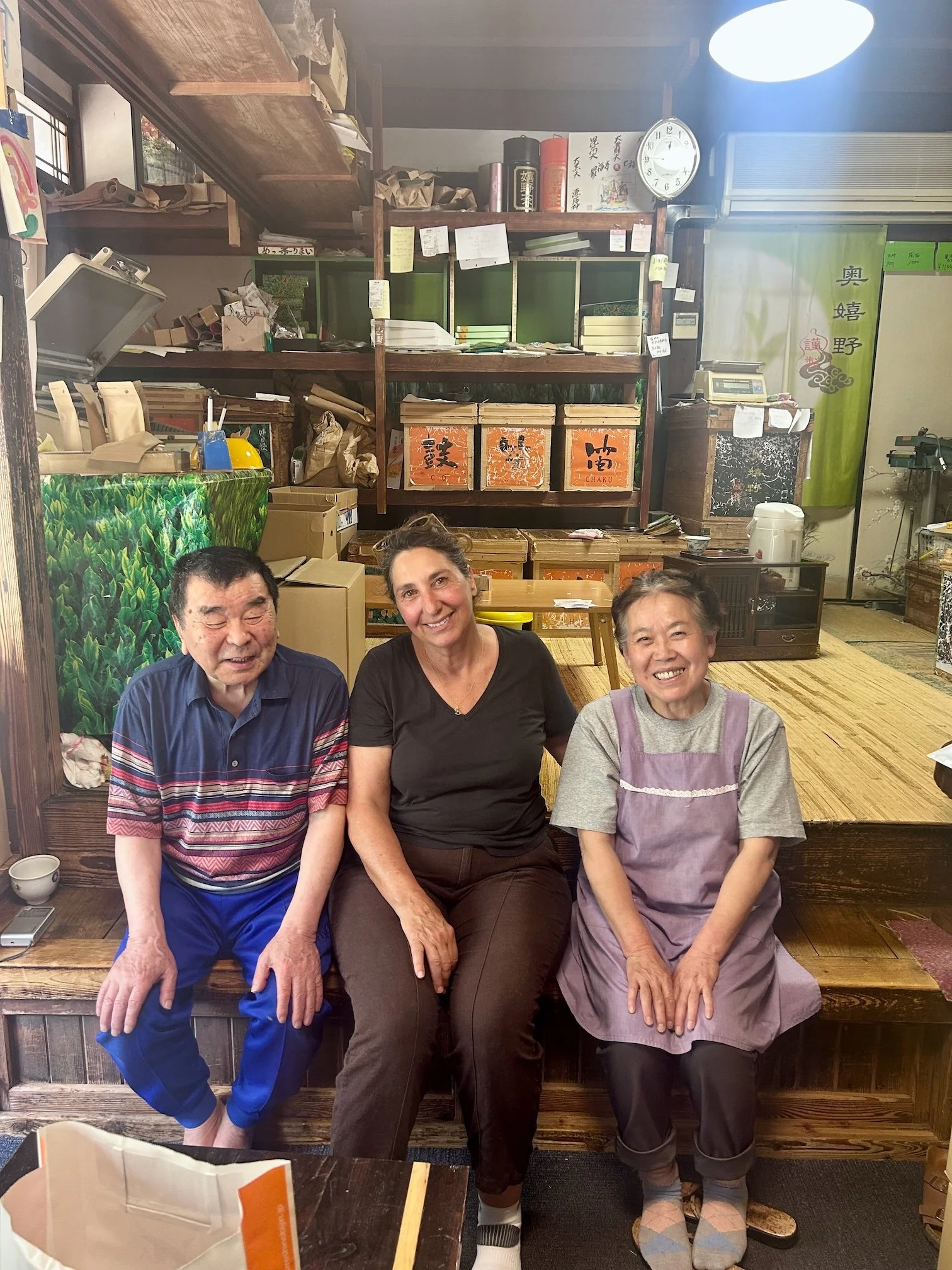
We continue by bus to Ureshino Onsen. The landscape opens into long symmetrical beds of green tea fields. Intense shades of green cover the mountains, rising and falling like a large woman stretching her limbs. We wind through her swelling curves.
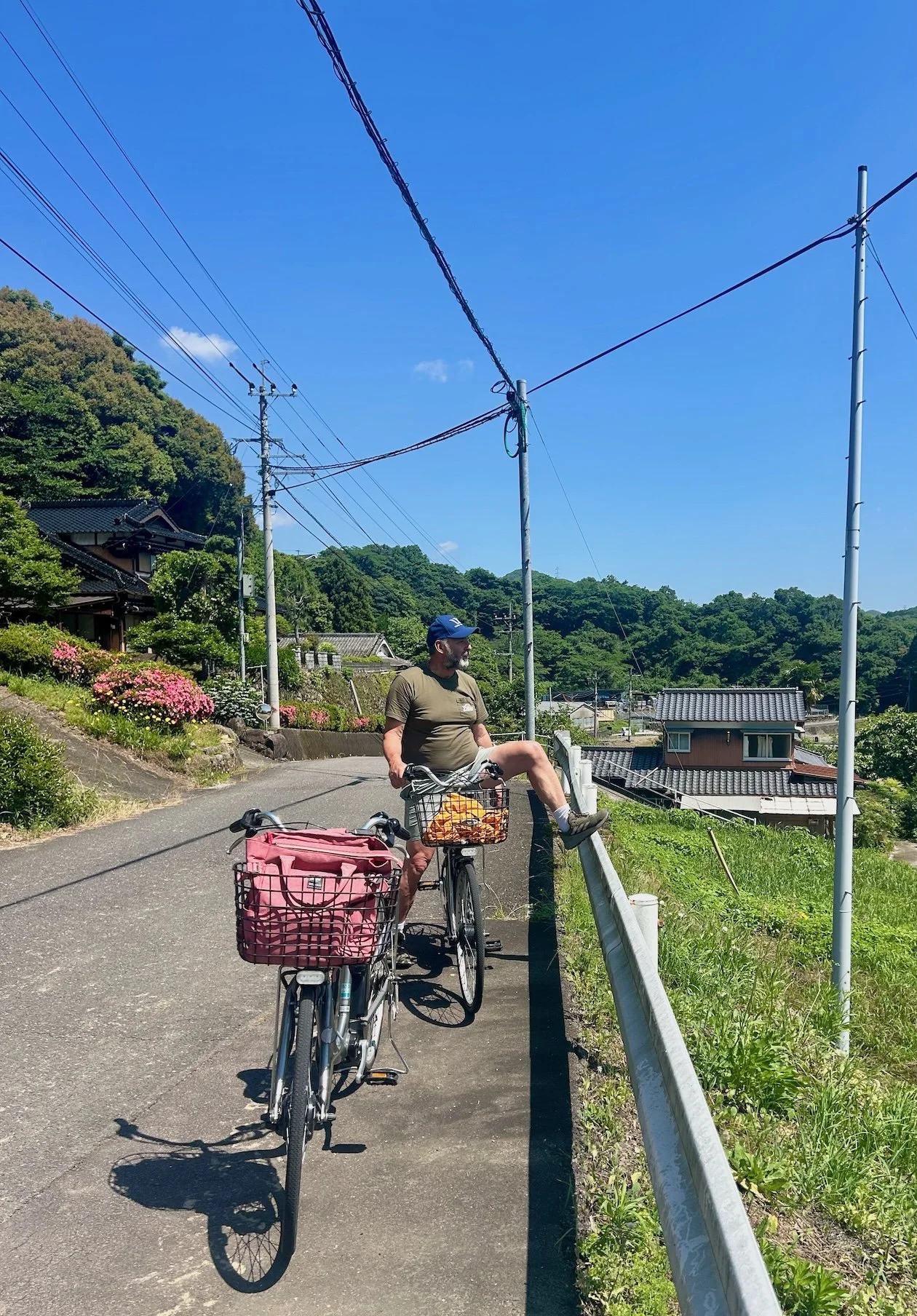
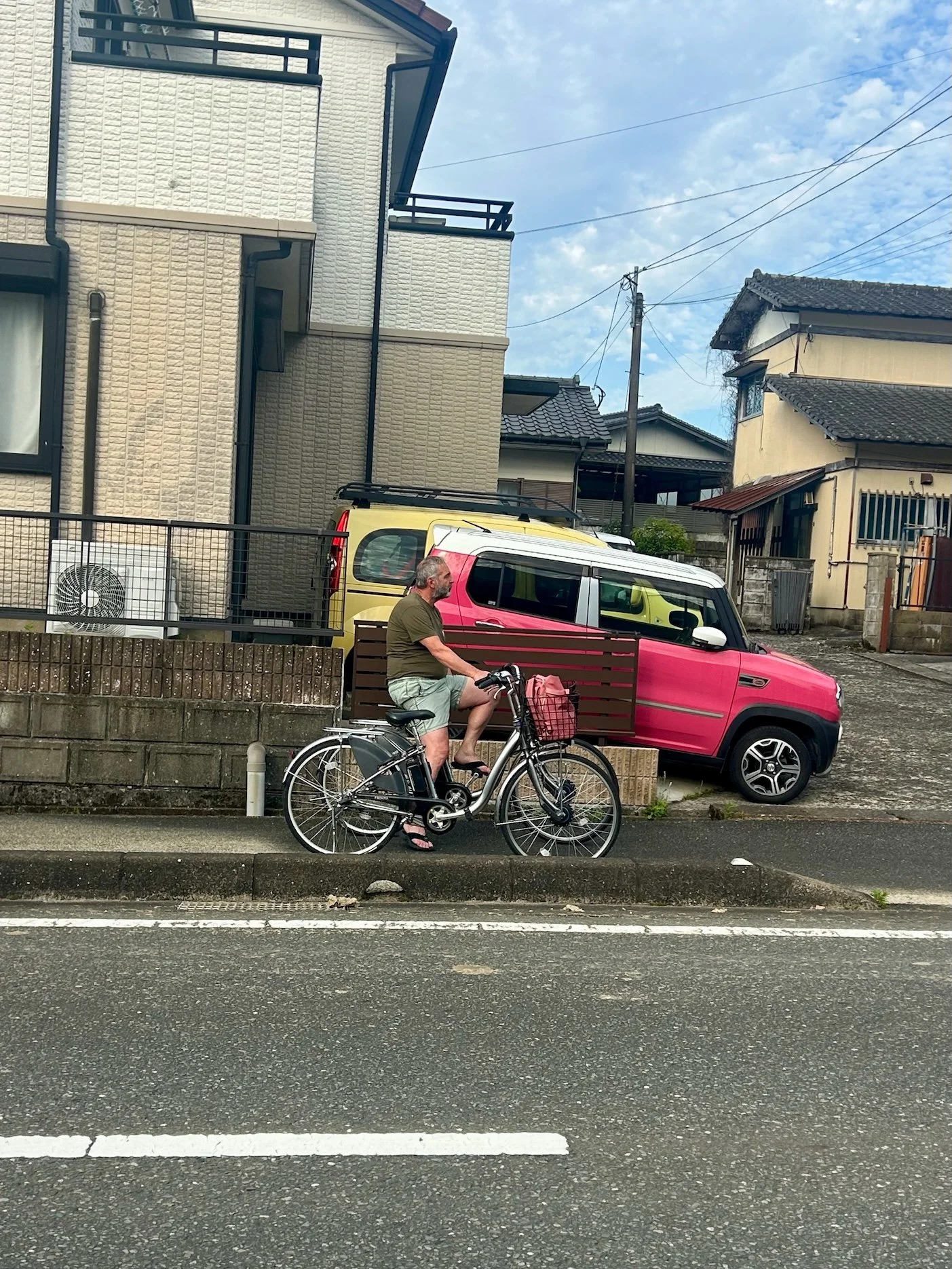
What a joy bicycles are.
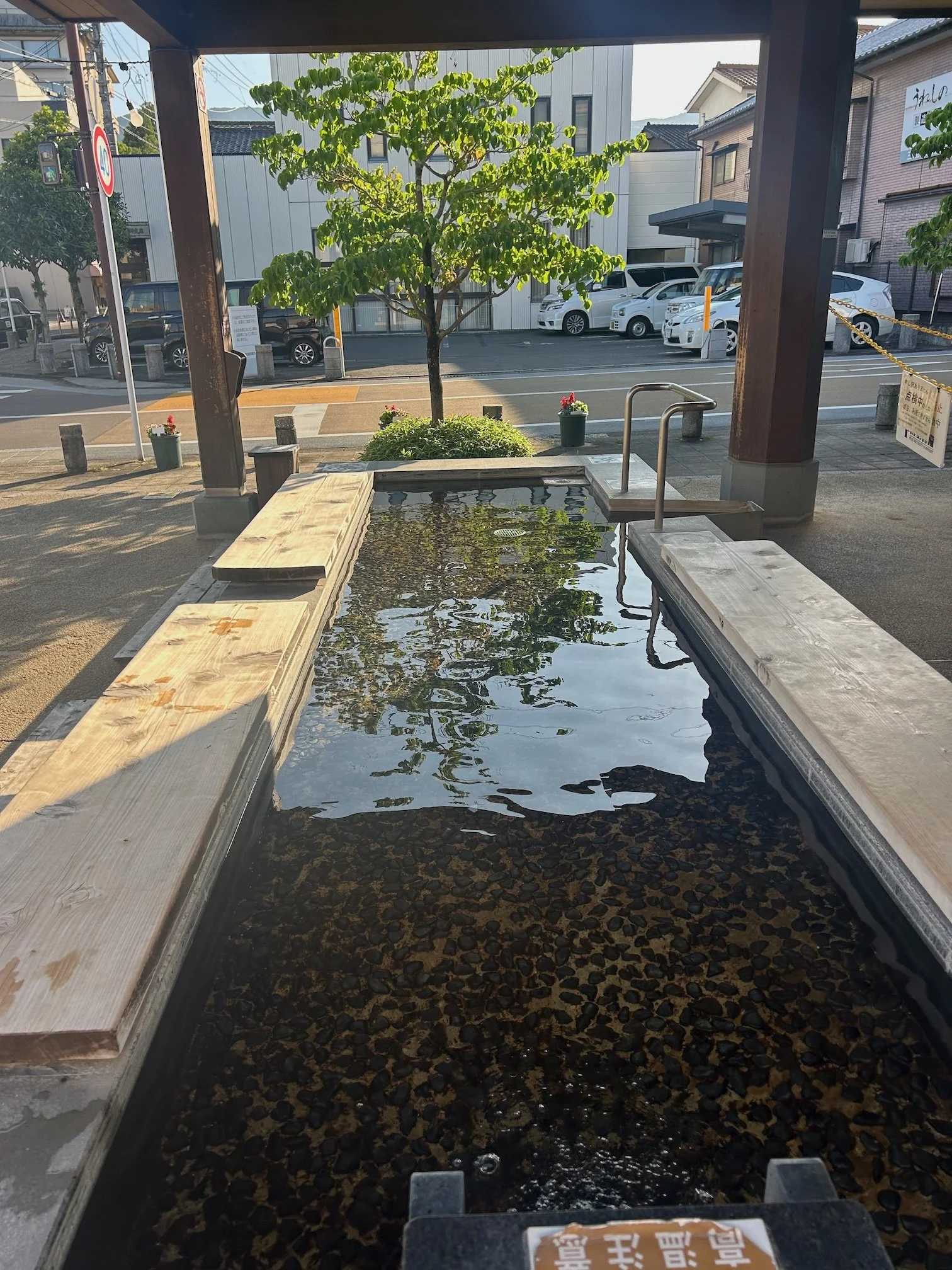
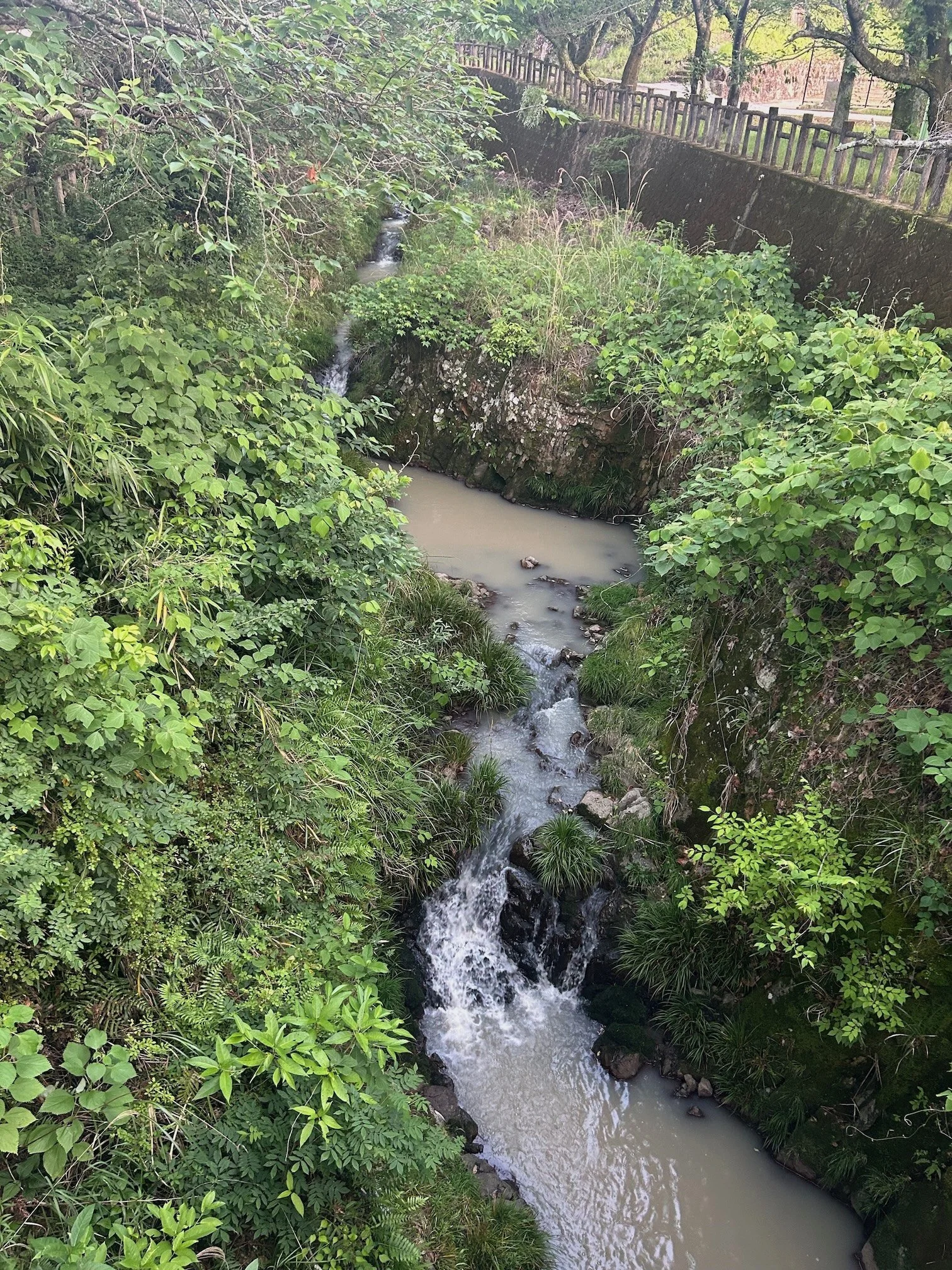
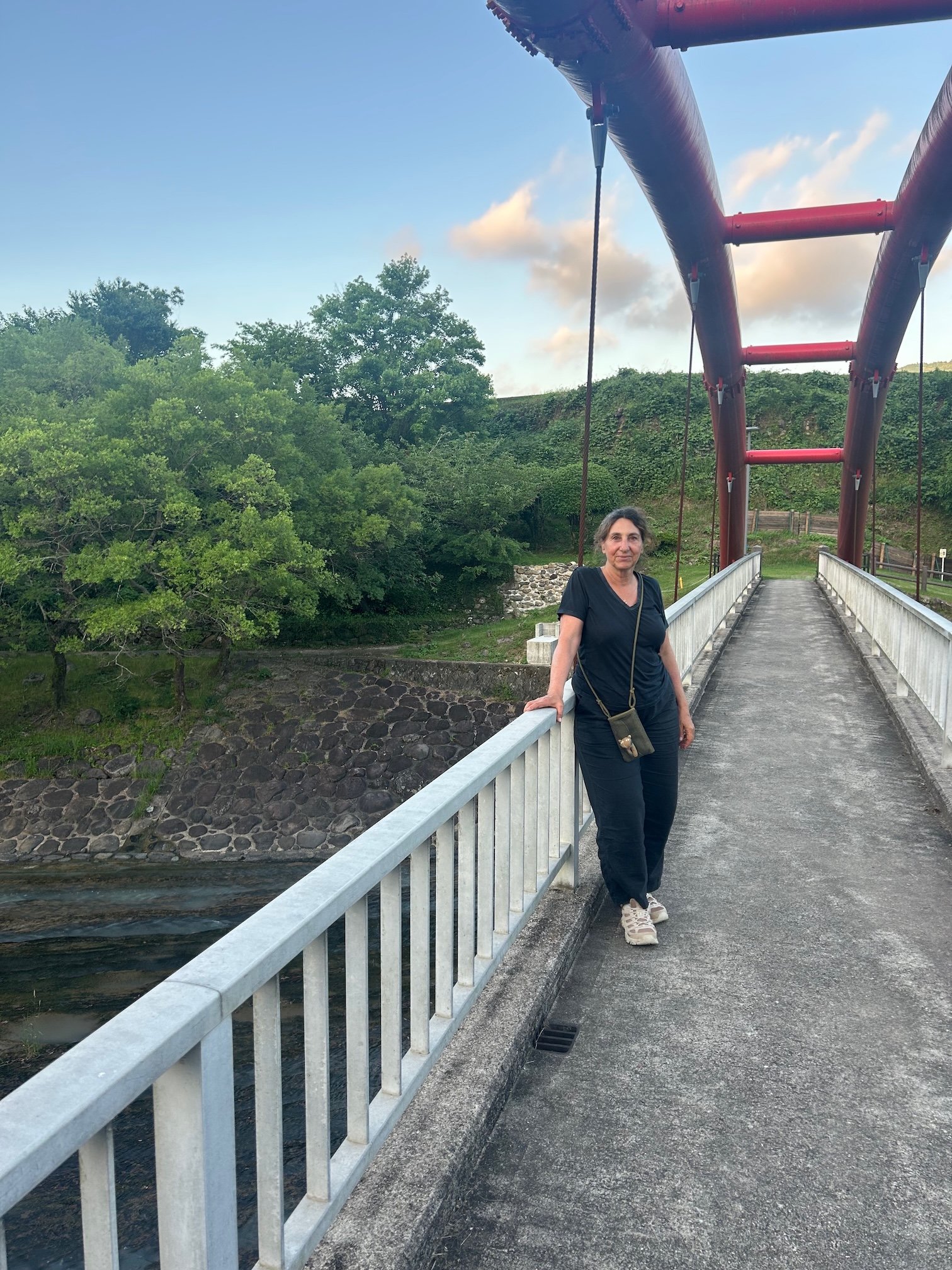
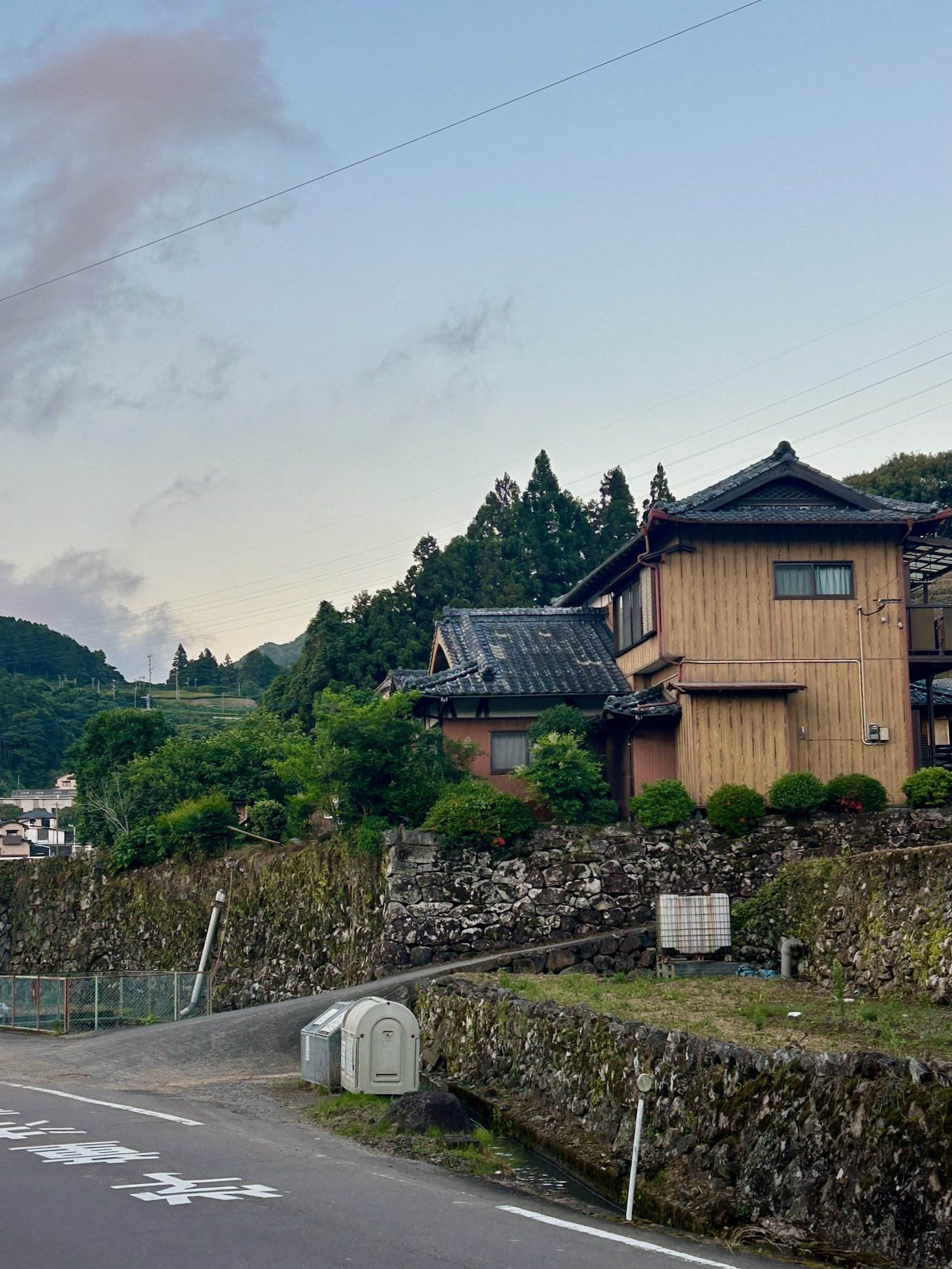
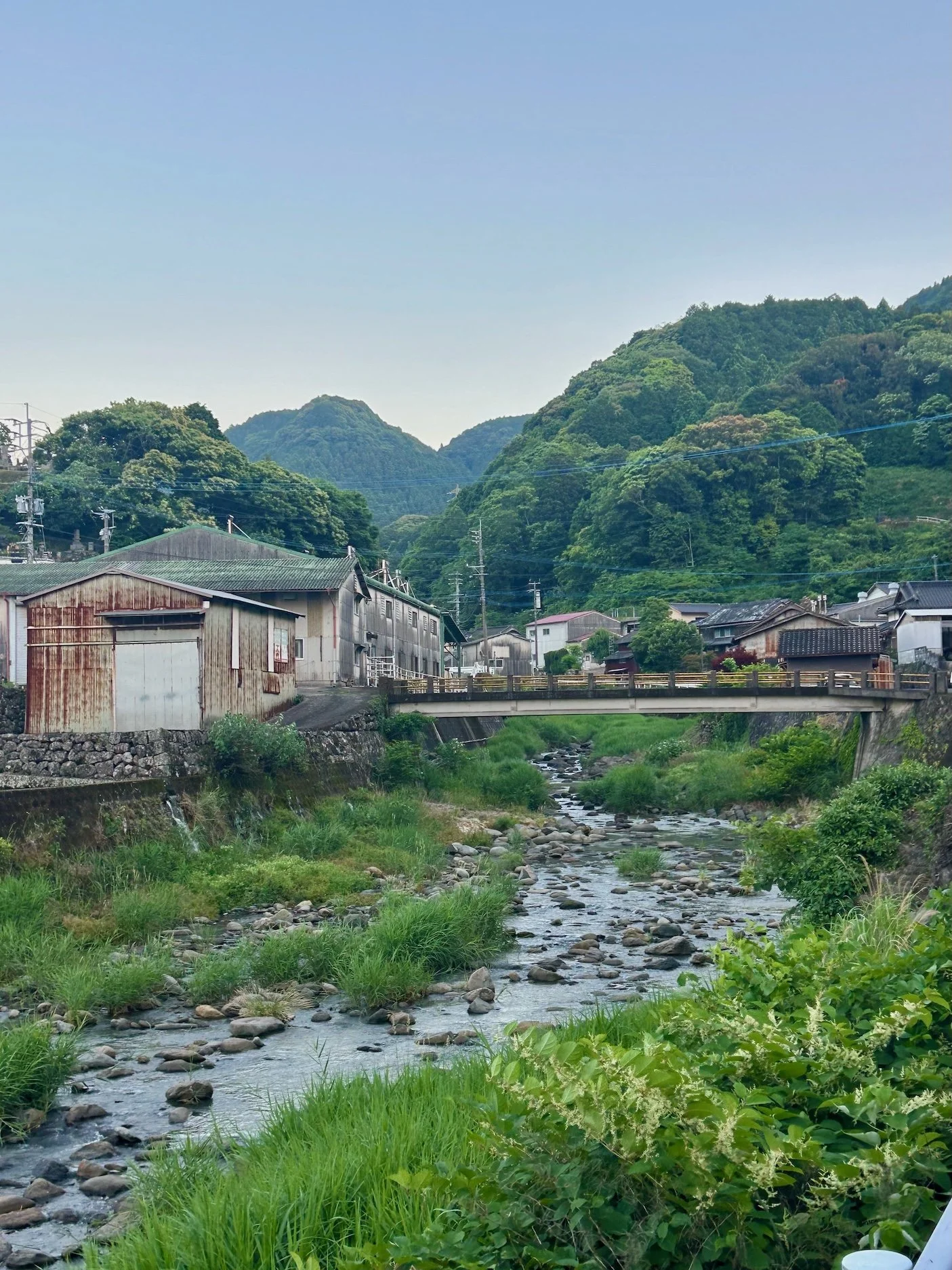
Ureshino is famous for its hot spring waters—mineral-rich, with a silky milk-like texture, considered beauty waters—and for the tea fields surrounding it from all sides. The whole town is a large bathing pool you can hold gently in your hands. A river, small bridges, and misty steam wrapping the houses.
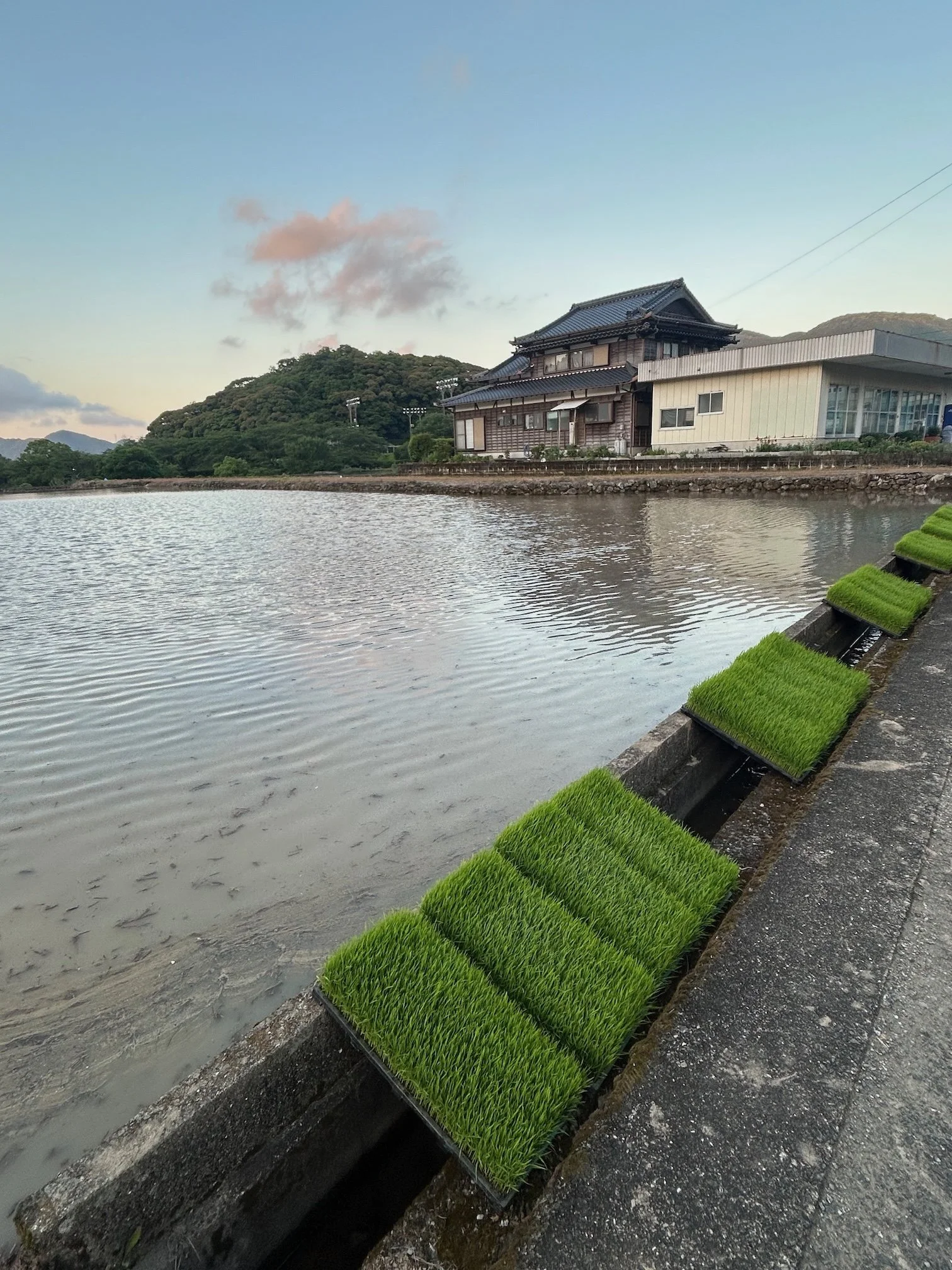
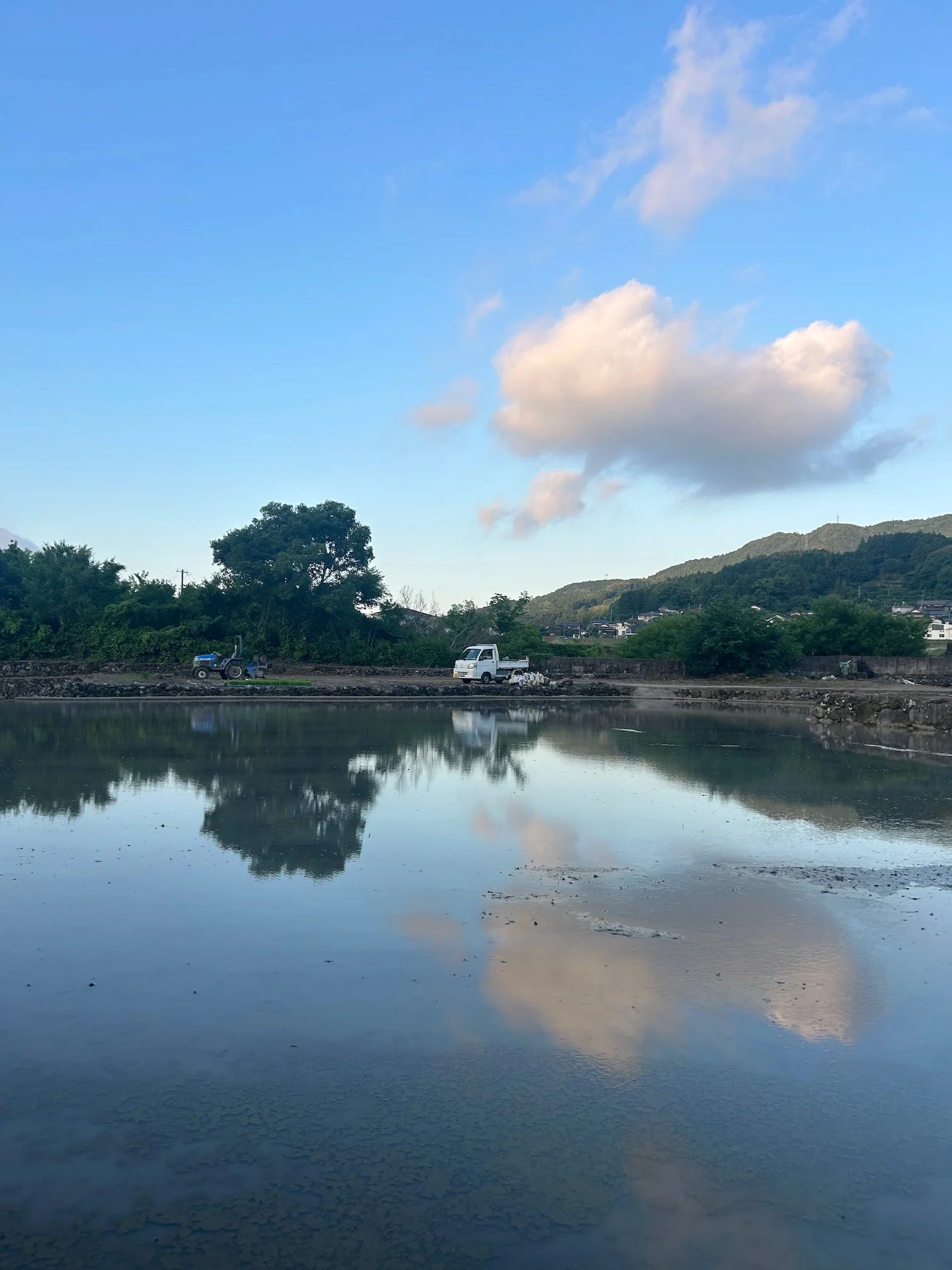
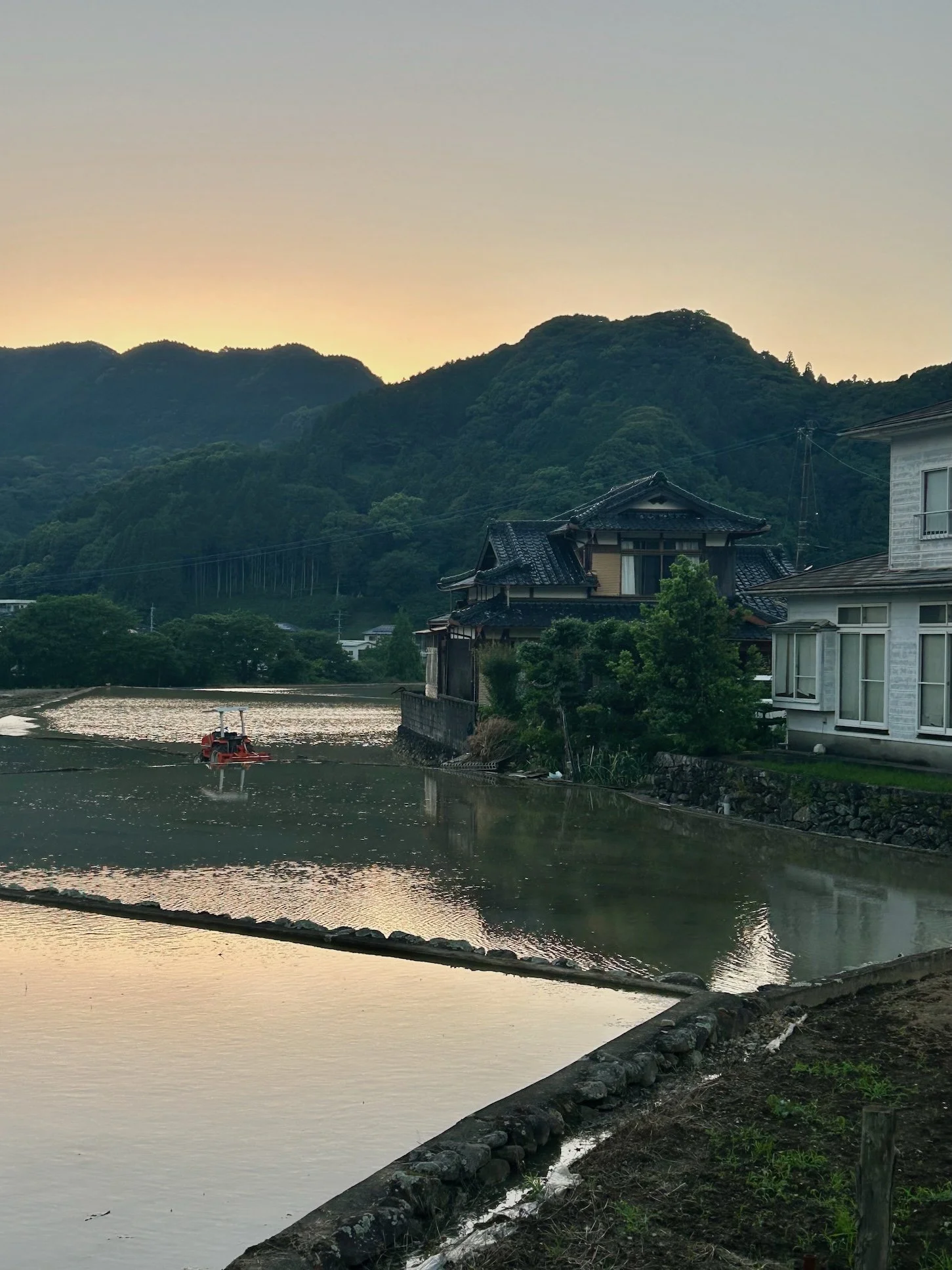
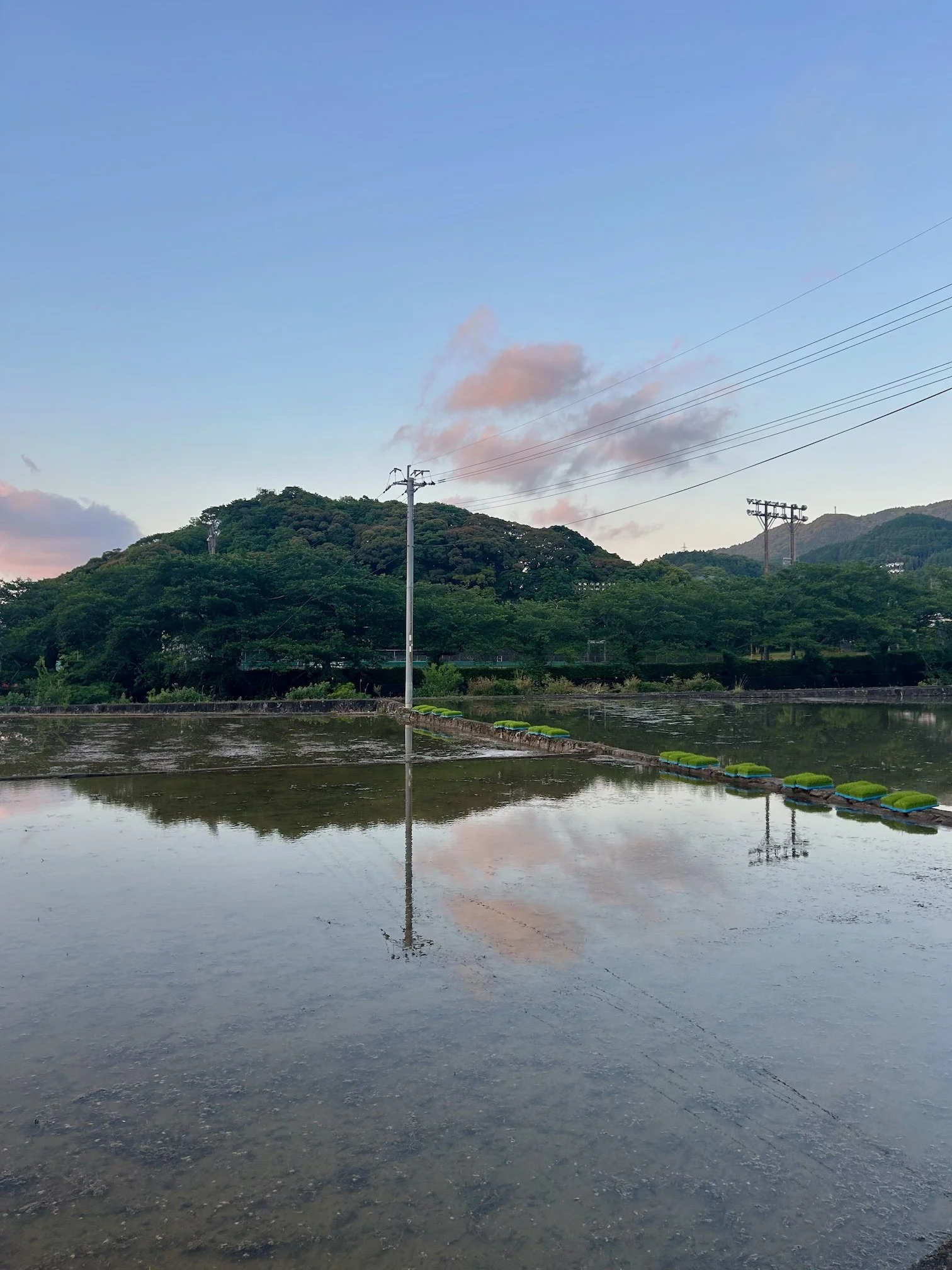
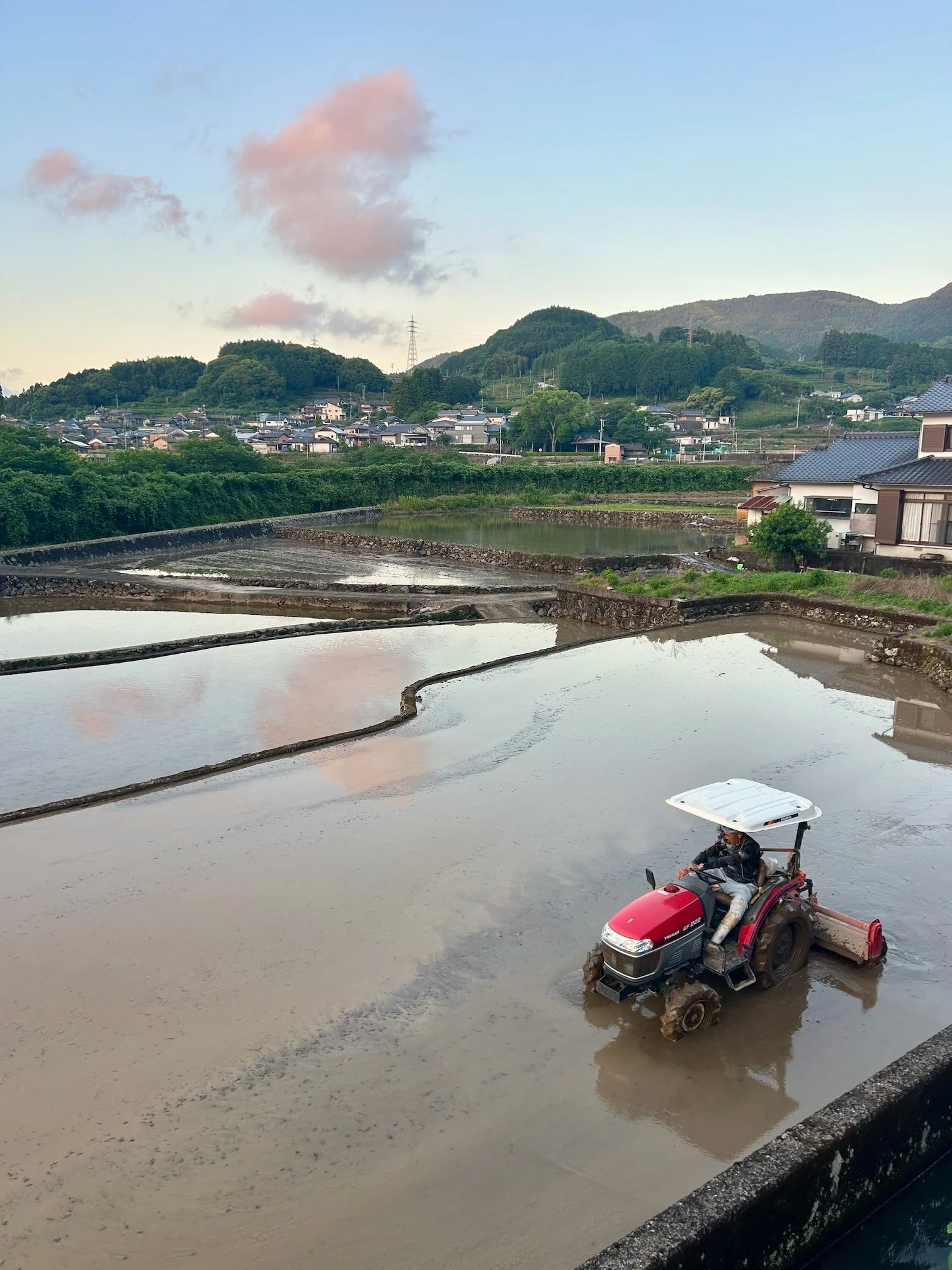
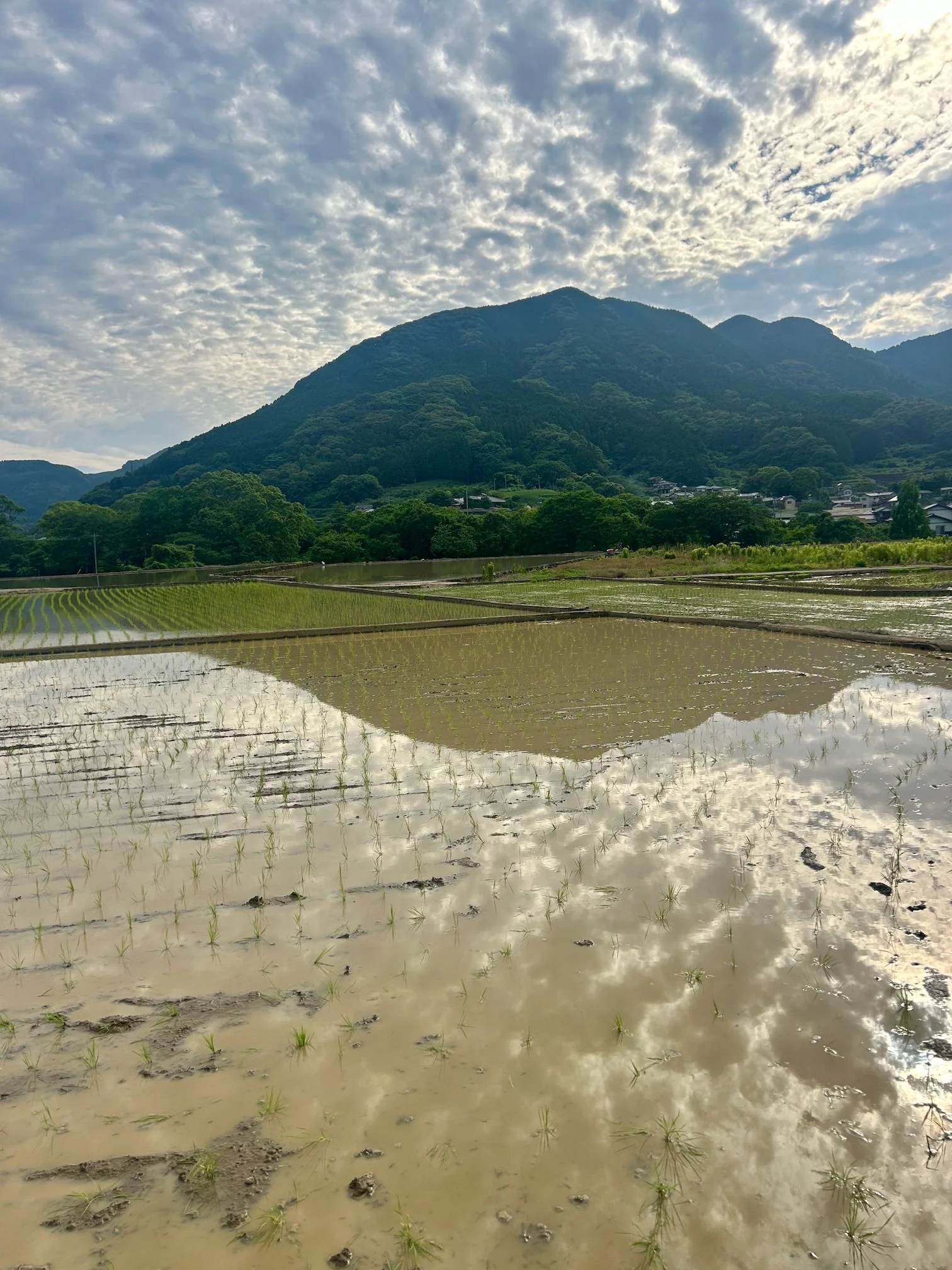
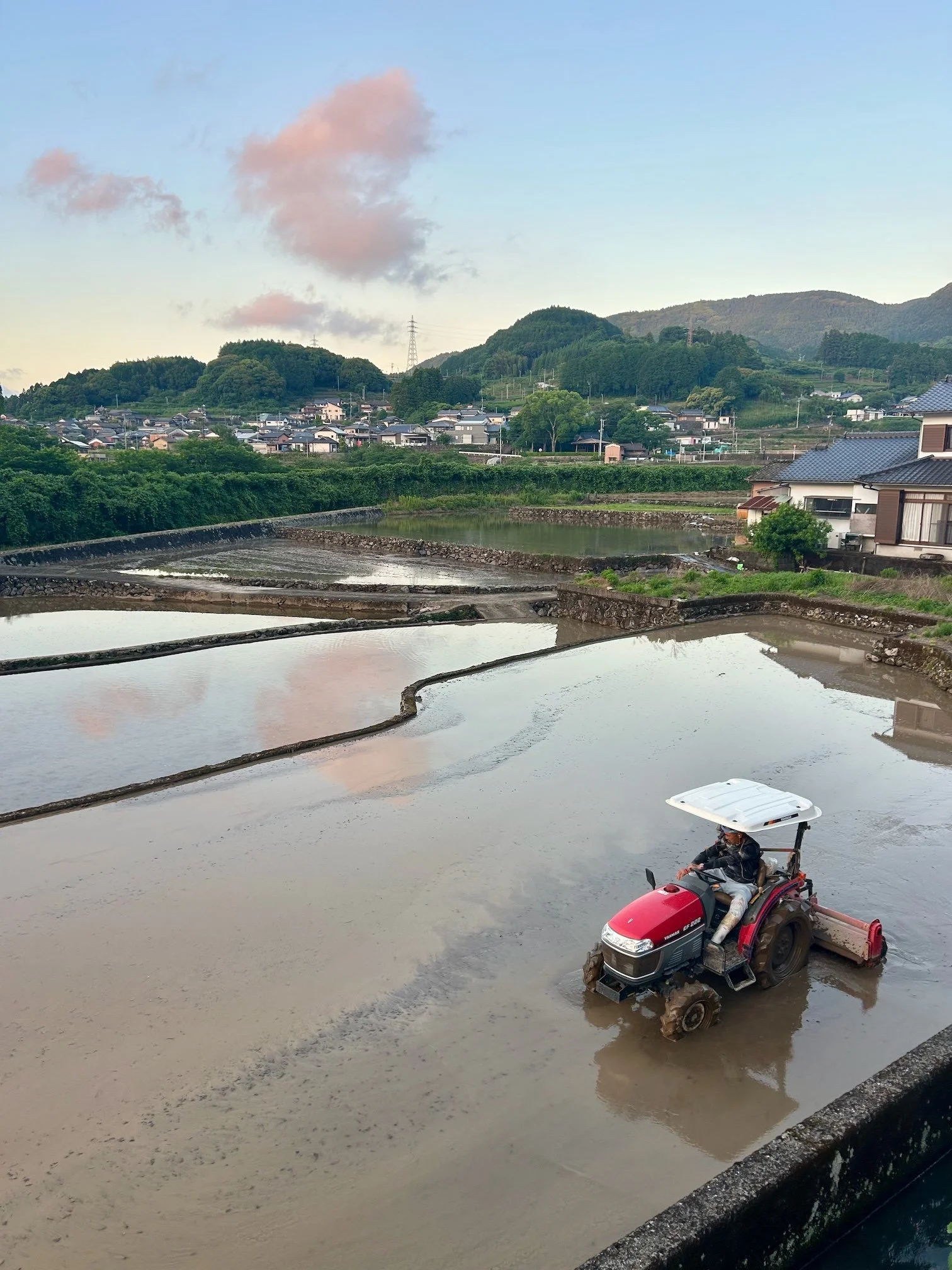
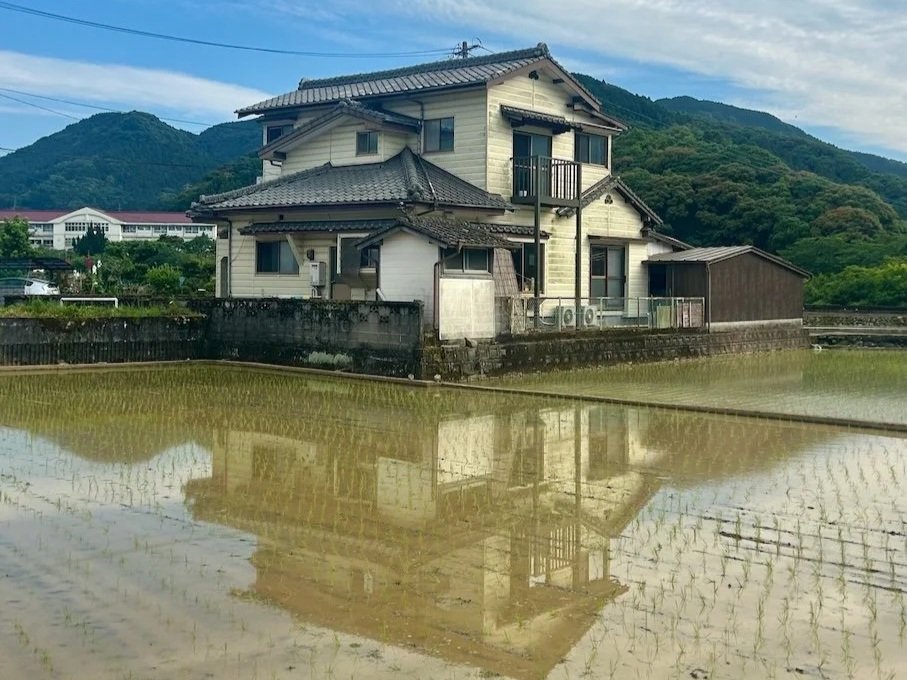
About an hour before sunset, when the light softens—this is the magic hour. The sky truly falls into the water, reflecting in a soft milky pink hue, just as my father wrote in his poem:
״Onto the puddle
A piece of sky, fell down to snuggle
A reflected world, drifting high
A Mirror sky with clouds float by״
Oyasuminasai—good night 🌙
We will continue along the Milky Way to another path.
Sigalit